

6 months 4 days ago
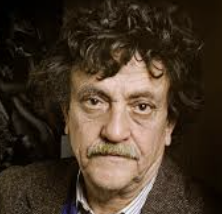
I was taught in the sixth grade that we had a standing army of just over a hundred thousand men and that the generals had nothing to say about what was done in Washington. I was taught to be proud of that and to pity Europe for having more than a million men under arms and spending all their money on airplanes and tanks. I simply never unlearned junior civics. I still believe in it. I got a very good grade.
▼
Source
source
As quoted by James Lundquist in Kurt Vonnegut
5 months 4 weeks ago
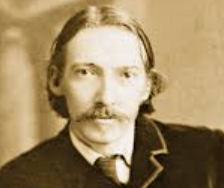
The devil, depend upon it, can sometimes do a very gentlemanly thing.
▼
Source
source
The Suicide Club, Story of the Young Man with the Cream Tarts.

5 months 1 week ago
The repression of liberty that took place in the countries in which Communist regimes were established cannot be adequately explained as a product of backwardness, or of errors in the application of Marxian theory. It was the result of a resolute attempt to realize an Enlightenment utopia - a condition of society in which no serious form of conflict any longer exists.
▼
Source
source
'Isaiah Berlin: The Value of Decency' (p.99)
9 months ago
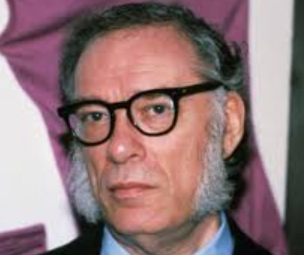
There is no way of being almost funny or mildly funny or fairly funny or tolerably funny. You are either funny or not funny and there is nothing in between. And usually it is the writer who thinks he is funny and the reader who thinks he isn't.

7 months 4 weeks ago
We do not "have" a body; rather, we "are" bodily.
▼
Source
source
p. 99


4 months 1 week ago
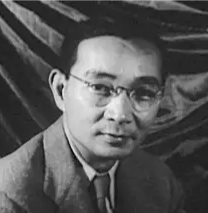
If life is all subjective, why not be subjectively happy rather than subjectively sad?
▼
Source
source
On the Wisdom of America (1950), p. 155
8 months 1 week ago
Man, being the servant and interpreter of Nature, can do and understand so much and so much only as he has observed in fact or in thought of the course of nature. Beyond this he neither knows anything nor can do anything.
▼
Source
source
Aphorism 1
5 months 2 weeks ago
The saying that a little knowledge is a dangerous thing is, to my mind, a very dangerous adage. If knowledge is real and genuine, I do not believe that it is other than a very valuable possession, however infinitesimal its quantity may be. Indeed, if a little knowledge is dangerous, where is the man who has so much as to be out of danger?
▼
Source
source
"On Elementary Instruction in Physiology"

8 months 2 weeks ago
Woman, compared to other creatures, is the image of God, for she bears dominion over them. But compared unto man, she may not be called the image of God, for she bears not rule and lordship over man, but ought to obey him. The woman shall be subject to man as unto Christ. For woman, has not her example from the body and from the flesh, that so she shall be subject to man, as the flesh is unto the Spirit, because that the flesh in the weakness and mortality of this life lusts and strives against the Spirit, and therefore would not the Holy Ghost give example of subjection to the woman of any such thing.
▼
Source
source
As quoted by John Knox The First Blast to Awaken Women Degenerate (1558)
7 months 3 days ago
In the interval between his campaigns Agricola was employed in the great labours of peace. He knew that the general must be perfected by the legislator; and that the conquest is neither permanent nor honourable, which is only an introduction to tyranny... In short, he subdued the Britons by civilizing them; and made them exchange a savage liberty for a polite and easy subjection. His conduct is the most perfect model for those employed in the unhappy, but sometimes necessary, task of subduing a rude and free people.
▼
Source
source
An Essay towards an Abridgment of English History (1757-c. 1763)

4 months 2 days ago
Whether we and our politicians know it or not, Nature is party to all our deals and decisions, and she has more votes, a longer memory, and a sterner sense of justice than we do.
▼
Source
source
Part of an endorsement statement for The Dying of the Trees (1997) by Charles E. Little
6 months 2 weeks ago
One must give one power a ballast, so to speak, to put it in a position to resist another.
▼
Source
source
Book V, Chapter 14.
3 months 3 weeks ago
No man can visualize four dimensions, except mathematically ... I think in four dimensions, but only abstractly. The human mind can picture these dimensions no more than it can envisage electricity. Nevertheless, they are no less real than electro-magnetism, the force which controls our universe, within, and by which we have our being.
6 months 3 weeks ago
His master was angry, and delivered him to the torturers until he should pay all that was due to him. "So My heavenly Father also will do to you if each of you, from his heart, does not forgive his brother his trespasses."
▼
Source
source
18:34-35
7 months 3 days ago
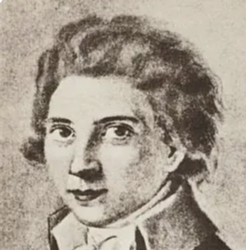
Honour is the mysticism of legality.
▼
Source
source
Aphorism 77, of Ideas as translated in The Early Political Writings of the German Romantics (1996) edited by Frederick C. Beiser, p. 131
6 months 2 weeks ago
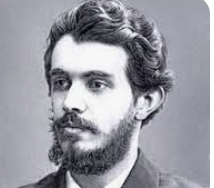
The whole economic system of Capitalism is an offshoot of a devouring and overwhelming lust, of a kind that can hold sway only in a society that has deliberately renounced the Christian asceticism and turned away from Heaven to give itself over exclusively to earthly gratifications. ... It is the result of a secularization of economic life, and by it the hierarchical subordination of the material to the spiritual is inverted. The autonomy of economics has ended in their dominating the whole life of human societies: the worship of Mammon has become the determining force of the age. And the worst of it is that this undisguised "mammonism" is regarded as a very good thing, an attainment to the knowledge of truth and a release from illusions. Economic materialism formulates this to perfection when it brands the whole spiritual life of man as a deception and a dream.
▼
Source
source
p. 92

6 months 2 weeks ago
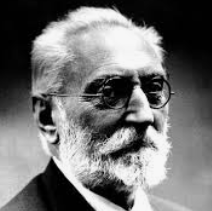
It has been said a thousand times and in a thousand books that ancestor-worship is for the most part the source of primitive religions, and it may be strictly said that what most distinguishes man from the other animals is that, in one form or another, he guards his dead and does not give them over to the neglect of teeming mother earth; he is an animal that guards its dead.
8 months 2 days ago
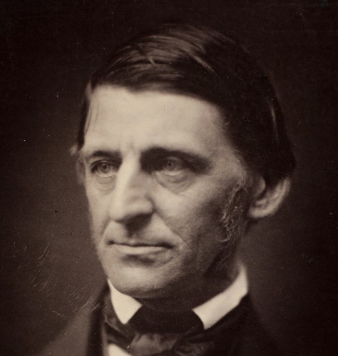
Character is higher than intellect...A great soul will be strong to live, as well as strong to think.
▼
Source
source
par. 27
8 months 1 week ago
The cause and root of nearly all evils in the sciences is this - that while we falsely admire and extol the powers of the human mind we neglect to seek for its true helps.
▼
Source
source
Aphorism 9
6 months 3 weeks ago
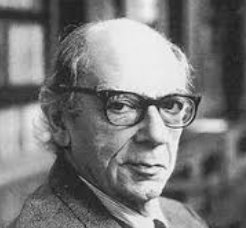
Everything is what it is: liberty is liberty, not equality or fairness or justice or culture, or human happiness or a quiet conscience.
8 months 2 days ago
There is a kind of latent omniscience not only in every man but in every particle.
▼
Source
source
p. 263

4 months 3 weeks ago
It is now almost my sole rule of life to clear myself of cants and formulas, as of poisonous Nessus shirts.
▼
Source
source
Letter to His Wife (1835).
8 months 1 week ago
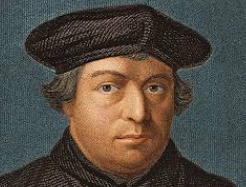
Certainly it is true that Christians, so far as they themselves are concerned, are subject neither to law nor sword, and have need of neither. But take heed and first fill the world with real Christians before you attempt to rule it in a Christian and evangelical manner. This you will never accomplish; for the world and the masses are and always will be un-Christian, even if they are all baptized and Christian in name.
▼
Source
source
p. 91
5 months 1 week ago
The point is that philosophy is seen to have come full circle, and to have exhausted itself.
▼
Source
source
Chapter 5, Nietzsche's Styles, p. 95
4 months 3 days ago
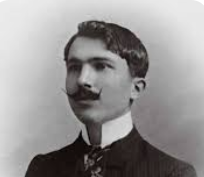
Death gestured with his hands and bade the king thrice welcome.
▼
Source
source
Book VIII, line 168
8 months 3 days ago
The hopes which inspire communism are, in the main, as admirable as those instilled by the Sermon on the Mount, but they are held as fanatically and are as likely to do as much harm.
▼
Source
source
Part I, The Present Condition of Russia, Ch. 1: What Is Hoped From Bolshevism


7 months 1 week ago
Men sometimes submit to shame, to tyranny, to conquest, but they never long suffer anarchy. There is no people so barbarous that they escape this general law of humanity.
▼
Source
source
Second letter on Algeria (1837), Travels in Algeria p. 38
6 months 4 weeks ago
Philosophy's error is to be too endurable.
6 months 4 days ago
Say what you will about the sweet miracle of unquestioning faith, I consider a capacity for it terrifying and absolutely vile.
4 months 3 weeks ago
On the whole, ought I not to rejoice that God was pleased to give me such a father; that from earliest years I had the example of a real man of God's own making continually before me? Let me learn of him. Let me write my books as he built his houses, and walk as blamelessly through this shadow world; if God so will, to rejoin him at last. Amen.
8 months 1 week ago
The law of nature teaches me to speak in my own defence: With respect to this charge of bribery I am as innocent as any man born on St. Innocents Day. I never had a bribe or reward in my eye or thought when pronouncing judgment or order. I am ready to make an oblation of myself to the King.
▼
Source
source
(17 April 1621) Quoted by Baron John Campbell (1818), J. Murray in "The Lives of the Lord Chancellors and Keepers of the Great Seal of England"
6 months 2 weeks ago
Now he saw the problem with great clarity. If he lived here, life would be pleasant and safe. But it would also be predictable. A child could be born here, grow up here, die here, without ever experiencing the excitement of discovery. Why did Dona question him endlessly about his life in the burrow and his journey to the country of the ants? Because for her, it represented a world that was dangerous and full of fascinating possibilities. For the children of this underground city, life was a matter of repetition, of habit. And this, he suddenly realized, was the heart of the problem. Habit. Habit was a stifling, warm blanket that threatened you with suffocation and lulled the mind into a state of perpetual nagging dissatisfaction. Habit meant the inability to escape from yourself, to change and develop . . .
▼
Source
source
pp. 132-133
6 months 2 weeks ago
Not to be loved is a misfortune, but it is an insult to be loved no longer.
▼
Source
source
No. 3. (Zachi writing to Usbek)
8 months 4 days ago
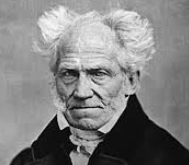
If two men who were friends in their youth meet again when they are old, after being separated for a life-time, the chief feeling they will have at the sight of each other will be one of complete disappointment at life as a whole; because their thoughts will be carried back to that earlier time when life seemed so fair as it lay spread out before them in the rosy light of dawn, promised so much - and then performed so little.
▼
Source
source
"On the Sufferings of the World"
4 months 2 weeks ago
A people cannot be free otherwise than at the individual's expense; for it is not the individual that is the main point in this liberty, but the people. The freer the people, the more bound the individual; the Athenian people, precisely at its freest time, created ostracism, banished the atheists, poisoned the most honest thinker.
▼
Source
source
Cambridge 1995, p. 190

3 months 4 weeks ago
The working class will acquire the sense of the new discipline, the freely assumed self-discipline of the Social Democracy, not as a result of the discipline imposed on it by the capitalist state, but by extirpating, to the last root, its old habits of obedience and servility.

6 months 2 weeks ago
Crime is naught but misdirected energy. So long as every institution of today, economic, political, social, and moral, conspires to misdirect human energy into wrong channels; so long as most people are out of place doing the things they hate to do, living a life they loathe to live, crime will be inevitable, and all the laws on the statutes can only increase, but never do away with, crime.
7 months 1 week ago
The New Englander is attached to his township because it is strong and independent; he has an interest in it because he shares in its management; he loves it because he has no reason to complain of his lot; he invests his ambition and his future in it; in the restricted sphere within his scope, he learns to rule society; he gets to know those formalities without which freedom can advance only through revolutions, and becoming imbued with their spirit, develops a taste for order, understands the harmony of powers, and in the end accumulates clear, practical ideas about the nature of his duties and the extent of his rights.
▼
Source
source
Chapter V.
9 months 3 days ago
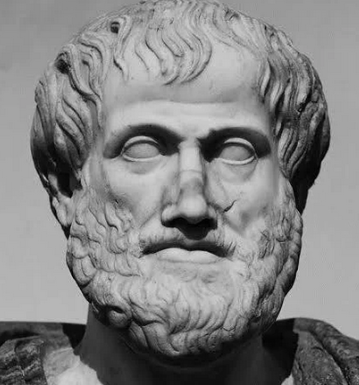
Universal is known according to reason, but that which is particular, according to sense...

3 months 4 weeks ago
What is not good for the swarm is not good for the bee.
▼
Source
source
VI, 54
4 months 1 week ago
The deeper we look into nature, the more we recognize that it is full of life, and the more profoundly we know that all life is a secret and that we are united with all life that is in nature. Man can no longer live for himself alone. We realize that all life is valuable, and that we are united to all this life. From this knowledge comes our spiritual relationship to the universe.
▼
Source
source
p. 248
7 months 3 days ago
People will not look forward to posterity, who never look backward to their ancestors.
▼
Source
source
Volume iii, p. 274
CivilSimian.com created by AxiomaticPanic, CivilSimian, Kalokagathia