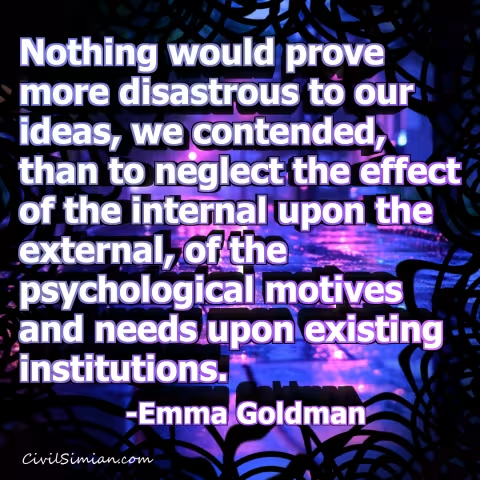
I've tried to focus inwardly for a long time, but, for the necessity of all of us. I feel new technologies are existential ones...we've been neglecting them for capital.


It is surely better to be wronged than to do wrong.
Whatever may happen to thee, it was prepared for thee from all eternity; and the implication of causes was from eternity spinning the thread of thy being, and of that which is incident to it. Alternate Translation: Whatever may befall you, it was preordained for you from everlasting.
Thus proletarian violence has become an essential factor in Marxism. Let us add once more that, if properly conducted, it will have the result of suppressing parliamentary socialism, which will no longer be able to pose as the leader of the working classes and as the guardian of order.
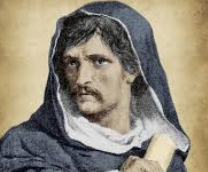
When the end comes, you will be esteemed by the world and rewarded by God, not because you have won the love and respect of the princes of the earth, however powerful, but rather for having loved, defended and cherished one such as I ... what you receive from others is a testimony to their virtue; but all that you do for others is the sign and clear indication of your own.
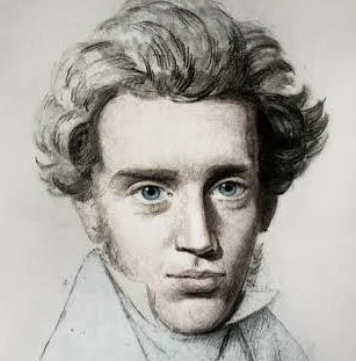
It will be easy for us once we receive the ball of yarn from Ariadne (love) and then go through all the mazes of the labyrinth (life) and kill the monster. But how many are there who plunge into life (the labyrinth) without taking that precaution?
But with respect to future debt; would it not be wise and just for that nation to declare in the constitution they are forming that neither the legislature, nor the nation itself can validly contract more debt, than they may pay within their own age, or within the term of 19 years.
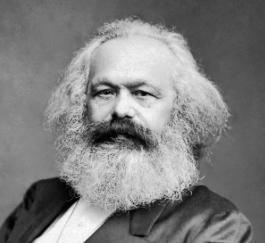
But if the labourers could live on air they could not be bought at any price.
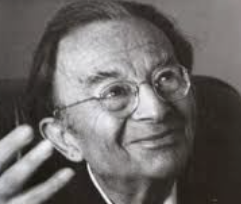
Greed is a bottomless pit which exhausts the person in an endless effort to satisfy the need without ever reaching satisfaction.
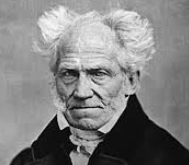
The little honesty that exists among authors is discernible in the unconscionable way they misquote from the writings of others.
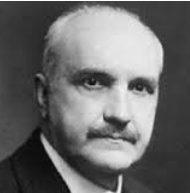
I was still "at the church door". Yet in belief, in the clarification of my philosophy, I had taken an important step. I no longer wavered between alternative views of the world, to be put on or taken off like alternative plays at the theatre. I now saw that there was only one possible play, the actual history of nature and of mankind, although there might well be ghosts among the characters and soliloquies among the speeches. Religions, all religions, and idealistic philosophies, all idealistic philosophies, were the soliloquies and the ghosts. They might be eloquent and profound. Like Hamlet's soliloquy they might be excellent reflective criticisms of the play as a whole. Nevertheless they were only parts of it, and their value as criticisms lay entirely in their fidelity to the facts, and to the sentiments which those facts aroused in the critic.

If thy fellows hurt thee in small things, suffer it! and be as bold with them!

The christian religion is a parody on the worship of the Sun, in which they put a man whom they call Christ, in the place of the Sun, and pay him the same adoration which was originally paid to the Sun.
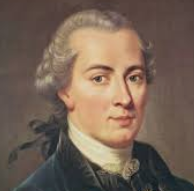
If you punish a child for being naughty, and reward him for being good, he will do right merely for the sake of the reward; and when he goes out into the world and finds that goodness is not always rewarded, nor wickedness always punished, he will grow into a man who only thinks about how he may get on in the world, and does right or wrong according as he finds either of advantage to himself.
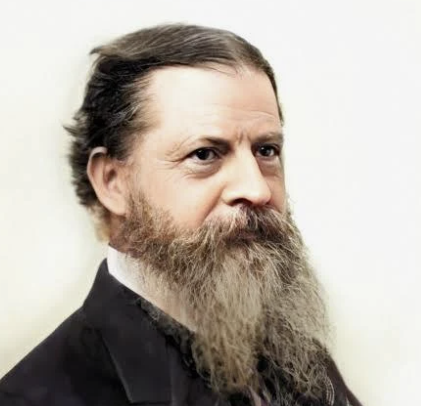
It is the man of science, eager to have his every opinion regenerated, his every idea rationalized, by drinking at the fountain of fact, and devoting all the energies of his life to the cult of truth, not as he understands it, but as he does not yet understand it, that ought properly to be called a philosopher. To an earlier age knowledge was power - merely that and nothing more; to us it is life and the summum bonum. Emancipation from the bonds of self, of one's own prepossessions, importunately sought at the hands of that rational power before which all must ultimately bow, - this is the characteristic that distinguishes all the great figures of nineteenth-century science from those of former periods.
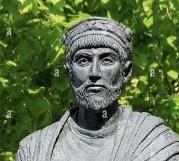
If the immediate creator of the universe be he who is proclaimed by Moses, then we hold nobler beliefs concerning him, inasmuch as we consider him to be the master of all things in general, but that there are besides national gods who are subordinate to him and are like viceroys of a king, each administering separately his own province; and, moreover, we do not make him the sectional rival of the gods whose station is subordinate to his. But if Moses first pays honour to a sectional god, and then makes the lordship of the whole universe contrast with his power, then it is better to believe as we do, and to recognise the God of the All, though not without apprehending also the God of Moses; this is better, I say, than to honour one who has been assigned the lordship over a very small portion, instead of the creator of all things.
No man expects such exact fidelity as a traitor.
We are not to expect to be translated from despotism to liberty in a featherbed.

What I had to say was so clear and I felt it so deeply that I am amazed by the tediousness, repetitiousness, verbiage, and disorder of this writing. What would have made it lively and vehement coming from another's pen is precisely what has made it dull and slack coming from mine. The subject was myself, and I no longer found on my own interest that zeal and vigor of courage which can exalt a generous soul only for another person's cause.
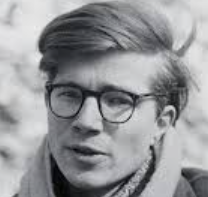
It seemed perfectly possible that, in spite of my certainty of my own genius, I might die of some illness, or perhaps even in a street accident, before I had ever glimpsed the meaning of life. My moods of happiness and self-confidence convinced me that I had a "destiny" to become a famous writer, and to be remembered as one of the most important thinkers of the century.
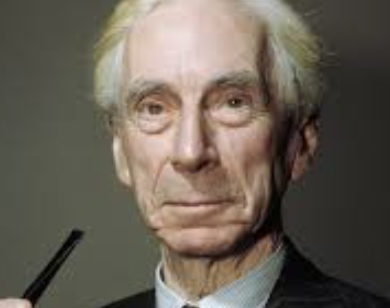
No man who believes that all is for the best in this suffering world can keep his ethical values unimpaired, since he is always having to find excuses for pain and misery.
In order to be able to meet a general combination of the banks against us in a critical emergency, could we not make a beginning towards an independent use of our own money, towards holding our own bank in all the deposits where it is received, and letting the treasurer give his draft or note for payment at any particular place, which, in a well-conducted government, ought to have as much credit as any private draft or bank note or bill, and would give us the same facilities which we derive from the banks?
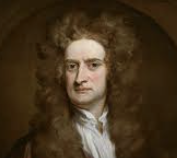
The best and safest method of philosophizing seems to be, first to enquire diligently into the properties of things, and to establish these properties by experiment, and then to proceed more slowly to hypothesis for the explanation of them. For hypotheses should be employed only in explaining the properties of things, but not assumed in determining them, unless so far as they may furnish experiments.
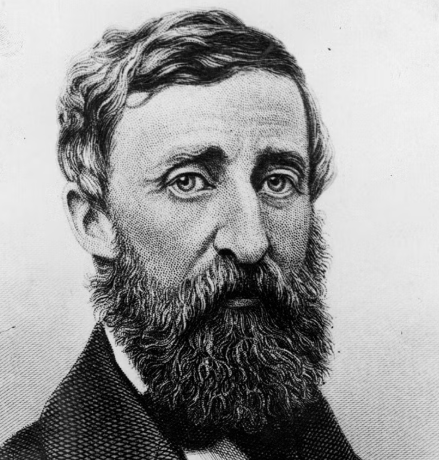
Not without a slight shudder at the danger, I often perceive how near I had come to admitting into my mind the details of some trivial affair, - the news of the street; and I am astonished to observe how willing men are to lumber their minds with such rubbish, - to permit idle rumors and incidents of the most insignificant kind to intrude on ground which should be sacred to thought. Shall the mind be a public arena, where the affairs of the street and the gossip of the tea-table chiefly are discussed? Or shall it be a quarter of heaven itself, - an hypæthral temple, consecrated to the service of the gods? I find it so difficult to dispose of the few facts which to me are significant, that I hesitate to burden my attention with those which are insignificant, which only a divine mind could illustrate. Such is, for the most part, the news in newspapers and conversation. It is important to preserve the mind's chastity in this respect.
As our acts and our thoughts are, so will our lives be.
It is perhaps typical of very creative minds that they hit very large nails not quite on the head.
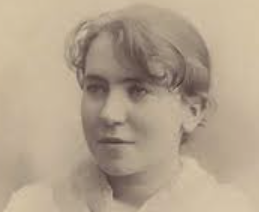
As of old, the most enlightened, even, hope for a miracle from the twentieth-century deity, - suffrage. Life, happiness, joy, freedom, independence, - all that, and more, is to spring from suffrage. In her blind devotion woman does not see what people of intellect perceived fifty years ago: that suffrage is an evil, that it has only helped to enslave people, that it has but closed their eyes that they may not see how craftily they were made to submit.
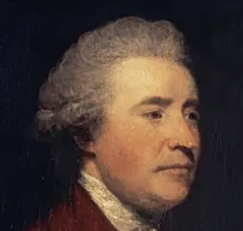
It cannot at this time be too often repeated; line upon line; precept upon precept; until it comes into the currency of a proverb, To innovate is not to reform.

There is no means of proving it is preferable to be than not to be.
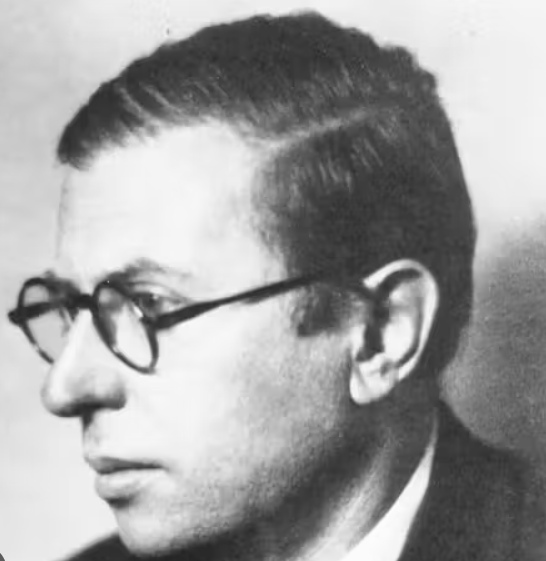
I respect orders but I respect myself too and I do not obey foolish rules made especially to humiliate me.
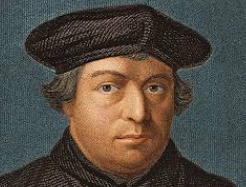
Throughout your treatment you forget that you said that 'free-will' can do nothing without grace, and you prove that 'free-will' can do all things without grace! Your inferences and analogies "For if man has lost his freedom, and is forced to serve sin, and cannot will good, what conclusion can more justly be drawn concerning him, than that he sins and wills evil necessarily?
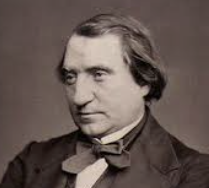
In morals, truth is but little prized when it is a mere sentiment, and only attains its full value when realized in the world as fact.
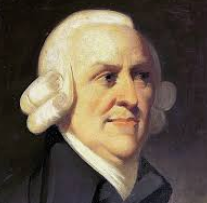
Nobody ever saw a dog make a fair and deliberate exchange of one bone for another with another dog.

A man contains all that is needful to his government within himself. He is made a law unto himself. All real good or evil that can befal him must be from himself. He only can do himself any good or any harm. Nothing can be given to him or can taken from him but always there is a compensation.. There is a correspondence between the human soul and everything that exists in the world; more properly, everything that is known to man. Instead of studying things without the principles of them, all may be penetrated unto with him. Every act puts the agent in a new position. The purpose of life seems to be to acquaint a man with himself. He is not to live the future as described to him but to live the real future to the real present. The highest revelation is that God is in every man.
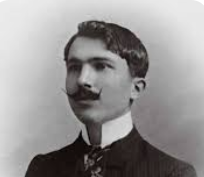
This is our epoch, good or bad, beautiful or ugly, rich or poor - we did not choose it. This is our epoch, the air we breathe, the mud given us, the bread, the fire, the spirit! Let us accept Necessity courageously. It is our lot to have fallen on fighting times. Let us tighten our belts, let us arm our hearts, our minds, and our bodies. Let us take our place in battle!
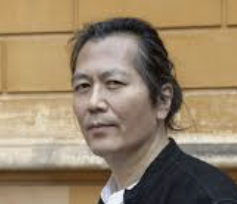
Silent listening unites a people and creates community without communication.
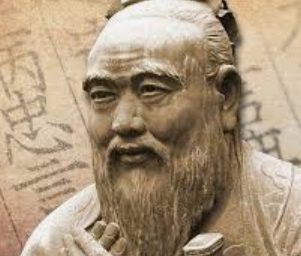
Chi Wan thought thrice, and then acted. When the Master was informed of it, he said, "Twice may do."
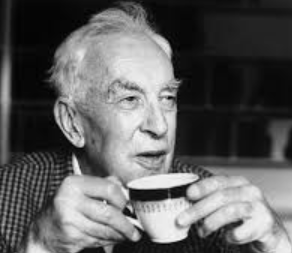
The difference between a Humanist and a lunatic is in fact one of degree.
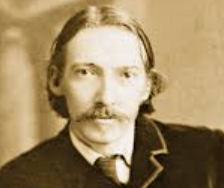
The world is a great place and stocked with wealth and beauty, and there is no limit to the rewards that may be offered. Such an one who would refuse a million of money may sell his honour for an empire or the love of a woman.
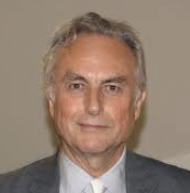
Unfortunately, instead of working out that they have probably misunderstood evolution, creationists conclude, instead, that evolution must be false.
Superstition is the religion of feeble minds.
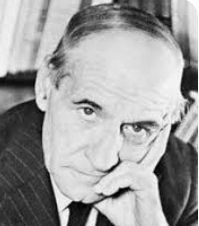
The mass-man sees in the State an anonymous power, and feeling himself, like it, anonymous, he believes that the State is something of his own. Suppose that in the public life of a country some difficulty, conflict, or problem presents itself, the mass-man will tend to demand that the State intervene immediately and undertake a solution directly with its immense and unassailable resources. This is the gravest danger that to-day threatens civilisation: State intervention; the absorption of all spontaneous social effort by the State.
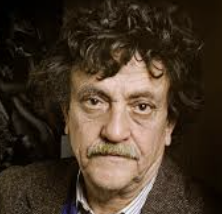
I urge you to please notice when you are happy, and exclaim or murmur or think at some point, "If this isn't nice, I don't know what is."
I have been merely oppressed by the weariness and tedium and vanity of things lately: nothing stirs me, nothing seems worth doing or worth having done: the only thing that I strongly feel worth while would be to murder as many people as possible so as to diminish the amount of consciousness in the world. These times have to be lived through: there is nothing to be done with them.
CivilSimian.com created by AxiomaticPanic, CivilSimian, Kalokagathia