


6 months 4 weeks ago
Till women are more rationally educated, the progress in human virtue and improvement in knowledge must receive continual checks.
▼
Source
source
Ch. 3
4 months 2 weeks ago
If you could be alarmed into the semblance of modesty, you would charm everybody; but remember my joke against you about the Moon and the Solar System;-"Damn the solar system! bad light - planets too distant - pestered with comets - feeble contriviance; - could make a better with great ease."
▼
Source
source
Vol. II, letter to Lord Jeffrey (1806), p. 23 Discussed in David A. Kent, D. R. Ewen, "Romantic Parodies, 1797-1831", The Review of English Studies, New Series, Vol. 44, No. 175, (1993), pp. 430-432
8 months 1 day ago
I have been writing & speaking what were once called novelties, for twenty five or thirty years, & have not now one disciple. Why? Not that what I said was not true; not that it has not found intelligent receivers but because it did not go from any wish in me to bring men to me, but to themselves. I delight in driving them from me. What could I do, if they came to me? - they would interrupt and encumber me. This is my boast that I have no school & no follower. I should account it a measure of the impurity of insight, if it did not create independence.
▼
Source
source
April 1859
8 months 2 weeks ago
The institutions of the Ruler are rooted in his own character and conduct, and sufficient attestation of them is given by the masses of the people. He examines them by comparison with those of the three kings, and finds them without mistake. He sets them up before Heaven and Earth, and finds nothing in them contrary to their mode of operation. He presents himself with them before spiritual beings, and no doubts about them arise. He is prepared to wait for the rise of a sage a hundred ages after, and has no misgivings. His presenting himself with his institutions before spiritual beings, without any doubts arising about them, shows that he knows Heaven. His being prepared, without any misgivings, to wait for the rise of a sage a hundred ages after, shows that he knows men.
5 months 2 weeks ago
Free trade, one of the greatest blessings which a government can confer on a people, is in almost every country unpopular.
▼
Source
source
p. 161
8 months 1 day ago
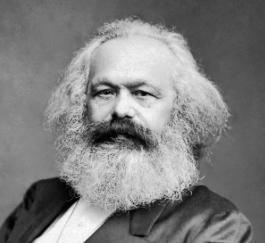
All that is solid melts into air, all that is holy is profaned, and man is at last compelled to face with sober senses, his real conditions of life, and his relations with his kind.
▼
Source
source
Section 1, paragraph 18, lines 12-14.

4 months 3 weeks ago
For the whole Past, as I keep repeating, is the possession of the Present; the Past had always something true, and is a precious possession. In a different time, in a different place, it is always some other side of our common Human Nature that has been developing itself. The actual True is the sum of all these; not any one of them by itself constitutes what of Human Nature is hitherto developed. Better to know them all than misknow them. "To which of these Three Religions do you specially adhere?" inquires Meister of his Teacher. "To all the Three!" answers the other: "To all the Three; for they by their union first constitute the True Religion."


4 months 1 week ago
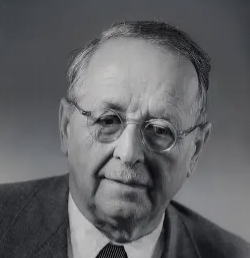
Cartan developed a general scheme of infinitesimal geometry in which Klein's notions were applied to the tangent plane and not to the n-dimensional manifold M itself. On the foundations of general infinitesimal geometry.
▼
Source
source
Bull. Amer. Math. Soc. 35 (1929) 716-725 doi:10.1090/S0002-9904-1929-04812-2 (quote on p. 716)
7 months 3 weeks ago
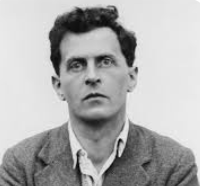
You could attach prices to ideas. Some cost a lot some little. ... And how do you pay for ideas? I believe: with courage.
▼
Source
source
p. 60e

6 months 3 weeks ago
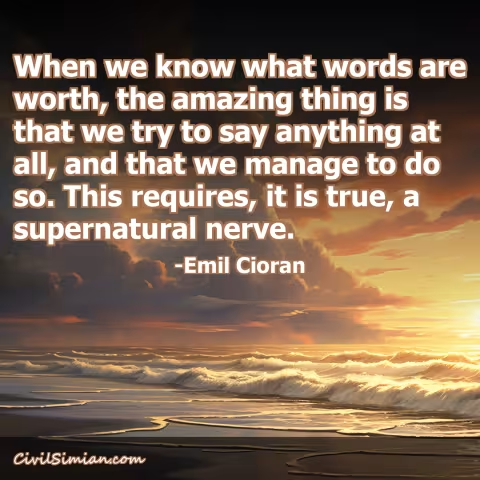
Nothing surpasses the pleasures of idleness: even if the end of the world were to come, I would not leave my bed at an ungodly hour.
8 months 2 weeks ago
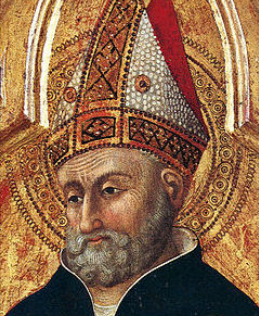
Venerate the martyrs, praise, love, proclaim, honor them. But worship the God of the martyrs.
▼
Source
source
273:9; translation from: The works of Saint Augustine, John E. Rotelle, New City Press, ISBN 1565480600 ISBN 9781565480605 p. 21
8 months 4 days ago
As to the Approbation or Esteem of those Blockheads who call themselves the Public, & whom a Bookseller, a Lord, a Priest, or a Party can guide, I do most heartily despise it.
▼
Source
source
Letter 138, To Gilbert Elliot of Minto; August 9, 1757
8 months 1 week ago
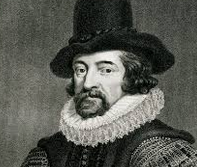
Further, it will not be amiss to distinguish the three kinds and, as it were, grades of ambition in mankind. The first is of those who desire to extend their own power in their native country, a vulgar and degenerate kind. The second is of those who labor to extend the power and dominion of their country among men. This certainly has more dignity, though not less covetousness. But if a man endeavor to establish and extend the power and dominion of the human race itself over the universe, his ambition (if ambition it can be called) is without doubt both a more wholesome and a more noble thing than the other two. Now the empire of man over things depends wholly on the arts and sciences. For we cannot command nature except by obeying her.
▼
Source
source
Aphorism 129
4 months 1 week ago
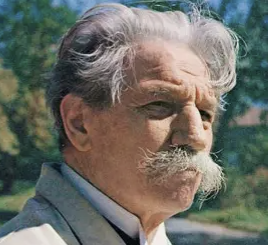
Reverence for life, veneratio vitæ, is the most direct and at the same time the profoundest achievement of my will-to-live. In reverence for life my knowledge passes into experience. The simple world- and life-affirmation which is within me just because I am will-to-live has, therefore, no need to enter into controversy with itself, if my will-to-live learns to think and yet does not understand the meaning of the world. In spite of the negative results of knowledge, I have to hold fast to world- and life-affirmation and deepen it. My life carries its own meaning in itself. This meaning lies in my living out the highest idea which shows itself in my will-to-live, the idea of reverence for life. With that for a starting-point I give value to my own life and to all the will-to-live which surrounds me, I persevere in activity, and I produce values.
7 months 1 day ago
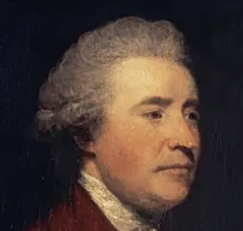
I take toleration to be a part of religion. I do not know which I would sacrifice; I would keep them both: it is not necessary that I should sacrifice either.
▼
Source
source
Speech on the Bill for the Relief of Protestant Dissenters
8 months 1 day ago
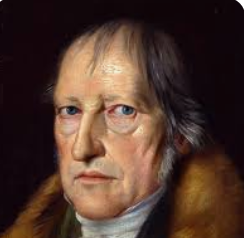
To be independent of public opinion is the first formal condition of achieving anything great or rational whether in life or in science. Great achievement is assured, however, of subsequent recognition and grateful acceptance by public opinion, which in due course will make it one of its own prejudices.
▼
Source
source
Sect. 318, as translated by T. M. Knox,, 1952
4 months 1 week ago
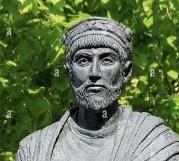
I am not indeed ignorant that certain over-wise people will call these legends "old wives' fables," and not worth listening to; but I think, for my part, that in such matters it is better to believe the testimony of nations than of those witty individuals, whose little soul is acute indeed, but has a clear insight into no one thing.

7 months 3 weeks ago
Oh. Marx's love for Shakespeare! It is well known. Chris Hani shared the same passion. I have just learned this and I like the idea. Even though Marx more often quotes Timon of Athens, the Manifesto seems to evoke or convoke, right from the start, the first coming of the silent ghost, the apparition of the spirit that does not answer, on those ramparts of Elsinore which is then the old Europe.
▼
Source
source
Injunctions of Marx
7 months 2 weeks ago
Antagoras the poet was boiling a conger, and Antigonus, coming behind him as he was stirring his skillet, said, "Do you think, Antagoras, that Homer boiled congers when he wrote the deeds of Agamemnon?" Antagoras replied, "Do you think, O king, that Agamemnon, when he did such exploits, was a peeping in his army to see who boiled congers?"
▼
Source
source
46 Antigonus I

7 months 1 week ago
Choose always the way that seems the best, however rough it may be; custom will soon render it easy and agreeable.
▼
Source
source
As quoted in A Dictionary of Thoughts: Being a Cyclopedia of Laconic Quotations from the Best Authors of the World, both Ancient and Modern (1908) by Tyron Edwards, p. 101
9 months 1 day ago
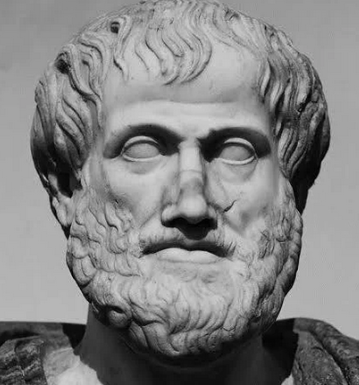
Since... nature is a principle of motion and mutation... it is necessary that we should not be ignorant of what motion is... But motion appears to belong to things continuous; and the infinite first presents itself to the view in that which is continuous. ...Frequently ...those who define the continuous, employ the nature or the infinite, as if that which is divisible to infinity is continuous.
8 months 3 days ago
The deceiver is really the fool.
▼
Source
source
Kant, Immanuel (1996), page 101

8 months 2 weeks ago
Now, as the Word of God is the Son of God, so the love of God is the Holy Spirit.
▼
Source
source
Art. 8

6 months 3 weeks ago
Perhaps misguided moral passion is better than confused indifference.
▼
Source
source
The Book and the Brotherhood (1987) p. 248.

5 months 1 week ago
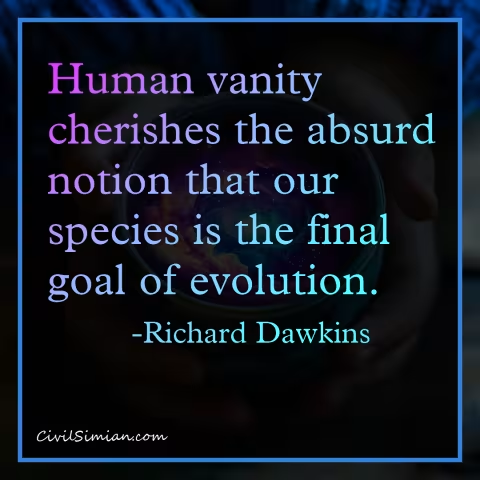
Darwinist thinkers such as Richard Dawkins and Daniel Dennett are militant opponents of Christianity. Yet their atheism and humanism are versions of Christian concepts. As a defender of Darwinism, Dawkins is committed to the view that humans are like other animal species in being 'gene machines' ruled by the laws of natural selection. He asserts nevertheless that humans, uniquely, can defy these natural laws: 'We, alone on earth, can rebel against the tyranny of the selfish replicators.' In affirming human uniqueness in this way, Dawkins relies on a Christian world-view.
▼
Source
source
Post-Apocalypse: After Secularism (pp. 265-6)
9 months 1 day ago
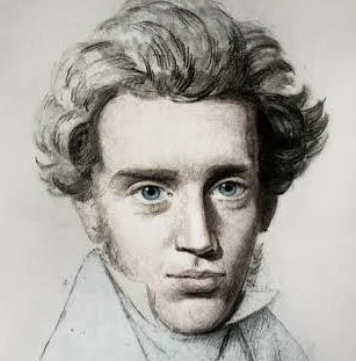
An old proverb fetched from the outward and visible world says: "Only the man that works gets the bread." Strangely enough this proverb does not aptly apply in that world to which it expressly belongs. For the outward world is subjected to the law of imperfection, and again and again the experience is repeated that he too who does not work gets the bread, and that he who sleeps gets it more abundantly than the man who works. In the outward world everything is made payable to the bearer, this world is in bondage to the law of indifference, and to him who has the ring, the spirit of the ring is obedient, whether he be Noureddin or Aladdin, and he who has the world's treasure, has it, however he got it.
7 months 4 weeks ago
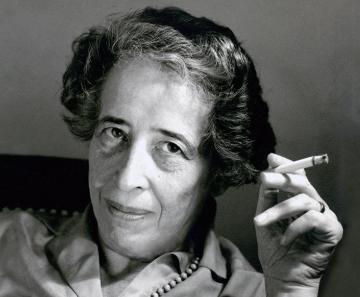
The ideal subject of totalitarian rule is not the convinced Nazi or the convinced Communist, but people for whom the distinction between fact and fiction (i.e., the reality of experience) and the distinction between true and false (i.e., the standards of thought) no longer exist.
▼
Source
source
Part 3, Ch. 13, § 3
8 months 4 weeks ago
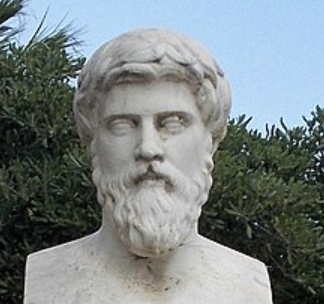
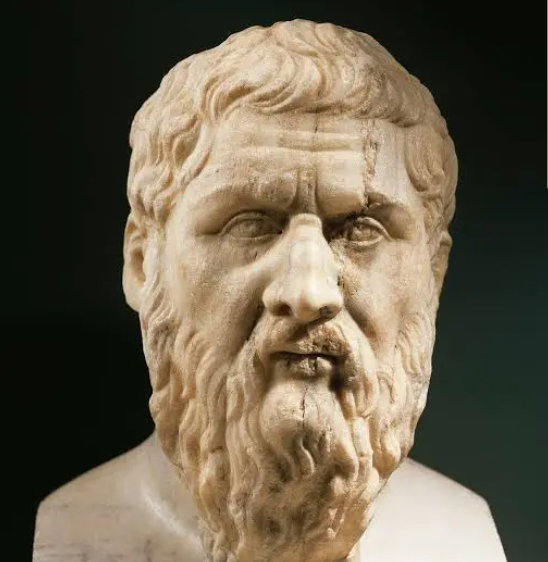
Parnenides: When there is a number of things which seem to you to be great, you may think, as you look at them all, that there is one and the same idea in them, and hence you think the great is one. But if with your mind's eye you regard the absolute great and these many great things in the same way, will not another great appear beyond, by which all these must appear to be great?
3 months 3 weeks ago
Soon you will have forgotten the world, and soon the world will have forgotten you.
▼
Source
source
VII, 21
4 months ago
Blest is that nation whose silent course of happiness furnishes nothing for history to say.
▼
Source
source
Letter to Count Diodati

6 months 2 weeks ago
The capacity to give one's attention to a sufferer is a very rare and difficult thing; it is almost a miracle; it is a miracle. Nearly all those who think they have this capacity do not possess it. Warmth of heart, impulsiveness, pity are not enough.
4 months ago
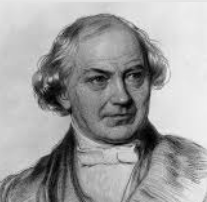
Philological analogies are to be preserved if possible, but modified according to scientific convenience.
9 months 3 days ago
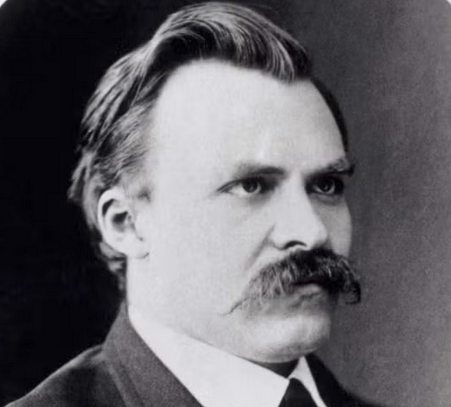
These people who have fled inward for their freedom also have to live outwardly, become visible, let themselves be seen; they are united with mankind through countless ties of blood, residence, education, fatherland, chance, the importunity of others; they are likewise presupposed to harbour countless opinions simply because these are the ruling opinions of the time; every gesture which is not clearly a denial counts as agreement.

8 months 1 day ago
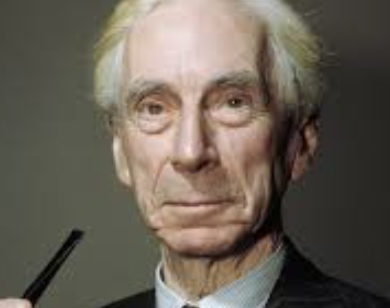
It is said (I do not know with what truth) that a certain Hindu thinker believed the earth to rest upon an elephant. When asked what the elephant rested upon, he replied that it rested upon a tortoise. When asked what the tortoise rested upon, he said, "I am tired of this. Suppose we change the subject." This illustrates the unsatisfactory character of the First-Cause argument.
▼
Source
source
"Is There a God?", 1952
7 months 3 weeks ago
Your questions refer to words; so I have to talk about words. You say: The point isn't the word, but its meaning, and you think of the meaning as a thing of the same kind as the word, though also different from the word. Here the word, there the meaning.
▼
Source
source
§ 120

4 months 3 weeks ago
The election... on November 3 ... illustrates a lot of these clashing forces. ..That election was the most important political fight ...in my lifetime. It's important not just for the United States but... for the rest of the world, given the role that the United States has historically played in maintaining that broader liberal international order.
▼
Source
source
20:56

6 months 4 weeks ago
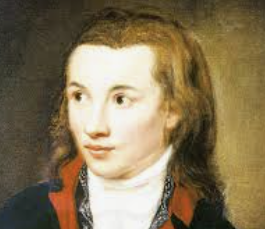
Every beloved object is the center point of a paradise.
▼
Source
source
Fragment No. 51; Jeder geliebte Gegenstand ist der Mittelpunkt eines Paradieses. Variant translations:
3 months 2 weeks ago
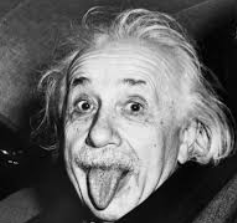
But what can be the attraction of getting to know such a tiny section of nature thoroughly, while one leaves everything subtler and more complex shyly and timidly alone? Does the product of such a modest effort deserve to be called by the proud name of a theory of the universe? In my belief the name is justified; for the general laws on which the structure of theoretical physics is based claim to be valid for any natural phenomenon whatsoever. With them, it ought to be possible to arrive at the description, that is to say, the theory, of every natural process, including life, by means of pure deduction, if that process of deduction were not far beyond the capacity of the human intellect. The physicist's renunciation of completeness for his cosmos is therefore not a matter of fundamental principle.
4 months ago
I hope we shall... crush in it's birth the aristocracy of our monied corporations which dare already to challenge our government to a trial of strength and bid defiance to the laws of our country.
▼
Source
source
Letter to George Logan, 1816
5 months 2 weeks ago
Time, and reflection, and discussion, have produced their natural effect on minds eminently intelligent and candid. No intermediate shades of opinion are now left. There is no twilight. The light has been divided from the darkness. Two parties are ranged in battle array against each other. There is the standard of monopoly. Here is the standard of free trade; and by the standard of free trade I pledge myself to stand firmly.
▼
Source
source
Speech in Edinburgh (2 December 1845), quoted in Speeches of the Right Honourable T. B. Macaulay, M.P. (1854), p. 423
8 months 3 days ago
Space is employed as the type even of the concept of time itself, representing it by a line, and its limits - moments - by points. Time, on the other had, approaches more to a universal and rational concept, comprising under its relations all things whatsoever, to wit, space itself, and besides, those accidents which are not comprehended in the relations of space, such as the thoughts of the soul. Again, time, besides this, though it certainly does not dictate the laws of reason, yet constitutes the principal conditions tinder favor of which the mind compares its notions according to the laws of reason. Thus, I cannot judge what is impossible except by predicating a and not-a of the same subject at the same time.
8 months 1 day ago
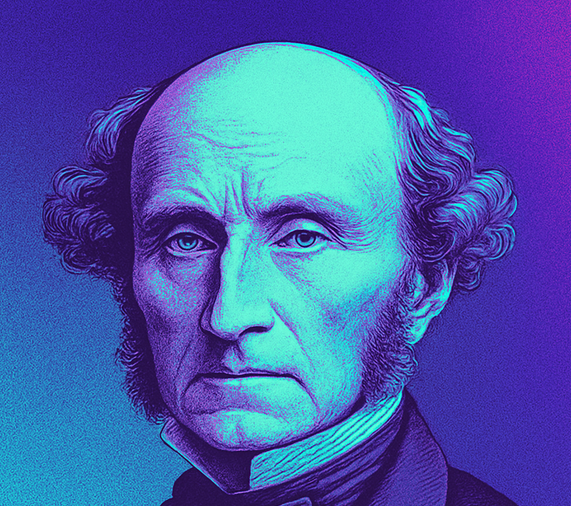
What, in unenlightened societies, colour, race, religion, or in the case of a conquered country, nationality, are to some men, sex is to all women; a peremptory exclusion from almost all honourable occupations, but either such as cannot be fulfilled by others, or such as those others do not think worthy of their acceptance.
▼
Source
source
Ch. 4
6 months 1 week ago
If it were true what in the end would be gained? Nothing but another truth. Is this such a mighty advantage? We have enough old truths still to digest, and even these we would be quite unable to endure if we did not sometimes flavor them with lies.
▼
Source
source
E 10
CivilSimian.com created by AxiomaticPanic, CivilSimian, Kalokagathia