

7 months 1 week ago
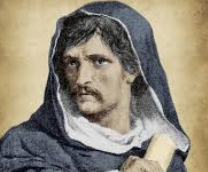
Time is the father of truth, its mother is our mind.
▼
Source
source
Quote as translated in The Encyclopedia of Religion Vol. 11 (1987), by Mircea Eliade, p. 459

8 months 2 weeks ago
Now what has been said about the Jews is also to be understood about Cahorsins, and anyone else depending upon the depravity of usury.
▼
Source
source
art. 4
6 months 3 weeks ago
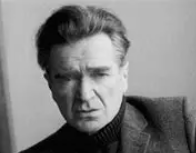
True confessions are written with tears only. But my tears would drown the world, as my inner fire would reduce it to ashes.

8 months ago
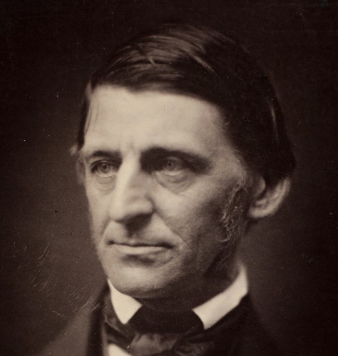
There is a kind of latent omniscience not only in every man but in every particle.
▼
Source
source
p. 263
8 months ago
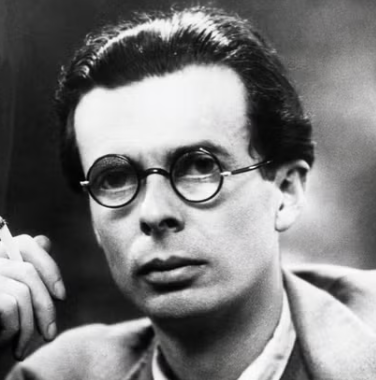
Why did it occur to anyone to believe in only one God? And conversely why did it ever occur to anyone to believe in many gods? To both these questions we must return the same answer: Because that is how the human mind happens to work. For the human mind is both diverse and simple, simultaneously many and one. We have an immediate perception of our own diversity and of that of the outside world. And at the same time we have immediate perceptions of our own oneness.
▼
Source
source
"One and Many," p. 12
5 months 4 weeks ago
There is absolutely no inevitability, so long as there is a willingness to contemplate what is happening.
▼
Source
source
[A chapter sub-heading attributed by McLuhan to Alfred North Whitehead]
8 months 2 days ago
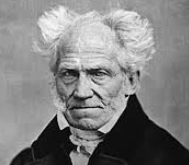
As the strata of the earth preserve in succession the living creatures of past epochs, so the shelves of libraries preserve in succession the errors of the past and their expositions, which like the former were very lively and made a great commotion in their own age but now stand petrified and stiff in a place where only the literary palaeontologist regards them.
▼
Source
source
Vol. 2 "On Books and Writing" as translated in Essays and Aphorisms (1970), as translated by R. J. Hollingdale
9 months 3 days ago
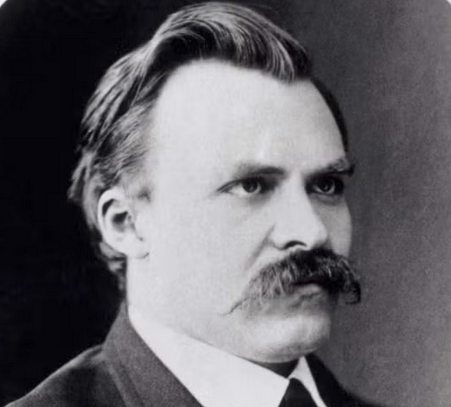
Because of the way that myth takes it for granted that miracles are always happening, the waking life of a mythically inspired people the ancient Greeks, for instance more closely resembles a dream than it does the waking world of a scientifically disenchanted thinker.
8 months 1 day ago
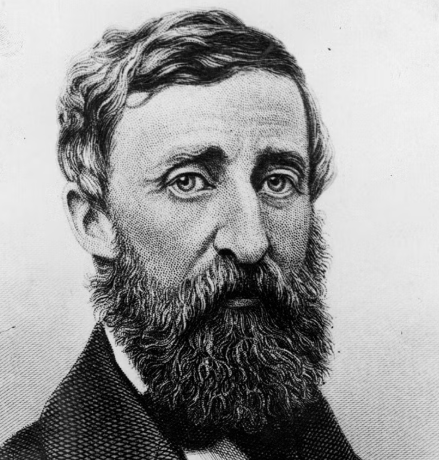
My desire for knowledge is intermittent; but my desire to bathe my head in atmospheres unknown to my feet is perennial and constant. The highest that we can attain to is not Knowledge, but Sympathy with Intelligence. I do not know that this higher knowledge amounts to anything more definite than a novel and grand surprise on a sudden revelation of the insufficiency of all that we called Knowledge before - a discovery that there are more things in heaven and earth than are dreamed of in our philosophy.
7 months 1 day ago
Only a man who is at one with the world can be at one with himself.
▼
Source
source
"Ideas," Lucinde and the Fragments, P. Firchow, trans. (1991), § 130
6 months 3 weeks ago
By capitulating to life, this world has betrayed nothingness. . . . I resign from movement, and from my dreams. Absence! You shall be my sole glory. . . . Let "desire" be forever stricken from the dictionary, and from the soul! I retreat before the dizzying farce of tomorrows. And if I still cling to a few hopes, I have lost forever the faculty of hoping.

7 months 3 weeks ago
Do the essences of proposition and of the truth determine themselves from out of the essence of the thing, or does the essence of the thing determine itself from out of the essence of the proposition? The question is posed as an either/or. However does this either/or itself suffice? Are the essence of the thing and the essence of the proposition only built as mirror images because both of them together determine themselves from out of the same but deeper lying root? However, what and where can be this common ground for the essence of the thing and of the proposition and of their origin? The unconditioned (Unbedingt)? We stated at the beginning that what conditions the essense of the thing in its thingness can no longer itself be thing and conditioned, it must be an unconditioned (Un-bedingtes).
▼
Source
source
p. 47
4 months ago
Whensoever hostile aggressions...require a resort to war, we must meet our duty and convince the world that we are just friends and brave enemies.
▼
Source
source
Letter to Andrew Jackson
6 months 3 weeks ago
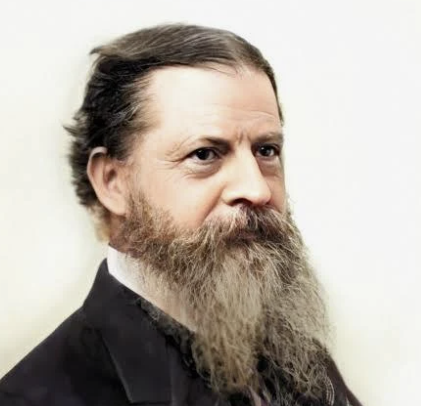
Let us not pretend to doubt in philosophy what we do not doubt in our hearts.
▼
Source
source
Vol. V, par. 265
5 months 3 weeks ago
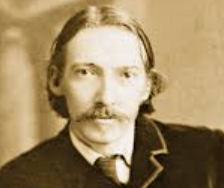
A faculty for idleness implies a catholic appetite and a strong sense of personal identity.
▼
Source
source
An Apology for Idlers.
8 months 3 weeks ago
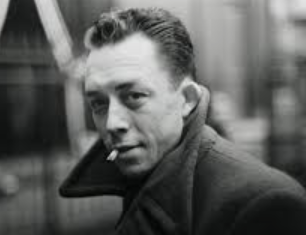
The slave begins by demanding justice and ends by wanting to wear a crown. He must dominate in his turn.
6 months ago
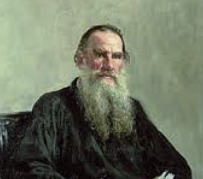
The activity of art is... as important as the activity of language itself, and as universal.

6 months 3 weeks ago
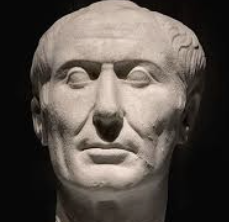
Freed from the sublimated form which was the very token of its irreconcilable dreams-a form which is the style, the language in which the story is told-sexuality turns into a vehicle for the bestsellers of oppression. ... This society turns everything it touches into a potential source of progress and of exploitation, of drudgery and satisfaction, of freedom and of oppression. Sexuality is no exception.
▼
Source
source
pp. 77-78
5 months 4 weeks ago
Every one excels in something in which another fails.
▼
Source
source
Maxim 17
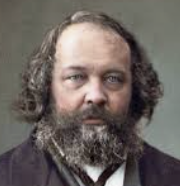
6 months 4 weeks ago
We must make a very precise distinction between the official and consequently dictatorial prerogatives of society organized as a state, and of the natural influence and action of the members of a non-official, non-artificial society.
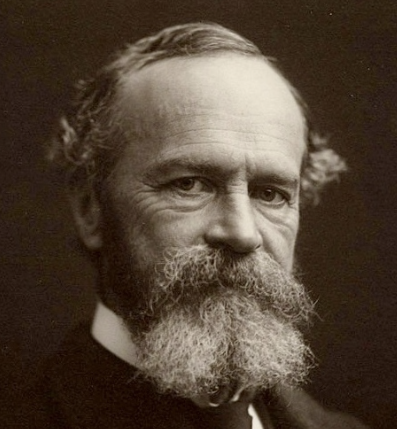
8 months ago
What we really need the poet's and orator's help to keep alive in us is not, then, the common and gregarious courage which Robert Shaw showed when he marched with you, men of the Seventh Regiment. It is that more lonely courage which he showed when he dropped his warm commission in the glorious Second to head your dubious fortunes, negroes of the Fifty-fourth. That lonely kind of courage (civic courage as we call it in times of peace) is the kind of valor to which the monuments of nations should most of all be reared.
▼
Source
source
Robert Gould Shaw: Oration upon the Unveiling of the Shaw Monument, 31 May 1897
5 months 4 weeks ago
Man in the electronic age has no possible environment except the globe and no possible occupation except information-gathering.
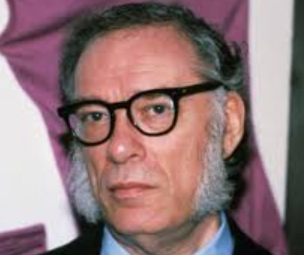
8 months 4 weeks ago
The Dantean conceptions of Inferno were childish and unworthy of the Divine imagination: fire and torture. Boredom is much more subtle. The inner torture of a mind unable to escape itself in any way, condemned to fester in its own exuding mental pus for all time, is much more fitting. Oh, yes, my friend, we have been judged, and condemned, too, and this is not Heaven, but hell.

7 months 4 weeks ago
What can you ever really know of other people's souls - of their temptations, their opportunities, their struggles? One soul in the whole creation you do know: and it is the only one whose fate is placed in your hands. If there is a God, you are, in a sense, alone with Him. You cannot put Him off with speculations about your next door neighbours or memories of what you have read in books.
▼
Source
source
Book IV, Chapter 10, "Nice People or New Men"
6 months 3 weeks ago
Loren von Stein thus turned the dialectic into an ensemble of objective laws calling for social reform as the adequate solution of all contradictions and neutralized the critical elements of the dialectic.
▼
Source
source
P. 388
4 months 1 day ago
Beauty is merciless. You do not look at it, it looks at you and does not forgive.
8 months 3 days ago
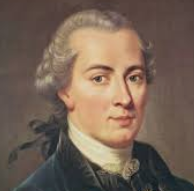
A public can only arrive at enlightenment slowly. Through revolution, the abandonment of personal despotism may be engendered and the end of profit-seeking and domineering oppression may occur, but never a true reform of the state of mind. Instead, new prejudices, just like the old ones, will serve as the guiding reins of the great, unthinking mass. All that is required for this enlightenment is freedom; and particularly the least harmful of all that may be called freedom, namely, the freedom for man to make public use of his reason in all matters. But I hear people clamor on all sides: Don't argue! The officer says: Don't argue, drill! The tax collector: Don't argue, pay! The pastor: Don't argue, believe!
6 months 1 week ago
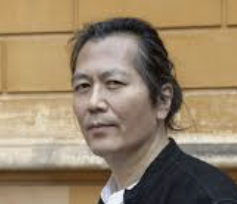
Enlightenment is an awakening to the everyday.
7 months 4 weeks ago
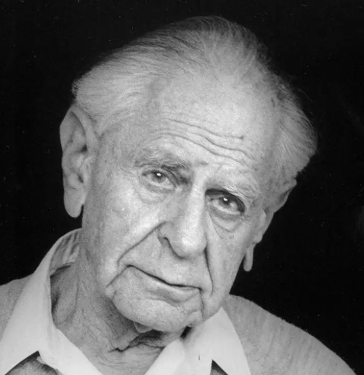
Put in a nut-shell, my thesis amounts to this. The repeated attempts made by Rudolf Carnap to show that the demarcation between science and metaphysics coincides with that between sense and nonsense have failed. The reason is that the positivistic concept of 'meaning' or 'sense' (or of verifiability, or of inductive confirmability, etc.) is inappropriate for achieving this demarcation - simply because metaphysics need not be meaningless even though it is not science. In all its variations demarcation by meaninglessness has tended to be at the same time too narrow and too wide: as against all intentions and all claims, it has tended to exclude scientific theories as meaningless, while failing to exclude even that part of metaphysics which is known as 'rational theology'.
▼
Source
source
Ch 11. "The Demarcation between Science and Metaphysics." (Summary, p. 253)
8 months 1 day ago
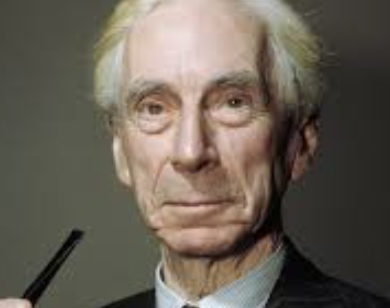
If human nature were unchangeable, as ignorant people still suppose it to be, the situation would indeed be hopeless.
▼
Source
source
Ch. 17: Some Prospects: Cheerful and Otherwise
4 months ago
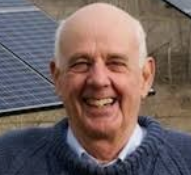
There's far too much generalization now about rural America. Conservatives and corporations have had their eye on rural America all along. And they've been turning it into money as fast as they can, which is to say destroying the land and the people...

4 months 1 week ago
Bacon, Locke, Descartes, Hume, and all the others knew they were giving rights to vulgarity. But in so doing-in addition to caring for man's well-being-they were providing rights for themselves.
▼
Source
source
"Commerce and Culture," p. 289.
4 months 2 weeks ago
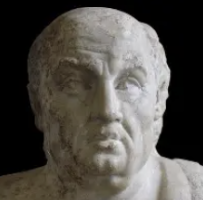
Dumb creatures have not human feelings, but have certain impulses which resemble them: for if it were not so, if they could feel love and hate, they would likewise be capable of friendship and enmity, of disagreement and agreement. Some traces of these qualities exist even in them, though properly all of them, whether good or bad, belong to the human breast alone.
8 months 1 week ago
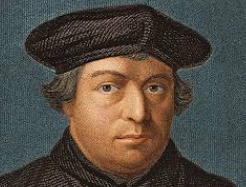
And I myself, in Rome, heard it said openly in the streets, "If there is a hell, then Rome is built on it." That is, "After the devil himself, there is no worse folk than the pope and his followers."
▼
Source
source
Against the Roman Papacy, An Institution of the Devil
6 months 3 weeks ago
My mission is to see things as they are. Exactly the contrary of a mission.
4 months 3 weeks ago
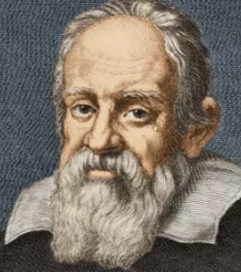
If what we are discussing were a point of law or of the humanities, in which neither true nor false exists, one might trust in subtlety of mind and readiness of tongue and in the greater experience of the writers, and expect him who excelled in those things to make his reasoning most plausible, and one might judge it to be the best. But in the natural sciences, whose conclusions are true and necessary and have nothing to do with human will, one must take care not to place oneself in the defense of error; for here a thousand Demostheneses and a thousand Aristotles would be left in the lurch by every mediocre wit who happened to hit upon the truth for himself. Therefore, Simplicio, give up this idea and this hope of yours that there may be men so much more learned, erudite, and well-read than the rest of us as to be able to make that which is false become true in defiance of nature.
▼
Source
source
Salviati, p. 61
6 months 1 week ago
The spirit of a production-centered, commodity-greedy society is such that only the non-conformist can defend himself sufficiently against it. Those who are seriously concerned with love as the only rational answer to the problem of human existence must, then, arrive at the conclusion that important and radical changes in our social structure are necessary, if love is to become a social and not a highly individualistic, marginal phenomenon.
8 months 3 days ago
In man (as the only rational creature on earth) those natural capacities which are directed to the use of his reason are to be fully developed only in the race, not in the individual.
▼
Source
source
Second Thesis

7 months 1 day ago
Think of something finite molded into the infinite, and you think of man.
▼
Source
source
"Selected Ideas (1799-1800)", Dialogue on Poetry and Literary Aphorisms, Ernst Behler and Roman Struc, trans. (1968) #98

7 months 2 weeks ago
Disease of the home and of the life comes about in the same way as that of the body.
▼
Source
source
Freeman (1948), p. 170 Variant: Disease occurs in a household, or in a life, just as it does in a body.
4 months ago
All hypotheses respecting the manner in which the elements of inorganic bodies are arranged in space, must be constructed with regard to the general facts of crystallization.
7 months 3 weeks ago
With an ill-famed man form no connection.
8 months 1 day ago
The old often envy the young; when they do, they are apt to treat them cruelly.
7 months 3 weeks ago
I am not adverting here to the alleged privacy of experience to its possessor. The point of view in question is not one accessible only to a single individual. Rather it is a type. It is often possible to take up a point of view other than one's own, so the comprehension of such facts is not limited to one's own case. There is a sense in which phenomenological facts are perfectly objective: one person can know or say of another what the quality of the other's experience is. They are subjective, however, in the sense that even this objective ascription of experience is possible only for someone sufficiently similar to the object of ascription to be able to adopt his point of view - to understand the ascription in the first person as well as in the third, so to speak. The more different from oneself the other experiencer is, the less success one can expect with this enterprise.
▼
Source
source
pp. 171-172
6 months 2 weeks ago
When I speak of 'negative dialectics' not the least important reason for doing so is my desire to dissociate myself from this fetishization of the positive.
▼
Source
source
p. 18
8 months 4 weeks ago
Now in this island of Atlantis there was a great and wonderful empire which had rule over the whole island and several others, and over parts of the continent and, furthermore, the men of Atlantis had subjected the parts of Libya within the columns of Heracles as far as Egypt, and of Europe as far as Tyrrhenia. This vast power, gathered into one, endeavored to subdue at a blow our country and yours and the whole of the region within the straits, and then, Solon, your country shone forth, in the excellence of her virtue and strength, among all mankind.
8 months 4 days ago
Extreme pride or dejection indicates extreme ignorance of self.
▼
Source
source
Part IV, Prop. LV
CivilSimian.com created by AxiomaticPanic, CivilSimian, Kalokagathia