

6 months 1 week ago
The evolutionary urge drives man to seek for intenser forms of fulfillment, since his basic urge is for more life, more consciousness, and this contentment has an air of stagnation that the healthy mind rejects. (This recognition lies at the centre of my own 'outsider theory': that there are human beings to whom comfort means nothing, but whose happiness consists in following an obscure inner-drive, an 'appetite for reality'.)
▼
Source
source
p. 32
6 months 3 weeks ago
Wherever big industries displaced manufacture, the bourgeoisie developed in wealth and power to the utmost and made itself the first class of the country. The result was that wherever this happened, the bourgeoisie took political power into its own hands and displaced the hitherto ruling classes, the aristocracy, the guildmasters, and their representative, the absolute monarchy. The bourgeoisie annihilated the power of the aristocracy, the nobility, by abolishing the entailment of estates - in other words, by making landed property subject to purchase and sale, and by doing away with the special privileges of the nobility. It destroyed the power of the guildmasters by abolishing guilds and handicraft privileges. In their place, it put competition - that is, a state of society in which everyone has the right to enter into any branch of industry, the only obstacle being a lack of the necessary capital.


8 months 1 day ago
The same law that shapes the earth-star shapes the snow-star. As surely as the petals of a flower are fixed, each of these countless snow-stars comes whirling to earth...these glorious spangles, the sweeping of heaven's floor.
▼
Source
source
January 5, 1856
4 months 2 weeks ago
Man with the great M is only an ideal, the species only something thought of.
▼
Source
source
Dover 2005, p. 182
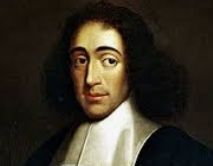
8 months 4 days ago
Nature is satisfied with little; and if she is, I am also.
▼
Source
source
As quoted in The Story of Philosophy (1933) by Will Durant, p. 176

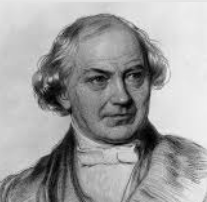
4 months ago
According to the technical language of old writers, a thing and its qualities are described as subject and attributes; and thus a man's faculties and acts are attributes of which he is the subject. The mind is the subject in which ideas inhere. Moreover, the man's faculties and acts are employed upon external objects; and from objects all his sensations arise. Hence the part of a man's knowledge which belongs to his own mind, is subjective: that which flows in upon him from the world external to him, is objective.
▼
Source
source
Part I Of Ideas, Book I Of Ideas in General, Chap. 4 Of the Difference and Opposition of Sensation and Ideas
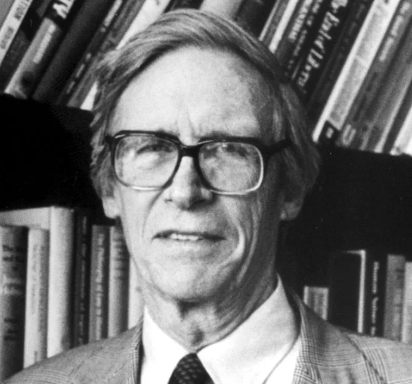
7 months 4 weeks ago
An intuitionist conception of justice is, one might say, but half a conception.
▼
Source
source
Chapter I, Section 8, pg. 41
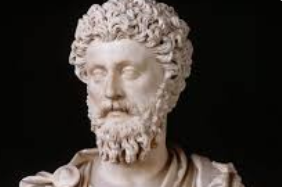
3 months 3 weeks ago
Give thyself time to learn something new and good, and cease to be whirled around.
▼
Source
source
II, 7
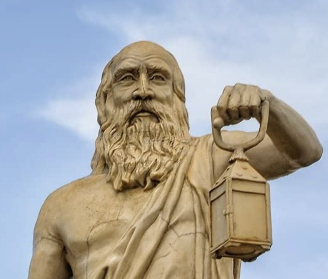
7 months 2 weeks ago
He once begged alms of a statue, and, when asked why he did so, replied, "To get practice in being refused."
▼
Source
source
Diogenes Laërtius, vi. 49

5 months 1 week ago
With new technologies of surveillance, economies of scale overcome problems of cost. Since all their electronic communications can be accessed, it is no longer necessary to segregate the inmates from one another. As there is no outside world, escape becomes unimaginable. Technological progress has brought into being a system of surveillance more far-reaching than any Bentham could have conceived. Enclosing the entire population in a virtual Panopticon might seem the ultimate invasion of freedom. But universal confinement need not be experienced as a privation. If they know nothing else, most are likely to accept it as normal. If the technology through which surveillance operates also provides continuous entertainment, they may soon find any other way of living intolerable.
▼
Source
source
In the Puppet Theatre: A Universal Panopticon (p. 125)
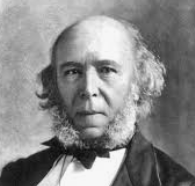
7 months ago
People ... become so preoccupied with the means by which an end is achieved, as eventually to mistake it for the end. Just as money, which is a means of satisfying wants, comes to be regarded by a miser as the sole thing to be worked for, leaving the wants unsatisfied; so the conduct men have found preferable because most conducive to happiness, has come to be thought of as intrinsically preferable: not only to be made a proximate end (which it should be), but to be made an ultimate end, to the exclusion of the true ultimate end.
▼
Source
source
Ethics (New York:1915), § 14, pp. 38-39

7 months 4 weeks ago
The totalitarian movements aim at and succeed in organizing masses-not classes, like the old interest parties of the Continental nation-states; not citizens with opinions about, interests in, the handling of public affairs, like the parties of Anglo-Saxon countries.
▼
Source
source
Part 3, Ch. 10
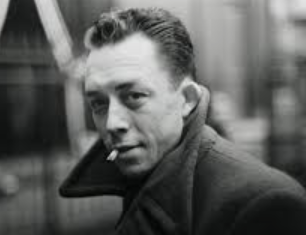
8 months 3 weeks ago
Perhaps we cannot prevent this world from being a world in which children are tortured. But we can reduce the number of tortured children. And if you don't help us, who else in the world can help us do this?
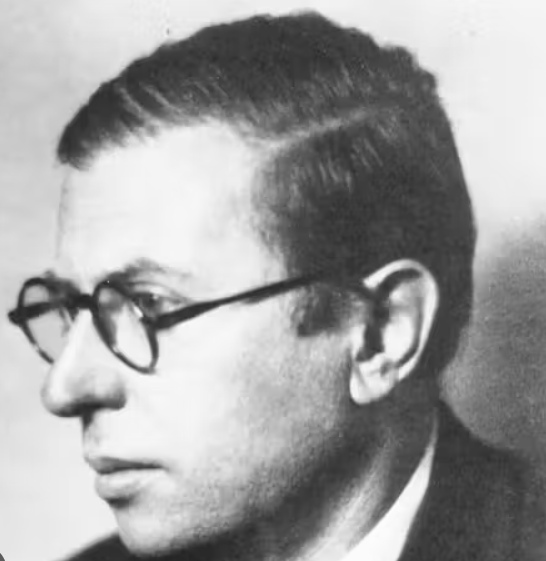
7 months 4 weeks ago
Man is condemned to be free; because once thrown into the world, he is responsible for everything he does.
6 months 2 weeks ago
Whoever is versed in the jargon does not have to say what he thinks, does not even have to think it properly. The jargon takes over this task.
▼
Source
source
p. 9

7 months 2 weeks ago
As we speak cruel time is fleeing. Seize the day, believing as little as possible in the morrow.
▼
Source
source
Book I, ode xi, line 7
8 months 1 week ago
The world's a bubble, and the life of man Less than a span.
6 months 3 days ago
Descartes may have made a lot of mistakes, but he was right about this: you cannot doubt the existence of your own consciousness. That's the first feature of consciousness, it's real and irreducible. You cannot get rid of it by showing that it's an illusion in a way that you can with other standard illusions.
9 months 3 days ago
Forgetting our intentions is the most frequent of all acts of stupidity.
6 months 3 weeks ago
The world is not divine sport, it is divine destiny. There is divine meaning in the life of the world, of man, of human persons, of you and of me. Creation happens to us, burns itself into us, recasts us in burning - we tremble and are faint, we submit. We take part in creation, meet the Creator, reach out to Him, helpers and companions.

4 months 1 week ago
Man is constituted as a speculative being; he contemplates the world, and the objects around him, not with a passive indifferent eye, but as a system disposed with order and design.
5 months 2 weeks ago
What could be a better indication of man's continued dependence on nature than the fact that today's so-called post-industrial societies satisfy most of their food needs through imports from so-called underdeveloped countries?
▼
Source
source
Staying Alive: Women, Ecology, and Development
7 months 4 weeks ago
I think of death only with tranquility, as an end. I refuse to let death hamper life. Death must enter life only to define it.

5 months 3 weeks ago
I'm delighted to hear someone make the claim that there is moral progress because it can be such a incendiary thing to say, and its something that I say and deeply believe in.
7 months 1 day ago
Circumstances (which with some gentlemen pass for nothing) give in reality to every political principle its distinguishing colour, and discriminating effect. The circumstances are what render every civil and political scheme beneficial or noxious to mankind.
8 months ago
Poetry teaches the enormous force of a few words, and, in proportion to the inspiration, checks loquacity.
▼
Source
source
Parnassus (1874) Preface
4 months 2 weeks ago
Mucius might have accomplished something more successful in that camp, but never anything more brave.

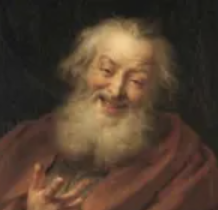
7 months 2 weeks ago
There are two forms of knowledge, one genuine, one obscure. To the obscure belong all of the following: sight, hearing, smell, taste, feeling. The other form is the genuine, and is quite distinct from this. [And then distinguishing the genuine from the obscure, he continues:] Whenever the obscure [way of knowing] has reached the minimum sensibile of hearing, smell, taste, and touch, and when the investigation must be carried farther into that which is still finer, then arises the genuine way of knowing, which has a finer organ of thought.
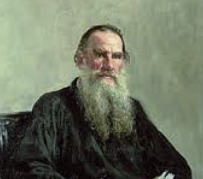
6 months ago
And so the arbitrary union of three incommensurate, mutually disconnected concepts became the basis of a bewildering theory... [by which] one of the lowest renderings of art, art for mere pleasure - against which all of the master teachers warned - was idealized as the ultimate in art.
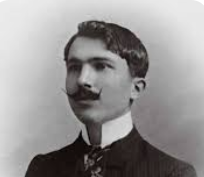
4 months 1 day ago
You are not free. Myriad invisible hands hold your hands and direct them. When you rise in anger, a great-grandfather froths at your mouth; when you make love, an ancestral caveman growls with lust; when you sleep, tombs open in your memory till your skull brims with ghosts.
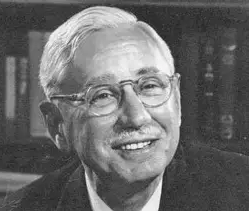
4 months 2 weeks ago
Love one another. My final lesson of history is the same as that of Jesus. You may think that's a lot of lollipop but just try it. Love is the most practical thing in the world. If you take an attitude of love toward everybody you meet, you'll eventually get along. When asked, at the age of 92, if he could summarize the lessons of history into a single sentence.
▼
Source
source
As quoted in "Durants on History from the Ages, with Love," by Pam Proctor, Parade (6 August 1978) p. 12.
6 months 2 weeks ago
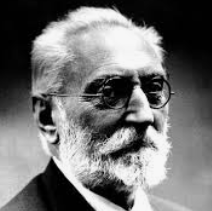
And yet this might not necessarily involve the conversion of the Trinity into a Quaternity. If... in Greek, spirit, instead of being neuter had been feminine, who can say that the Virgin Mary might not already have become an incarnation or humanization of the Holy Spirit? ...And thus a dogmatic evolution would have been effected parallel to that of the divinization of Jesus, the Son, and his identification with the Word.
8 months 1 day ago
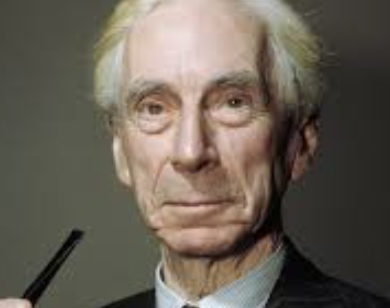
One of the symptoms of approaching nervous breakdown is the belief that one's work is terribly important, and that to take a holiday would bring all kinds of disaster. If I were a medical man, I should prescribe a holiday to any patient who considered his work important.
4 months 1 week ago
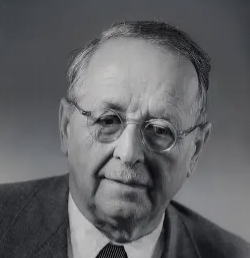
Important though the general concepts and propositions may be with which the modern industrious passion for axiomatizing and generalizing has presented us, in algebra perhaps more than anywhere else, nevertheless I am convinced that the special problems in all their complexity constitute the stock and core of mathematics; and to master their difficulties requires on the whole the harder labor.
▼
Source
source
The Classical Groups
6 months 3 weeks ago
My mission is to suffer for all those who suffer without knowing it. I must pay for them, expiate their unconsciousness, their luck to be ignorant of how unhappy they are.
7 months 5 days ago
When shall we see poets born? After a time of disasters and great misfortunes, when harrowed nations begin to breathe again. And then, shaken by the terror of such spectacles, imaginations will paint things entirely strange to those who have not witnessed them.
7 months 2 weeks ago
The Athenians are right to accept advice from anyone, since it is incumbent on everyone to share in that sort of excellence, or else there can be no city at all.
▼
Source
source
As quoted in Protagoras by Plato
6 months 2 weeks ago
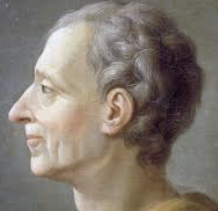
The Spirit of the Laws became the nobleman's Bible all over Europe.
▼
Source
source
Catherine Behrens, The Ancien Régime (1967), p. 78
5 months 1 week ago
As the Genesis story teaches, knowledge cannot save us from ourselves. If we know more than before, it means only that we have greater scope to enact our fantasies. But - as the Genesis myth also teaches - there is no way we can rid ourselves of what we know. If we try to regain a state of innocence, the result can only be a worse madness. The message of Genesis is that in the most vital areas of human life there can be no progress, only an unending struggle with our own nature.
▼
Source
source
An Old Chaos: Humanism and Flying Saucers (pp. 79-80)
6 months 3 weeks ago
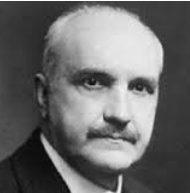
Our dignity is not in what we do, but in what we understand. The whole world is doing things.
▼
Source
source
p. 199
4 months 1 week ago
Woe to that nation whose literature is disturbed by the intervention of power. Because that is not just a violation against "freedom of print", it is the closing down of the heart of the nation, a slashing to pieces of its memory. The nation ceases to be mindful of itself, it is deprived of its spiritual unity, and despite a supposedly common language, compatriots suddenly cease to understand one another Woe to that nation whose literature is cut short by the intrusion of force. This is not merely interference with freedom of the press but the sealing up of a nation's heart, the excision of its memory.
▼
Source
source
Variant translation, as quoted in TIME
8 months ago
That what we seek we shall find; what we flee from flees from us.
▼
Source
source
Fate
CivilSimian.com created by AxiomaticPanic, CivilSimian, Kalokagathia