


8 months ago
All the great speakers were bad speakers at first.
▼
Source
source
Power
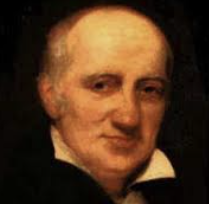
6 months 4 weeks ago
To conceive that compulsion and punishment are the proper means of reformation, is the sentiment of a barbarian; civilisation and science are calculated to explode so ferocious an idea. It was once universally admitted and approved; it is now necessarily upon the decline.
▼
Source
source
Vol. 2, bk. 7, ch. 5


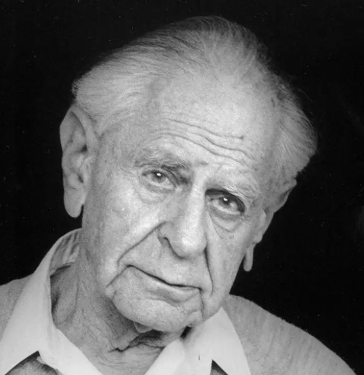
7 months 4 weeks ago
In speaking of sociological laws or natural laws of social life I have in mind such laws as are formulated by modern economic theories, for instance, the theory of international trade, or the theory of the trade cycle. These and other important sociological laws are connected with the functioning of social institutions. These laws play a role in our social life corresponding to the role played in mechanical engineering by, say, the principle of the lever. For institutions, like levers, are needed if we want to achieve anything which goes beyond the power of our muscles. Like machines, institutions multiply our power for good or evil. Like machines, they need intelligent supervision by someone who understands their way of functioning and, most of all, their purpose, since we cannot build them so that they work entirely automatically.
▼
Source
source
Karl Popper, The Open Society and its Enemies, Vol I Plato Chapter 5: Nature and Convention. P. 67
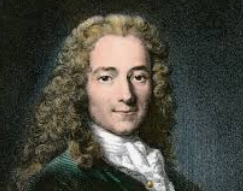
8 months 2 days ago
The man, who in a fit of melancholy, kills himself today, would have wished to live had he waited a week.
▼
Source
source
"Cato", 1764
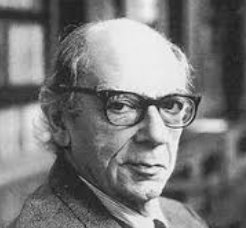
6 months 3 weeks ago
By freedom he meant a condition in which men were not prevented from choosing both the object and the manner of their worship. For him only a society in which this condition was realised could be called fully human. Its realisation was an ideal which Mill regarded as more precious than life itself.
4 months 2 weeks ago
Because the Egoist is to himself the warder of the human, and has nothing to say to the state except: "Get out of my sunshine!"
▼
Source
source
Tucker 1907, p. 307
8 months 1 week ago
Alonso of Aragon was wont to say in commendation of age, that age appears to be best in four things - old wood best to burn, old wine to drink, old friends to trust, and old authors to read.
▼
Source
source
No. 97

4 months 3 weeks ago
In situations of de facto diversity, attempts to impose a single way of life on an entire population is a formula for dictatorship.
8 months 2 days ago
That the outer man is a picture of the inner, and the face an expression and revelation of the whole character, is a presumption likely enough in itself, and therefore a safe one to go on; borne out as it is by the fact that people are always anxious to see anyone who has made himself famous .... Photography ... offers the most complete satisfaction of our curiosity.
▼
Source
source
Vol. 2, Ch. 29, § 377
5 months 4 weeks ago
Any new technology is an evolutionary and biological mutation opening doors of perception and new spheres of action to mankind.
▼
Source
source
(p. 67)
6 months 2 weeks ago
The science of pure mathematics, in its modern developments, may claim to be the most original creation of the human spirit.
▼
Source
source
Ch. 2: "Mathematics as an Element in the History of Thought", p. 28

4 months ago
The liberty of the whole earth was depending on the issue of the contest, and was ever such a prize won with so little innocent blood? My own affections have been deeply wounded by some of the martyrs to this cause, but rather than it should have failed, I would have seen half the earth desolated. Were there but an Adam & an Eve left in every country, & left free, it would be better than as it now is.
▼
Source
source
Letter to William Short (January 3, 1793), quoted in Stanley Elkins and Eric McKitrick, The Age of Federalism (1995), pp. 316-317
4 months 2 weeks ago
India was the motherland of our race, and Sanskrit the mother of Europe's languages: she was the mother of our philosophy; mother, through the Arabs, of much of our mathematics; mother, through the Buddha, of the ideals embodied in Christianity; mother, through the village community, of self-government and democracy. Mother India is in many ways the mother of us all.
6 months ago
How good is it to remember one's insignificance: that of a man among billions of men, of an animal amid billions of animals; and one's abode, the earth, a little grain of sand in comparison with Sirius and others, and one's life span in comparison with billions on billions of ages. There is only one significance, you are a worker. The assignment is inscribed in your reason and heart and expressed clearly and comprehensibly by the best among the beings similar to you. The reward for doing the assignment is immediately within you. But what the significance of the assignment is or of its completion, that you are not given to know, nor do you need to know it. It is good enough as it is. What else could you desire?
▼
Source
source
Last Diaries (1979) edited by Leon Stilman, p. 77
6 months 3 weeks ago
The State is always, whatever be its form - primitive, ancient, medieval, modern - an invitation issued by one group of men to other human groups to carry out some enterprise in common. That enterprise, be its intermediate processes what they may, consists in the long run in the organisation of a certain type of common life. ... [As Renan says,] "To have common glories in the past, a common will in the present; to have done great things together; to wish to do greater; these are the essential conditions which make up a people.... In the past, an inheritance of glories and regrets; in the future, one and the same programme to carry out.... The existence of a nation is a daily plebiscite."
▼
Source
source
Chapter XIV: Who Rules The World?
5 months 4 weeks ago
New technological environments are commonly cast in the molds of the preceding technology out of the sheer unawareness of their designers.
▼
Source
source
(p. 47)

6 months 1 week ago
The basic paradox about sex is that it always seems to be offering more than it can deliver. A glimpse of a girl undressing through a lighted bedroom window induces a vision of ecstatic delight, but in the actual process of persuading the girl into bed, the vision somehow evaporates.
▼
Source
source
p. 16
5 months 4 weeks ago
Physiologically, man in the normal use of technology (or his variously extended body) is perpetually modified by it and in turn finds ever new ways of modifying his technology. Man becomes, as it were, the sex organs of the machine world, as the bee of the plant world, enabling it to fecundate and to evolve ever new forms. The machine world reciprocates man's love by expediting his wishes and desires, namely, in providing him with wealth. One of the merits of motivation research has been the revelation of man's sex relation to the motorcar.
▼
Source
source
(p.46)
6 months 3 weeks ago
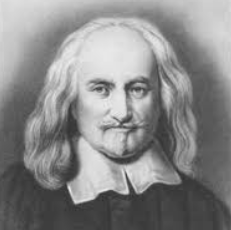
And because the condition of Man, (as hath been declared in the precedent Chapter) is a condition of Warre of every one against everyone; in which case every one is governed by his own Reason; and there is nothing he can make use of, that may not be a help unto him, in preserving his life against his enemyes; It followeth, that in such a condition, every man has a Right to every thing; even to one anothers body.
▼
Source
source
The First Part, Chapter 14, p. 64

8 months 2 weeks ago
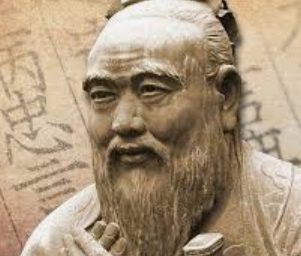
The superior man, even when he is not moving, has a feeling of reverence, and while he speaks not, he has the feeling of truthfulness.

4 months 3 weeks ago
Not only was Thebes built by the music of an Orpheus; but without the music of some inspired Orpheus was no city ever built, no work that man glories-in ever done.
▼
Source
source
Bk. III, ch. 8.
4 months 2 weeks ago
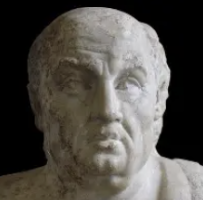
He maintained this attitude up to the very end, and no man ever saw Socrates too much elated or too much depressed. Amid all the disturbance of Fortune, he was undisturbed.
7 months 3 weeks ago
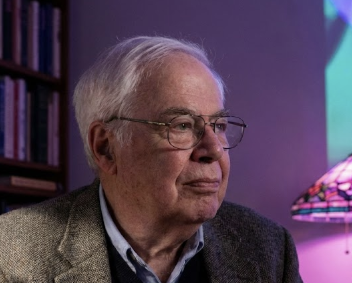
From Richard McKeon and Robert Brumsbaugh I learned to view the history of philosophy as a series, not of alternative solutions to the same problems, but of quite different sets of problems. From Rudolph Carnap and Carl Hempel I learned how pseudo-problems could be revealed as such by restarting them in the formal mode of speech. From Charles Hartshorne and Paul Weiss I learned how they could be so revealed by being translated into Whiteheadian or Hegelian terms.
▼
Source
source
Preface
7 months ago
Ethical ideas and sentiments have to be considered as parts of the phenomena of life at large. We have to deal with man as a product of evolution, with society as a product of evolution, and with moral phenomena as products of evolution.
▼
Source
source
Ch. 1, Introductory
4 months 3 weeks ago
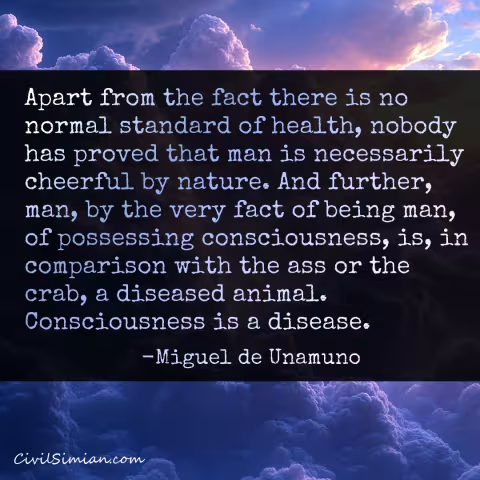
It is all work and forgotten work, this peopled, clothed, articulate-speaking, high-towered, wide-acred World. The hands of forgotten brave men have made it a World for us; they,- honour to them; they, in spite of the idle and the dastard. This English Land, here and now, is the summary of what was found of wise, and noble, and accordant with God's Truth, in all the generations of English Men. Our English Speech is speakable because there were Hero-Poets of our blood and lineage; speakable in proportion to the number of these. This Land of England has its conquerors, possessors, which change from epoch to epoch, from day to day; but its real conquerors, creators, and eternal proprietors are these following, and their representatives if you can find them: All the Heroic Souls that ever were in England, each in their degree; all the men that ever cut a thistle, drained a puddle out of England, contrived a wise scheme in England, did or said a true and valiant thing in England.
4 months 3 weeks ago
O thou who art able to write a Book, which once in the two centuries or oftener there is a man gifted to do, envy not him whom they name City-builder, and inexpressibly pity him whom they name Conqueror or City-burner! Thou too art a Conqueror and Victor; but of the true sort, namely over the Devil: thou too hast built what will outlast all marble and metal, and be a wonder-bringing City of the Mind, a Temple and Seminary and Prophetic Mount, whereto all kindreds of the Earth will pilgrim.
▼
Source
source
Bk. II, ch. 8.
8 months 1 day ago
I frequently asked myself, if I could, or if I was bound to go on living, when life must be passed in this manner. I generally answered to myself, that I did not think I could possibly bear it beyond a year.
▼
Source
source
(p. 140)
6 months 1 week ago
Do not commence your exercises in philosophy in those regions where an error can deliver you over to the executioner.
▼
Source
source
C 16
7 months 2 weeks ago
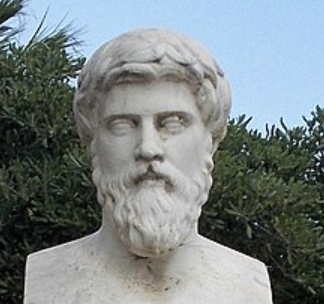
Lysander said, "Where the lion's skin will not reach, it must be pieced with the fox's."
▼
Source
source
60 Lysander
5 months 1 week ago
One might naively suppose that a negative utilitarian would welcome human extinction. But only (trans)humans - or our potential superintelligent successors - are technically capable of phasing out the cruelties of the rest of the living world on Earth. And only (trans)humans - or rather our potential superintelligent successors - are technically capable of assuming stewardship of our entire Hubble volume.
▼
Source
source
"Unsorted Postings", Facebook, pre-2014
8 months 2 weeks ago
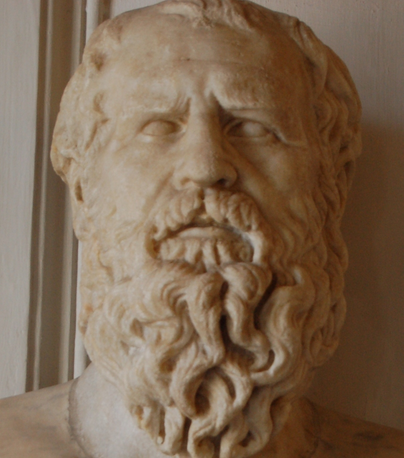
Corpses are more fit to be cast out than dung.
8 months 2 weeks ago
A man living without conflicts, as if he never lives at all.
5 months 1 week ago
If we don't address the genetic causes of suffering (physical and mental) we will find ourselves in 500 years enjoying material abundance via nanotech, living in a perfect democracy, colonizing space, and still sitting around wondering "Why are we miserable so much of the time? Why can't we all just get along? Why are we not all happy?"
▼
Source
source
David Pearce in SF, Qualia Computing, 7 Oct. 2018

7 months 4 weeks ago
The moment we no longer have a free press, anything can happen. What makes it possible for a totalitarian or any other dictatorship to rule is that people are not informed; how can you have an opinion if you are not informed? If everybody always lies to you, the consequence is not that you believe the lies, but rather that nobody believes anything any longer. This is because lies, by their very nature, have to be changed, and a lying government has constantly to rewrite its own history. On the receiving end you get not only one lie - a lie which you could go on for the rest of your days - but you get a great number of lies, depending on how the political wind blows. And a people that no longer can believe anything cannot make up its mind. It is deprived not only of its capacity to act but also of its capacity to think and to judge. And with such a people you can then do what you please.
▼
Source
source
p. 70

7 months 4 weeks ago
If in this book harsh words are spoken about some of the greatest among the intellectual leaders of mankind, my motive is not, I hope, the wish to belittle them. It springs rather from my conviction that, if our civilization is to survive, we must break with the habit of deference to great men. Great men may make great mistakes; and as the book tries to show, some of the greatest leaders of the past supported the perennial attack on freedom and reason. Their influence, too rarely challenged, continues to mislead those on whose defence civilization depends, and to divide them. The responsibility of this tragic and possibly fatal division becomes ours if we hesitate to be outspoken in our criticism of what admittedly is a part of our intellectual heritage. By reluctance to criticize some of it, we may help to destroy it all.
▼
Source
source
Preface to the First Edition
7 months 3 weeks ago
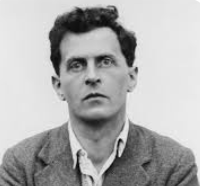
Philosophy unravels the knots in our thinking; hence its results must be simple, but its activity is as complicated as the knots that it unravels.
▼
Source
source
Ch. 9 : Philosophy, p. 183
4 months 1 week ago
My faith in human dignity consists in the belief that man is the greatest scamp on earth. Human dignity must be associated with the idea of a scamp and not with that of an obedient, disciplined and regimented soldier.
▼
Source
source
Ch. I : The Awakening, p. 12
3 months 2 weeks ago
I am happy because I want nothing from anyone. I do not care about money. Decorations, titles or distinctions mean nothing to me. I do not crave praise. The only thing that gives me pleasure, apart from my work, my violin, and my sailboat, is the appreciation of my fellow workers.

8 months 2 weeks ago
The true servants of God are not solicitous that He should order them to do what they desire to do, but that they may desire to do what He orders them to do.
▼
Source
source
p. 616
8 months 1 day ago
In the visible world, the Milky Way is a tiny fragment; within this fragment, the solar system is an infinitesimal speck, and of this speck our planet is a microscopic dot. On this dot, tiny lumps of impure carbon and water, of complicated structure, with somewhat unusual physical and chemical properties, crawl about for a few years, until they are dissolved again into the elements of which they are compounded. They divide their time between labour designed to postpone the moment of dissolution for themselves and frantic struggles to hasten it for others of their kind.
▼
Source
source
Dreams and Facts, 1919
4 months 3 weeks ago
Carnap made a detailed analysis of Heidegger's statement, "Nothing nihilates," in order to show that it is purely verbal, devoid of empirical meaning. (Incidentally, this is the only sentence from existentialist philosophy the majority of contemporary positivists appear familiar with.)
▼
Source
source
Chapter Eight, Logical Empiricism, p. 187
4 months 1 week ago
The greater part of human activity is designed to make permanent those experiences and joys which are only lovable because they are changing.
▼
Source
source
p. 32
6 months 3 weeks ago
The first character of a general idea so resulting is that it is living feeling. A continuum of this feeling, infinitesimal in duration, but still embracing innumerable parts, and also, though infinitesimal, entirely unlimited, is immediately present. And in its absence of boundedness a vague possibility of more than is present is directly felt.

8 months 1 week ago
There is a plague on Man, the opinion that he knows something.
6 months 3 weeks ago
The tendency to regard continuity, in the sense in which I shall define it, as an idea of prime importance in philosophy conveniently may be be termed synechism. The present paper is intended chiefly to show what synechism is, and what it leads to.
CivilSimian.com created by AxiomaticPanic, CivilSimian, Kalokagathia