

8 months 1 day ago
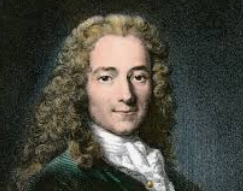
Where there is friendship, there is our natural soil.
▼
Source
source
Letter to Nicolas-Claude Thieriot, 1734
8 months 1 day ago
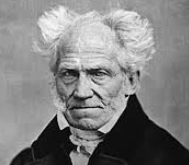
Descartes is rightly regarded as the father of modern philosophy primarily and generally because he helped the faculty of reason to stand on its own feet by teaching men to use their brains in place whereof the Bible, on the one hand, and Aristotle, on the other, had previously served.
▼
Source
source
E. Payne, trans. (1974) Vol. 1, p. 3
6 months 3 weeks ago
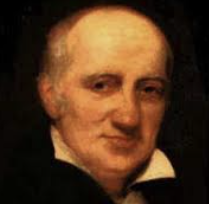
Mankind will never be, in an eminent degree, virtuous and happy till each man shall possess that portion of distinction and no more, to which he is entitled by his personal merits. The dissolution of aristocracy is equally the interest of the oppressor and the oppressed. The one will be delivered from the listlessness of tyranny, and the other from the brutalizing operation of servitude.
▼
Source
source
Book V, Chapter 11, "Moral Effects of Aristocracy"
6 months 2 days ago
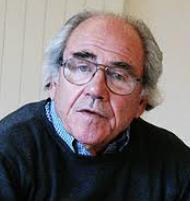
Dying is nothing. You have to know how to disappear. Dying comes down to a biological chance and that is of no consequence. Disappearing is of a far higher order of necessity. You must not leave it to biology to decide when you will disappear. To disappear is to pass into an enigmatic state which is neither life nor death. Some animals know how to do this, as do savages, who withdraw while still alive, from the sight of their own people.

6 months 1 week ago
It cannot be sufficiently emphasized that revolution is in vain unless inspired by its ultimate ideal. Revolutionary methods must be in tune with revolutionary aims. The means used to further the revolution must harmonize with its purposes. In short, the ethical values which the revolution is to establish in the new society must be initiated with the revolutionary activities of the so-called transitional period. The latter can serve as a real and dependable bridge to the better life only if built of the same material as the life to be achieved.
7 months 4 weeks ago
Though love repine, and reason chafe, There came a voice without reply, - "'T is man's perdition to be safe When for the truth he ought to die."
▼
Source
source
Sacrifice
5 months 1 week ago
Biopiracy is biological theft; illegal collection of indigenous plants by corporations who patent them for their own use.
▼
Source
source
On biopiracy, from the booklet "No Patents on Seeds: A Handbook For Activists"
6 months 3 weeks ago
Oblivious of Democritus, the unwilling materialists of our day have generally been awkwardly intellectual and quite incapable of laughter. If they have felt anything, they have felt melancholy. Their allegiance and affection were still fixed on those mythical sentimental worlds which they saw to be illusory. The mechanical world they believed in could not please them, in spite of its extent and fertility. Giving rhetorical vent to their spleen and prejudice, they exaggerated nature's meagreness and mathematical dryness. When their imagination was chilled they spoke of nature, most unwarrantably, as dead, and when their judgment was heated they took the next step and called it unreal.
▼
Source
source
Ch. 3 "Mechanism"
8 months ago
When I was a child the atmosphere in the house was one of puritan piety and austerity. There were family prayers at eight o'clock every morning. Although there were eight servants, food was always of Spartan simplicity, and even what there was, if it was at all nice, was considered too good for children. For instance, if there was apple tart and rice pudding, I was only allowed the rice pudding. Cold baths all the year round were insisted upon, and I had to practice the piano from seven-thirty to eight every morning although the fires were not yet lit. My grandmother never allowed herself to sit in an armchair until the evening. Alcohol and tobacco were viewed with disfavor although stern convention compelled them to serve a little wine to guests. Only virtue was prized, virtue at the expense of intellect, health, happiness, and every mundane good.
▼
Source
source
p. 9
4 months 2 weeks ago
...Lucretius talked epicureanism stoically (like Heine's Englishman taking his pleasures sadly), and concluded on his stren gospel of pleasure by committing suicide. His noble epic "on the Nature of Things", follows Epicurus in damning pleasure with faint praise. Almost contemporary with Caesar and Pompey, he lived in the midst of turmoil and alarms; his nervous pen is forever inditing prayers to tranquility and peace. One pictures him as a timid soul whose youth had been darkened with religious fears; for he never tires of telling his readers that there's no hell, except here, and there are no gods except gentlemanly ones who live in a garden of Epicurus in the clouds, and never intrude in the affairs of men.
5 months 3 weeks ago
All media are extensions of some human faculty -- psychic or physical.
4 months 3 weeks ago
Karl Marx was born at Trier on 5 May 1818, the child of Jewish parents with a long rabbinical tradition on both sides. His grandfathers were rabbis; his father, a well-to-do lawyer, changed his first name from Herschel to Heinrich and adopted Protestantism, which in Prussia was a necessary condition of professional and cultural emancipation.
▼
Source
source
(pg. 96)
7 months 4 weeks ago
Assembled in a crowd, people lose their powers of reasoning and their capacity for moral choice.
▼
Source
source
Chapter 5 (p. 42)
7 months ago
What is the wisdom of a book compared with the wisdom of an angel?
6 months 1 week ago
When television screens had only rare images of black folks, black people were more critically vigilant about these representations. Even when blackness was represented 'positiviely,' as it was in early black television shows like Julia, which focused on the life of a black nurse, the beauty standard was a reflection of white supremacist aesthetics.

6 months 3 weeks ago
Nobody really thinks who does not abstract from that which is given, who does not relate the facts to the factors which have made them, who does not - in his mind - undo the facts. Abstractness is the very life of thought, the token of its authenticity.
▼
Source
source
p. 134
7 months 6 days ago
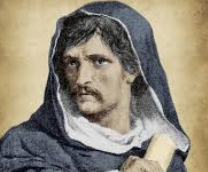
Even to have come forth is something, since I see that being able to conquer is placed in the hands of fate. However, there was in me, whatever I was able to do, that which no future century will deny to be mine, that which a victor could have for his own: Not to have feared to die, not to have yielded to any equal in firmness of nature, and to have preferred a courageous death to a noncombatant life.
9 months ago
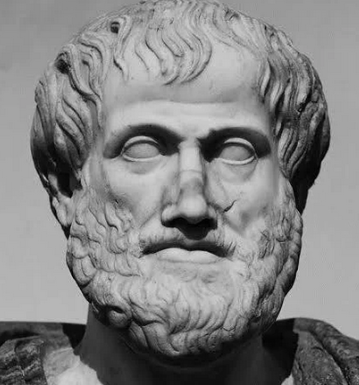
If a man knows what it is right to do, he does not require a formal reason. And a person that has been thus trained, either possesses these first principles already, or can easily acquire them.
7 months 4 weeks ago
You can do everything with bayonets except sit on them. If you want to preserve your power indefinitely you have to get the consent of the ruled. And this they will do partly by drugs as I foresaw in "Brave new World", and partly by these new techniques of propaganda. They will do it by bypassing the sort of rational side of man and appealing to his subconscious, and his deeper emotions, and his physiology, even, and so making him actually love his slavery. I mean I think this is the danger that actually people may be, in some ways, happy under the new regime. But they will be happy in situations when they oughtn't be happy.
8 months 3 weeks ago
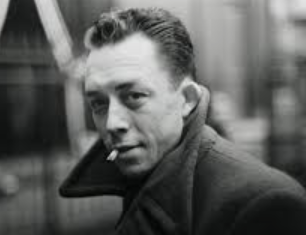
To two men living the same number of years, the world always provides the same sum of experiences. It is up to us to be conscious of them.
6 months 2 weeks ago
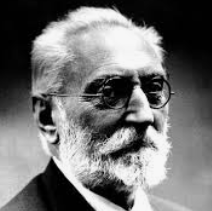
A terrible thing is intelligence. It tends to death as memory tends to stability. The living, the absolutely unstable, the absolutely individual, is strictly unintelligible. Logic tends to reduce everything to identities and genera, to each representation having no more than one self-same content in whatever place, time or relation it may occur to us. And there is nothing that remains for two successive moments of its existence. My idea of God is different each time that I conceive it. Identity, which is death, is the goal of the intellect. The mind seeks what is dead, for what is living escapes it; it seeks to congeal the flowing stream in blocks of ice; it seeks to arrest it. In order to analyze a body it is necessary to extenuate or destroy it. In order to understand anything it is necessary to kill it, to lay it out rigid in the mind.
7 months 2 weeks ago
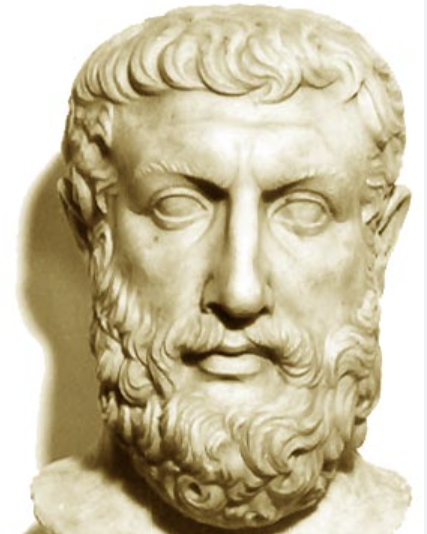
The only roads of enquiry there are to think of: one, that it is and that it is not possible for it not to be, this is the path of persuasion (for truth is its companion); the other, that it is not and that it must not be - this I say to you is a path wholly unknowable.
▼
Source
source
Frag. B 2.2-6, quoted by Proclus, Commentary on the Timaeus I, 345
6 months 2 weeks ago
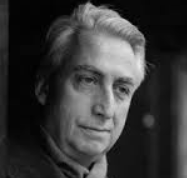
The Text is plural. Which is not simply to say that it has several meanings, but that it accomplishes the very plural of meaning: an irreducible (and not merely an acceptable) plural. The Text is not a co-existence of meanings but a passage, an overcrossing; thus it answers not to an interpretation, even a liberal one, but to an explosion, a dissemination.
▼
Source
source
Proposition 4
6 months 3 weeks ago
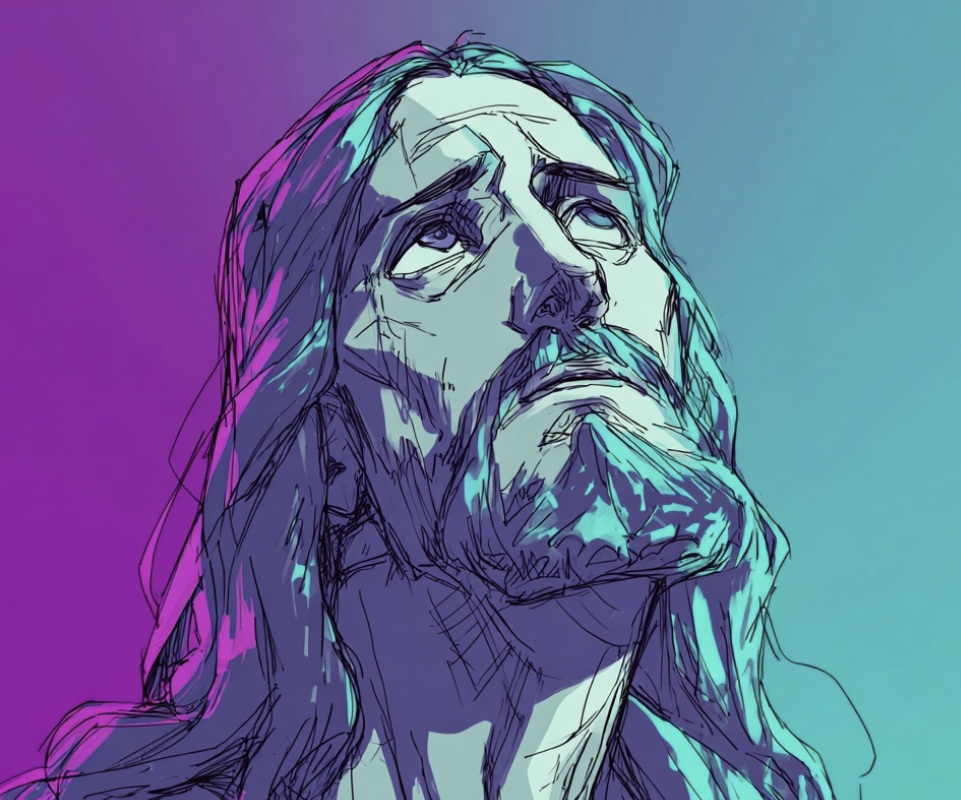
And Jesus answered and said unto her, Martha, Martha, thou art careful and troubled about many things, but one thing is needful: and Mary hath chosen that good part, which shall not be taken away from her.
▼
Source
source
10:41-42 (King James Version| KJV)

8 months ago
Far from New England's blustering shore,New England's worm her hulk shall bore,And sink her in the Indian seas,Twine, wine, and hides, and China teas.
▼
Source
source
"Though All the Fates Should Prove Unkind", st. 2

4 months 2 weeks ago
Had there not been a natural goodness and indestructible force in my father, I see not how be could have bodied himself forth from these mean impediments. I suppose good precepts were not wanting. There was the Bible to read. Old John Orr, the schoolmaster, used from time to time to lodge with them; be was religious and enthusiastic (though in practice irregular with drink). In my grandfather, also, there seems to have been a certain geniality; for instance, he and a neighbor, Thomas Hogg, read "Anson's Voyages;" also tho "Arabian Nights," for which latter my father, armed with zealous conviction, scrupled not to censure them openly. By one means and another, at an early age he had acquired principles, lights that not only flickered, but shone steadily to guide his way.
4 months ago
The major and almost only theme of all my work is the struggle of man with "God": the unyielding, inextinguishable struggle of the naked worm called "man" against the terrifying power and darkness of the forces within him and around him.
▼
Source
source
As quoted in Nikos Kazantzakis (1968) by Helen Kazantzakis, p. 507
5 months 3 weeks ago
Natural selection is like artificial selection, but without the human chooser. Instead of a human deciding which offspring shall die in which shall reproduce, nature 'decides'. The quotation marks are vital because nature doesn't consciously decide. This might seem too obvious to emphasize, but you'd be surprised by the number of people who think natural selection implies some kind of personal choice. They couldn't be more wrong. It just is the case that some offspring are more likely to die while others have what it takes to survive and reproduce. Therefore, as the generations go by, the average, typical creature in the population becomes ever better at the arts of surviving and reproducing. Ever better, I should specify, when, when measured against some absolute standard.
▼
Source
source
Chapter 1, "Facing Mount Rushmore" (p. 34)
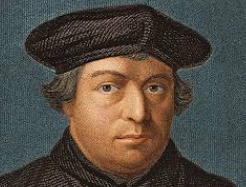
8 months 1 week ago
Adam was created righteous, acceptable, and without sin. He had no need from his labor in the garden to be made righteous and acceptable to God. Rather, the Lord gave Adam work in order to cultivate and protect the garden. This would have been the freest of all works because they were done simply to please God and not to obtain righteousness. ... The works of the person who trusts God are to be understood in a similar manner. Through faith we are restored to paradise and created anew. We have no need of works in order to be righteous; however, in order to avoid idleness and so that the body might be cared for an disciplined, works are done freely to please God.
▼
Source
source
pp. 73-74

7 months 2 weeks ago
Do you count your birthdays with gratitude?
▼
Source
source
Book II, epistle ii, line 210
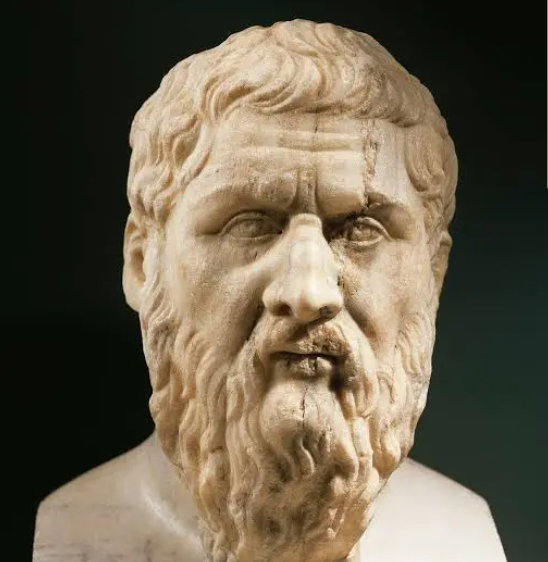
8 months 3 weeks ago
They do not know the penalty of unrighteousness, which is the thing they most ought to know. For it is not what they think it is scourgings and death, which they sometimes escape entirely when they have done wrong but a penalty which it is impossible to escape. Two patterns, my friend, are set up in the world, the divine, which is most blessed, and the godless, which is most wretched, and their silliness and extreme foolishness blind them to the fact that through their unrighteous acts they are made like the one and unlike the other. They therefore pay the penalty for this by living a life that conforms to the pattern they resemble.
4 months 3 weeks ago
In the same way that the figure of the peasant tends to disappear, so too does the figure of the industrial worker, the service industry worker and all other separate categories.
▼
Source
source
125
5 months 4 weeks ago
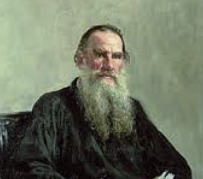
Service of the people by sciences and arts will only exist when men live with the people and as the people live, and without presenting any claims will offer their scientific and artistic services, which the people will be free to accept or decline as they please.
8 months 3 days ago
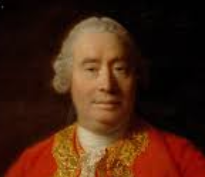
Nature may certainly produce whatever can arise from habit: Nay, habit is nothing but one of the principles of nature, and derives all its force from that origin.
▼
Source
source
Part 3, Section 16

6 months 3 weeks ago
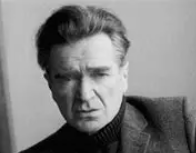
Existing is plagiarism.

7 months 3 weeks ago
The gesture that divides madness is the constitutive one, not the science that grows up in the calm that returns after the division has been made.
▼
Source
source
Preface to 1961 edition

7 months 4 weeks ago
A young man who wishes to remain a sound Atheist cannot be too careful of his reading. There are traps everywhere... God is, if I may say it, very unscrupulous.
▼
Source
source
p. 191
8 months 1 day ago
Clever tyrants are never punished.
▼
Source
source
Mérope, act V, scene V, 1743
4 months 1 week ago
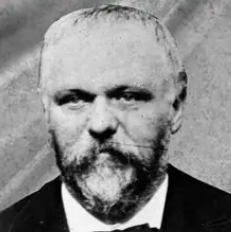
All the future of socialism resides in the autonomous development of workers' syndicates.
▼
Source
source
As quoted in Essays in Political Philosophy, Vidya Dhar Mahajan, Doaba House, Lahore, 1943 p. 41

4 months 2 weeks ago
Consider how, even in the meanest sorts of Labour, the whole soul of a man is composed into a kind of real harmony, the instant he sets himself to work! Doubt, Desire, Sorrow, Remorse, Indignation, Despair itself, all these like helldogs lie beleaguering the soul of the poor dayworker, as of every man: but he bends himself with free valour against his task, and all these are stilled, all these shrink murmuring far off into their caves. The man is now a man. The blessed glow of Labour in him, is it not as purifying fire, wherein all poison is burnt up, and of sour smoke itself there is made bright blessed flame!
8 months 3 weeks ago
The evil that is in the world always comes of ignorance, and good intentions may do as much harm as malevolence, if they lack understanding. On the whole men are more good than bad; that, however, isn't the real point. But they are more or less ignorant, and it is this that we call vice or virtue; the most incorrigible vice being that of an ignorance which fancies it knows everything and therefore claims for itself the right to kill. There can be no true goodness, nor true love, without the utmost clear-sightedness.
8 months 3 weeks ago
You know what charm is: a way of getting the answer 'yes' without having asked any clear question.
6 months 4 weeks ago
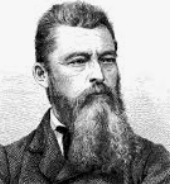
Christianity set itself the goal of fulfilling man's unattainable desires, but for that very reason ignored his attainable desires. By promising man eternal life, it deprived him of temporal life, by teaching him to trust in God's help it took away his trust in his own powers; by giving him faith in a better life in heaven, it destroyed his faith in a better life on earth and his striving to attain such a life. Christianity gave man what his imagination desires, but for that very reason failed to give him what he really and truly desires.
▼
Source
source
Lecture XXX, Atheism alone a Positive View
CivilSimian.com created by AxiomaticPanic, CivilSimian, Kalokagathia