

6 months 2 weeks ago
The characteristic activity of science is not construction, but induction. The more often something has occurred in the past, the more certain that it will in all the future. Knowledge relates solely to what is and to its recurrence. New forms of being, especially those arising from the historical activity of man, lie beyond empiricist theory. Thoughts which are not simply carried over from the prevailing pattern of consciousness, but arise from the aims and resolves of the individual, in short, all historical tendencies that reach beyond what is present and recurrent, do not belong to the domain of science.
▼
Source
source
p. 144.
8 months ago
I should like to believe my people's religion, which was just what I could wish, but alas, it is impossible. I have really no religion, for my God, being a spirit shown merely by reason to exist, his properties utterly unknown, is no help to my life. I have not the parson's comfortable doctrine that every good action has its reward, and every sin is forgiven. My whole religion is this: do every duty, and expect no reward for it, either here or hereafter.
▼
Source
source
Greek Exercises (1888), written two days after his sixteenth birthday.
8 months 1 week ago
Saying is one thing, doing another.
▼
Source
source
Book II, Ch. 31. Of Anger
3 months 3 weeks ago
Constantly contemplate the whole of time and the whole of substance, and consider that all individual things as to substance are a grain of a fig, and as to time the turning of a gimlet.
▼
Source
source
X, 17
5 months 3 weeks ago
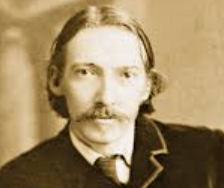
Mankind was never so happily inspired as when it made a cathedral.
▼
Source
source
An Inland Voyage (1878).

6 months 3 weeks ago
How I wish I didn't know anything about myself and this world!
6 months 3 weeks ago
If you don't want to explode with rage, leave your memory alone, abstain from burrowing there.
8 months ago
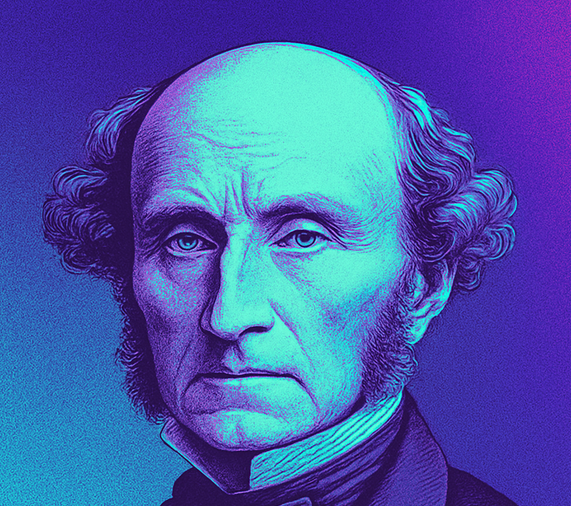
Conformity to nature has no connection whatever with right and wrong. The idea can never be fitly introduced into ethical discussions at all, except, occasionally and partially, into the question of degrees of culpability. To illustrate this point, let us consider the phrase by which the greatest intensity of condemnatory feeling is conveyed in connection with the idea of nature - the word "unnatural." That a thing is unnatural, in any precise meaning which can be attached to the word, is no argument for its being blamable; since the most criminal actions are to a being like man not more unnatural than most of the virtues.
▼
Source
source
page 62; Broadview Press, page 102

4 months 2 weeks ago
Men, I say, never did believe idle songs, never risked their soul's life on allegories: men in all times, especially in early earnest times, have had an instinct for detecting quacks, for detesting quacks.
8 months ago
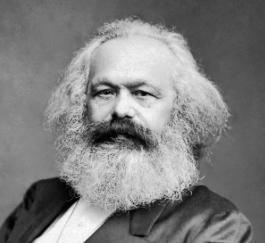
There is a physical relation between physical things. But it is different with commodities.
▼
Source
source
Vol. I, Ch. 1, Section 4, pg. 83.
7 months ago
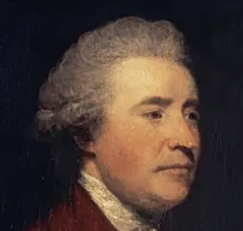
Justice is itself the great standing policy of civil society; and any eminent departure from it, under any circumstances, lies under the suspicion of being no policy at all.
7 months 4 weeks ago
Music is the poor man's Parnassus.
▼
Source
source
Poetry and Imagination
9 months 2 days ago
We obtain the concept, as we do the form, by overlooking what is individual and actual; whereas nature is acquainted with no forms and no concepts, and likewise with no species, but only with an X which remains inaccessible and undefinable for us.
8 months ago
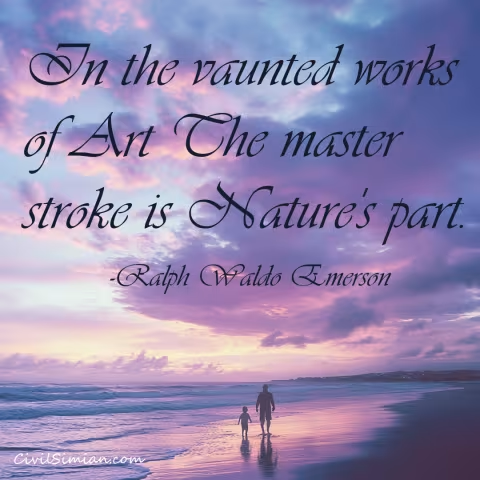
My life is like a stroll upon the beach, As near the ocean's edge as I can go.
▼
Source
source
"The Fisher's Boy", in Edmund Clarence Stedman (ed.) An American Anthology, 1787-1900, Boston and New York: Houghton, Mifflin and Co., 1900
6 months 2 weeks ago
The safest general characterization of the European philosophical tradition is that it consists of a series of footnotes to Plato.
▼
Source
source
Pt. II, ch. 1, sec. 1.

5 months 3 weeks ago
Ignorance, to a scientist, is an itch that begs to be pleasurably scratched. Ignorance, if you are a theologian, is something to be washed away by shamelessly making something up.
▼
Source
source
The Intellectual and Moral Courage of Atheism
8 months ago
For many years I was self-appointed inspector of snowstorms and rainstorms, and did my duty faithfully, though I never received one cent for it.
▼
Source
source
After February 22, 1846
3 months 3 weeks ago
All those events in history were such dramas as we see now, only with different actors.
▼
Source
source
.X, 27
7 months 4 weeks ago
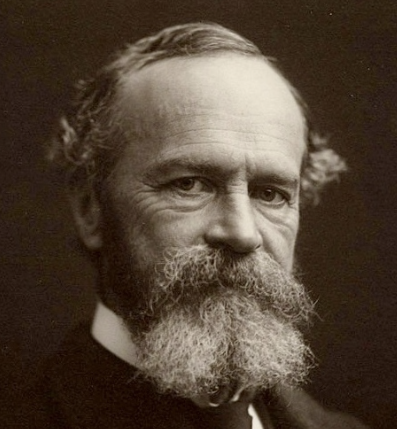
I will now confess my own utopia. I devoutly believe in the reign of peace and in the gradual advent of some sort of socialistic equilibrium. The fatalistic view of the war function is to me nonsense, for I know that war-making is due to definite motives and subject to prudential checks and reasonable criticisms, just like any other form of enterprise. And when whole nations are the armies, and the science of destruction vies in intellectual refinement with the science of production, I see that war becomes absurd and impossible from its own monstrosity. Extravagant ambitions will have to be replaced by reasonable claims, and nations must make common cause against them.
8 months 1 day ago
A false science makes atheists, a true science prostrates men before the Deity.
▼
Source
source
The critical review, or annals of literature, Volume XXVI, by A Society of Gentlemen (1768) p. 450
5 months 3 weeks ago
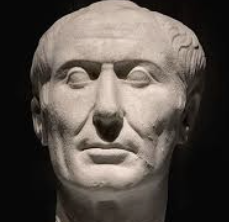
Receive an injury rather than do one.
▼
Source
source
Maxim 5
5 months 3 weeks ago
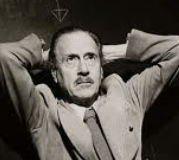
Until writing was invented, man lived in acoustic space: boundless, directionless, horizonless, in the dark of the mind, in the world of emotion, by primordial intuition, terror. Speech is a social chart of this bog.
▼
Source
source
(p. 48)
7 months 4 weeks ago
Shall I tell you the secret of the true scholar? It is this: Every man I meet is my master at some point, and in that, I learn of him.
▼
Source
source
Greatness
7 months 4 weeks ago
The imitator dooms himself to hopeless mediocrity. The inventor did it because it was natural to him, and so in him it has a charm. In the imitator something else is natural, and he bereaves himself of his own beauty, to come short of another man's.
▼
Source
source
p. 26
7 months ago
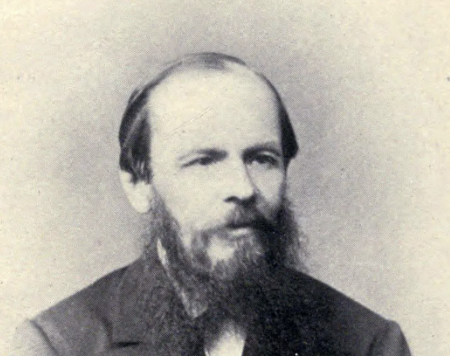
And what is it in us that is mellowed by civilization? All it does, I'd say, is to develop in man a capacity to feel a greater variety of sensations. And nothing, absolutely nothing else. And through this development, man will yet learn how to enjoy bloodshed. Why, it has already happened....Civilization has made man, if not always more bloodthirsty, at least more viciously, more horribly bloodthirsty.
▼
Source
source
Part 1, Chapter 7
6 months 3 weeks ago
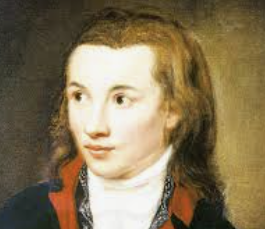
The world must be romanticized. In this way the originary meaning may be found again.
▼
Source
source
As quoted in The Experience of the Foreign : Culture and Translation in Romantic Germany (1992) by Antoine Berman Variant translation: Romanticize the world.
6 months 3 weeks ago
Facing a landscape annihilated by the light, to remain serene supposes a temper I do not have. The sun is my purveyor of black thoughts; and summer the season when I have always reconsidered my relations with this world and with myself, to the greatest prejudice of both.

7 months 1 week ago
Meditate upon my counsels; love them; follow them; To the divine virtues will they know how to lead thee. I swear it by the One who in our hearts engraved The sacred Tetrad, symbol immense and pure, Source of Nature and model of the Gods.
▼
Source
source
As translated by Fabre d'Olivet
4 months 2 weeks ago
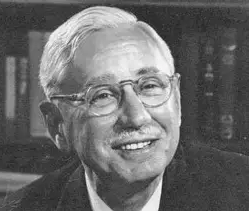
Man is as young as the risks he takes.
▼
Source
source
Ch. 2 : On Youth

3 months 4 weeks ago
We are living in the most destructive and, hence, the most stupid period of the history of our species.
▼
Source
source
A Poem of Difficult Hope
9 months 2 days ago
He who thinks a great deal is not suited to be a party man: he thinks his way through the party and out the other side too soon.

6 months 1 week ago
The progress of human knowledge depends on maintaining that touch of scepticism even about the most "unquestionable" truths. A century ago, Darwin's theory of evolution by natural selection was regarded as scientifically unshakeable; today, most biologists have their reservations about it. Fifty years ago, Freud's sexual theory of neurosis was accepted by most psychiatrists; today, it is widely recognized that his methods were highly questionable. At the turn of this century, a scientist who questioned Newton's theory of gravity would have been regarded as insane; twenty years later, it had been supplanted by Einstein's theory, although, significantly, few people actually understood it. It seems perfectly conceivable that our descendants of the twenty-second century will wonder how any of us could have been stupid enough to have been taken in by Darwin, Freud or Einstein.
▼
Source
source
p. 4


7 months 2 weeks ago
We know nothing accurately in reality, but only as it changes according to the bodily condition, and the constitution of those things that flow upon the body and impinge upon it.
▼
Source
source
Freeman (1948), p. 142
8 months ago
Unjust laws exist: shall we be content to obey them, or shall we endeavor to amend them, and obey them until we have succeeded, or shall we transgress them at once?

5 months 1 week ago
One might naively suppose that a negative utilitarian would welcome human extinction. But only (trans)humans - or our potential superintelligent successors - are technically capable of phasing out the cruelties of the rest of the living world on Earth. And only (trans)humans - or rather our potential superintelligent successors - are technically capable of assuming stewardship of our entire Hubble volume.
▼
Source
source
"Unsorted Postings", Facebook, pre-2014
7 months 4 weeks ago
Nature is too thin a screen; the glory of the One breaks in everywhere.
▼
Source
source
p. 182

8 months 1 day ago
There ought to be some regulation with respect to the spirit of denunciation that now prevails. If every individual is to indulge his private malignancy or his private ambition, to denounce at random and without any kind of proof, all confidence will be undermined and all authority be destroyed. Calumny is a species of treachery that ought to be punished as well as any other kind of treachery. It is a private vice productive of public evils; because it is possible to irritate men into disaffection by continual calumny who never intended to be disaffected. It is therefore equally as necessary to guard against the evils of unfounded or malignant suspicion as against the evils of blind confidence. It is equally as necessary to protect the characters of public officers from calumny as it is to punish them for treachery or misconduct.
▼
Source
source
Letter to George Jacques Danton
8 months 3 days ago
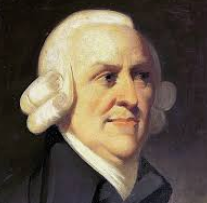
But though empires, like all the other works of men, have all hitherto proved mortal, yet every empire aims at immortality.
▼
Source
source
Chapter II, Part II, p. 896.
4 months 3 weeks ago
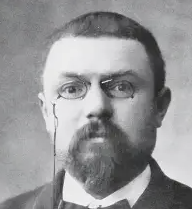
A scientist worthy of the name, above all a mathematician, experiences in his work the same impression as an artist; his pleasure is as great and of the same nature. ...we work not only to obtain the positive results which, according to the profane, constitute our one and only affection, as to experience this esthetic emotion and to convey it to others who are capable of experiencing it.
▼
Source
source
"Notice sur Halphen," Journal de l'École Polytechnique (Paris, 1890), 60ème cahier, p. 143.
3 months 2 weeks ago
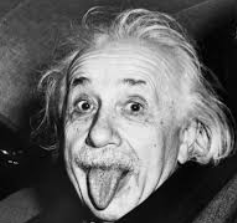
In America, more than anywhere else, the individual is lost in the achievements of the many. America is beginning to be the world leader in a scientific investigation. American scholarship is both patient and inspiring. The Americans show an unselfish devotion to science, which is the very opposite of the conventional European view of your countrymen. Too many of us look upon Americans as dollar chasers. This is a cruel libel, even if it is reiterated thoughtlessly by the Americans themselves. It is not true that the dollar is an American fetish. The American student is not interested in dollars, not even in success as such, but in his task, the object of the search. It is his painstaking application to the study of the infinitely little and the infinitely large which accounts for his success in astronomy.

8 months 1 week ago
The art of persuasion consists as much in that of pleasing as in that of convincing, so much more are men governed by caprice than by reason!

3 months 3 weeks ago
Man... whatever the origin of his soul, if it is pure, noble, and lofty, it is a beautiful soul which dignifies the man endowed with it.
7 months ago
When any work seems to have required immense force and labor to affect it, the idea is grand. Stonehenge, neither for disposition nor ornament, has anything admirable; but those huge rude masses of stone, set on end, and piled each on other, turn the mind on the immense force necessary for such a work. Nay, the rudeness of the work increases this cause of grandeur, as it excludes the idea of art and contrivance; for dexterity produces another sort of effect, which is different enough from this.
▼
Source
source
Part II Section XII
5 months 2 weeks ago
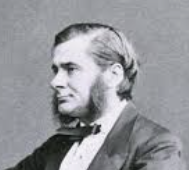
Education is the instruction of the intellect in the laws of Nature, under which name I include not merely things and their forces, but men and their ways; and the fashioning of the affections and of the will into an earnest and loving desire to move in harmony with those laws. For me, education means neither more nor less than this. Anything which professes to call itself education must be tried by this standard, and if it fails to stand the test, I will not call it education, whatever may be the force of authority, or of numbers, upon the other side.
7 months 2 weeks ago
Throw moderation to the winds, and the greatest pleasures bring the greatest pains.
4 months 3 weeks ago
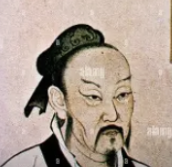
The way of learning is none other than finding the lost mind.
▼
Source
source
6A:11, as translated by Wing-tsit Chan in A Source Book in Chinese Philosophy (1963), p. 58

6 months 1 week ago
Feminism is the struggle to end sexist oppression. Therefore, it is necessarily a struggle to eradicate the ideology of domination that permeates Western culture on various levels, as well as a commitment to reorganizing society so that the self-development of people can take precedence over imperialism, economic expansion, and material desires.
8 months 1 week ago
There is no man so good that if he placed all his actions and thoughts under the scrutiny of the laws, he would not deserve hanging ten times in his life.
▼
Source
source
Ch. 9
8 months 1 day ago
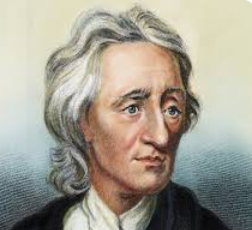
Encourage therefore his inquisitiveness all you can, by satisfying his demands, and informing his judgement, as far as it is capable. When his reasons are any way tolerable, let him find the credit and commendation of it, without being laugh'd at for his mistake be gently put into the right; and if he shew a forwardness to be reasoning about things that come in his way, take care, as much as you can, that no body check this inclination in him, or mislead it by captious or fallacious ways of talking with him. For when all is done, this is the highest and most important faculty of our minds, deserves the greatest care and attention in cultivating it: the right improvement, and exercise of our reason being the highest perfection that a man can attain to in his life.
▼
Source
source
Sec. 122
CivilSimian.com created by AxiomaticPanic, CivilSimian, Kalokagathia