

5 months 4 weeks ago
Pure and complete sorrow is as impossible as pure and complete joy.
▼
Source
source
Bk. XV, ch. 1
8 months 3 weeks ago
The job of science will never be done, it will just sink deeper and deeper into never-ending complexity.

7 months 4 weeks ago
Can a mortal ask questions which God finds unanswerable? Quite easily, I should think. All nonsense questions are unanswerable. How many hours are there in a mile? Is yellow square or round? Probably half the questions we ask - half our great theological and metaphysical problems - are like that.
7 months 4 weeks ago
So our self-feeling in this world depends entirely on what we back ourselves to be and do.
▼
Source
source
Ch. 10
8 months ago
While we are reading these sentences, this fair modern world seems only a reprint of the Laws of Menu with the gloss of Culluca. Tried by a New England eye, or the mere practical wisdom of modern times, they are the oracles of a race already in its dotage, but held up to the sky, which is the only impartial and incorruptible ordeal, they are of a piece with its depth and serenity, and I am assured that they will have a place and significance as long as there is a sky to test them by.
4 months 3 weeks ago
The social conditions that nourished and made use of this ideology can still revive; perhaps - who knows? - the virus is dormant, waiting for the next opportunity. Dreams about the perfect society belong to the enduring stock of civilization.
▼
Source
source
New Preface, p. vi
5 months 3 weeks ago
Just now, when every one is bound, under pain of a decree in absence convicting them of lèse-respectability, to enter on some lucrative profession, and labour therein with something not far short of enthusiasm, a cry from the opposite party, who are content when they have enough.
▼
Source
source
An Apology for Idlers.
8 months ago
Owing to the identification of religion with virtue, together with the fact that the most religious men are not the most intelligent, a religious education gives courage to the stupid to resist the authority of educated men, as has happened, for example, where the teaching of evolution has been made illegal. So far as I can remember, there is not one word in the Gospels in praise of intelligence; and in this respect ministers of religion follow gospel authority more closely than in some others.
▼
Source
source
p. 110


7 months 3 weeks ago
The task of universal pragmatics is to identify and reconstruct universal conditions of possible mutual understanding.
▼
Source
source
p. 21
4 months 1 week ago
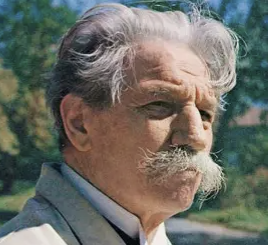
The disastrous feature of our civilization is that it is far more developed materially than spiritually. Its balance is disturbed ... Now come the facts to summon us to reflect. They tell us in terribly harsh language that a civilization which develops only on its material side, and not in the sphere of the spirit ... heads for disaster.
6 months 1 week ago
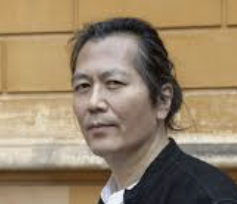
Perhaps power is never free from a feeling of lack.
7 months 5 days ago
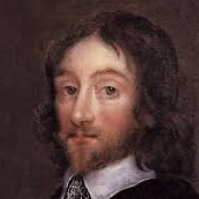
A Dialogue between two Infants in the womb concerning the state of this world, might handsomely illustrate our ignorance of the next, whereof methinks we yet discourse in Plato's Den, and are but Embryon Philosophers.
▼
Source
source
Chapter IV
8 months ago
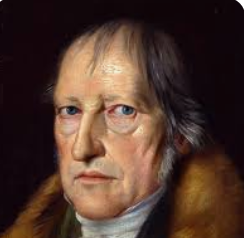
The essence of the modern state is the union of the universal with the full freedom of the particular, and with the welfare of individuals.
▼
Source
source
Sect. 260
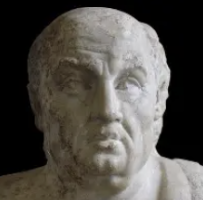
4 months 2 weeks ago
Why should I not regard this as desirable-not because the fire, burns me, but because it does not overcome me?
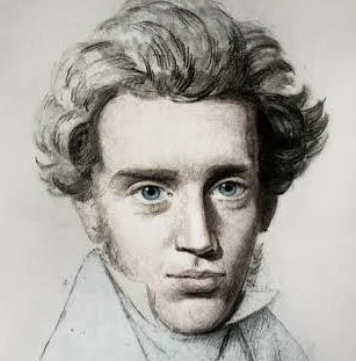
9 months ago
It is the duty of the human understanding to understand that there are things which it cannot understand, and what those things are. Human understanding has vulgarly occupied itself with nothing but understanding, but if it would only take the trouble to understand itself at the same time it would simply have to posit the paradox.
8 months ago
I shall keep it [the manuscript] by me until the end of May for purposes of revision, and of adding malicious foot-notes.
▼
Source
source
Letter to W. W. Norton, 17 February, 1931
8 months ago
Philosophy, from the earliest times, has made greater claims, and achieved fewer results, than any other branch of learning.
▼
Source
source
Lecture I, Current Tendencies, p. 11, New American Library edition, 1960
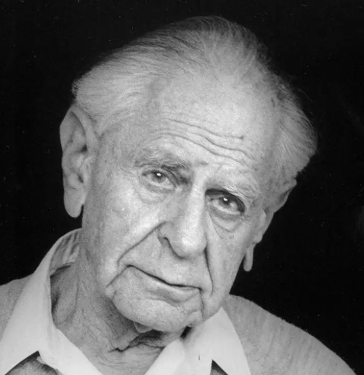
7 months 4 weeks ago
All things living are in search of a better world.
▼
Source
source
Preface
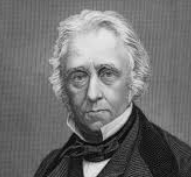
5 months 2 weeks ago
It is surely delightful, Sir, to look forward to that period when a series of liberal and prudent measures shall have delivered islands, so highly favoured by the bounty of Providence, from the curse inflicted on them by the frantic rapacity of man. Then the peasant of the Antilles will no longer crawl in listless and trembling dejection round a plantation from whose fruits he must derive no advantage, and a hut whose door yields him no protection; but, when his cheerful and voluntary labour is performed, he will return with the firm step and erect brow of a British citizen from the field which is his freehold to the cottage which is his castle.
▼
Source
source
Speech to a meeting of the Anti-Slavery Society held in Freemasons' Tavern (25 June 1824), quoted in Report of the Committee of the Society for the Mitigation and Gradual Abolition of Slavery Throughout the British Dominions, Volume I (1824), p. 77
6 months 3 weeks ago
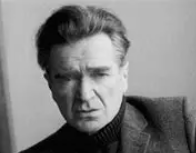
Society: an inferno of saviors!
6 months 3 weeks ago
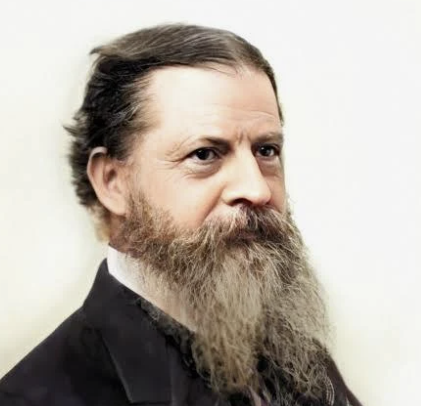
Time with its continuity logically involves some other kind of continuity than its own. Time, as the universal form of change, cannot exist unless there is something to undergo change, and to undergo a change continuous in time, there must be a continuity of changeable qualities.
4 months ago
But we, O blockhead, with dogged spite and armored loveshall force those deaf dark powers to grow ears and hear us!I know that God is earless, eyeless, and heartless too,a brainless Dragon Worm that crawls on earth and hopesin anguish and then in secret that we'll give him soul,for then he, too, may sprout ears, eyes, to match his growth,but God is clay in my ten fingers, and I mould him!
▼
Source
source
Odysseus to Kentaur, Book VIII, line 829
6 months 3 weeks ago
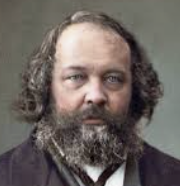
Freedom is the absolute right of every human being to seek no other sanction for his actions but his own conscience, to determine these actions solely by his own will, and consequently to owe his first responsibility to himself alone.
▼
Source
source
As quoted in Anarchism: From Theory to Practice, Daniel Guérin, New York: NY, Monthly Review Press (1970) p. 31
6 months 2 weeks ago
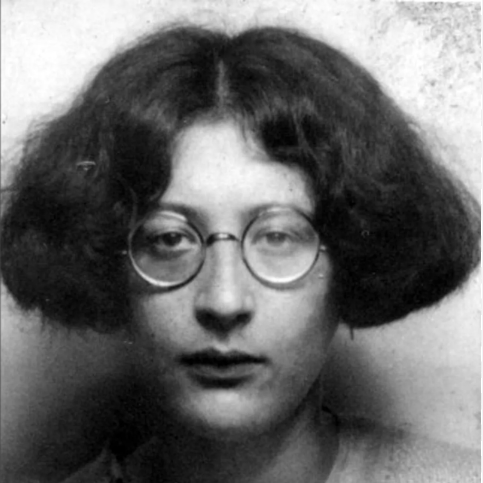
Stars and blossoming fruit-trees: utter permanence and extreme fragility give an equal sense of eternity.
▼
Source
source
p. 277
7 months 4 weeks ago
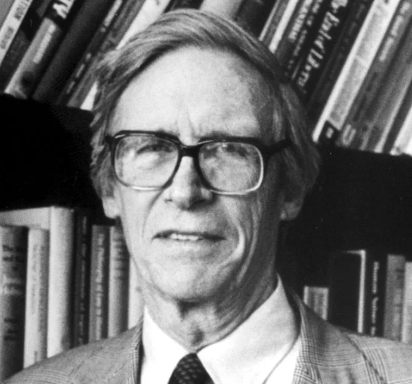
The difference principle, for example, requires that the higher expectations of the more advantaged contribute to the prospects of the least advantaged.
▼
Source
source
Chapter II, Section 16, pg. 95
5 months 3 weeks ago
Eight hours daily labour is enough for any human being, and under proper arrangements sufficient to afford an ample supply of food, raiment and shelter, or the necessaries and comforts of life, and for the remainder of his time, every person is entitled to education, recreation and sleep.
▼
Source
source
"Foundation Axioms" of Society for Promoting National Regeneration
4 months 1 week ago
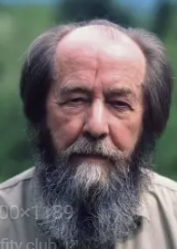
Archeologists have not discovered stages of human existence so early that they were without art. Right back in the early morning twilights of mankind we received it from Hands which we were too slow to discern. And we were too slow to ask: FOR WHAT PURPOSE have we been given this gift? What are we to do with it? And they were mistaken, and will always be mistaken, who prophesy that art will disintegrate, that it will outlive its forms and die. It is we who shall die - art will remain. And shall we comprehend, even on the day of our destruction, all its facets and all its possibilities?
4 months 3 weeks ago
There can be no liberty for a community which lacks the information by which to detect lies.
▼
Source
source
What Modern Liberty Means, p. 64
4 months 2 weeks ago
It is quality rather than quantity that matters.
▼
Source
source
Line 1
7 months 4 weeks ago
The trouble with fiction... is that it makes too much sense. Reality never makes sense.
▼
Source
source
"John Rivers" in The Genius and the Goddess, 1955
8 months 1 week ago
To turn one's eyes away from Jesus means to turn them to the Law.
▼
Source
source
Chapter 2
6 months 1 week ago
Where the frontier of science once was is now the centre.
▼
Source
source
As quoted in A Dictionary of Scientific Quotations (1991) edited by Alan Lindsay Mackay, p. 153
6 months 4 weeks ago
No nation which has sunk into this state of dependence can raise itself out of it by the means which have usually been adopted hitherto. Since resistance was useless to it when it was still in possession of all its powers, what can such resistance avail now that it has been deprived of the greater part of them?
▼
Source
source
Introduction p. 9-10
4 months 2 weeks ago
To animals not only human virtues but even human vices are forbidden: their whole constitution, mental and bodily, is unlike that of human beings...they possess intellect, the greatest attribute of all, but in a rough and inexact condition. It is, consequently, able to grasp those visions and semblances which rouse it to action, but only in a cloudy and indistinct fashion. Their impulses and outbreaks are violent, and that they do not feel fear, anxieties, grief, or anger, but some semblances of these feelings: wherefore they quickly drop them and adopt the converse of them: they graze after showing the most vehement rage and terror, and after frantic bellowing and plunging they straightaway sink into quiet sleep.
3 months 4 weeks ago
The equation state = politics becomes erroneous and deceptive at exactly the moment when state and society penetrate each other.
8 months ago
I do not wish to kill nor to be killed, but I can foresee circumstances in which both these things would be by me unavoidable. We preserve the so-called peace of our community by deeds of petty violence every day. Look at the policeman's billy and handcuffs! Look at the jail! Look at the gallows! Look at the chaplain of the regiment! We are hoping only to live safely on the outskirts of this provisional army. So we defend ourselves and our hen-roosts, and maintain slavery. I know that the mass of my countrymen think that the only righteous use that can be made of Sharp's rifles and revolvers is to fight duels with them, when we are insulted by other nations, or to hunt Indians, or shoot fugitive slaves with them, or the like. I think that for once the Sharp's rifles and the revolvers were employed in a righteous cause. The tools were in the hands of one who could use them.
8 months 2 weeks ago
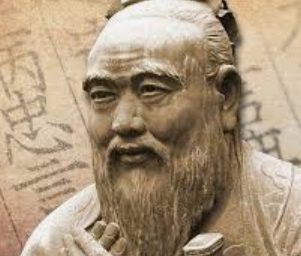
See a person's means (of getting things). Observe his motives. Examine that in which he rests. How can a person conceal his character? See a person's "being", observe his motive, notice his result. How can a person conceal his character?
6 months 2 weeks ago
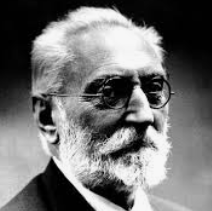
"The bitterest sorrow that man can know is to aspire to do much and to achieve nothing"... so Herodotus relates that a Persian said to a Theban at a banquet (book ix., chap. xvi.). And it is true. With knowledge and desire we can embrace everything , or almost everything; with the will nothing, or almost nothing. And contemplation is not happiness - no! not if this contemplation implies impotence. And out of this collision between our knowledge and our power pity arises.
4 months 2 weeks ago
That which Fortune has not given, she cannot take away.
8 months ago
There are two motives for reading a book: one, that you enjoy it; the other, that you can boast about it.
8 months 3 weeks ago
476 ... is usually taken as the date of the "fall of the Roman Empire." The date, however, is a false one. No one at this period of time considered that the Roman Empire had "fallen." Indeed, it still existed and was the most powerful realm in Europe. Its capital was at Constantinople and the Emperor was Zeno. It is only because we ourselves are culturally descended from the Roman west, that we tend to ignore the continued existence of the Roman Empire in the east.
5 months 3 weeks ago
The Institution has been devised to afford the means of receiving your children at an early age, almost as soon as they can walk. By this means many of you, mothers and families, will be able to earn a better maintenance or support for your children; you will have less care and anxiety about them, while the children will be prevented from acquiring any bad habits. and gradually prepared to learn the best.
6 months 1 week ago
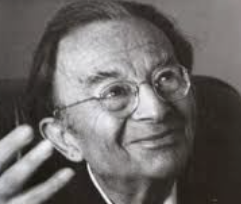
Temperament refers to the mode of reaction and is constitutional and not changeable; character is essentially formed by a person's experiences, especially of those in early life, and changeable, to some extent, by insights and new kinds of experiences. If a person has a choleric temperament, for instance, his mode of reaction is "quick and strong." But what he is quick or strong about depends on his kind of relatedness, his character. If he is a productive, just, loving person he will react quickly and strongly when he loves, when he is enraged by injustice, and when he is impressed by a new idea. If he is a destructive or sadistic character, he will be quick and strong in his destructiveness or in his cruelty. The confusion between temperament and character has had serious consequences for ethical theory. Preferences with regard to differences in temperament are mere matters of subjective taste. But differences in character are ethically of the most fundamental importance.
▼
Source
source
Ch. 3
7 months 4 weeks ago
Happiness is not achieved by the conscious pursuit of happiness; it is generally the by-product of other activities.
▼
Source
source
Essay "Religion and Time" in Vedanta for the Western World (1945) edited by Christopher Isherwood

6 months 3 weeks ago
Because of your unbelief: for verily I say unto you, If ye have faith as a grain of mustard seed, ye shall say unto this mountain, Remove hence to yonder place; and it shall remove; and nothing shall be impossible unto you. Howbeit this kind goeth not out but by prayer and fasting.
▼
Source
source
17:20-21 (KJV)
6 months 3 weeks ago
In theory, it matters little to me whether I live as whether I die; in practice, I am lacerated by every anxiety which opens an abyss between life and death.
9 months ago
The similarity between Christ and Socrates consists essentially in their dissimilarity. Just as philosophy begins with doubt, so also a life that may be called human begins with irony.

8 months 1 week ago
As Christ had recommended peace during the whole of his life, mark with what anxiety he enforces it at the approach of his dissolution. Love one another, says he; as I have loved you, so love one another; and again, my peace I give unto you, my peace I leave you. Do you observe the legacy he leaves to those whom he loves? Is it a pompous retinue, a large estate, or empire? Nothing of this kind. What is it then? Peace he giveth, his peace he leaveth; peace, not only with our near connections, but with enemies and strangers!
CivilSimian.com created by AxiomaticPanic, CivilSimian, Kalokagathia