

7 months 4 weeks ago
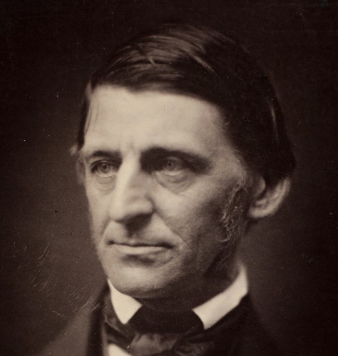
Every man I meet is in some way my superior, and in that, I can learn of him.
▼
Source
source
As quoted in Think, Vol. 4-5 (1938), p. 32
5 months 3 weeks ago
Environment is process, not container.
▼
Source
source
(p. 30)
8 months 1 week ago
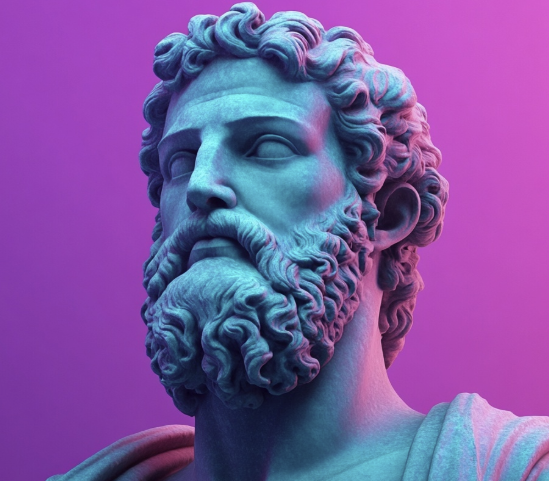
Although life is a matter of indifference, the use which you make of it is not a matter of indifference.
▼
Source
source
Book II, ch. 6, 1.
7 months 3 weeks ago
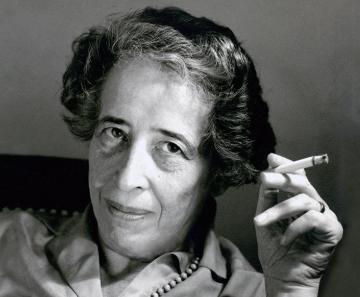
Political questions are far too serious to be left to the politicians.
▼
Source
source
Men in Dark Times
6 months 1 week ago
Human nature asserts itself regardless of all laws, nor is there any plausible reason why nature should adapt itself to a perverted conception of morality.
7 months 4 weeks ago
All who are not lunatics are agreed about certain things. That it is better to be alive than dead, better to be adequately fed than starved, better to be free than a slave. Many people desire those things only for themselves and their friends; they are quite content that their enemies should suffer. These people can only be refuted by science: Humankind has become so much one family that we cannot ensure our own prosperity except by ensuring that of everyone else. If you wish to be happy yourself, you must resign yourself to seeing others also happy.
▼
Source
source
"The Science to Save Us from Science," The New York Times Magazine, 3/19/1950
3 months 2 weeks ago
The really good music, whether of the East or of the West, cannot be analyzed.
8 months 2 days ago
This miracle of analysis, this marvel of the world of ideas, an almost amphibian object between Being and Non-being that we call the imaginary number.
▼
Source
source
Quoted in Singularités : individus et relations dans le système de Leibniz (2003) by Christiane Frémont
6 months 2 weeks ago
Wyman's overpopulated universe is in many ways unlovely. It offends the aesthetic sense of us who have a taste for desert landscapes.
▼
Source
source
"On What There Is", p. 4. a humorous comment on the idea "unactualized possible".
7 months 3 weeks ago
Philosophy is a battle against the bewitchment of our intelligence by means of our language.
▼
Source
source
§ 109
4 months 1 week ago
Not being able to ban sexuality altogether, Catholicism has tried to reduce it to a mere biological fact, allowing its use in marriage only for procreation. Unlike certain ancient traditions, Catholicism has recognized no higher value, not even a potential one, in the sexual experience taken in itself. There is lacking any basis for its transformation in the interests of a more intense life, to integrate and elevate the inner tension of two beings of different sexes, whereas it is in exactly these terms that one should conceive of a concrete "sacralization" of the union and the effect of a higher influence involved in the rite.
▼
Source
source
p. 190
7 months 3 weeks ago
The aim of philosophy is to erect a wall at the point where language stops anyway.
▼
Source
source
Ch. 9 : Philosophy, p. 187
5 months 1 week ago
Experience is what you get while looking for something else.
▼
Source
source
"Experience"
7 months 3 weeks ago
Uttering a word is like striking a note on the keyboard of the imagination.
▼
Source
source
§ 6

6 months 3 weeks ago
Dialectical logic undoes the abstractions of formal logic and of transcendental philosophy, but it also denies the concreteness of immediate experience. To the extent to which this experience comes to rest with the things as they appear and happen to be, it is a limited and even false experience. It attains its truth if it has freed itself from the deceptive objectivity which conceals the factors behind the facts - that is, if it understands its world as a historical universe, in which the established facts are the work of the historical practice of man.
▼
Source
source
p. 141
7 months 4 weeks ago
After silence that which comes nearest to expressing the inexpressible is music.
▼
Source
source
"The Rest is Silence"
7 months 4 days ago
Thus is man that great and true Amphibium, whose nature is disposed to live not only like other creatures in diverse elements, but in divided and distinguished worlds.
▼
Source
source
Section 34
6 months 1 week ago
Those who devote themselves to rituals must ignore themselves. Rituals produce a distance from the self, a self-transcendence.
6 months 3 weeks ago
The ordinary logic has a great deal to say about genera and species, or in our nineteeth century dialect, about classes. Now a class is a set of objects comprising all that stand to one another in a special relation of similarity. But where ordinary logic talks of classes the logic of relatives talks of systems. A system is a set of objects comprising all that stands to one another in a group of connected relations. Induction according to ordinary logic rises from the contemplation of a sample of a class to that of a whole class; but according to the logic of relatives it rises from the comtemplation of a fragment of a system to the envisagement of the complete system.
▼
Source
source
Vol. IV, par. 5
6 months 3 weeks ago
This organization of functional discourse is of vital importance; it serves as a vehicle of coordination and subordination. The unified, functional language is an irreconcilably anti-critical and anti-dialectical language. In it, operational and behavioral rationality absorbs the transcendent, negative, oppositional elements of Reason.
▼
Source
source
p. 97
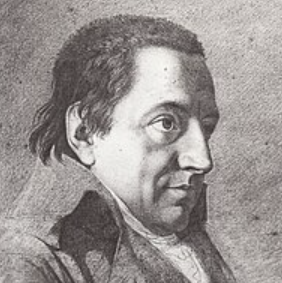
6 months 4 weeks ago
He who must still exhort himself, and be exhorted, to will the good, has as yet no firm and ever-ready will, but wills a will anew every time he needs it. But he who has such a stable will, wills what he wills for ever, and cannot under any circumstances will otherwise than he always wills. For him freedom of the will is destroyed and swallowed up in necessity.
▼
Source
source
General Nature of New Eduction p 21
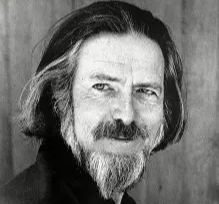
4 months 1 week ago
Zen does not confuse spirituality with thinking about God while one is peeling potatoes. Zen spirituality is just to peel the potatoes. Paraphrase of original text which reads "It does not confuse spirituality with thinking about God while one is peeling potatoes. Zen spirituality is just to peel the potatoes.
▼
Source
source
The Way of Zen, Pt. 2, Ch. 2
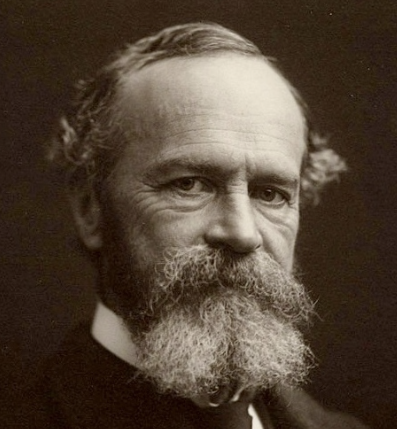
7 months 4 weeks ago
The gods we stand by are the gods we need and can use, the gods whose demands on us are reinforcements of our demands on ourselves and on one another. What I then propose to do is, briefly stated, to test saintliness by common sense, to use human standards to help us decide how far the religious life commends itself as an ideal kind of human activity . ... It is but the elimination of the humanly unfit, and the survival of the humanly fittest, applied to religious beliefs; and if we look at history candidly and without prejudice, we have to admit that no religion has ever in the long run established or proved itself in any other way. Religions have approved themselves; they have ministered to sundry vital needs which they found reigning. When they violated other needs too strongly, or when other faiths came which served the same needs better, the first religions were supplanted.
▼
Source
source
Lectures XIV and XV, "The Value of Saintliness"
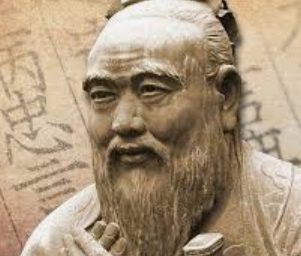
8 months 2 weeks ago
If the people have no faith in their rulers, there is no standing for the state.
8 months 1 week ago
A thing therefore never returns to nothing.
▼
Source
source
Book I, line 248 (tr. Munro)
5 months 3 weeks ago
Bless Madison Ave for restoring the magical art of the cavemen to suburbia.
▼
Source
source
(p. 130)
3 months 3 weeks ago
Everything that happens is either endurable or not. If it's endurable, then endure it. Stop complaining. If it's unendurable . . . then stop complaining. Your destruction will mean its end as well.
▼
Source
source
(Hays translation) X, 3

7 months 3 weeks ago
Technology is in its essence something that human beings cannot master of their own accord.
7 months 3 weeks ago
What do we mean by saying that existence precedes essence? We mean that man first of all exists, encounters himself, surges up in the world-and defines himself afterwards. If man as the existentialist see him is not definable, it is because to begin with he is nothing. He will not be anything until later, and then he will be what he makes of himself. Thus, there is no human nature, because there is no God to have a conception of it. Man simply is. Not that he is simply what he conceives himself to be, but he is what he wills, and as he conceives himself after already existing - as he wills to be after that leap towards existence. Man is nothing else but that which he makes of himself. That is the first principle of existentialism.
▼
Source
source
p. 28
8 months 2 weeks ago
Men all say, "We are wise"; but being driven forward and taken in a net, a trap, or a pitfall, they know not how to escape. Men all say, "We are wise"; but happening to choose the course of the Mean, they are not able to keep it for a round month.
7 months 4 weeks ago
Natural religion supplies still all the facts which are disguised under the dogma of popular creeds. The progress of religion is steadily to its identity with morals.
▼
Source
source
p. 223
7 months 3 weeks ago
Besides, we should never attempt to balance anybody's misery against somebody else's happiness.
▼
Source
source
pp. 486-487
6 months 4 weeks ago
To enrich God, man must become poor; that God may be all, man must be nothing.
6 months 2 weeks ago
The only way to give finality to the world is to give it consciousness. For where there is no consciousness there is no finality, finality presupposing a purpose. And... faith in God is based simply upon the vital need of giving finality to existence, of making it answer to a purpose. We need God, not in order to understand the why, but in order to feel and sustain the ultimate wherefore, to give a meaning to the Universe.
8 months 6 days ago
The Clergy is the greatest hindrance to faith.
▼
Source
source
58
8 months 3 weeks ago
So many men are deprived of grace. How can one live without grace? One has to try it and do what Christianity never did: be concerned with the damned.
3 months 3 weeks ago
It is necessary that every man be surpassingly temperate. That person would most of all be a man of this sort if he were superior to money, which is what corrupts all men, and if, without caring about his life, he bestowed his pains on things that are just and pursued virtue.
▼
Source
source
p. 149

8 months 2 weeks ago
It is no advantage to be near the light if the eyes are closed.
▼
Source
source
p. 607
3 months 4 weeks ago
The wife of my God is matter; they wrestle with each other, they laugh and weep, they cry out in the nuptial bed of flesh. They spawn and are dismembered. They fill sea, land, and air with species of plants, animals, men, and spirits. This primordial pair embraces, is dismembered, and multiplies in every living creature. All the concentrated agony of the Universe bursts out in every living thing. God is imperiled in the sweet ecstasy and bitterness of flesh. But he shakes himself free, he leaps out of brains and loins, then clings to new brains and new loins until the struggle for liberation again breaks out from the beginning.
7 months 2 weeks ago
Thrasyllus the Cynic begged a drachm of Antigonus. "That," said he, "is too little for a king to give." "Why, then," said the other, "give me a talent." "And that," said he, "is too much for a Cynic (or, for a dog) to receive."
▼
Source
source
45 Antigonus I
5 months 4 weeks ago
People continued - regardless of all that leads man forward - to try to unite the incompatibles : the virtue of love, and what is opposed to love, namely, the restraining of evil by violence. And such a teaching, despite its inner contradiction, was so firmly established that the very people who recognize love as a virtue accept as lawful at the same time an order of life based on violence and allowing men not merely to torture but even to kill one another.
▼
Source
source
III
4 months 1 week ago
But the wise man knows that all things are in store for him. Whatever happens, he says: "I knew it."

6 months 2 weeks ago
When we cannot obtain a thing, we comfort ourselves with the reassuring thought that it is not worth nearly as much as we believed.
▼
Source
source
L. Coser, trans. (1973), p. 73
4 months 3 weeks ago
You may take great comfort from the fact that suffering inwardly for the sake of truth proves abundantly that one loves it and marks one out as being of the elect.
▼
Source
source
Saint Sulpice and the Hidden God.

6 months 3 weeks ago
Till women are more rationally educated, the progress in human virtue and improvement in knowledge must receive continual checks.
▼
Source
source
Ch. 3
7 months 4 weeks ago
Men are what their mothers made them.
▼
Source
source
Fate
4 months 1 week ago
I am old, but I certainly have not that sign of old age, extolling the past at the expense of the present.
▼
Source
source
Vol. I, ch. 11, p. 437
8 months 6 days ago
A faithful and good servant is a real godsend; but truly 'tis a rare bird in the land.
▼
Source
source
156

7 months 1 week ago
To use Virtue is perfect blessedness.
CivilSimian.com created by AxiomaticPanic, CivilSimian, Kalokagathia