


4 months 2 weeks ago
To the wild deep-hearted man all was yet new, not veiled under names or formulas; it stood naked, flashing in on him there, beautiful, awful, unspeakable. Nature was to this man, what to the Thinker and Prophet it forever is, preternatural. This green flowery rock-built earth, the trees, the mountains, rivers, many-sounding seas;-that great deep sea of azure that swims overhead; the winds sweeping through it; the black cloud fashioning itself together, now pouring out fire, now hail and rain.
8 months 6 days ago
This return of Republics back to their principles also results from the simple virtue of one man, without depending on any law that excites him to any execution: none the less, they are of such influence and example that good men desire to imitate him, and the wicked are ashamed to lead a life contrary to those examples.
▼
Source
source
Book 3, Ch. 1
8 months ago
Our labour preserves us from three great evils -- weariness, vice, and want.
5 months 3 weeks ago
New technological environments are commonly cast in the molds of the preceding technology out of the sheer unawareness of their designers.
▼
Source
source
(p. 47)
7 months 4 weeks ago
Do not hire a man who does your work for money, but him who does it for love of it.
▼
Source
source
p. 486
4 months 2 weeks ago
Every pitifulest whipster that walks within a skin has had his head filled with the notion that he is, shall be, or by all human and divine laws ought to be, 'happy.' His wishes, the pitifulest whipster's, are to be fulfilled for him; his days, the pitifulest whipster's, are to flow on in an ever-gentle current of enjoyment, impossible even for the gods. The prophets preach to us, Thou shalt be happy; thou shalt love pleasant things, and find them. The people clamor, Why have we not found pleasant things? ...God's Laws are become a Greatest Happiness Principle. There is no religion; there is no God; man has lost his soul.
▼
Source
source
Bk. III, ch. 4.

5 months 4 weeks ago
Giving alms is only a virtuous deed when you give money that you yourself worked to get.
▼
Source
source
p. 83
4 months 2 weeks ago
Innumerable are the illusions and legerdemain-tricks of Custom: but of all these, perhaps the cleverest is her knack of persuading us that the Miraculous, by simple repetition, ceases to be Miraculous.
▼
Source
source
Bk. III, ch. 8.
5 months 2 weeks ago
To a person uninstructed in natural history, his country or sea-side stroll is a walk through a gallery filled with wonderful works of art, nine-tenths of which have their faces turned to the wall.
▼
Source
source
On the Educational Value of the Natural History Sciences (1854) p. 29
8 months 2 weeks ago
They hate not to make use of their abilities... they do not necessarily work for their own self-interest.
6 months 3 weeks ago
For Prudence, is but Experience; which equal time, equally bestows on all men, in those things they equally apply themselves unto.
▼
Source
source
The First Part, Chapter 13, p. 60

6 months 4 weeks ago
You have the representatives of that [Christian] religion which says that their God is love, that the very vital spirit of their institution is charity,-a religion which so much hates oppression, that, when the God whom we adore appeared in human form, He did not appear in a form of greatness and majesty, but in sympathy with the lowest of the people, and thereby made it a firm and ruling principle that their welfare was the object of all government, since the Person who was the Master of Nature chose to appear Himself in a subordinate situation. These are the considerations which influence them, which animate them, and will animate them, against all oppression,-knowing that He who is called first among them, and first among us all, both of the flock that is fed and of those who feed it, made Himself "the servant of all."
▼
Source
source
Speech in opening the impeachment of Warren Hastings (19 February 1788), quoted in The Works of the Right Honourable Edmund Burke, Volume the Tenth (1899), p. 144

6 months 3 weeks ago
We make choices, decisions, as long as we keep to the surface of things; once we reach the depths, we can neither choose nor decide, we can do nothing but regret the surface...
6 months 4 weeks ago
Before either of us knew it, we belonged to each other.
6 months 4 weeks ago
Mere parsimony is not economy. Expense, and great expense, may be an essential part in true economy.
6 months 3 weeks ago
No doubt the spirit or energy of the world is what is acting in us, as the sea is what rises in every little wave; but it passes through us, and cry out as we may, it will move on. Our privilege is to have perceived it as it moves.
▼
Source
source
p. 199
6 months 1 week ago
There is no more important rule of conduct in the world than this: attach yourself as much as you can to people who are abler than you and yet not so very different that you cannot understand them.
▼
Source
source
F 81

7 months 4 weeks ago
If the single man plant himself indomitably on his instincts, and there abide, the huge world will come round to him. 6. Nature, Addresses and Lectures.
▼
Source
source
The American Scholar
9 months 1 day ago
Knowledge more than a Means. Also without this passion I refer to the passion for knowledge, science would be furthered: science has hitherto increased and grown up without it. The good faith in science, the prejudice in its favour, by which States are at present dominated (it was even the Church formerly), rests fundamentally on the fact that the absolute inclination and impulse has so rarely revealed itself in it, and that science is regarded not as a passion, but as a condition and an "ethos." Indeed, amour-plaisir of knowledge (curiosity) often enough suffices, amour-vanity suffices, and habituation to it, with the afterthought of obtaining honour and bread; it even suffices for many that they do not know what to do with a surplus of leisure, except to continue reading, collecting, arranging, observing and narrating; their "scientific impulse" is their ennui.
3 months 3 weeks ago
Look to the essence of a thing, whether it be a point of doctrine, of practice, or of interpretation.
▼
Source
source
VIII, 22
8 months 1 week ago
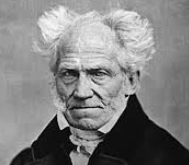
The essence of the good is a certain kind of moral purpose, and that of the evil is a certain kind of moral purpose.
▼
Source
source
Book I, ch. 29, 1
8 months ago
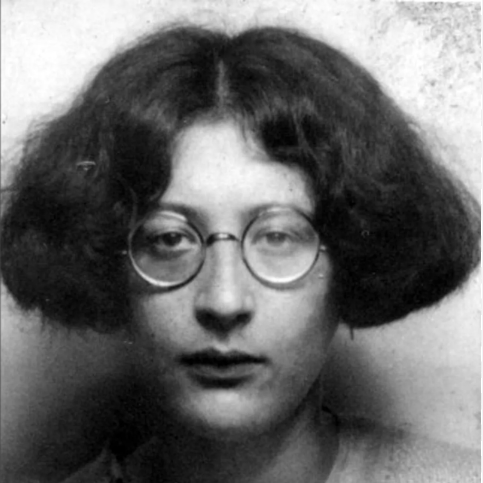
No difference of rank, position, or birth, is so great as the gulf that separates the countless millions who use their head only in the service of their belly, in other words, look upon it as an instrument of the will, and those very few and rare persons who have the courage to say: No! my head is too good for that; it shall be active only in its own service; it shall try to comprehend the wondrous and varied spectacle of this world and then reproduce it in some form, whether as art or as literature, that may answer to my character as an individual.
▼
Source
source
On Genius, Parerga and Paralipomena, Chapter III
6 months 2 weeks ago
In order to be exercised, the intelligence requires to be free to express itself without control by any authority. There must therefore be a domain of pure intellectual research, separate but accessible to all, where no authority intervenes. The human soul has need of some solitude and privacy and also of some social life.The human soul has need of both personal property and collective property.
7 months 4 weeks ago
You ask particularly after my health. I suppose that I have not many months to live; but, of course, I know nothing about it. I may add that I am enjoying existence as much as ever, and regret nothing.
▼
Source
source
Last letter, to Myron Benton, March 31, 1862
7 months 2 weeks ago
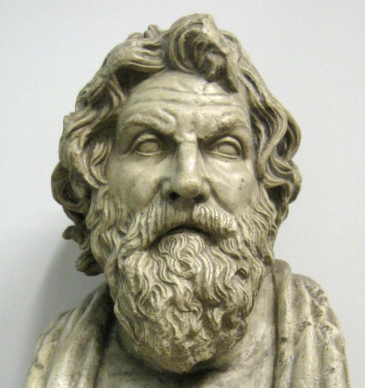
Antisthenes ... was asked on one occasion what learning was the most necessary, and he replied, "To unlearn one's bad habits."
▼
Source
source
§ 4
5 months 2 weeks ago
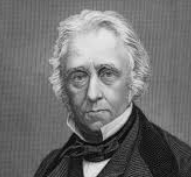
It is now time for us to pay a decent, a rational, a manly reverence to our ancestors, not by superstitiously adhering to what they, in other circumstances, did, but by doing what they, in our circumstances, would have done.
▼
Source
source
Speech in the House of Commons on the Reform Bill (2 March 1831), quoted in Speeches of the Right Honourable T. B. Macaulay, M.P. (1854), p. 8
7 months 3 weeks ago
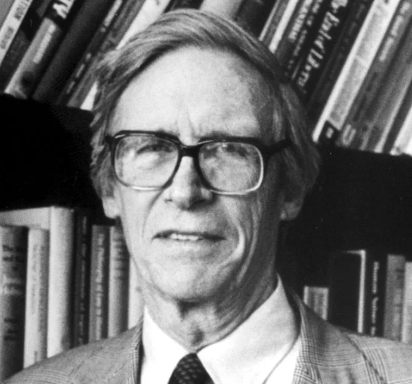
Ideally a just constitution would be a just procedure arranged to insure a just outcome.
▼
Source
source
Chapter IV, Section 31, pg. 197
6 months 3 weeks ago
So that in the first place, I put for a general inclination of all mankind a perpetual and restless desire of Power after power, that ceaseth only in Death. And the cause of this is not always that a man hopes for a more intensive delight than he has already attained to, or that he cannot be content with a moderate power: but because he cannot assure the power and means to live well, which he hath present, without the acquisition of more.
▼
Source
source
The First Part, Chapter 11, p. 47
5 months 4 weeks ago
What! all of us, Christians, not only profess to love one another, but do actually live one common life; we whose social existence beats with one common pulse-we aid one another, learn from one another, draw ever closer to one another to our mutual happiness, and find in this closeness the whole meaning of life!-and to-morrow some crazy ruler will say some stupidity, and another will answer in the same spirit, and then I must go expose myself to being murdered, and murder men-who have done me no harm-and more than that, whom I love. And this is not a remote contingency, but the very thing we are all preparing for, which is not only probable, but an inevitable certainty.
▼
Source
source
Chapter V, Contradiction Between our Life and our Christian Conscience
7 months 3 weeks ago
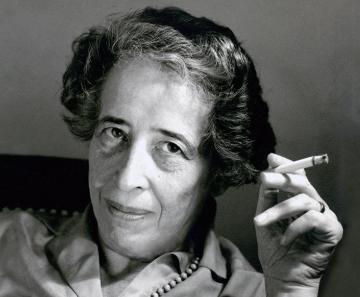
It is, in fact, far easier to act under conditions of tyranny than it is to think.
▼
Source
source
The Human Condition
7 months 3 weeks ago
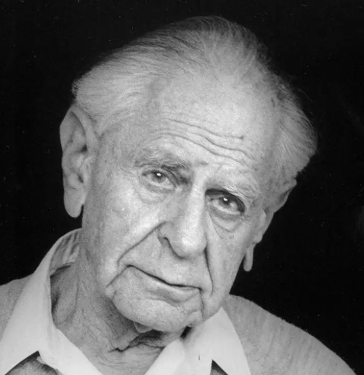
As a rule, begin my lectures on Scientific Method by telling my students that scientific method does not exist. ...having been ...the one and only professor of this non-existent subject within the British Commonwealth.
6 months 3 weeks ago
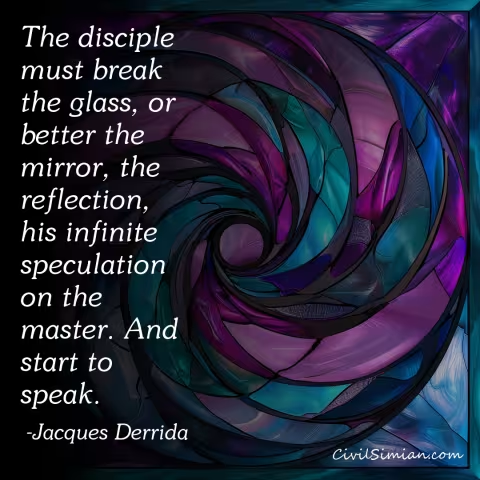
God is what survives the evidence that nothing deserves to be thought.
3 months 4 weeks ago
In order to be able to meet a general combination of the banks against us in a critical emergency, could we not make a beginning towards an independent use of our own money, towards holding our own bank in all the deposits where it is received, and letting the treasurer give his draft or note for payment at any particular place, which, in a well-conducted government, ought to have as much credit as any private draft or bank note or bill, and would give us the same facilities which we derive from the banks?
▼
Source
source
Letter to Albert Gallatin, 1803. ME 10:439
6 months 2 weeks ago
The bourgeoisie is defined as the social class which does not want to be named.
▼
Source
source
p. 138

7 months 3 weeks ago
On recent and contemporary literature student's need is least and our help least. They ought to understand it better than we, and if they do not then there is something radically wrong either with them or with the literature. But I need not labour the point. There is an intrinsic absurdity in making current literature a subject of academic study, and the student who wants a tutor's assistance in reading the works of his own contemporaries might as well ask for a nurse's assistance in blowing his own nose.
▼
Source
source
"Our English syllabus", Rehabilitations and Other Essays (1939). Reprinted in Image and Imagination: Essays and Reviews by C. S. Lewis (2013), Cambridge University Press
3 months 3 weeks ago
No state sorrier than that of the man who keeps up a continual round, and pries into "the secrets of the nether world," as saith the poet, and is curious in conjecture of what is in his neighbour's heart.
▼
Source
source
II, 13
4 months 1 week ago
It would be some consolation for the feebleness of our selves and our works, if all things should perish as slowly as they come into being; but as it is, increases are of sluggish growth, but the way to ruin is rapid.
5 months 3 weeks ago
The audience, as ground, shapes and controls the work of art.
▼
Source
source
p. 48
4 months 2 weeks ago
It is a course which perhaps would not have been necessary had it been possible to form a state composed of wise men, but as every multitude is fickle, full of lawless desires, unreasoned passion, and violent anger, the multitude must be held in by invisible terrors and suchlike pageantry. For this reason I think, not that the ancients acted rashly and at haphazard in introducing among the people notions concerning the gods and beliefs in the terrors of hell, but that the moderns are most rash and foolish in banishing such beliefs.
6 months 2 weeks ago
God ... demands everything, in order to give everything anew to him who loves Him, after that loving has truly given up all.
▼
Source
source
p. 45
6 months 4 weeks ago
Do you know that ages will pass and mankind will proclaim in its wisdom and science that there is no crime and, therefore no sin, but that there are only hungry people. "Feed them first and then demand virtue of them!" - that is what they will inscribe on their banner which they will raise against you and which will destroy your temple.
8 months ago
My basis is supported by the authority of the greatest moralist of modern times; for such, undoubtedly, J. J. Rousseau is,-that profound reader of the human heart, who drew his wisdom not from books, but from life, and intended his doctrine not for the professorial chair, but for humanity; he, the foe of all prejudice, the foster-child of nature, whom alone she endowed with the gift of being able to moralise without tediousness, because he hit the truth and stirred the heart.
▼
Source
source
Part III, Ch. VIII, 9, p. 230
3 months 4 weeks ago
Experience declares that man is the only animal which devours his own kind; for I can apply no milder term to the governments of Europe, and to the general prey of the rich on the poor.
▼
Source
source
Letter to Colonel Edward Carrington
8 months 3 weeks ago
There is no way of being almost funny or mildly funny or fairly funny or tolerably funny. You are either funny or not funny and there is nothing in between. And usually it is the writer who thinks he is funny and the reader who thinks he isn't.

3 months 3 weeks ago
A geometrician has learned to perform the most difficult demonstrations and calculations, as a monkey has learned to take his little hat off and on...
CivilSimian.com created by AxiomaticPanic, CivilSimian, Kalokagathia