

6 months 2 weeks ago
Greatness by nature includes a power, but not a will to power.
▼
Source
source
p. 150
6 months ago
Perhaps the promise of phallus is always dissatisfying in some way.
▼
Source
source
"The Lesbian Phallus and the Morphological Imaginary" (1993), later published in The Judith Butler Reader (2004) edited by Sarah Salih with Judith Butler
4 months 2 weeks ago
Philosophy is a hypothetical interpretation of the unknown (as in metaphysics), or of the inexactly known (as in ethics or political philosophy); it is the front trench in the siege of truth.
7 months 2 weeks ago
A life without a holiday is like a long journey without an inn to rest at.
7 months 2 weeks ago
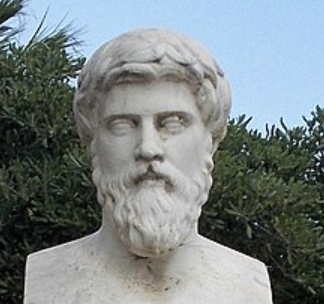
The mind is not a vessel that needs filling, but wood that needs igniting.
▼
Source
source
On Listening to Lectures (Tr. Waterfield)
6 months 3 weeks ago
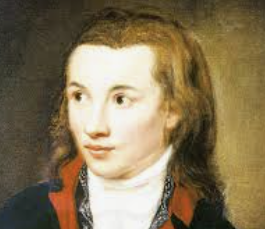
Every stage of education begins with childhood. That is why the most educated person on earth so much resembles a child.
▼
Source
source
"Miscellaneous Observations," Philosophical Writings, M. Stolijar, trans. (Albany: 1997) #48
6 months 2 weeks ago
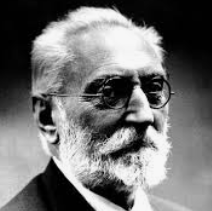
I am dreaming ...? Let me dream, if this dream is my life. Do not awaken me from it. I believe in the immortal origin of this yearning for immortality, which is the very substance of my soul. But do I really believe in it ...? And wherefore do you want to be immortal? you ask me, wherefore? Frankly, I do not understand the question, for it is to ask the reason of the reason, the end of the end, the principle of the principle.
5 months 4 weeks ago
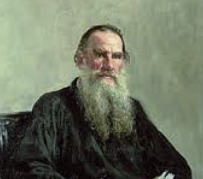
Science is meaningless because it gives no answer to our question, the only question important for us: 'what shall we do and how shall we live.
▼
Source
source
Quoted by Max Weber in his lecture "Science as a Vocation"; in Lynda Walsh (2013)
6 months 4 weeks ago
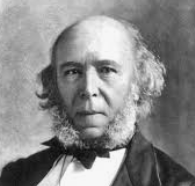
The education of the child must accord both in mode and arrangement with the education of mankind, considered historically. In other words, the genesis of knowledge in the individual, must follow the same course as the genesis of knowledge in the race. In strictness, this principle may be considered as already expressed by implication; since both being processes of evolution, must conform to those same general laws of evolution... and must therefore agree with each other. Nevertheless this particular parallelism is of value for the specific guidance it affords. To M. Comte we believe society owes the enunciation of it; and we may accept this item of his philosophy without at all committing ourselves to the rest.
8 months ago
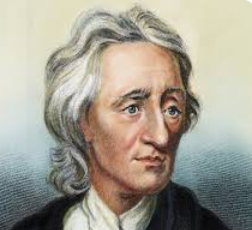
It is one thing to show a man that he is in error, and another to put him in possession of the truth.
▼
Source
source
Book IV, Ch. 7, sec. 11
6 months 3 weeks ago
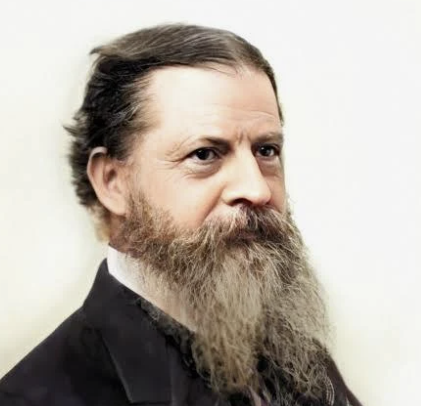
Some words shall herein be capitalised when used, not as vernacular, but as terms defined. Thus an "idea" is the substance of an actual unitary thought or fancy; but "Idea," nearer Plato's idea of ἰδέα, denotes anything whose Being consists in its mere capacity for getting fully represented, regardless of any person's faculty or impotence to represent it.
▼
Source
source
I
8 months 2 days ago
If the material world rests upon a similar ideal world, this ideal world must rest upon some other; and so on, without end. It were better, therefore, never to look beyond the present material world. By supposing it to contain the principle of its order within itself, we really assert it to be God; and the sooner we arrive at that Divine Being, so much the better. When you go one step beyond the mundane system, you only excite an inquisitive humour which it is impossible ever to satisfy.
▼
Source
source
Philo to Cleanthes, Part IV

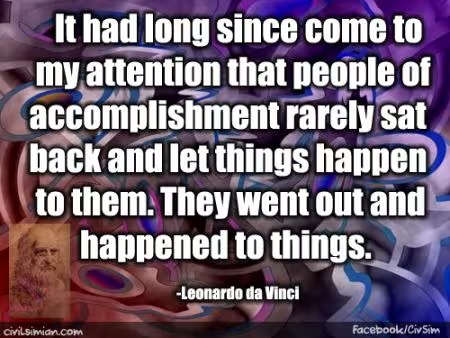
6 months 1 week ago
One has to do something new in order to see something new.
▼
Source
source
J 1770
6 months 3 weeks ago
Where love rules, there is no will to power; and where power predominates, there love is lacking. The one is the shadow of the other.
▼
Source
source
P. 97
8 months 2 weeks ago
People travel to wonder at the height of mountains, at the huge waves of the sea, at the long courses of rivers, at the vast compass of the ocean, at the circular motion of the stars; and they pass by themselves without wondering.
▼
Source
source
Variant: Men go abroad to admire the heights of mountains, the mighty billows of the sea, the broad tides of rivers, the compass of the ocean, and the circuits of the stars, and pass themselves by. X
6 months 1 week ago
Greed is a bottomless pit which exhausts the person in an endless effort to satisfy the need without ever reaching satisfaction.
▼
Source
source
Ch. 4
7 months 3 weeks ago
The meaning of a question is the method of answering it: then what is the meaning of 'Do two men really mean the same by the word "white"?' Tell me how you are searching, and I will tell you what you are searching for.
▼
Source
source
Philosophical Remarks (1991), Part III (27), pp.66-67
6 months 4 weeks ago
All became so jealous of the rights of their own personality that they did their very utmost to curtail and destroy them in others, and made that the chief thing in their lives. Slavery followed, even voluntary slavery; the weak eagerly submitted to the strong, on condition that the latter aided them to subdue the still weaker. Then there were saints who came to these people, weeping, and talked to them of their pride, of their loss of harmony and due proportion, of their loss of shame. They were laughed at or pelted with stones.
8 months 1 week ago
The essence of the good is a certain kind of moral purpose, and that of the evil is a certain kind of moral purpose.
▼
Source
source
Book I, ch. 29, 1
5 months 3 weeks ago
The pre-atomist multisensory void was an animate, pulsating, and moving vibrant interval, neither container nor contained, acoustic space penetrated by tactility.
▼
Source
source
p. 34
5 months 3 weeks ago
You don't have to be a scientist - you don't have to play the Bunsen burner - in order to understand enough science to overtake your imagined need and fill that fancied gap. Science needs to be released from the lab into the culture.
4 months 1 week ago
A comfortable house is a great source of happiness. It ranks immediately after health and a good conscience.
▼
Source
source
Vol. II, letter to Lord Murray (29 September 1843), p. 501
8 months ago
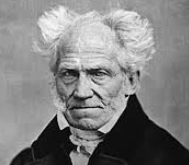
It is the courage to make a clean breast of it in the face of every question that distinguishes the philosopher. He must be like Sophocles' Oedipus, who, seeking enlightenment concerning his terrible fate, pursues his indefatigable inquiry even though he divines that appalling horror awaits him in the answer. But most of us carry with us the Jocasta in our hearts, who begs Oedipus, for God's sake, not to inquire further.
▼
Source
source
Letter to Johann Wolfgang von Goethe (November 1815)
6 months 2 weeks ago
The only way to give finality to the world is to give it consciousness. For where there is no consciousness there is no finality, finality presupposing a purpose. And... faith in God is based simply upon the vital need of giving finality to existence, of making it answer to a purpose. We need God, not in order to understand the why, but in order to feel and sustain the ultimate wherefore, to give a meaning to the Universe.
6 months 4 weeks ago
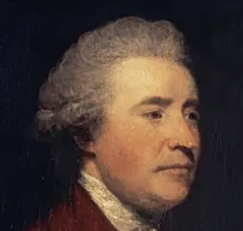
I considerd a general War against Jacobins and Jacobinism, as the only possible chance of saving Europe, (and England as included in Europe) from a truly frightful revolution. ... It is my Protest against the delusion, by which some have been taught to look upon this Jacobin contest at home as an ordinary party squabble about place or Patronage; and to regard this Jacobin War abroad as a common War about Trade, or Territorial Boundaries, or about a political Balance of power among Rival or jealous States.
▼
Source
source
Letter to the Duke of Portland (29 September 1793), quoted in P. J. Marshall and John A. Woods (eds.)
8 months 2 weeks ago
Choose to love whomsoever thou wilt: all else will follow. Thou mayest say, "I love only God, God the Father." Wrong! If Thou lovest Him, thou dost not love Him alone; but if thou lovest the Father, thou lovest also the Son. Or thou mayest say, "I love the Father and I love the Son, but these alone; God the Father and God the Son, our Lord Jesus Christ who ascended into heaven and sitteth at the right hand of the Father, the Word by whom all things were made, the Word who was made flesh and dwelt amongst us; only these do I love." Wrong again! If thou lovest the Head, thou lovest also the members; if thou lovest not the members, neither dost thou love the Head.
▼
Source
source
p 438
8 months 4 weeks ago
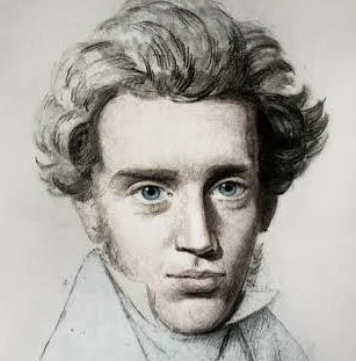
Not merely in the realm of commerce but in the world of ideas as well our age is organizing a regular clearance sale. Everything is to be had at such a bargain that it is questionable whether in the end there is anybody who will want to bid. Every speculative price-fixer who conscientiously directs attention to the significant march of modern philosophy, every Privatdocent, tutor, and student, every crofter and cottar goes further. Perhaps it would be untimely and ill-timed to ask them where they are going.
3 months 3 weeks ago
The dyad gets its name from passing through or asunder; for the dyad is the first to have separated itself from the monad, whence also it is called "daring." For when the monad manifests unification, the dyad steals in and manifests separation.
▼
Source
source
On the Dyad
3 months 3 weeks ago
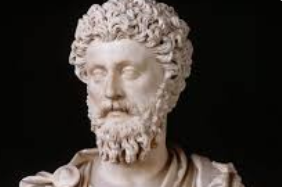
Direct thy attention to what is said. Let thy understanding enter into the things that are doing and the things which do them.
▼
Source
source
VII, 30
7 months 4 weeks ago
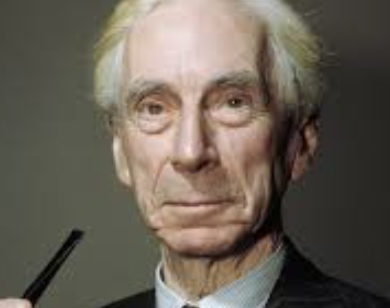
It seems that sin is geographical. From this conclusion, it is only a small step to the further conclusion that the notion of "sin" is illusory, and that the cruelty habitually practised in punishing it is unnecessary.
▼
Source
source
A Fresh Look at Empiricism: 1927-42 (1996), p. 283
8 months 1 day ago
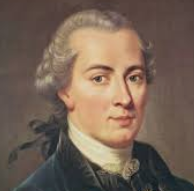
The third of this kind of principles is : matter neither originates nor perishes; all the changes in the world concern form only ; a postulate which on the recommendation of common sense has spread through all philosophical schools, not because it is to be taken as having been found so, or as having been demonstrated by arguments a priori, but because if we were to admit that matter itself is fleeting and transitory, nothing at all that is stable and lasting would be left any longer to serve for the explication of phenomena according to universal and perpetual laws, and hence nothing at all would be left for the exercise of the intellect.
6 months 3 weeks ago
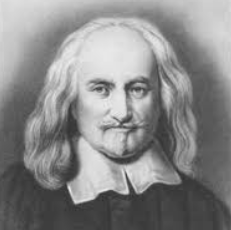
Power as is really divided, and as dangerously to all purposes, by sharing with another an Indirect Power, as a Direct one.
▼
Source
source
The Third Part, Chapter 42, p. 315
5 months 1 week ago
...it won't just be the quality and quantity of consciousness in the world that will be transformed in the post-Darwinian Transition. As (post-)humanity emerges from the neurochemical Dark Ages, enriched dopaminergic function in particular may sharpen the sheer intensity and meaningfulness of every moment of conscious existence. For a generation whose lifetimes span both modes of awareness, it will be as if they had just woken up. They will feel they had hitherto been sleep-walking through life in a twilit stupor. Thereafter their former mundane and minimal existence may be recalled only as some kind of zombified trance-state whose nature they were physiologically incapable of recognising...
▼
Source
source
The Hedonistic Imperative: Heaven on Earth?, "Eden", BLTC Research
5 months 2 weeks ago
I do not advocate burning your ship to get rid of the cockroaches.
▼
Source
source
Said in reference to those who wished to abolish all religious teaching, rather than freeing state education from Church controls, in Critiques and Addresses (1873) p. 90
7 months 3 days ago
Reorganisation, irrespectively of God or king, by the worship of Humanity, systematically adopted. Man's only right is to do his duty. The Intellect should always be the servant of the Heart, and should never be its slave.
▼
Source
source
Title Page

6 months 3 weeks ago
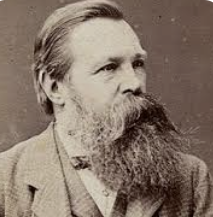
True, the law is sacred to the bourgeois, for it is his own composition, enacted with his consent, and for his benefit and protection. He knows that, even if an individual law should injure him, the whole fabric protects his interests; and more than all, the sanctity of the law, the sacredness of order as established by the active will of one part of society, and the passive acceptance of the other, is the strongest support of his social position. Because the English bourgeois finds himself reproduced in his law, as he does in his God, the policeman's truncheon which, in a certain measure, is his own club, has for him a wonderfully soothing power. But for the working-man quite otherwise! The working-man knows too well, has learned from too oft-repeated experience, that the law is a rod which the bourgeois has prepared for him; and when he is not compelled to do so, he never appeals to the law.
3 months 3 weeks ago
Today I escaped from anxiety. Or no, I discarded it, because it was within me, in my own perceptions-not outside.
▼
Source
source
(Hays translation) IX, 13
6 months 4 weeks ago
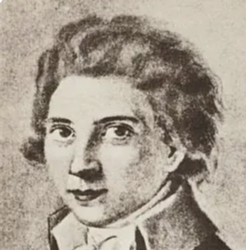
Life is writing. The sole purpose of mankind is to engrave the thoughts of divinity onto the tablets of nature.
▼
Source
source
"On Philosophy: To Dorothea," in Theory as Practice (1997), p. 420
6 months 2 weeks ago
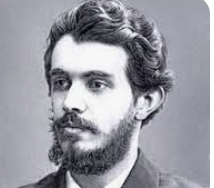
He was arrested twice; he was taken in 1922 for a midnight interrogation with Dzerjinsky; Kamenev was also there. ... But Berdyaev did not humiliate himself, he did not beg, he firmly professed the moral and religious principles by virtue of which he did not adhere to the party in power; and not only did they judge that there was no point in putting him on trial, but he was freed. Now there is a man who had a "point of view"!
▼
Source
source
Richard Schain, in In Love with Eternity : Philosophical Essays and Fragments (2005), Ch. 7 : Nikolai Alexandrovich Berdyaev - A Champion of the Spirit, p. 47
7 months 4 weeks ago
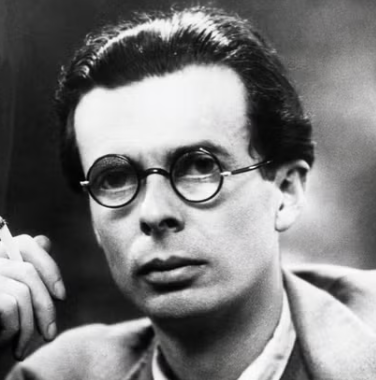
The film concludes with ... the most nauseatingly luscious, the most penetratingly vulgar mammy song that it has ever been my lot to hear. My flesh crept as the loud speaker poured out those sodden words, the greasy, sagging melody. I felt ashamed of myself for listening to such things, for even being a member of the species to which such things are addressed.
▼
Source
source
"Silence is Golden," p. 62
6 months 1 day ago
My car and my adding machine understand nothing: they are not in that line of business.
7 months 4 days ago
Persecution is a bad and indirect way to plant Religion.
▼
Source
source
Section 25
6 months 1 week ago
If it is permissible to write plays that are not intended to be seen, I should like to see who can prevent me from writing a book no one can read.
▼
Source
source
F 1

6 months 3 weeks ago
This is how I recognize an authentic poet: by frequenting him, living a long time in the intimacy of his work, something changes in myself, not so much my inclinations or my tastes as my very blood, as if a subtle disease had been injected to alter its course, its density and nature. To live around a true poet is to feel your blood run thin, to dream a paradise of anemia, and to hear, in your veins, the rustle of tears.

8 months 4 weeks ago
It is as useless for a person to want first of all to decide the externals and after that the fundamentals as it is for a cosmic body, thinking to form itself, first of all to decide the nature of its surface, to what bodies it should turn its light, which its dark side, without first letting the harmony of centrifugal and centripetal forces realize its existence and letting the rest come of itself. One must learn to know oneself before knowing anything else (gnothi seauton). Not until a person has inwardly understood himself and then sees the course he is to take does his life gain peace and meaning.
CivilSimian.com created by AxiomaticPanic, CivilSimian, Kalokagathia