

5 months 3 weeks ago
Fortune is like glass-the brighter the glitter, the more easily broken.
▼
Source
source
Maxim 280


7 months 2 weeks ago
There are two forms of knowledge, one genuine, one obscure. To the obscure belong all of the following: sight, hearing, smell, taste, feeling. The other form is the genuine, and is quite distinct from this. [And then distinguishing the genuine from the obscure, he continues:] Whenever the obscure [way of knowing] has reached the minimum sensibile of hearing, smell, taste, and touch, and when the investigation must be carried farther into that which is still finer, then arises the genuine way of knowing, which has a finer organ of thought.

6 months 3 weeks ago
Suppose ye that I am come to give peace on earth? I tell you, Nay; but rather division: For from henceforth there shall be five in one house divided, three against two, and two against three. The father shall be divided against the son, and the son against the father; the mother against the daughter, and the daughter against the mother; the mother in law against her daughter in law, and the daughter in law against her mother in law. And he said also to the people, When ye see a cloud rise out of the west, straightway ye say, There cometh a shower; and so it is. And when ye see the south wind blow, ye say, There will be heat; and it cometh to pass. Ye hypocrites, ye can discern the face of the sky and of the earth; but how is it that ye do not discern this time? Yea, and why even of yourselves judge ye not what is right?
▼
Source
source
12:51-57 (KJV) Variant translation of 12:57: Why do you not judge for yourselves what is right?

5 months 1 week ago
I believe most people are aware of periods in their lives when they seem to be "in grace" and other periods when they feel "out of grace," even though they may use different words to describe these states. In the first happy condition, one seems to carry all one's tasks before one lightly, as if borne along on a great tide; and in the opposite state one can hardly tie a shoe-string. It is true that a large part of life consists in learning a technique of tying the shoe-string, whether one is in grace or not. But there are techniques of living too; there are even techniques in the search for grace.

6 months 4 weeks ago
Revolution is like Saturn, it devours its own children.
▼
Source
source
Act I.

8 months 1 week ago
Above all, every relation must be considered as suspicious, which depends in any degree upon religion, as the prodigies of Livy: And no less so, everything that is to be found in the writers of natural magic or alchemy, or such authors, who seem, all of them, to have an unconquerable appetite for falsehood and fable.
▼
Source
source
Aphorism 29
5 months 2 weeks ago
The man of science who commits himself to even one statement which turns out to be devoid of good foundation loses somewhat of his reputation among his fellows, and if he be guilty of the same error often he loses not only his intellectual, but his moral standing among them. For it is justly felt that errors of this kind have their root rather in the moral than in the intellectual nature.
▼
Source
source
The Evidence of the Miracle of the Resurrection

4 months 1 week ago
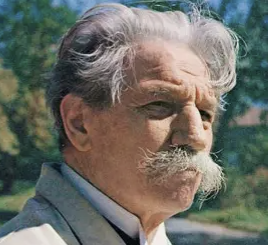
The only originality I claim is that for me this truth goes hand in hand with the intellectual certainty that the human spirit is capable of creating in our time a new mentality, an ethical mentality. Inspired by this certainty, I too proclaim this truth in the hope that my testimony may help to prevent its rejection as an admirable sentiment but a practical impossibility. Many a truth has lain unnoticed for a long time, ignored simply because no one perceived its potential for becoming reality.

6 months 1 week ago
Can the "word" be pinned down to either one period or one church? All churches are, of course, only more or less unsuccessful attempts to represent the unseen to the mind.
▼
Source
source
Letter quoted in Florence Nightingale in Rome : Letters Written by Florence Nightingale in Rome in the Winter of 1847-1848 (1981)
5 months 3 weeks ago
When Fortune is on our side, popular favor bears her company.
▼
Source
source
Maxim 275
8 months ago
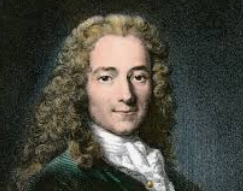
It is very strange that men should deny a creator and yet attribute to themselves the power of creating eels.
▼
Source
source
From the Philosophic Dictionary, as quoted in The life of Pasteur, 1902
5 months 3 weeks ago
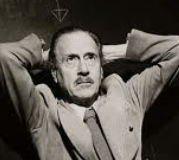
Another theme of the Wake that helps in the understanding of the paradoxical shift from cliché to archetype is "pastimes are past times". The dominant technologies of one age become the games and pastimes of a later age. In the twentieth century the number of past times that are simultaneously available is so vast as to create cultural anarchy. When all the cultures of the world are simultaneously present, the work of the artist in the elucidation of form takes on new scope and new urgency. Most men are pushed into the artist role. The artist cannot dispense with the principle of doubleness and interplay since this kind of hendiadys-dialogue is essential to the very structure of consciousness, awareness, and autonomy.
▼
Source
source
(p.99)


7 months 4 weeks ago
It is said (I do not know with what truth) that a certain Hindu thinker believed the earth to rest upon an elephant. When asked what the elephant rested upon, he replied that it rested upon a tortoise. When asked what the tortoise rested upon, he said, "I am tired of this. Suppose we change the subject." This illustrates the unsatisfactory character of the First-Cause argument.
▼
Source
source
"Is There a God?", 1952
4 months 1 week ago
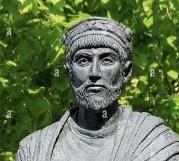
The good effects that emanate from the same source are equally diffused upon the earth. Different regions become partakers in these benefits in different ways; so that neither their production comes to an end, nor does the Deity confer his blessings upon the recipient world with any degree of variation. For where the substance is the same, so is the action thereof, in the case of Divine Powers; especially with him who is king of them all, namely, the Sun; of whom the motion is the most simple amongst all the bodies that move in a contrary direction to the world, which fact that most excellent philosopher, Aristotle, adduces to prove the superiority of that luminary to the others.
5 months 3 weeks ago
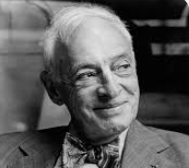
Writers are greatly respected. The intelligent public is wonderfully patient with them, continues to read them, and endures disappointment after disappointment, waiting to hear from art what it does not hear from theology, philosophy, social theory, and what it cannot hear from pure science. Out of the struggle at the center has come an immense, painful longing for a broader, more flexible, fuller, more coherent, more comprehensive account of what we human beings are, who we are and what this life is for.
▼
Source
source
Nobel Prize lecture
6 months 3 weeks ago
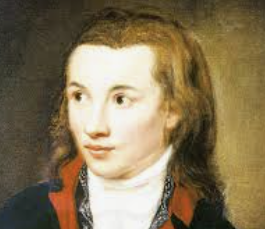
To become properly acquainted with a truth, we must first have disbelieved it, and disputed against it.
4 months 3 weeks ago
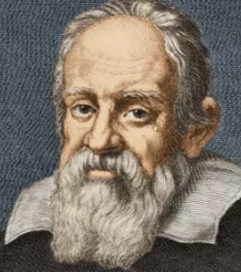
I do not feel obliged to believe that the same God who has endowed us with senses, reason, and intellect has intended us to forgo their use and by some other means to give us knowledge which we can attain by them.
5 months 3 weeks ago
Once you had read the Psychopathology of Everyday Life, you knew that everyday life was psychopathology.
▼
Source
source
Humboldt's Gift (1975) [Penguin Classics, 1996, ISBN 0-140-18944-0], p. 5

6 months ago
If the immutable character of sex is contested, perhaps this construct called 'sex' is as culturally constructed as gender; indeed, perhaps it was always already gender, with the consequence that the distinction between sex and gender turns out to be no distinction at all.
▼
Source
source
Gender Trouble: Feminism and the Subversion of Identity
6 months 2 weeks ago
And the conversion of the other Don Quixote - he who was converted only to die - was possible because he was mad, and it was his madness, and not his death or his conversion that immortalized him, earning him forgiveness for this crime of having been born. Felix culpa! And neither was his madness cured, but only transformed. His death was his last knightly adventure; in dying he stormed heaven, which suffereth violence.

6 months 3 weeks ago
The skeptic is the least mysterious man in the world, and yet, starting from a certain moment, he no longer belongs to this world.

7 months 4 weeks ago
A sect or party is an elegant incognito devised to save a man from the vexation of thinking.
▼
Source
source
June 20, 1831
7 months 4 weeks ago
Conversation is an art in which a man has all mankind for his competitors, for it is that which all are practising every day while they live.
▼
Source
source
Considerations by the Way
7 months 4 weeks ago
A mind does not receive truth as a chest receives jewels that are put into it, but as the stomach takes up food into the system. It is no longer food, but flesh, and is assimilated. The appetite and the power of digestion measure our right to knowledge. He has it who can use it. As soon as our accumulation overruns our invention or power to use, the evils of intellectual gluttony begin,- congestion of the brain, apoplexy, and strangulation.
▼
Source
source
"The Natural History of Intellect", p. 30
6 months ago
Nonviolence does not make sense without a commitment to equality. The reason why nonviolence requires a commitment to equality can best be understood by considering that in this world some lives are more clearly valued than others, and that this inequality implies that certain lives will be more tenaciously defended than others. If one opposes the violence done to human lives-or, indeed, to other living beings-this presumes that it is because those lives are valuable. Our opposition affirms those lives as valuable. If they were to be lost as a result of violence, that loss would be registered as a loss only because those lives were affirmed as having a living value, and that, in turn, means we regard those lives as worthy of grief.
▼
Source
source
p. 28

8 months 6 days ago
The first law that ever God gave to man was a law of pure obedience; it was a commandment naked and simple, wherein man had nothing to inquire after, nor to dispute; forasmuch as to obey is the proper office of a rational soul, acknowledging a heavenly superior and benefactor.
▼
Source
source
Ch. 12, tr. Cotton, 1685
6 months 1 week ago
Do not commence your exercises in philosophy in those regions where an error can deliver you over to the executioner.
▼
Source
source
C 16
6 months 2 weeks ago
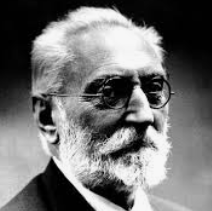
There is no tyranny in the world more hateful than that of ideas. Ideas bring ideophobia, and the consequence is that people begin to persecute their neighbors in the name of ideas. I loathe and detest all labels, and the only label that I could now tolerate would be that of ideoclast or idea breaker.
▼
Source
source
Recalled by Walter Starkie from a conversation he had with Unamuno, as related in the Epilogue of Unamuno.
6 months 2 weeks ago
In ressentiment morality, love for the "small," the "poor," the "weak," and the "oppressed" is really disguised hatred, repressed envy, an impulse to detract, etc., directed against the opposite phenomena: "wealth," "strength," "power," "largesse." When hatred does not dare to come out into the open, it can be easily expressed in the form of ostensible love-love for something which has features that are the opposite of those of the hated object. This can happen in such a way that the hatred remains secret. When we hear that falsely pious, unctuous tone (it is the tone of a certain "socially-minded" type of priest), sermonizing that love for the "small" is our first duty, love for the "humble" inspirit, since God gives "grace" to them, then it is often only hatred posing as Christian love.
▼
Source
source
L. Coser, trans. (1961), pp. 96-97

7 months 4 weeks ago
Too little liberty brings stagnation, and too much brings chaos.
▼
Source
source
Authority and the Individual (1949), p. 37

4 months 2 weeks ago
Consider, for example, the state of Science generally, in Europe, at this period. It is admitted, on all sides, that the Metaphysical and Moral Sciences are falling into decay, while the Physical are engrossing, every day, more respect and attention. In most of the European nations there is now no such thing as a Science of Mind; only more or less advancement in the general science, or the special sciences, of matter.
7 months 4 weeks ago
The South has conquered nothing - but a graveyard.
4 months 1 week ago
By Hercules, the state would have sustained a great loss if you had not brought him forth from the oblivion to which his two splendid qualities, eloquence and independence, had consigned him: he is now read, is popular, is received into men's hands and bosoms, and fears no old age: but as for those who butchered him, before long men will cease to speak even of their crimes, the only things by which they are remembered.
6 months 3 weeks ago
One hardly saves a world without ruling it.

8 months 2 days ago
Truth is a standard both of itself and of falsity.
▼
Source
source
Part II, Prop. XLIII, Scholium
6 months 2 weeks ago
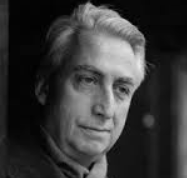
The bastard form of mass culture is humiliated repetition: content, ideological schema, the blurring of contradictions-these are repeated, but the superficial forms are varied: always new books, new programs, new films, news items, but always the same meaning.
▼
Source
source
Modern, in The Pleasure of the Text

8 months 1 day ago
Days of absence,
sad and dreary,
Clothed in sorrow's dark array,
Days of absence, I am weary: She I love is far away.
▼
Source
source
Day of Absence, reported in Bartlett's Familiar Quotations, 10th ed. (1919).
7 months 4 weeks ago
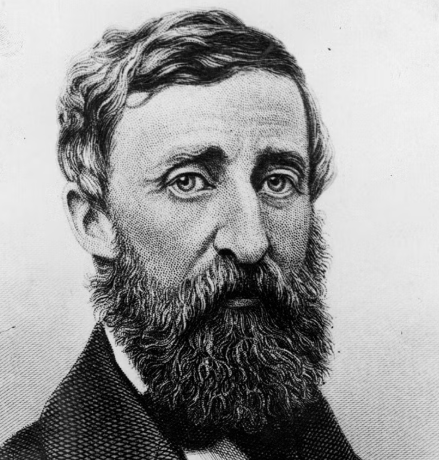
What extracts from the Vedas I have read fall on me like the light of a higher and purer luminary, which describes a loftier course through purer stratum. It rises on me like the full moon after the stars have come out, wading through some far stratum in the sky.
▼
Source
source
1850
4 months 1 week ago
It is to this law that our souls must adjust themselves, this they should follow, this they should obey. Whatever happens, assume that it was bound to happen, and do not be willing to rail at Nature. That which you cannot reform, it is best to endure, and to attend uncomplainingly upon the God under whose guidance everything progresses; for it is a bad soldier who grumbles when following his commander.

4 months 3 weeks ago
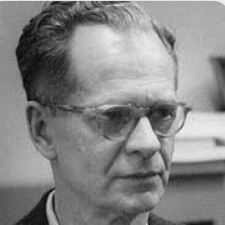
We admire people to the extent that we cannot explain what they do, and the word "admire" then means "marvel at."
▼
Source
source
Beyond Freedom and Dignity
5 months 2 weeks ago
Not far from the invention of fire... we must rank the invention of doubt.
▼
Source
source
Collected Essays vol 6, viii; quoted in T. H. Huxley: Scientist, Humanist, and Educator (1950) by Cyril Bibby, p. 257

3 months 4 weeks ago
We may say with truth and meaning that governments are more or less republican, as they have more or less of the element of popular election and control in their composition; and believing, as I do, that the mass of the citizens is the safest depository of their own rights, and especially, that the evils flowing from the duperies of the people are less injurious than those from the egoism of their agents, I am a friend to that composition of government which has in it the most of this ingredient. And I sincerely believe, with you, that banking establishments are more dangerous than standing armies; and that the principle of spending money to be paid by posterity, under the name of funding, is but swindling futurity on a large scale.
▼
Source
source
Letter to John Taylor (28 May 1816) ME 15:23
6 months 3 weeks ago
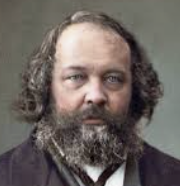
Unity is the great goal toward which humanity moves irresistibly. But it becomes fatal, destructive of the intelligence, the dignity, the well-being of individuals and peoples whenever it is formed without regard to liberty, either by violent means or under the authority of any theological, metaphysical, political, or even economic idea. That patriotism which tends toward unity without regard to liberty is an evil patriotism, always disastrous to the popular and real interests of the country it claims to exalt and serve. Often, without wishing to be so, it is a friend of reaction - an enemy of the revolution, i.e., the emancipation of nations and men.
6 months 3 weeks ago
Therefore every scribe which is instructed unto the kingdom of heaven is like unto a man that is an householder, which bringeth forth out of his treasure things new and old.
▼
Source
source
13:52 (KJV)
CivilSimian.com created by AxiomaticPanic, CivilSimian, Kalokagathia