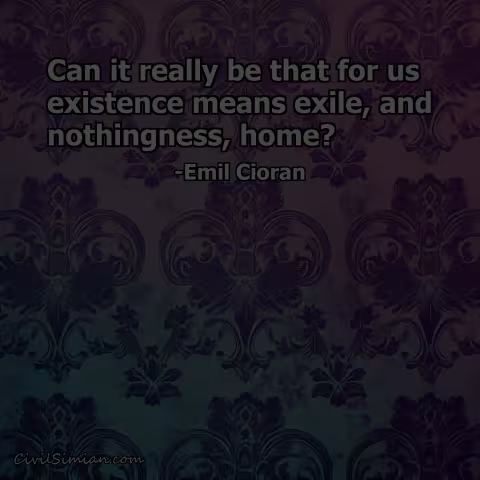
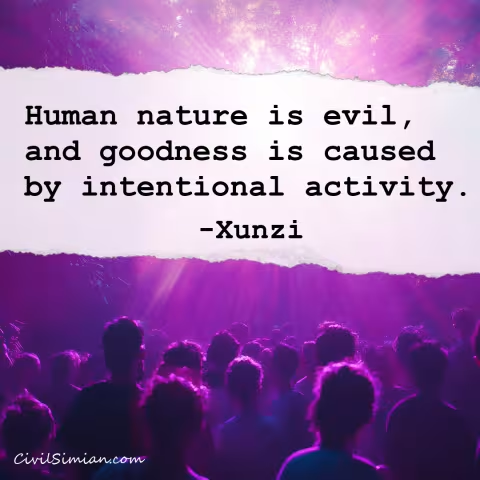
This is what captured religious people (in modern times) would have you believe. Throughout history life has been a battle, but if that were to change....


As human beings, we are endowed with this freedom of choice, and we cannot shuffle off our responsibility upon the shoulders of God or nature. We must shoulder it ourselves. It is up to us.
Whatever the explicit strategic or political aims of a war may be, they prove to be weak in comparison with its aims of destruction; what war destroys first are the very restrictions imposed on destructive license. If we can rightly speak about the unstated "aim" of war, it is neither primarily to alter the political landscape nor to establish a new political order, but rather to destroy the social basis of politics itself.
You need to know enough of the natural sciences so that you are not a stranger in the world.

Enough had been thought, and said, and felt, and imagined. It was about time that something should be done.
World-view is a product of life-view, not vice versa.
Spirit: Do not be deceived by sophists and half philosophers; things do not appear to thee by means of any representatives. Of the thing that exists, and that can exist, thou art conscious immediately ; thou, thyself, art that of which thou art conscious. By a fundamental law of thy being thou art thus presented to thyself, and thrown out of thyself.
There is a sort of gratification in doing good which makes us rejoice in ourselves.
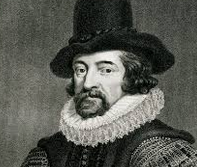
My Lord St. Albans said that Nature did never put her precious jewels into a garret four stories high, and therefore that exceeding tall men had ever very empty heads.
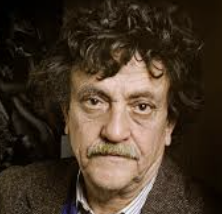
1. Find a subject you care about.2. Do not ramble, though.3. Keep it simple.4. Have the guts to cut.5. Sound like yourself.6. Say what you mean to say.7. Pity the readers.
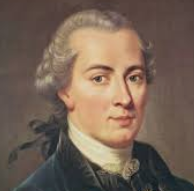
The means employed by Nature to bring about the development of all the capacities of men is their antagonism in society, so far as this is, in the end, the cause of a lawful order among men.
I think that if God forgives us we must forgive ourselves. Otherwise it is almost like setting up ourselves as a higher tribunal than Him.

A good Soul hath neither too great joy, nor too great sorrow: for it rejoiceth in goodness; and it sorroweth in wickedness. By the means whereof, when it beholdeth all things, and seeth the good and bad so mingled together, it can neither rejoice greatly; nor be grieved with over much sorrow.
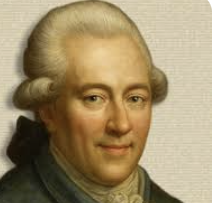
As I take up my pen I feel myself so full, so equal to my subject, and see my book so clearly before me in embryo, I would almost like to try to say it all in a single word.
We may assume the existence of an aether; only we must give up ascribing a definite state of motion to it, i.e. we must by abstraction take from it the last mechanical characteristic which Lorentz had still left it. ... But this ether may not be thought of as endowed with the quality characteristic of ponderable media, as consisting of parts which may be tracked through time. The idea of motion may not be applied to it.
The groups are not unified under any single authority but rather relate to each other in a network structure. Social forums, affinity groups, and other forms of democratic decision-making are the basis of the movements, and they manage to act together based on what they have in common. ... These globalization protest movements are obviously limited in many regards. First of all, although their vision and desire is global in scope, they have thus far only involved significant numbers in North America and Europe. Second, so long, as they remain merely protests movements, traveling from one summit meeting to the next, they will be incapable of becoming a foundational struggle and of articulating an alternative to social relations. These limitations may only be temporary obstacles, and the movements may discover ways to overcome them.

We are observing ourselves being observed by the painter, and made visible to his eyes by the same light that enables us to see him. And just as we are about to apprehend ourselves, transcribed by his hand as though in a mirror, we find that we can in fact apprehend nothing of that mirror but its lusterless back. The other side of a psyche.
... our maturation has consisted in the gradual realization that, if we can rely on one another, we need not rely on anything else. In religious terms, this is the Feuerbachian thesis that God is just a projection of the best, and sometimes the worst, of humanity. In philosophical terms, it is the thesis that anything that talk of objectivity can do to make our practices intelligible can be done equally well by talk of intersubjectivity.

Take the question whether other people exist. ...It is plain that it makes for happiness to believe that they exist - for even the greatest misanthropist would not wish to be deprived of the objects of his hate. Hence the belief that other people exist is, pragmatically, a true belief. But if I am troubled by solipsism, the discovery that a belief in the existence of others is 'true' in the pragmatist's sense is not enough to allay my sense of loneliness: the perception that I should profit by rejecting solipsism is not alone sufficient to make me reject it. For what I desire is not that the belief in solipsism should be false in the pragmatic sense, but that other people should in fact exist. And with the pragmatist's meaning of truth, these two do not necessarily go together. The belief in solipsism might be false even if I were the only person or thing in the universe.
And the soul, my soul at least, longs for something else, not absorption, not quietude, not peace, not appeasement, it longs ever to approach and never to arrive, it longs for the never-ending longing, for an eternal hope which is eternally renewed but never wholly fulfilled. And together with all this, it longs for an eternal lack of something and an eternal suffering. A suffering, a pain, thanks to which it grows without ceasing in consciousness and longing. Do not write upon the gate of heaven that sentence which Dante placed over the threshold of hell, Lasciate ogni speranza! [Lasciate ogne speranza, voi ch'intrate: All hope abandon, ye who enter in] Do not destroy time!
But our Don Quixote, the inward, the immortal Don Quixote, conscious of his own comicness, does not believe that his doctrines will triumph in this world, because they are not of it. And it is better that they should not triumph. And if the world wished to make Don Quixote king, he would retire alone to the mountain, fleeing from the king-making crowds, as Christ retired alone to the mountain when, after the miracle of the loaves and fishes, they sought to proclaim him king. He left the title of king for the inscription written over the cross.
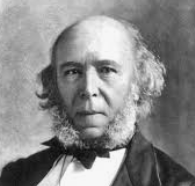
Man needed one moral constitution to fit him for his original state; he needs another to fit him for his present state; and he has been, is, and will long continue to be, in process of adaptation. And the belief in human perfectibility merely amounts to the belief that, in virtue of this process, man will eventually become completely suited to his mode of life. Progress, therefore, is not an accident, but a necessity. Instead of civilization being artificial, it is part of nature; all of a piece with the development of the embryo or the unfolding of a flower. The modifications mankind have undergone, and are still undergoing, result from a law underlying the whole organic creation; and provided the human race continues, and the constitution of things remains the same, those modifications must end in completeness.
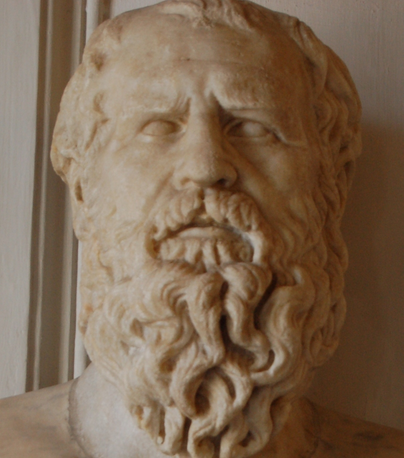
War is the father and king of all: some he has made gods, and some men; some slaves and some free.
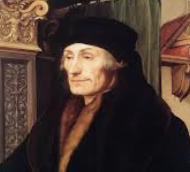
The things that we can see with our physical eyes are mere shadows of reality. If they appear ugly and ill formed, then what must be the ugliness of the soul in sin, deprived of all light? The soul, like the body, can undergo transformation in appearance. In sin it appears as completely ugly to the beholder. In virtue it shines resplendently before God.
All forms of violence are quests for identity. When you live on the frontier, you have no identity. You're a nobody.
For consequentialists, of course, the imperative to imagine the consequences of living in a world in which everyone would act as you choose to act leads to the conclusion that some practices are utterly untenable, not because they are irrational, but because they inflict consequential damage that is unwanted. In both cases, I would suggest, a potential action is figured as hypothetically reciprocal: one's own act comes back in the imagined form of another's act; another might act on me as I would act on the other, and the consequences are unacceptable because of those damaging consequences.
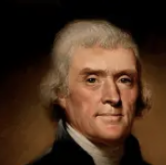
I deplore with you the putrid state into which our newspapers have passed, and the malignity, the vulgarity, & mendacious spirit of those who write for them: and I enclose you a recent sample, the production of a New England judge, as a proof of the abyss of degradation into which we are fallen. These ordures are rapidly depraving the public taste and lessening its relish for sound food. As vehicles of information and a curb on our functionaries, they have rendered themselves useless by forfeiting all title to belief. That this has in a great degree been produced by the violence and malignity of party spirit I agree with you...

Anxiety - or the fanaticism of the worst.
The selfish spirit of commerce knows no country, and feels no passion or principle but that of gain.

Much in the study of the paranormal was what we would now call pseudo-science. But the line between science and pseudo-science is smudged and shifting; where it lies seems clear only in retrospect. There is no pristine science untouched by the vagaries of faith.
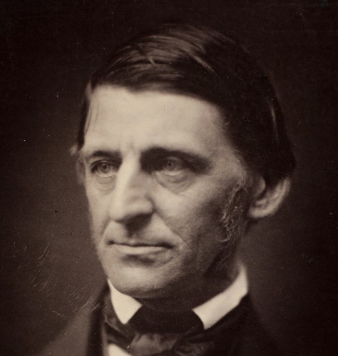
Wealth begins in a tight roof that keeps the rain and wind out; in a good pump that yields you plenty of sweet water; in two suits of clothes, so to change your dress when you are wet; in dry sticks to burn; in a good double-wick lamp; and three meals; in a horse, or a locomotive, to cross the land; in a boat to cross the sea; in tools to work with; in books to read; and so, in giving, on all sides, by tolls and auxiliaries, the greatest possible extension to our powers, as if it added feet, and hands, and eyes, and blood, length to the day, and knowledge, and good-will.Wealth begins with these articles of necessity.
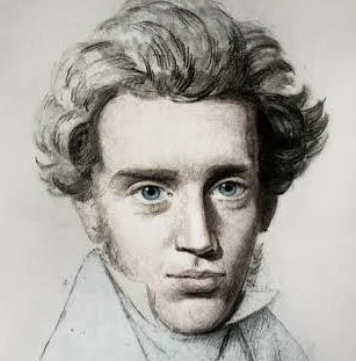
For as only one thing is necessary, and as the theme of the talk is the willing of only one thing: hence the consciousness before God of one's eternal responsibility to be an individual is that one thing necessary.
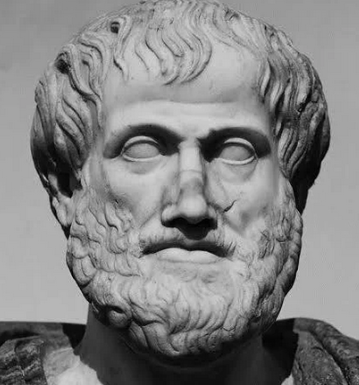
We may assume the superiority ceteris paribus [all things being equal] of the demonstration which derives from fewer postulates or hypotheses—in short from fewer premisses; for... given that all these are equally well known, where they are fewer knowledge will be more speedily acquired, and that is a desideratum. The argument implied in our contention that demonstration from fewer assumptions is superior may be set out in universal form...
Neither a man nor a crowd nor a nation can be trusted to act humanely or to think sanely under the influence of a great fear.
Criticism alone can sever the root of materialism, fatalism, atheism, free-thinking, fanaticism, and superstition, which can be injurious universally; as well as of idealism and skepticism, which are dangerous chiefly to the Schools, and hardly allow of being handed on to the public.
A comfortable house is a great source of happiness. It ranks immediately after health and a good conscience.
There is a greatness in the lives of those who build up religious systems, a greatness in action, in idea and in self-subordination, embodied in instance after instance through centuries of growth. There is a greatness in the rebels who destroy such systems: they are the Titans who storm heaven, armed with passionate sincerity. It may be that the revolt is the mere assertion by youth of its right to its proper brilliance, to that final good of immediate joy. Philosophy may not neglect the multifariousness of the world - the fairies dance, and Christ is nailed to the cross.
See now the power of truth; the same experiment which at first glance seemed to show one thing, when more carefully examined, assures us of the contrary.
It was these Romans who reunited in one State the Culture which had now been produced by the intermixture of different races, and thereby completed the period of Ancient Time, and closed the simple course of Ancient Civilization. With respect to its influence on Universal History, this nation, more than any other, was the blind and unconscious instrument for the furtherance of a higher World-Plan; after having formed itself, by its internal des tiny indicated above, into a most fit and proper instrument for that purpose.
What all other men are is of the greatest importance to me. However independent I may imagine myself to be, however far removed I may appear from mundane considerations by my social status, I am enslaved to the misery of the meanest member of society. The outcast is my daily menace. Whether I am Pope, Czar, Emperor, or even Prime Minister, I am always the creature of their circumstance, the conscious product of their ignorance, want and clamoring. They are in slavery, and I, the superior one, am enslaved in consequence.
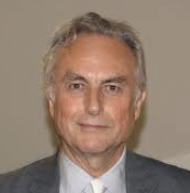
In particular, it is certainly wrong to condemn poor old Homo sapiens as the only species to kill his own kind, the only inheritor of the mark of Cain, and similar melodramatic charges. Whether a naturalist stresses the violence or the restraint of animal aggression depends partly on the kinds of animals he is used to watching, and partly on his evolutionary preconceptions-Lorenz is, after all, a 'good of the species' man. Even if it has been exaggerated, the gloved fist view of animal fights seems to have at least some truth. Superficially this looks like a form of altruism. The selfish gene theory must face up to the difficult task of explaining it. Why is it that animals do not go all out to kill rival members of their species at every possible opportunity?
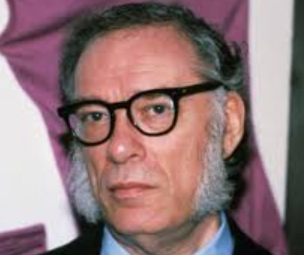
The history of science is full of revolutionary advances that required small insights that anyone might have had, but that, in fact, only one person did.
Pass in, pass in, the angels say, In to the upper doors; Nor count compartments of the floors, But mount to Paradise By the stairway of surprise.
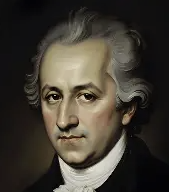
Young Schopenhauer, a zealous and thorough-going Kantian, tried to explain that light would cease to exist along with the seeing eye. "What!" he said, according to Schopenhauer's own report, "looking at him with his Jove-like eyes,"-"You should rather say that you would not exist if the light could not see you?"
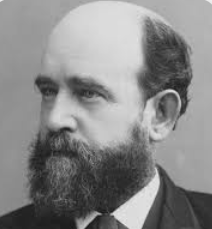
More is given to us than to any people at any time before; and, therefore, more is required of us. We have made, and still are making, enormous advances on material lines. It is necessary that we commensurately advance on moral lines. Civilization, as it progresses, requires a higher conscience, a keener sense of justice, a warmer brotherhood, a wider, loftier, truer public spirit. Falling these, civilization must pass into destruction. It cannot be maintained on the ethics of savagery. For civilization knits men more and more closely together, and constantly tends to subordinate the individual to the whole, and to make more and more important social conditions.
CivilSimian.com created by AxiomaticPanic, CivilSimian, Kalokagathia