



7 months 3 weeks ago
No one ever told me that grief felt so like fear. First line.
7 months 3 weeks ago
Solvency is maintained by means of the national debt, on the principle, "If you will not lend me the money, how can I pay you?"
▼
Source
source
Ability
4 months 1 week ago
Every individual is a unique manifestation of the Whole, as every branch is a particular outreaching of the tree. To manifest individuality, every branch must have a sensitive connection with the tree, just as our independently moving and differentiated fingers must have a sensitive connection with the whole body. The point, which can hardly be repeated too often, is that differentiation is not separation. The head and the feet are different, but not separate, and though man is not connected to the universe by exactly the same physical relation as branch to tree or feet to head, he is nonetheless connected-and by physical relations of fascinating complexity. The death of the individual is not disconnection but simply withdrawal. The corpse is like a footprint or an echo-the dissolving trace of something which the Self has ceased to do.
▼
Source
source
p. 60
7 months 3 weeks ago
It is an odd circumstance that neither the old nor the new, by itself, is interesting; the absolutely old is insipid; the absolutely new makes no appeal at all. The old in the new is what claims the attention,-the old with a slightly new turn.
▼
Source
source
Chapter XI: Attention
6 months 3 weeks ago
Just as Marx used to say about the French Marxists of the late 'seventies: All I know is that I am not a Marxist.
▼
Source
source
Letter to Conrad Schmidt
3 months 3 weeks ago
There is no man so fortunate that there shall not be by him when he is dying some who are pleased with what is going to happen. Suppose that he was a good and a wise man, will there not be at least some one to say to himself, Let us at last breathe freely, being relieved from this schoolmaster? It is true that he was harsh to none of us, but I perceive that he tacitly condemns us.-This is what is said of a good man. But in our own case how many other things are there for which there are many who wish to get rid of us.
▼
Source
source
X, 36
6 months 4 weeks ago
But what is liberty without wisdom, and without virtue? It is the greatest of all possible evils; for it is folly, vice, and madness, without tuition or restraint.

8 months 3 weeks ago
To become god is merely to be free on this earth, not to serve an immortal being.
7 months 3 weeks ago
First of all, no one knows his place in society, his class position or social status; nor does he know his fortune in the distribution of natural assets and abilities, his intelligence and strength, and the like. Nor, again, does anyone know his conception of the good, the particulars of his rational plan of life, or even the special features of psychology such as his aversion to risk or liability to optimism or pessimism. More than this, I assume that the parties do not know the particular circumstances of their own society. That is, they do not know its particular economic or political situation, or the level of civilization and culture it has been able to achieve. The persons in the original position have no information as to which generation they belong.
▼
Source
source
p. 117
6 months 2 weeks ago
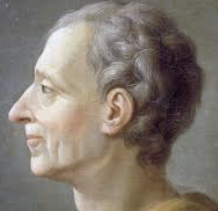
There is only one thing that can form a bond between men, and that is gratitude...we cannot give someone else greater power over us than we have ourselves.
▼
Source
source
No. 104. (Usbek writing to Ibben)
6 months 3 weeks ago
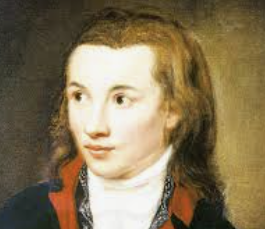
Before abstraction everything is one, but one like chaos; after abstraction everything is united again, but this union is a free binding of autonomous, self-determined beings. Out of a mob a society has developed, chaos has been transformed into a manifold world.
▼
Source
source
Fragment No. 95
6 months 2 weeks ago
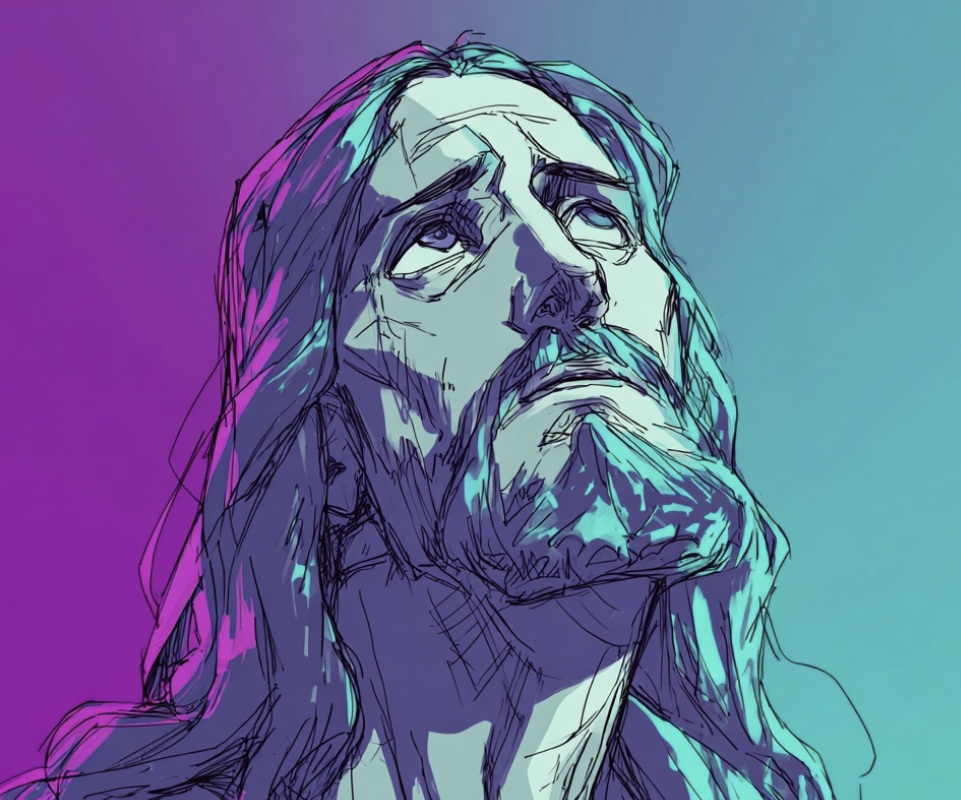
Yet lackest thou one thing: sell all that thou hast, and distribute unto the poor, and thou shalt have treasure in heaven: and come, follow me.
▼
Source
source
18:22 (KJV)

3 months 3 weeks ago
Our people... will give you all the necessaries of war they produce, if, instead of the bankrupt trash they now are obliged to receive for want of any other, you will give them a paper promise funded on a specific pledge, and of a size for common circulation.
▼
Source
source
Letter to James Monroe, 1815. ME 14:228
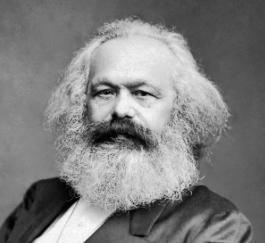
7 months 4 weeks ago
Under no pretext should arms and ammunition be surrendered; any attempt to disarm the workers must be frustrated, by force if necessary.
▼
Source
source
Address of the Central Committee to the Communist League in London, March 1850
6 months 5 days ago
To require that all of these must be reducible to a single version is to make the mistake of supposing that 'Which are the real objects?' is a question that makes sense independently of our choice of concepts.
▼
Source
source
Lecture I: Is There Still Anything to Say about Reality and Truth?
3 months 3 weeks ago
I congratulate you, fellow citizens, on the approach of the period at which you may interpose your authority constitutionally to withdraw the citizens of the United States from all further participation in those violations of human rights which have been so long continued on the un-offending inhabitants of Africa, and which the morality, the reputation, and the best of our country have long been eager to proscribe. Although no law you may pass can take prohibitory effect until the first day of the year 1808, yet the intervening period is not too long to prevent by timely notice expeditions which can not be completed before that day.
▼
Source
source
Thomas Jefferson's Sixth State of the Union Address
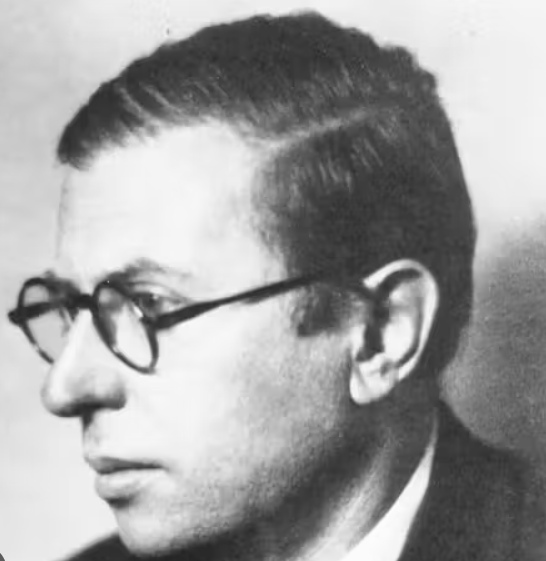
7 months 3 weeks ago
One cannot become a saint when one works sixteen hours a day.
▼
Source
source
Act 5, sc. 2
5 months 3 weeks ago
There is no connection between the elements in an electric world, which is equivalent to being surrounded by the human unconscious.
▼
Source
source
(p. 260)
4 months 1 week ago
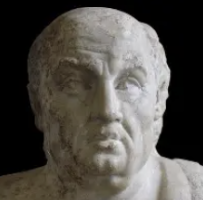
We must admit, however, that neither wild beasts nor any other creature except man is subject to anger: for, whilst anger is the foe of reason, it nevertheless does not arise in any place where reason cannot dwell. Wild beasts have impulses, fury, cruelty, combativeness: they have not anger any more than they have luxury: yet they indulge in some pleasures with less self-control than human beings.
6 months 1 week ago
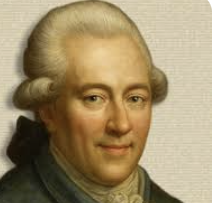
A clever child brought up with a foolish one can itself become foolish. Man is so perfectable and corruptible he can become a fool through good sense.
▼
Source
source
F 69
7 months 2 weeks ago
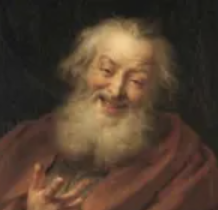
You can tell the man who rings true from the man who rings false, not by his deeds alone, but also by his desires.
4 months 3 weeks ago
There is only one purpose to which a whole society can be directed by a deliberate plan. That purpose is war, and there is no other.
▼
Source
source
Ch. V: "The Totalitarian Regimes", §7, p. 90
8 months 6 days ago
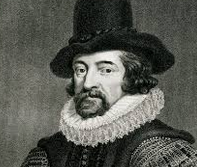
Who then to frail mortality shall trust But limns the water, or but writes in dust.
3 months 3 weeks ago
Constantly regard the universe as one living being, having one substance and one soul; and observe how all things have reference to one perception, the perception of this one living being; and how all things act with one movement; and how all things are the cooperating causes of all things which exist; observe too the continuous spinning of the thread and the contexture of the web.
▼
Source
source
IV, 40
5 months 2 weeks ago
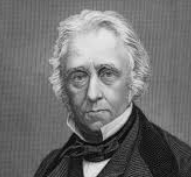
Wherever literature consoles sorrow, or assuages pain,-wherever it brings gladness to eyes which fail with wakefulness and tears, and ache for the dark house and the long sleep,-there is exhibited, in its noblest form, the immortal influence of Athens.
▼
Source
source
p. 179
7 months 4 weeks ago
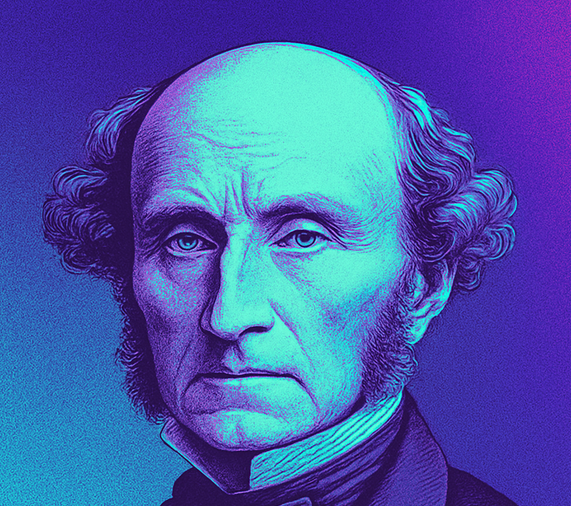
The remedies for all our diseases will be discovered long after we are dead; and the world will be made a fit place to live in, after the death of most of those by whose exertions it will have been made so. It is to be hoped that those who live in those days will look back with sympathy to their known and unknown benefactors.
▼
Source
source
Diary, April 15, 1854, in The Collected Works of John Stuart Mill, Toronto, 1988, vol. 27, p. 668
3 months 3 weeks ago
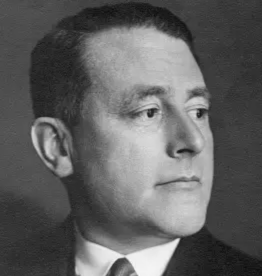
All law is "situational law." The sovereign produces and guarantees the situation in its totality. He has the monopoly over this last decision.
▼
Source
source
p.13
7 months 3 weeks ago
"Milton was right," said my Teacher. "The choice of every lost soul can be expressed in the words 'Better to reign in Hell than to serve in Heaven.' There is always something they insist on keeping even at the price of misery."
▼
Source
source
Ch. 9
8 months 1 week ago
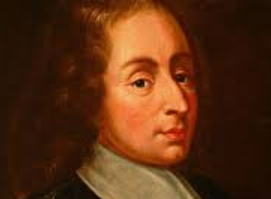
You are in the same manner surrounded with a small circle of persons... full of desire. They demand of you the benefits of desire... You are therefore properly the king of desire. ...equal in this to the greatest kings of the earth... It is desire that constitutes their power; that is, the possession of things that men covet.
7 months 4 weeks ago
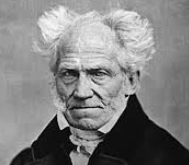
The charlatan takes very different shapes according to circumstances; but at bottom he is a man who cares nothing about knowledge for its own sake, and only strives to gain the semblance of it that he may use it for his own personal ends, which are always selfish and material.
▼
Source
source
"Similes, Parables and Fables" Parerga and Paralipomena, vol. 2, § 394
6 months 2 weeks ago
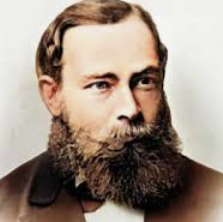
Being true is different from being taken as true, whether by one or by many or everybody, and in no case is it to be reduced to it. There is no contradiction in something's being true which everybody takes to be false. I understand by 'laws of logic' not psychological laws of takings-to-be-true, but laws of truth. ...If being true is thus independent of being acknowledged by somebody or other, then the laws of truth are not psychological laws: they are boundary stones set in an eternal foundation, which our thought can overflow, but never displace. It is because of this that they have authority for our thought if it would attain truth. They do not bear the relation to thought that the laws of grammar bear to language; they do not make explicit the nature of our human thinking and change as it changes.
▼
Source
source
Introduction, Tr. Montgomery Furth


7 months 2 days ago
It is easy to see that, even in the freedom of early youth, an American girl never quite loses control of herself; she enjoys all permitted pleasures without losing her head about any of them, and her reason never lets the reins go, though it may often seem to let them flap.
▼
Source
source
Book Three, Chapter IX.
6 months ago
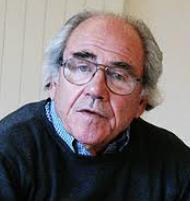
There is no aphrodisiac like innocence.
▼
Source
source
Chapter 5
5 months 3 weeks ago
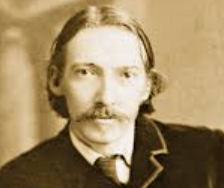
It seems as if marriage were the royal road through life, and realised, on the instant, what we have all dreamed on summer Sundays when the bells ring, or at night when we cannot sleep for the desire of living. They think it will sober and change them. Like those who join a brotherhood, they fancy it needs but an act to be out of the coil and clamour for ever. But this is a wile of the devil's. To the end, spring winds will sow disquietude, passing faces leave a regret behind them, and the whole world keep calling and calling in their ears. For marriage is like life in this - that it is a field of battle, and not a bed of roses.
▼
Source
source
Virginibus Puerisque, Ch. 1.
7 months 4 weeks ago
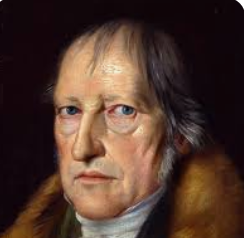
The goal to be reached is the mind's insight into what knowing is. Impatience asks for the impossible, wants to reach the goal without the means of getting there. The length of the journey has to be borne with, for every moment is necessary, ... because by nothing less could that all-pervading mind ever manage to become conscious of what itself is - for that reason, the individual mind, in the nature of the case, cannot expect by less toil to grasp what its own substance contains.
▼
Source
source
Preface (J. B. Baillie translation), § 29
7 months 2 days ago
For the first time in sixty years, the priests, the old aristocracy and the people met in a common sentiment-a feeling of revenge, it is true, and not of affection; but even that is a great thing in politics, where a community of hatred is almost always the foundation of friendships.
7 months 3 weeks ago
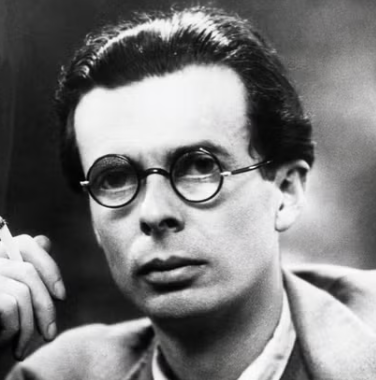
And suddenly I had an inkling of what it must feel like to be mad.
5 months 3 weeks ago
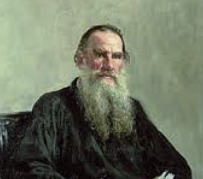
After Plotinus, says Schassler, fifteen centuries passed without the slightest scientific interest for the world of beauty and art. ...In reality, nothing of the kind happened. The science of aesthetics ... neither did nor could vanish, because it never existed. ... the Greeks were so little developed that goodness and beauty seemed to coincide. On that obsolete Greek view of life the science of aesthetics was invented by men of the eighteenth century, and especially shaped and mounted in Baumgarten's theory. The Greeks (as anyone may read in Bénard's book on Aristotle and Walter's work on Plato) never had a science of aesthetics.
6 months 2 weeks ago
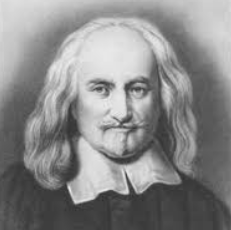
Science is the knowledge of Consequences, and dependence of one fact upon another: by which, out of that we can presently do, we know how to do something else when we will, or the like, another time.
▼
Source
source
The First Part, Chapter 5, p. 21
3 months 4 weeks ago
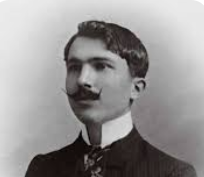
A woman's body is a dark and monstrous mystery;between her supple thighs a heavy whirlpool swirls,two rivers crash, and woe to him who slips and falls!
▼
Source
source
Odysseus, Book II, line 1017
7 months 3 weeks ago
If you are not already dead, forgive. Rancor is heavy, it is worldly; leave it on earth: die light.
▼
Source
source
Act 1

8 months 5 days ago
Not because Socrates said so,... I look upon all men as my compatriots.
▼
Source
source
Book III, Ch. 9. Of Vanity
6 months 3 weeks ago
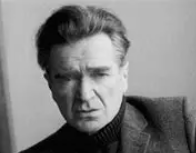
In every man sleeps a prophet, and when he wakes there is a little more evil in the world

6 months 1 day ago
I do not define time, space, place, and motion, as being well known to all. Only I must observe, that the common people conceive those quantities under no other notions but from the relation they bear to sensible objects. And thence arise certain prejudices, for the removing of which it will be convenient to distinguish them into absolute and relative, true and apparent, mathematical and common.
▼
Source
source
Definitions - Scholium
3 months 3 weeks ago
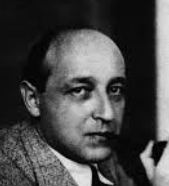
When the empirical investigator glories in his refusal to go beyond the specialized observation dictated by the traditions of his discipline, be they ever so inclusive, he is making a virtue out of a defense mechanism which insures him against questioning his presuppositions.
6 months 3 weeks ago
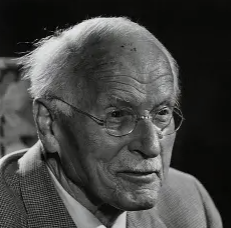
Where love rules, there is no will to power; and where power predominates, there love is lacking. The one is the shadow of the other.
▼
Source
source
P. 97
3 months 4 weeks ago
Every man has his own circle composed of trees, animals, men, ideas, and he is in duty bound to save this circle. He, and no one else. If he does not save it, he cannot be saved. These are the labors each man is given and is in duty bound to complete before he dies. He may not otherwise be saved. For his own soul is scattered and enslaved in these things about him, in trees, in animals, in men, in ideas, and it is his own soul he saves by completing these labors.
CivilSimian.com created by AxiomaticPanic, CivilSimian, Kalokagathia