

8 months 1 week ago
To avoid falling into the toils of love is not so hard as, after you are caught, to get out of the nets you are in and to break through the strong meshes of Venus.
▼
Source
source
Book IV, lines 1146-1148 (tr. Munro)
7 months 4 weeks ago
In the sphere of thought, absurdity and perversity remain the masters of the world, and their dominion is suspended only for brief periods.
▼
Source
source
"The Art of Controversy" as translated by T. Bailey Saunders
3 months 3 weeks ago
..If you are troubled by external circumstances, it is not the circumstances that trouble you, but your own perception of them - and they are in your power to change at any time.
6 months 2 weeks ago
Master, we saw one casting out devils in thy name, and he followeth not us: and we forbad him, because he followeth not us. But Jesus said, Forbid him not: for there is no man which shall do a miracle in my name, that can lightly speak evil of me. For he that is not against us is on our part.
▼
Source
source
Mark 9:38-40 (KJV)
7 months 4 weeks ago
Let me suggest a theme for you: to state to yourself precisely and completely what that walk over the mountains amounted to for you, - returning to this essay again and again, until you are satisfied that all that was important in your experience is in it. Give this good reason to yourself for having gone over the mountains, for mankind is ever going over a mountain. Don't suppose that you can tell it precisely the first dozen times you try, but at 'em again, especially when, after a sufficient pause, you suspect that you are touching the heart or summit of the matter, reiterate your blows there, and account for the mountain to yourself. Not that the story need be long, but it will take a long while to make it short.
▼
Source
source
Letter to Harrison Blake, November 16, 1857

6 months 1 week ago
On the whole, the scientist is better off if he collects his facts by accident, little by little, so he can study them before he tries to fit them into a jigsaw puzzle, This is how the late Tom Lethbridge came to arrive at his theories about other dimensions of reality. It is also how Guy Lyon Playfair came to develop his own theories about the nature of the poltergeist.
▼
Source
source
p. 196
7 months 3 weeks ago
Objective evidence and certitude are doubtless very fine ideals to play with, but where on this moonlit and dream-visited planet are they found?
▼
Source
source
"The Will to Believe" p. 14
6 months 1 week ago
Shakespeare wrote better poetry for not knowing too much; Milton, I think, knew too much finally for the good of his poetry.
▼
Source
source
Ch. 43, November 11, 1947.
6 months 2 weeks ago
Whatsoever therefore is consequent to a time of Warre, where every man is Enemy to every man; the same is consequent to the time, wherein men live without other security, than what their own strength, and their own invention shall furnish them withall. In such condition, there is no place for Industry; because the fruit thereof is uncertain: and consequently no Culture of the Earth; no Navigation, nor use of the commodities that may be imported by Sea; no commodious Building; no Instruments of moving, and removing things as require much force; no Knowledge of the face of the Earth; no account of Time; no Arts; no Letters; no Society; and which is worst of all, continuall feare, and danger of violent death; And the life of man solitary, poore, nasty, brutish, and short.
▼
Source
source
The First Part, Chapter 13, p. 62

4 months 2 weeks ago
One comfort is, that Great Men, taken up in any way, are profitable company. We cannot look, however imperfectly, upon a great man, without gaining something by him. He is the living light-fountain, which it is good and pleasant to be near. The light which enlightens, which has enlightened the darkness of the world; and this not as a kindled lamp only, but rather as a natural luminary shining by the gift of Heaven; a flowing light-fountain, as I say, of native original insight, of manhood and heroic nobleness;-in whose radiance all souls feel that it is well with them.
8 months 5 days ago
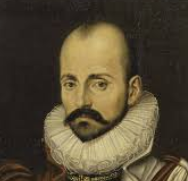
In this present that God has made us, there is nothing unworthy our care; we stand accountable for it even to a hair; and is it not a commission to man, to conduct man according to his condition; 'tis express, plain, and the very principal one, and the Creator has seriously and strictly prescribed it to us. Authority has power only to work in regard to matters of common judgment, and is of more weight in a foreign language; therefore let us again charge at it in this place.
▼
Source
source
Ch. 13
8 months 6 days ago
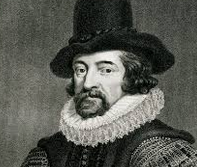
Another argument of hope may be drawn from this - that some of the inventions already known are such as before they were discovered it could hardly have entered any man's head to think of; they would have been simply set aside as impossible. For in conjecturing what may be men set before them the example of what has been, and divine of the new with an imagination preoccupied and colored by the old; which way of forming opinions is very fallacious, for streams that are drawn from the springheads of nature do not always run in the old channels.
▼
Source
source
Aphorism 109
4 months 1 week ago
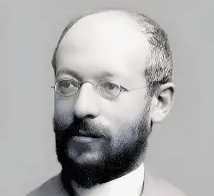
The social game has a deeper double meaning-that it is played not only in a society as its outward bearer but that with its help people actually "play" "society."
▼
Source
source
Sociability (1910) in On Individuality and Social Forms (1971), p. 134
7 months 2 weeks ago
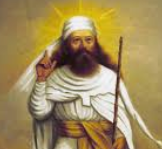
With a drunken man do not walk on the road.

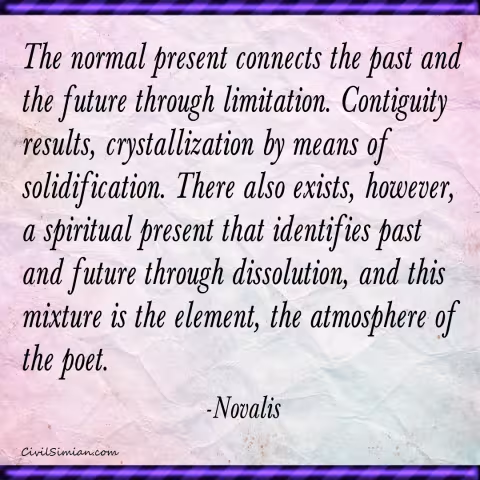

7 months 4 weeks ago
It is error only, and not truth, that shrinks from inquiry.
7 months 3 weeks ago
Religion...is a man's total reaction upon life.
▼
Source
source
Lecture II, "Circumscription of the Topic"
7 months 3 weeks ago
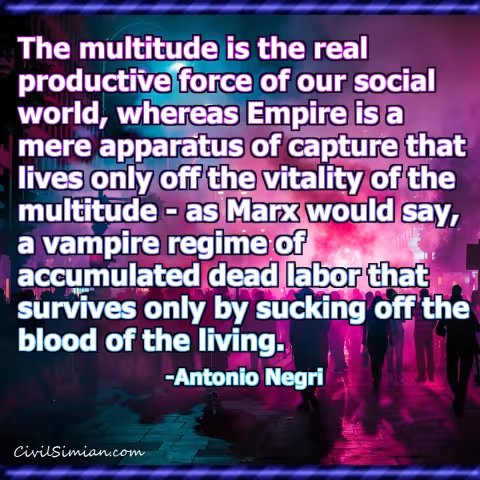
I know nothing, I am neither woman nor girl; I have been living in a dream and when someone kissed me, it made me want to laugh. Now I am here before you, it seems as though I have just awakened and it is morning.
▼
Source
source
Act 6, sc. 2
4 months 3 weeks ago
Heresy is a set of opinions "at variance with established or generally received principles." In this sense, heresy is the price of all originality and innovation.
8 months 1 week ago
You are in the same manner surrounded with a small circle of persons... full of desire. They demand of you the benefits of desire... You are therefore properly the king of desire. ...equal in this to the greatest kings of the earth... It is desire that constitutes their power; that is, the possession of things that men covet.
8 months 1 week ago
By protracting life, we do not deduct one jot from the duration of death.
▼
Source
source
Book III, lines 1087-1088 (tr. Rouse)
3 months 3 weeks ago
Freedom of religion, restricted only from acts of trespass on that of others.
8 months 1 day ago
That a joint stock company should be able to carry on successfully any branch of foreign trade, when private adventurers can come into any sort of open and fair competition with them, seems contrary to all experience.
▼
Source
source
Chapter I, Part III, Article I, p. 810.
8 months 6 days ago
Riches are a good handmaid, but the worst mistress.
▼
Source
source
De Augmentis Scientiarum, Book II, "Antitheta"
7 months 4 weeks ago
The past alone is truly real: the present is but a painful, struggling birth into the immutable being of what is no longer. Only the dead exist fully. The lives of the living are fragmentary, doubtful, and subject to change; but the lives of the dead are complete, free from the sway of Time, the all but omnipotent lord of the world. Their failures and successes, their hopes and fears, their joys and pains, have become eternal-our efforts cannot now abate one jot of them. Sorrows long buried in the grave, tragedies of which only a fading memory remains, loves immortalized by Death's hallowing touch these have a power, a magic, an untroubled calm, to which no present can attain. ...On the banks of the river of Time, the sad procession of human generations is marching slowly to the grave; in the quiet country of the Past, the march is ended, the tired wanderers rest, and the weeping is hushed.
▼
Source
source
On History, 1904
6 months 2 weeks ago
It is not meet to take the children's bread, and to cast it to dogs.
▼
Source
source
15:26 (KJV)
8 months 3 weeks ago
It built itself up endlessly, like a chess game, and the telemetrists began to use a computer to program the computer that designed the program for the computer that programmed the robot-controlling computer.
6 months 2 weeks ago
Spontaneous social action will be broken up over and over again by State intervention; no new seed will be able to fructify. Society will have to live for the State, man for the governmental machine. And as, after all, it is only a machine whose existence and maintenance depend on the vital supports around it, the State, after sucking out the very marrow of society, will be left bloodless, a skeleton, dead with that rusty death of machinery, more gruesome than the death of a living organism. Such was the lamentable fate of ancient civilisation. ... Already in the times of the Antonines (IInd Century), the State overbears society with its anti-vital supremacy. Society begins to be enslaved, to be unable to live except in the service of the State. The whole of life is bureaucratised. What results? The bureaucratisation of life brings about its absolute decay in all orders.
▼
Source
source
Chapter XIII: The Greatest Danger, The State
5 months 3 weeks ago
Everybody tends to merge his identity with other people at the speed of light. It's called being mass man.
5 months 1 week ago
Only in growth, reform, and change, paradoxically enough, is true security to be found.
▼
Source
source
The Wave of the Future
5 months 3 weeks ago
The civilized pagan recognizes life not in himself alone, but in societies of men-in the tribe, the clan, the family, the kingdom -and sacrifices his personal good for these societies. The motive power of his life is glory. His religion consists in the exaltation of the glory of those who are allied to him-the founders of his family, his ancestors, his rulers-and in worshiping gods who are exclusively protectors of his clan, his family, his nation, his government.
▼
Source
source
Chapter IV, Christianity Misunderstood by Men of Science
12 months 3 days ago
The wreck of the Titanic functions as a sublime object: a positive, material object elevated to the status of the impossible Thing. And perhaps all the effort to articulate the metaphysical meaning of the Titanic is nothing but an attempt to escape this terrifying impact of the Thing, an attempt to domesticate the Thing by reducing it to its symbolic status, by providing it with a meaning. We usually say that the fascinating presence of a Thing obscures its meaning; here, the opposite is true: the meaning obscures the terrifying impact of its presence.
8 months 5 days ago
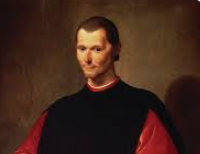
If you only notice human proceedings, you may observe that all who attain great power and riches, make use of either force or fraud; and what they have acquired either by deceit or violence, in order to conceal the disgraceful methods of attainment, they endeavor to sanctify with the false title of honest gains. Those who either from imprudence or want of sagacity avoid doing so, are always overwhelmed with servitude and poverty; for faithful servants are always servants, and honest men are always poor; nor do any ever escape from servitude but the bold and faithless, or from poverty, but the rapacious and fraudulent. God and nature have thrown all human fortunes into the midst of mankind; and they are thus attainable rather by rapine than by industry, by wicked actions rather than by good. Hence it is that men feed upon each other, and those who cannot defend themselves must be worried.
▼
Source
source
Book III, Chapter 13
4 months 6 days ago
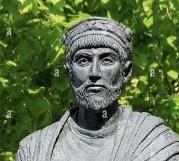
We ought to acquiesce in the reasoning of the Egyptian priests, who raise altars to the Sun conjointly with Jupiter; nay, rather we should assent to Apollo himself (long before them), who sits on the same throne with Jove, and whose words are,
5 months 2 weeks ago
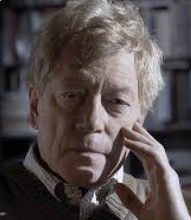
Of course, there are those - Sandel, Walzer and Dworkin, for example - who propose "communitarian" ways of thinking, as a further move in the direction which a sophisticated liberalism requires. But none of them is prepared to accept the real price of community: which is sanctity, intolerance, exclusion, and a sense that life's meaning depends upon obedience, and also on vigilance against the enemy.
▼
Source
source
'In Defence of the Nation', The Philosopher on Dover Beach (1990), p. 310
4 months 3 weeks ago
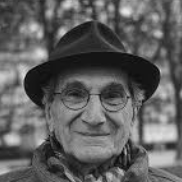
A specter haunts the world and it is the specter of migration.
▼
Source
source
213
3 months 3 weeks ago
We shall divert through our own Country a branch of commerce which the European States have thought worthy of the most important struggles and sacrifices, and in the event of peace... we shall form to the American union a barrier against the dangerous extension of the British Province of Canada and add to the Empire of liberty an extensive and fertile Country thereby converting dangerous Enemies into valuable friends.
7 months 4 weeks ago
And now, at half-past ten o'clock, I hear the cockerels crow in Hubbard's barns, and morning is already anticipated. It is the feathered, wakeful thought in us that anticipates the following day.
▼
Source
source
July 11, 1851
5 months 3 weeks ago
The attitude that living things are placed here for our benefit still dominates our culture, even where its underpinnings have disappeared. We now need, for purposes of scientific understanding, to find a less human-centered view of the natural world.
▼
Source
source
Chapter 8, "Pollen Grains and Magic Bullets" (p. 258)

7 months 3 weeks ago
Try now to answer my third riddle. By what rule to you tell a copy from an original?'
▼
Source
source
Pilgrim's Regress 52
3 months 3 weeks ago
We are disposed, somewhat by culture and somewhat by nature, to solve our problems by violence, and even to enjoy doing so. And yet by now all of us must at least have suspected that our right to live, to be free, and to be at peace is not guaranteed by any act of violence. It can be guaranteed only by our willingness that all other persons should live, be free, and be at peace - and by our willingness to use or give our own lives to make that possible.

6 months 1 week ago
It is only by entering the transcendental, the supernatural, the authentically spiritual order that man rises above the social. Until then, whatever he may do, the social is transcendent in relation to him.
▼
Source
source
p. 123
5 months 3 weeks ago
The assertion that art may be good art and at the same time incomprehensible to a great number of people is extremely unjust, and its consequences are ruinous to art itself...it is the same as saying some kind of food is good but most people can't eat it.
4 months 5 days ago
By association with nature's enormities, a man's heart may truly grow big also. There is a way of looking upon a landscape as a moving picture and being satisfied with nothing less big as a moving picture, a way of looking upon tropic clouds over the horizon as the backdrop of a stage and being satisfied with nothing less big as a backdrop, a way of looking upon the mountain forests as a private garden and being satisfied with nothing less as a private garden, a way of listening to the roaring waves as a concert and being satisfied with nothing less as a concert, and a way of looking upon the mountain breeze as an air-cooling system and being satisfied with nothing less as an air-cooling system. So do we become big, even as the earth and firmaments are big.
▼
Source
source
Like the "Big Man" described by Yuan Tsi (A.D. 210-263), one of China's first romanticists, we "live in heaven and earth as our house." p. 282
7 months 2 weeks ago
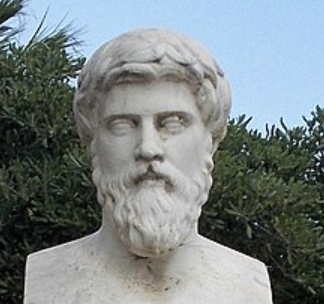
The great god Pan is dead.
▼
Source
source
Why the Oracles cease to give Answers (Tr. Goodwin)
8 months 5 days ago
T is one and the same Nature that rolls on her course, and whoever has sufficiently considered the present state of things might certainly conclude as to both the future and the past.
▼
Source
source
Book II, Ch. 12. Apology for Raimond Sebond
CivilSimian.com created by AxiomaticPanic, CivilSimian, Kalokagathia