

5 months 3 weeks ago
To be good and lead a good life means to give to others more than one takes from them.
▼
Source
source
Ch. VII
3 months 3 weeks ago
We come from a dark abyss, we end in a dark abyss, and we call the luminous interval life. As soon as we are born the return begins, at once the setting forth and the coming back; we die in every moment. Because of this many have cried out: The goal of life is death! But as soon as we are born we begin the struggle to create, to compose, to turn matter into life; we are born in every moment. Because of this many have cried out: The goal of ephemeral life is immortality! In the temporary living organism these two streams collide ... both opposing forces are holy. It is our duty, therefore, to grasp that vision which can embrace and harmonize these two enormous, timeless, and indestructible forces, and with this vision to modulate our thinking and our action.
5 months 2 weeks ago
Let us remember that the government and the society act and react on each other. Sometimes the government is in advance of the society, and hurries the society forward. So urged, the society gains on the government, comes up with the government, outstrips the government, and begins to insist that the government shall make more speed. If the government is wise, it will yield to that just and natural demand. The great cause of revolutions is this, that, while nations move onward, constitutions stand still. The peculiar happiness of England is that here, through many generations, the constitution has moved onward with the nation.
▼
Source
source
Speech in the House of Commons on the Reform Bill (5 July 1831), quoted in Speeches of the Right Honourable T. B. Macaulay, M.P. (1854), p. 25

6 months 3 weeks ago
By virtue of depression, we recall those misdeeds we buried in the depths of our memory. Depression exhumes our shames.
7 months 2 weeks ago
Wealth and poverty do not lie in a person's estate, but in their souls.
▼
Source
source
iv. 34
6 months 2 weeks ago
Our questions and answers are in part determined by the historical tradition in which we find ourselves. We apprehend truth from our own source within the historical tradition. The content of our truth depends upon our appropriating the historical foundation. Our own power of generation lies in the rebirth of what has been handed down to us. If we do not wish to slip back, nothing must be forgotten; but if philosophising is to be genuine our thoughts must arise from our own source. Hence all appropriation of tradition proceeds from the intentness of our own life. The more determinedly I exist, as myself, within the conditions of the time, the more clearly I shall hear the language of the past, the nearer I shall feel the glow of its life.
3 months 3 weeks ago
The best revenge is not to be like your enemy.
▼
Source
source
VI, 6
7 months 3 weeks ago
The game of science is, in principle, without end. He who decides one day that scientific statements do not call for any further test, and that they can be regarded as finally verified, retires from the game.
▼
Source
source
Ch. 2 "On the Problem of a Theory of Scientific Method", Section 11: Methodological Rules as Conventions, p. 32.
6 months 6 days ago
All mathematical laws which we find in Nature are always suspect to me, in spite of their beauty. They give me no pleasure. They are merely auxiliaries. At close range it is all not true.
▼
Source
source
As quoted in Lichtenberg : A Doctrine of Scattered Occasions (1959) by Joseph Peter Stern, p. 84
8 months 4 days ago
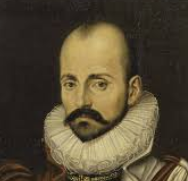
He who fears he shall suffer, already suffers what he fears.
▼
Source
source
Book III, Ch. 13
5 months 6 days ago
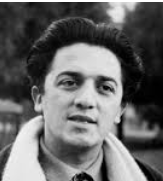
A created thing is never invented and it is never true: it is always and ever itself.
▼
Source
source
Creation
3 months 3 weeks ago
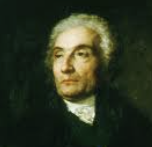
Every nation gets the government it deserves.
▼
Source
source
Original text:Toute nation a le gouvernement qu'elle mérite. Letter 76, on the topic of Russia's new constitutional laws (27 August 1811); published in Lettres et Opuscules.
6 months 3 weeks ago
Existing is plagiarism.

3 months 3 weeks ago
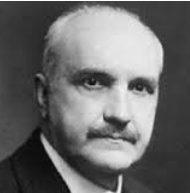
We are living in the most destructive and, hence, the most stupid period of the history of our species.
▼
Source
source
A Poem of Difficult Hope
6 months 2 weeks ago
Miracles are propitious accidents, the natural causes of which are too complicated to be readily understood.
7 months 3 weeks ago
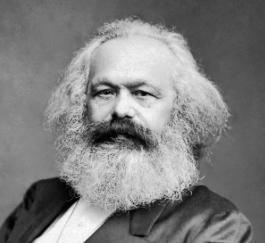
The foundation of irreligious criticism is: Man makes religion, religion does not make man.
4 months 3 weeks ago
I do not admire myself as a person. My successes do not override my shortcomings.
▼
Source
source
Journal of Humanistic Psychology (Spring 1991) Vol. 31 No. 2, p. 112
7 months 3 weeks ago
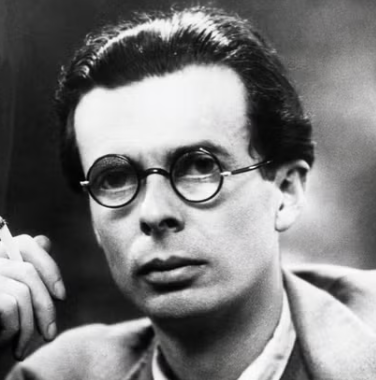
The proper study of mankind is books.
▼
Source
source
Ch. XXVIII


4 months 2 weeks ago
To this man life is already as earnest and awful, and beautiful and terrible, as death.
4 months 1 week ago
The individual is reduced to a negligible quantity, perhaps less in his consciousness than in his practice and in the totality of his obscure emotional states that are derived from this practice. The individual has become a mere cog in an enormous organization of things and powers which tear from his hands all progress, spirituality, and value in order to transform them from their subjective form into the form of a purely objective life. It needs merely to be pointed out that the metropolis is the genuine arena of this culture which outgrows all personal life. Here in buildings and educational institutions, in the wonders and comforts of space-conquering technology, in the formations of community life, and in the visible institutions of the state, is offered such an overwhelming fullness of crystallized and impersonalized spirit that the personality, so to speak, cannot maintain itself under its impact.
▼
Source
source
p. 422
8 months 4 weeks ago
That a woman is presented as a teacher, as a prototype of piety, cannot amaze anyone who knows that piety or godliness is fundamentally womanliness. ... from a woman you learn concern for the one thing needful, from Mary, sister of Lazarus, who sat silent at Christ's feet with her heart's choice: the one thing needful.
6 months 1 week ago
To be sure, exchange-value exerts its power in a special way in the realm of cultural goods. For in the world of commodities this realm appears to be exempted from the power of exchange, to be in an immediate relationship with the goods, and it is this appearance in turn which alone gives cultural goods their exchange-value. But they nevertheless simultaneously fall completely into the world of commodities, are produced for the market, and are aimed at the market.
▼
Source
source
p. 279
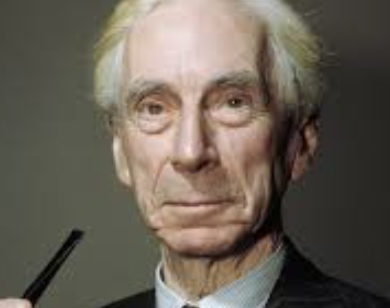
7 months 4 weeks ago
It is the duty of all who care for their country or for civilisation to point out that we cannot further any of our ideals by participation in the next war, and that we ought therefore to resist all measures based upon the assumption that we shall take part in it. In the late war it was arguable that victory, being possible, might do some good. With the modern technique of gas attack, no belligerent can hope for victory. Absolute pacifism, therefore, in every country, in which it is politically possible, is the only sane policy both for Governments and individuals.
▼
Source
source
Letter to The New Statesman and Nation (10 August 1935), quoted in Yours Faithfully, Bertrand Russell
8 months 1 week ago
The first and most necessary topic in philosophy is that of the use of moral theorems, such as, "We ought not to lie;" the second is that of demonstrations, such as, "What is the origin of our obligation not to lie;" the third gives strength and articulation to the other two, such as, "What is the origin of this is a demonstration." For what is demonstration? What is consequence? What contradiction? What truth? What falsehood? The third topic, then, is necessary on the account of the second, and the second on the account of the first. But the most necessary, and that whereon we ought to rest, is the first. But we act just on the contrary. For we spend all our time on the third topic, and employ all our diligence about that, and entirely neglect the first.
▼
Source
source
(51).
4 months 3 weeks ago
What is objective must be common to many minds and consequently transmissible from one to the other, and as this transmission can only come about by... discourse... we are even forced to conclude: no discourse no objectivity.

6 months 3 weeks ago
The preposterous distinction of rank, which render civilization a curse, by dividing the world between voluptuous tyrants and cunning envious dependents, corrupt, almost equally, every class of people, because respectability is not attached to the discharge of the relative duties of life, but to the station, and when the duties are not fulfilled, the affections cannot gain sufficient strength to fortify the virtue of which they are the natural reward. Still there are some loop-holes out of which a man may creep, and dare to think and act for himself; but for a woman it is an herculean task, because she has difficulties peculiar to her sex to overcome, which require almost super-human powers.
▼
Source
source
Ch. 9
3 months 3 weeks ago
The Process of Induction may be resolved into three steps ; the 'Selection of the Idea', the 'Construction of the Conception', and the 'Determination of the Magnitudes'. These three steps correspond to the determination of the 'Independent Variable', the 'formula', and the 'coefficients', in mathematical investigations; or to the 'Argument', the 'Law', and the 'Numerical Data', in a Table of an Inequality. The conceptions involved in scientific truths have attained the requisite degree of clearness by means of the Discussions respecting ideas which have taken place among discoverers and their followers. Such discussions are very far from being unprofitable

4 months 2 weeks ago
Those who try to include all life when trying to determine justice: Should a man be executed for killing a fly? No? The fly has a short life span? The fly is small? All these rationalizations can be applied to you, by a creature that lives longer, is bigger, etc. #philosophy
6 months 1 week ago
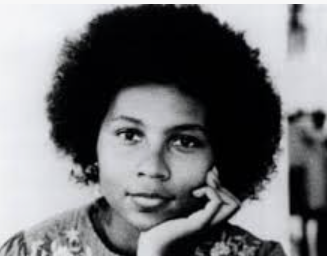
Radical black feminists have never confined their vision to just the emancipation of black women or women in general, or all black people for that matter. Rather, they are the theorists and proponents of a radical humanism committed to liberating humanity and reconstructing social relations across the board. When bell hooks says "Feminism is for everybody," she is echoing what has always been a basic assumption of black feminists. We are not talking about identity politics but a constantly developing often contested, revolutionary conversation about how all of us might envision and remake the world.
▼
Source
source
Robin Kelley Freedom Dreams
7 months 4 days ago
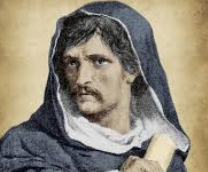
To a body of infinite size there can be ascribed neither centre nor boundary... Thus the Earth no more than any other world is at the centre.
6 months 3 weeks ago
What am I, other than a chance in the infinite probabilities of not having been!
6 months 3 weeks ago
Doutbless, revenge is not always sweet, once it is consummated we feel inferior to our victim, or else we are tangled in the subtleties of remorse; so vengeance too has its venom, though it comes closer to what we are, to what we feel, to the very law of the self; it is also healthier than magnanimity. The Furies were held to antedate the gods, Zeus included. Vengeance before Divinity! This is the Major intuition of ancient mythology. p. 70.
6 months 2 weeks ago
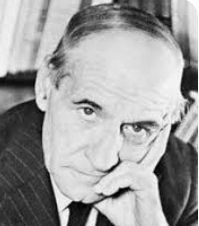
The direction of society has been taken over by a type of man who is not interested in the principles of civilisation. Not of this or that civilisation but - from what we can judge to-day - of any civilisation. ...The type of man dominant to-day is a primitive one, a Naturmensch rising up in the midst of a civilised world.
▼
Source
source
Chap.IX: The Primitive and the Technical
4 months 1 week ago
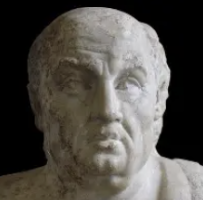
Lay hold of today's task, and you will not need to depend so much upon tomorrow's. While we are postponing, life speeds by.
6 months 2 weeks ago
An eternal purgatory, then, rather than a heaven of glory; an eternal ascent. If there is an end to all suffering, however pure and spiritualized we may suppose it to be, if there is an end to all desire, what is it that makes the blessed in paradise go on living? If in paradise they do not suffer for want of God, how shall they love Him? And if there, in the heaven of glory, while they behold God little by little and closer and closer, yet without ever wholly attaining Him, there does not always remain something more for them to know and desire, if there does not always remain a substratum of doubt, how shall they not fall asleep?
3 months 3 weeks ago
The Construction of the Conception very often includes, in a great measure, the Determination of the Magnitudes. The true construction of the conception is frequently suggested by some hypothesis; and in these cases, the hypothesis may be useful, though containing superfluous parts.
6 months 3 weeks ago
So it is that after each night, facing a new day, the impossible necessity of dealing with it fills us with dread; exiled in light as if the world had just started, inventing the sun, we flee from tears-just one of which would be enough to wash us out of time.
3 months 3 weeks ago
But what has been the experience of the Russian socialist movement up to now? The most important and fruitful changes in its tactical policy during the last ten years have not been the inventions of several leaders and even less so of any central organizational organs. They have always been the spontaneous product of the movement in ferment.
4 months 3 weeks ago
He has begun by supposing that light has a constant velocity... the same in all directions. This... could never be verified directly by experiment... The postulate... resembling the principle of sufficient reason... furnishes us with a new rule for the investigation of simultaneity.
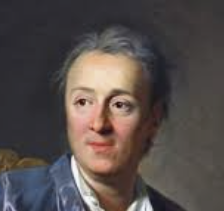
7 months 1 day ago
Jews are angry and brutish people, vile and vulgar men, slaves worthy of the yoke [Talmudism] which you bear... Go, take back your books and remove yourselves from me. [ The Talmud ] taught the Jews to steal the goods of Christians, to regard them as savage beasts, to push them over the precipice... to kill them with impunity and to utter every morning the most horrible imprecations against them.
▼
Source
source
See The Jews: A History, Second Edition, by John Efron, Steven Weitzman and Matthias Lehmann
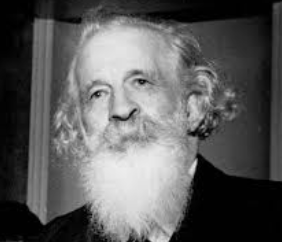
6 months 2 weeks ago
The repose of sleep refreshes only the body. It rarely sets the soul at rest. The repose of the night does not belong to us. It is not the possession of our being. Sleep opens within us an inn for phantoms. In the morning we must sweep out the shadows.
▼
Source
source
Ch. 2, sect. 3
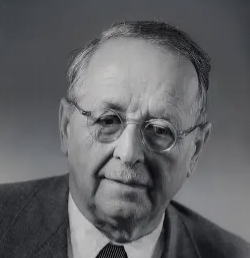
4 months 1 week ago
Physicists and philosophers stick stubbornly to the principles of a mechanistic interpretation of the world after physics has, in its factual structure, already outgrown the latter. They have the same excuse as the inhabitant of the mainland who for the first time travels on the open sea: he will desperately try to stay in sight of the vanishing coast line, as long as there is no other coast in sight, towards which he steers.
▼
Source
source
"Wissenschaft als symbolische Konstruktion des Menschen" Eranos-Jahrbuch (1948) GA IV, as quoted/translated by Erhard Scholz, "Philosophy as a Cultural Resource and Medium of Reflection for Hermann Weyl"
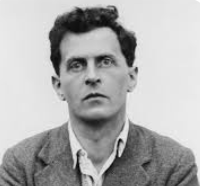
7 months 3 weeks ago
A proposition is completely logically analyzed if its grammar is made completely clear: no matter what idiom it may be written or expressed in...
▼
Source
source
Philosophical Remarks (1930), Part I (1)
8 months ago
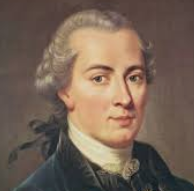
The concept of space, therefore, is a pure intuition, being a singular concept, not made up by sensations, but itself the fundamental form of all external sensation.
CivilSimian.com created by AxiomaticPanic, CivilSimian, Kalokagathia