


7 months 4 weeks ago
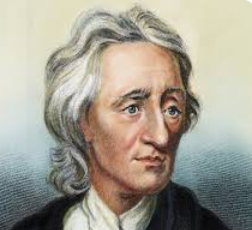
This life affords no solid satisfaction, but in the consciousness of having done well, and the hopes of another life.
▼
Source
source
Letter to Anthony Collins (23 August 1704), in The Works of John Locke, Vol. X (London, 1823), p. 298; quoted by William Julius Mickle in Voltain in the Shades (London, 1770), p. 7
7 months 3 weeks ago
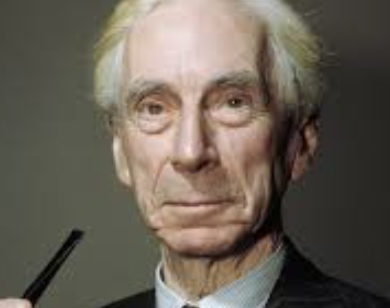
To choose one sock from each of infinitely many pairs of socks requires the Axiom of Choice, but for shoes the Axiom is not needed.
▼
Source
source
As quoted in Williams' Weighing the Odds: A Course in Probability and Statistics (2001), p. 498
6 months 5 days ago
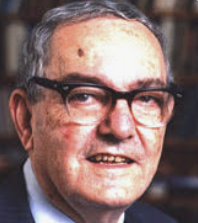
The fact that goals may be dependent for their force on other more distant ends leads to the arrangement of these goals in a hierarchy - each level to be considered as an end relative to the levels below it and as a mean to the levels above it.
▼
Source
source
p. 62.
3 months 2 weeks ago
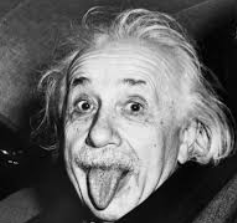
It has often been said, and certainly not without justification, that the man of science is a poor philosopher. Why then should it not be the right thing for the physicist to let the philosopher do the philosophizing? Such might indeed be the right thing to do at a time when the physicist believes he has at his disposal a rigid system of fundamental laws which are so well established that waves of doubt can't reach them; but it cannot be right at a time when the very foundations of physics itself have become problematic as they are now. At a time like the present, when experience forces us to seek a newer and more solid foundation, the physicist cannot simply surrender to the philosopher the critical contemplation of theoretical foundations; for he himself knows best and feels more surely where the shoe pinches. In looking for an new foundation, he must try to make clear in his own mind just how far the concepts which he uses are justified, and are necessities.
▼
Source
source
"Physics and Reality" in the Journal of the Franklin Institute Vol. 221, Issue 3 (March 1936), Pages 349-382

7 months 3 weeks ago
Savage - There is only one way fit for a man - Heroism, or Master-Morality, or Violence. All the other people in between are ploughing the sand.
▼
Source
source
Pilgrim's Regress 100
7 months 3 weeks ago
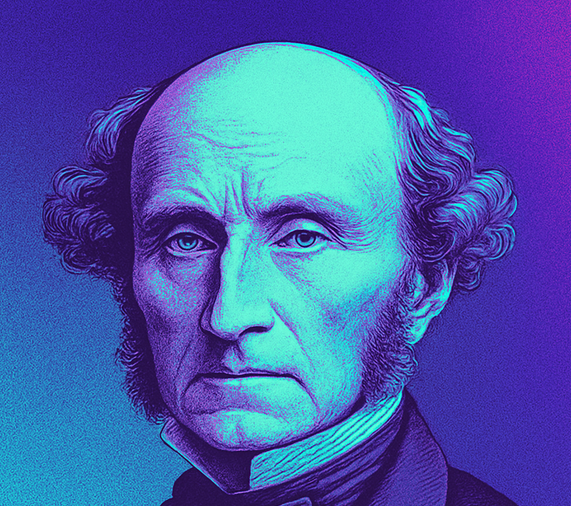
What, in unenlightened societies, colour, race, religion, or in the case of a conquered country, nationality, are to some men, sex is to all women; a peremptory exclusion from almost all honourable occupations, but either such as cannot be fulfilled by others, or such as those others do not think worthy of their acceptance.
▼
Source
source
Ch. 4
7 months 3 weeks ago
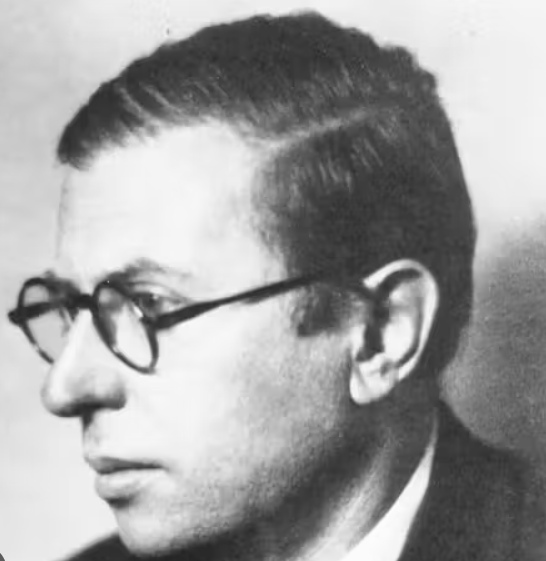
I am sorry to say that at the moment I am so busy as to be convinced that life has no meaning whatever... I do not see that we can judge what would be the result of the discovery of truth, since none has hitherto been discovered.
▼
Source
source
Letter to Will Durant, 20 June, 1931
7 months 3 weeks ago
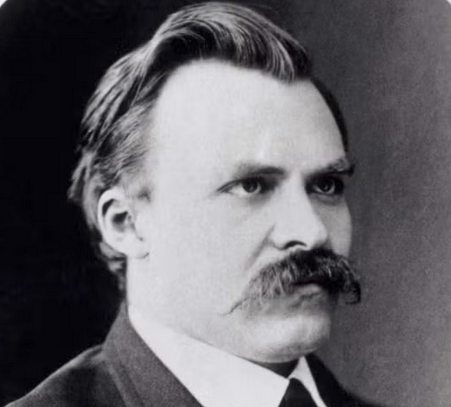
I will not be modest. Humble, as much as you like, but not modest. Modesty is the virtue of the lukewarm.
▼
Source
source
Act 4, sc. 5
8 months 4 weeks ago
Woe to the thinker who is not the gardener but only the soil of the plants that grow in him!
8 months 4 days ago
I am further of opinion that it would be better for us to have [no laws] at all than to have them in so prodigious numbers as we have.
▼
Source
source
Book III, Ch. 13. Of Experience
6 months 2 weeks ago
Power as is really divided, and as dangerously to all purposes, by sharing with another an Indirect Power, as a Direct one.
▼
Source
source
The Third Part, Chapter 42, p. 315
7 months 3 weeks ago
A mind does not receive truth as a chest receives jewels that are put into it, but as the stomach takes up food into the system. It is no longer food, but flesh, and is assimilated. The appetite and the power of digestion measure our right to knowledge. He has it who can use it. As soon as our accumulation overruns our invention or power to use, the evils of intellectual gluttony begin,- congestion of the brain, apoplexy, and strangulation.
▼
Source
source
"The Natural History of Intellect", p. 30
5 months 5 days ago
[H]uman nature as encoded in our DNA isn't immutable. Mankind's barbaric track-record to date is an unreliable guide to the future. If Homo sapiens' nastier alleles and their more sinister combinations can be silenced or edited out of the genome, and new improved code-sequences inserted instead, then the pessimists will be confounded. A major discontinuity in the development of life lies ahead. Providentially, we've learned that the DNA-driven world isn't written in God-given proprietary code it would be hubris to tamper with, but in bug-ridden open source amenable to improvement.
▼
Source
source
Utopian Pharmacology: Mental Health in the Third Millennium MDMA and Beyond, BLTC Research, last updated 2020
4 months 1 week ago
You do not know where death awaits you; so be ready for it everywhere.
8 months 3 weeks ago
Knowledge can in part be set aside, and one can then go further in order to collect new; the natural scientist can set aside insects and flowers and then go further, but if the existing person sets aside the decision in existence, it is eo ipso lost, and he is changed.

6 months 1 week ago
No art can be judged by purely aesthetic standards, although a painting or a piece of music may appear to give a purely aesthetic pleasure. Aesthetic enjoyment is an intensification of the vital response, and this response forms the basis of all value judgements. The existentialist contends that all values are connected with the problems of human existence, the stature of man, the purpose of life. These values are inherent in all works of art, in addition to their aesthetic values, and are closely connected with them.
▼
Source
source
The Chicago Review, Volume 13, no. 2, 1959, p. 152-181

6 months 1 week ago
The first act of violence that patriarchy demands of males is not violence toward women. Instead patriarchy demands of all males that they engage in acts of psychic self-mutilation, that they kill off the emotional parts of themselves. If an individual is not successful in emotionally crippling himself, he can count on patriarchal men to enact rituals of power that will assault his self-esteem.
▼
Source
source
The Will To Change: Men, Masculinity, and Love (2004), p. 66
7 months 3 weeks ago
Everything great glitters, glitter begets ambition, and ambition can easily have caused the inspiration or what we thought to be inspiration. But reason can no longer restrain one who is lured by the fury of ambition. He tumbles where his vehement drive calls him; no longer does he choose his position, but rather chance and luster determine it.
6 months 1 week ago
In the mid nineteenth century, the typical murderer was a drunken illiterate; a hundred years later the typical murderer regards himself as a thinking man.
▼
Source
source
Introductory Essay, p. xiv
12 months 2 days ago
I hate writing. I so intensely hate writing — I cannot tell you how much. The moment I am at the end of one project I have the idea that I didn’t really succeed in telling what I wanted to tell, that I need a new project — it’s an absolute nightmare. But my whole economy of writing is in fact based on an obsessional ritual to avoid the actual act of writing.
4 months 2 weeks ago
One of the most striking signs of the decay of art is the intermixing of different genres.
▼
Source
source
Propylaea (1798) Introduction
4 months 1 week ago
Zen does not confuse spirituality with thinking about God while one is peeling potatoes. Zen spirituality is just to peel the potatoes. Paraphrase of original text which reads "It does not confuse spirituality with thinking about God while one is peeling potatoes. Zen spirituality is just to peel the potatoes.
▼
Source
source
The Way of Zen, Pt. 2, Ch. 2
8 months 3 weeks ago
I believe that only scientists can understand the universe. It is not so much that I have confidence in scientists being right, but that I have so much in nonscientists being wrong.
6 months 1 week ago
The original Golden Dawn was not always as serious as it should have been. Mathers was a clown, and Yeats was just a romantic trying to deceive himself. Most of them were interested in personal power, and it ended up by destroying them. The aim of our group is the scientific exploration of the hidden powers of the human mind.
▼
Source
source
p. 113

4 months 2 weeks ago
All work is as seed sown; it grows and spreads, and sows itself anew.

7 months 1 day ago
If it be of the highest importance to man, as an individual, that his religion should be true, the case of society is not the same. Society has no future life to hope for or to fear; and provided the citizens profess a religion, the peculiar tenets of that religion are of very little importance to its interests. Variant translation: Though it is very important for man as an individual that his religion should be true, that is not the case for society. Society has nothing to fear or hope from another life; what is most important for it is not that all citizens profess the true religion but that they should profess religion.
▼
Source
source
Chapter XVII.

7 months 2 weeks ago
The animals themselves are incapable of demanding their own liberation, or of protesting against their condition with votes, demonstrations, or boycotts. Human beings have the power to continue to oppress other species forever, or until we make this planet unsuitable for living beings. Will our tyranny continue, proving that morality counts for nothing when it clashes with selfinterest, as the most cynical of poets and philosophers have always said? Or will we rise to the challenge and prove our capacity for genuine altruism by ending our ruthless exploitation of the species in our power, not because we are forced to do so by rebels or terrorists, but because we recognize that our position is morally indefensible? The way in which we answer this question depends on the way in which each one of us, individually, answers it.
▼
Source
source
Ch. 6: Speciesism Today
4 months 3 weeks ago
Roemer used eclipses of the satellites of Jupiter, and sought how much the event fell behind its prediction. But... this prediction is made... by... astronomic laws; for instance Newton's... The velocity of light... is adopted, such that the astronomic laws compatible with this value may be as simple as possible.
8 months ago
Morality is a subject that interests us above all others: We fancy the peace of society to be at stake in every decision concerning it; and 'tis evident, that this concern must make our speculations appear more real and solid, than where the subject is, in a great measure, indifferent to us. What affects us, we conclude can never be a chimera; and as our passion is engag'd on the one side or the other, we naturally think that the question lies within human comprehension; which, in other cases of this nature, we are apt to entertain some doubt of. Without this advantage I never should have ventur'd upon a third volume of such abstruse philosophy, in an age, wherein the greatest part of men seem agreed to convert reading into an amusement, and to reject every thing that requires any considerable degree of attention to be comprehended.
▼
Source
source
Part 1, Section 1
7 months 3 weeks ago
If we remembered everything, we should on most occasions be as ill off as if we remembered nothing. It would take as long for us to recall a space of time as it took the original time to elapse, and we should never get ahead with our thinking. All recollected times undergo, accordingly, what M. Ribot calls foreshortening; and this foreshortening is due to the omission of an enormous number of the facts which filled them.
▼
Source
source
Ch. 16
6 months 3 weeks ago
The divine origin of man, as taught by Vedanta, IS continually inculcated, to stimulate his efforts to return, to animate him in the struggle, and incite him to consider a reunion and reincorporation with Divinity as the one primary object of every action and reaction. Even the loftiest philosophy of the European, the idealism of reason as it is set forth by the Greek philosophers, appears in comparison with the abundant light and vigor of Oriental idealism like a feeble Promethean spark in the full flood of heavenly glory of the noonday sun, faltering and feeble and ever ready to be extinguished.
▼
Source
source
quoted in Londhe, S. (2008). A tribute to Hinduism: Thoughts and wisdom spanning continents and time about India and her culture. New Delhi: Pragun Publication.
6 months 1 week ago
It is not enough to accept a concept of order and live by it; that is cowardice, and such cowardice cannot result from freedom. Chaos must be faced. Real order must be preceded by a descent into chaos.
▼
Source
source
Chapter Three, The Romantic Outsider
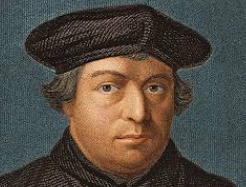
8 months 4 days ago
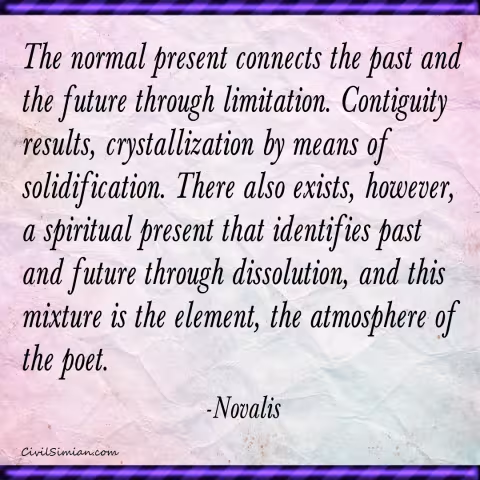
What does it mean to have a god? or, what is God? Answer: A god means that from which we are to expect all good and to which we are to take refuge in all distress, so that to have a God is nothing else than to trust and believe Him from the [whole] heart; as I have often said that the confidence and faith of the heart alone make both God and an idol. If your faith and trust be right, then is your god also true; and, on the other hand, if your trust be false and wrong, then you have not the true God; for these two belong together faith and God. That now, I say, upon which you set your heart and put your trust is properly your god.
▼
Source
source
Large Catechism 1.1-3, F. Bente and W.H.T. Dau, tr. Triglot Concordia: The Symbolical Books of the Ev. Lutheran Church(St. Louis: Concordia Publishing House, 1921), 565.
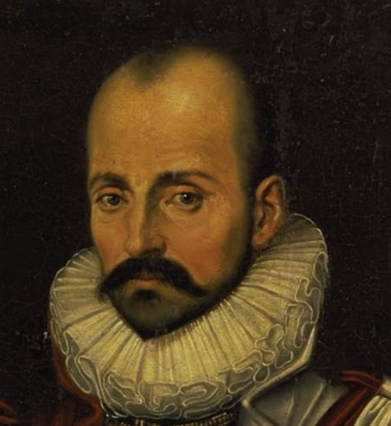
4 months 3 weeks ago
Tyrants would distribute largess, a bushel of wheat, a gallon of wine, and a sesterce: and then everybody would shamelessly cry, "Long live the King!" The fools did not realize that they were merely recovering a portion of their own property, and that their ruler could not have given them what they were receiving without having first taken it from them.
▼
Source
source
Part 2

6 months 3 weeks ago
Detachment from the world as an attachment to the ego... Who can realize the detachment in which you are as far away from yourself as you are from the world?

4 months 3 weeks ago
The other big issue is an emotional one. We tend to feel the greatest bonds of solidarity with people that are close to us. There are very few true citizens of the world. We're citizens of individual countries and we really feel the closest bonds to people that live within our nation, and therefore... the nation becomes a kind of social glue. But if you're going to make a national identity compatible with liberalism, it has to be the right kind of national identity. It has to be one that is open to all of the citizens that actually live in the territory of the nation. It can't exclude certain groups by race, by ethnicity, by religious belief and the like, and therefore it needs to be an open identity that is based on essentially liberal ideas.
▼
Source
source
24:46:00
7 months 1 day ago
There are at the present time two great nations in the world-allude to the Russians and the Americans- All other nations seem to have nearly reached their national limits, and have only to maintain their power; these alone are proceeding-along a path to which no limit can be perceived.
▼
Source
source
Chapter XVIII.
7 months 3 weeks ago
Written words differ from spoken words in being material structures. A spoken word is a process in the physical world, having an essential time-order; a written word is a series of pieces of matter, having an essential space-order.
▼
Source
source
An Outline of Philosophy Ch.4 Language, 1927
6 months 2 weeks ago
In proportion as a man's interests become humane and his efforts rational, he appropriates and expands a common life, which reappears in all individuals who reach the same impersonal level of ideas.
▼
Source
source
Ch. VIII: Ideal Society
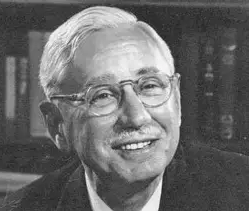
4 months 2 weeks ago
It is life that educates, and perhaps love more than anything else in life.
▼
Source
source
Ch. 2 : On Youth
5 months 3 weeks ago
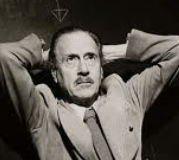
The public has yet to see TV as TV. Broadcasters have no awareness of its potential. The movie people are just beginning to get a grasp on film.
▼
Source
source
quoted in "Marshall McLuhan, Author, Dies; Declared 'Medium Is the Message'" by Alden Whitman, The New York Times, January 1, 1981
8 months ago
There is an inconvenience which attends all abstruse reasoning. That it may silence, without convincing an antagonist, and requires the same intense study to make us sensible of its force, that was at first requisite for its invention. When we leave our closet, and engage in the common affairs of life, its conclusions seem to vanish, like the phantoms of the night on the appearance of the morning; and 'tis difficult for us to retain even that conviction, which we had attain'd with difficulty.
▼
Source
source
Part 1, Section 1
4 months 1 week ago
The one loves to do good, the other to do harm; the one to help even strangers, the other to attack even its dearest friends.
5 months 2 weeks ago
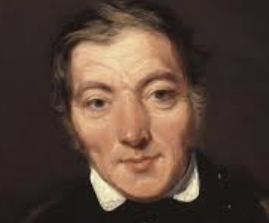
The end of government is to make the governed and the governors happy. That government then is thebest, which in practice produces the greatest happiness to the greatest number; including those who govern, and those who obey.
▼
Source
source
Essay Fourth, The Principles of the Former Essays Applied to Government
7 months 2 weeks ago
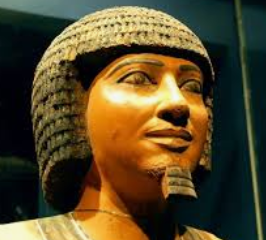
Beware an act of avarice; it is bad and incurable disease.
▼
Source
source
Maxim no. 19.
3 months 3 weeks ago
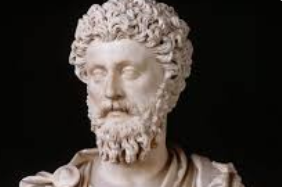
Let opinion be taken away, and no man will think himself wronged. If no man shall think himself wronged, then is there no more any such thing as wrong.
▼
Source
source
IV. 7, trans. Méric Casaubon
6 months 3 weeks ago
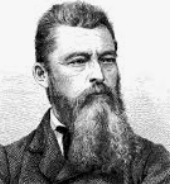
Hegel determines and presents only the most striking differences of various religions, philosophies, time and peoples, and in a progressive series of stages, but he ignores all that is common and identical in all of them. ... His system knows only subordination and succession; coordination and coexistence are unknown to it.
▼
Source
source
Z. Hanfi, trans., in The Fiery Brook (1972), p. 54
4 months 1 week ago
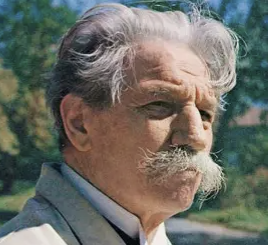
Example is not the main thing. It is the only thing. That is, if the one giving the example is not saying to himself, 'Behold I am giving an example.' That spoils it. Anyone thinking of the example he will give to others has lost his simplicity. Only as a man has simplicity can his example influence others. Sometimes presented in paraphrased form, such as "Example is not the main thing in influencing others, it is the only thing".
CivilSimian.com created by AxiomaticPanic, CivilSimian, Kalokagathia