

3 months 3 weeks ago
With respect to the new Government, nine or ten States will probably have accepted by the end of this month. The others may oppose it. Virginia, I think, will be of this number. Besides other objections of less moment, she will insist on annexing a bill of rights to the new Constitution, i.e. a bill wherein the Government shall declare that, 1. Religion shall be free; 2. Printing presses free; 3. Trials by jury preserved in all cases; 4. No monopolies in commerce; 5. No standing army. Upon receiving this bill of rights, she will probably depart from her other objections; and this bill is so much to the interest of all the States, that I presume they will offer it, and thus our Constitution be amended, and our Union closed by the end of the present year.
▼
Source
source
Letter to Mr. Dumas

7 months 3 weeks ago
There are many things of which a wise man might wish to be ignorant.
▼
Source
source
Demonology
8 months 3 weeks ago
Of all the cultural aspects of humanity, the only one which is not broken up into national or regional splinters is science. Different nations have different languages, they may have different religions, may have different dietaries, may have different holidays, different ways of thinking, but here's only one science.
▼
Source
source
Interview by Richard Heffner on The Open Mind (19 June 1988); video (25:31)
6 months 2 weeks ago
Even the most elevated psychological understanding is not a loving understanding.

7 months 3 weeks ago
Our elucidations of the preliminary concept of phenomenology show that its essential character does not consist in its actuality as a philosophical "movement." Higher than actuality stands possibility. We can understand phenomenology solely by seizing upon it as a possibility.
▼
Source
source
Introduction: The Exposition of the Question of the Meaning of Being (Stambaugh translation)

7 months 1 week ago
Be not hasty to speak; nor slow to hear!
3 months 3 weeks ago
The majority, oppressing an individual, is guilty of a crime, abuses its strength, and by acting on the law of the strongest breaks up the foundations of society.
▼
Source
source
Letter to Éleuthère Irénée du Pont de Nemours
7 months 3 weeks ago
Man cannot will unless he has first understood that he must count on no one but himself; that he is alone, abandoned on earth in the midst of his infinite responsibilities, without help, with no other aim than the one he sets himself, with no other destiny than the one he forges for himself on this earth.
6 months 2 weeks ago
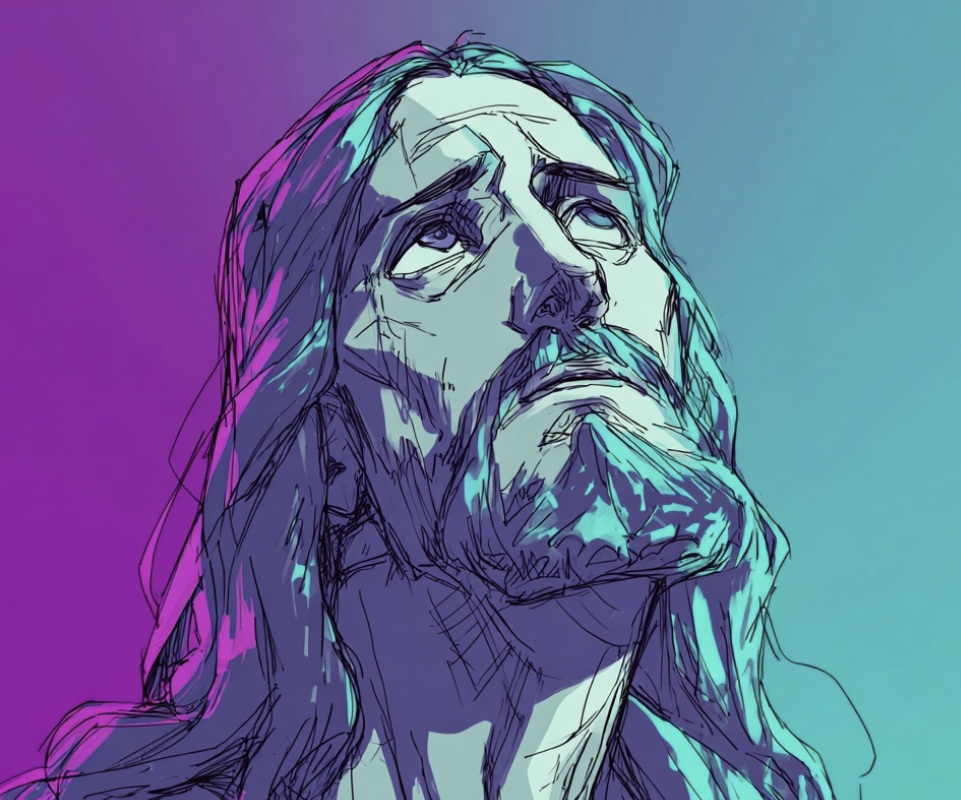
For he must rule as king until God has put all enemies under his feet. And the last enemy, death, is to be brought to nothing.
▼
Source
source
Paul of Tarsus, 1 Corinthians 15: 25-26, NWT
5 months 1 week ago
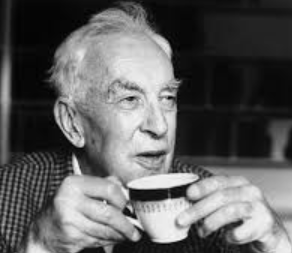
Of the twenty or so civilizations known to modern Western historians, all except our own appear to be dead or moribund, and, when we diagnose each case, in extremis or post mortem, we invariably find that the cause of death has been either War or Class or some combination of the two. To date, these two plagues have been deadly enough, in partnership, to kill off nineteen out of twenty representatives of this recently evolved species of human society; but, up to now, the deadliness of these scourges has had a saving limit.
▼
Source
source
Ch. 2: The Present Point in History
7 months 2 weeks ago
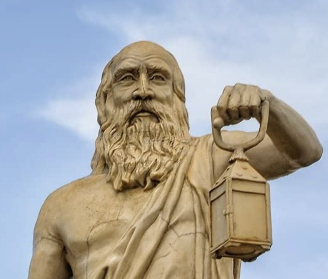
Boasting, like gilded armour, is very different inside from outside.
▼
Source
source
Stobaeus, iii. 22. 40
6 months 2 weeks ago
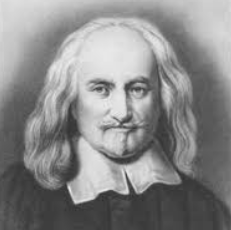
The office of the sovereign, be it a monarch or an assembly, consisteth in the end for which he was trusted with the sovereign power, namely the procuration of the safety of the people, to which he is obliged by the law of nature, and to render an account thereof to God, the Author of that law, and to none but Him. But by safety here is not meant a bare preservation, but also all other contentments of life, which every man by lawful industry, without danger or hurt to the Commonwealth, shall acquire to himself. And this is intended should be done, not by care applied to individuals, further than their protection from injuries when they shall complain; but by a general providence, contained in public instruction, both of doctrine and example; and in the making and executing of good laws to which individual persons may apply their own cases.
▼
Source
source
The Second Part, Chapter 30: Of the Office of the Sovereign Representative
8 months 4 weeks ago
We often contradict an opinion for no other reason than that we do not like the tone in which it is expressed.
6 months 2 weeks ago
There are two kinds of means. One kind is external to that which is accomplished; the other kind is taken up into the consequences and remains immanent in them. There are ends which are merely welcome cessations and there are ends that are fulfillments of what went before. The toil of the laborer is too often an antecedent to the wage he receives, as consumption of gasoline is merely a means to transportation. The means cease to act when the "end" is reached; one would be glad, as a rule, to get the result without having to employ the means. They are but the scaffolding.

6 months 3 weeks ago
What place do we occupy in the "universe"? A point, if that! Why reproach ourselves when we are evidently so insignificant? Once we make this observation, we grow calm at once: henceforth, no more bother, no more frenzy, metaphysical or otherwise. And then that point dilates, swells, substitutes itself for space. And everything begins all over again.
6 months 2 weeks ago
The ideal of strictly scientific method in mathematics which I have tried to realise here, and which perhaps might be named after Euclid I should like to describe in the following way... The novelty of this book does not lie in the content of the theorems but in the development of the proofs and the foundations on which they are based... With this book I accomplish an object which I had in view in my Begriffsschrift of 1879 and which I announced in my Grundlagen der Arithmetik. I am here trying to prove the opinion on the concept of number that I expressed in the book last mentioned.
▼
Source
source
Vol. 1. pp. 137-140, as cited in: Ralph H. Johnson (2012), Manifest Rationality: A Pragmatic Theory of Argument, p. 87
6 months 2 weeks ago
In the life of the mass-order, the culture of the generality tends to conform to the demands of the average human being. Spirituality decays through being diffused among the masses when knowledge is impoverished in every possible way by rationalisation until it becomes accessible to the crude understanding of all.
6 months 2 weeks ago
While they denounce as subversive anarchy signs of independent thought, of thinking for themselves on the part of others lest such thought disturb the conditions by which they profit, they think quite literally for themselves, that is of themselves.
▼
Source
source
Human Nature and Conduct (1921) Part 1 Section IV.
6 months 2 weeks ago
It is not politics that can bring true liberty to the soul; that must be achieved, if at all, by philosophy;
▼
Source
source
"The Irony of Liberalism"
7 months 4 weeks ago
All religions promise a reward for excellences of the will or heart, but none for excellences of the head or understanding.
▼
Source
source
E. Payne, trans., vol. 2, p. 230

6 months 2 weeks ago
Such abstraction which refuses to accept the given universe of facts as the final context of validation, such "transcending" analysis of the facts in the light of their arrested and denied possibilities, pertains to the very structure of social theory.
▼
Source
source
p. xliii

7 months 4 weeks ago
If any philosopher had been asked for a definition of infinity, he might have produced some unintelligible rigmarole, but he would certainly not have been able to give a definition that had any meaning at all.
▼
Source
source
Ch. 5: Mathematics and the Metaphysicians

4 months 2 weeks ago
Music is well said to be the speech of angels.
▼
Source
source
The Opera (1852).
8 months 6 days ago
The world's a bubble, and the life of man Less than a span.
7 months 3 weeks ago
We do not directly go about the execution of the purpose that thrills us, but shut our doors behind us, and ramble with prepared minds, as if the half were already done. Our resolution is taking root or hold on the earth then, as seeds first send a shoot downward, which is fed by their own albumen, ere they send one upwards to the light.
▼
Source
source
Pearls of Thought (1881) p. 61
7 months 4 weeks ago
Life is a task to be done. It is a fine thing to say defunctus est; it means that the man has done his task.
▼
Source
source
"On the Sufferings of the World"
7 months 3 weeks ago
For the prevision is allied Unto the thing so signified; Or say, the foresight that awaits Is the same Genius that creates.
▼
Source
source
Fate


5 months 3 weeks ago
Try not to have Emily exposed to hours and hours of TV. It is a vile drug which permeates the nervous system, especially in the young.
▼
Source
source
Letter to son Eric McLuhan, regarding one of Eric's daughters, 1976

7 months 4 weeks ago
Let's not be dazzled by the sententious glitter with which error and lying often cover themselves. Society is not created by the crowd, and bodies come together in vain when hearts reject each other. The truly sociable man is more difficult in his relationships than others; those which consist only in false appearances cannot suit him. He prefers to live far from wicked men without thinking about them, than to see them and hate them. He prefers to flee his enemy rather than seek him out to harm him. A person who knows no other society than that of the heart will not seek his society in your circles. That is How J.J. must have thought and behaved before the conspiracy of which he is the object.
▼
Source
source
Second Dialogue; translated by Judith R. Bush, Christopher Kelly, Roger D. Masters
3 months 3 weeks ago
I repair, then, fellow-citizens, to the post you have assigned me. With experience enough in subordinate offices to have seen the difficulties of this the greatest of all, I have learnt to expect that it will rarely fall to the lot of imperfect man to retire from this station with the reputation and the favor which bring him into it.
5 months 4 weeks ago
The student should have enough knowledge of his or her cultural tradition to know how it got to be the way it is. This involves both political and social history, on the one hand, as well as the mastery of some of the great philosophical and literary texts of the culture on the other. It involves reading not only texts that are of great value, like those of Plato, but many less valuable that have been influential, such as the works of Marx. For the United States, the dominant tradition is, and for the foreseeable future, will remain the European tradition. The United States is, after all, a product of the European Enlightenment. However, you do not understand your own tradition if you do not see it in relation to others. Works from other cultural traditions need to be studied as well.
8 months 3 weeks ago
The artist reconstructs the world to his plan.

6 months 1 week ago
Zen Buddhism is inspired by a basic trust in the Here, a basic trust in the world.
4 months 3 weeks ago
To rule the imperial population, behold our vocation.
▼
Source
source
94

6 months 3 weeks ago
Arms are not yet taken up; but virtually, you are in a civil war. You are not people of differing opinions in a public council;-you are enemies, that must subdue or be subdued, on the one side or the other. If your hands are not on your swords, their knives will be at your throats. There is no medium,-there is no temperament,-there is no compromise with Jacobinism.
▼
Source
source
Letter to William Windham (30 December 1794), quoted in R. B. McDowell (ed.)
6 months 3 weeks ago
Whereas logic and objectivity are usually the predominant features of a man's outer attitude, or are at least regarded as ideals, in the case of a woman it is feeling. But in the soul it is the other way round: inwardly it is the man who feels, and the woman who reflects. Hence a man's greater liability to total despair, while a woman can always find comfort and hope; accordingly a man is more likely to put an end to himself than a woman. However much a victim of social circumstances a woman may be, as a prostitute for instance, a man is no less a victim of impulses from the unconscious, taking the form of alcoholism and other vices.
▼
Source
source
Psychological Types (1921). CW 6. P.805
5 months 3 weeks ago
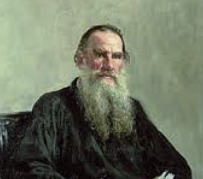
Understand that all the evils from which you suffer, you yourselves cause by yielding to the suggestions by which emperors, kings, members of parliament, governors, officers, capitalists, priests, authors, artists, and all who need this fraud of patriotism in order to live upon your labour, deceive you!
▼
Source
source
Patriotism and Government
7 months 4 weeks ago
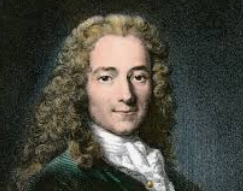
Clever tyrants are never punished.
▼
Source
source
Mérope, act V, scene V, 1743
3 months 3 weeks ago
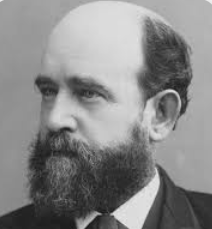
How can a man be said to have a country where he has no right to a square inch of soil...
▼
Source
source
Ch. 2 : Political Dangers
3 months 3 weeks ago
Never spend your money before you have it.

7 months 3 weeks ago
He sees as well as you do that courage is not simply one of the virtues, but the form of every virtue at the testing point, which means, at the point of highest reality. A chastity or honesty, or mercy, which yields to danger will be chaste or honest or merciful only on conditions.
▼
Source
source
Letter XXIX
3 months 3 weeks ago
The tax upon land values is, therefore, the most just and equal of all taxes. It falls only upon those who receive from society a peculiar and valuable benefit, and upon them in proportion to the benefit they receive. It is the taking by the community, for the use of the community, of that value which is the creation of the community. It is the application of the common property to common uses. When all rent is taken by taxation for the needs of the community, then will the equality ordained by Nature be attained. No citizen will have an advantage over any other citizen save as is given by his industry, skill, and intelligence; and each will obtain what he fairly earns. Then, but not till then, will labor get its full reward, and capital its natural return.
▼
Source
source
Book VIII, Ch. 3
6 months 2 weeks ago
Imminent seems the collapse of that which for millennium has constituted man's universe. The new world which has arisen as an apparatus for supply of the necessaries of life compels everything and everyone to serve it. It annihilates whatever it has no place for person seems to be going undergoing absorption into that which is nothing more than a means to an end, into that which is devoid of purpose of significance.

5 months 3 days ago
If there is anything unique about the human animal it is that it has the ability to grow knowledge at an accelerating rate while being chronically incapable of learning from experience. Science and technology are cumulative, whereas ethics and politics deal with recurring dilemmas. Whatever they are called, torture and slavery are universal evils; but these evils cannot be consigned to the past like redundant theories in science. They return under different names: torture as enhanced interrogation techniques, slavery as human trafficking. Any reduction in universal evils is an advance in civilization. But, unlike scientific knowledge, the restraints of civilized life cannot be stored on a computer disc. They are habits of behaviour, which once broken are hard to mend. Civilization is natural for humans, but so is barbarism.
▼
Source
source
An Old Chaos: Humanism and Flying Saucers (p. 75)
7 months 2 weeks ago
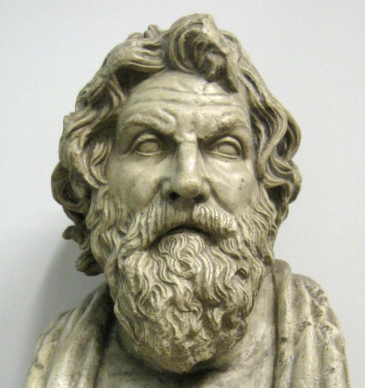
Wealth and poverty do not lie in a person's estate, but in their souls.
▼
Source
source
iv. 34
4 months 1 week ago
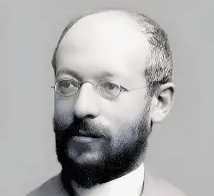
Every relationship between two individuals or two groups will be characterized by the ratio of secrecy that is involved in it. Even when one of the parties does not notice the secret factor, yet the attitude of the concealer, and consequently the whole relationship, will be modified by it.
▼
Source
source
p. 462
5 months 2 weeks ago
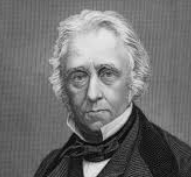
And why were those haughty [French] nobles destroyed with that utter destruction? Why were they scattered over the face of the earth, their titles abolished, their escutcheons defaced, their parks wasted, their palaces dismantled, their heritage given to strangers? Because they had no sympathy with the people, no discernment of the signs of their time; because, in the pride and narrowness of their hearts, they called those whose warnings might have saved them theorists and speculators; because they refused all concession till the time had arrived when no concession would avail.
▼
Source
source
Speech in the House of Commons on the Reform Bill (20 September 1831), quoted in Speeches of the Right Honourable T. B. Macaulay, M.P. (1854), p. 50
7 months 2 weeks ago
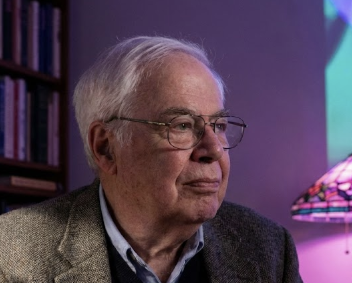
My principal motive is the belief that we can still make admirable sense of our lives even if we cease to have ... "an ambition of transcendence."
▼
Source
source
Introduction to Objectivity, Relativism, and Truth: Philosophical Papers, Volume I (1991).
6 months 1 week ago
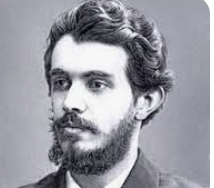
We used to pay too little attention to utopias, or even disregard them altogether, saying with regret they were impossible of realisation. Now indeed they seem to be able to be brought about far more easily than we supposed, and we are actually faced by an agonising problem of quite another kind: how can we prevent their final realisation? ... Utopias are more realisable than those 'realist politics' that are only the carefully calculated policies of office-holders, and towards utopias we are moving. But it is possible that a new age is already beginning, in which cultured and intelligent people will dream of ways to avoid ideal states and to get back to a society that is less 'perfect' and more free.
▼
Source
source
pp. 187-188. Aldous Huxley used this passage (in French translation) as the epigraph to Brave New World.
CivilSimian.com created by AxiomaticPanic, CivilSimian, Kalokagathia