

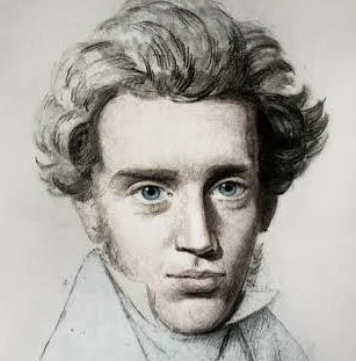
8 months 3 weeks ago
People are scarcely aware that it is a slavery they are creating; they forget this in their zeal to make people free by overthrowing dominions. They are scarcely aware that it is slavery; how could it be possible to be a slave in relation to equals?
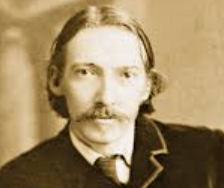
5 months 3 weeks ago
An appeal to his alarm is never a good plan to rid oneself of a spirited young man.
▼
Source
source
The Pavilion on the Links, ch. III.
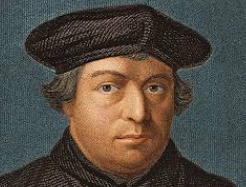
8 months 4 days ago
Justice is a temporary thing that must at last come to an end; but the conscience is eternal and will never die.
▼
Source
source
On Marriage
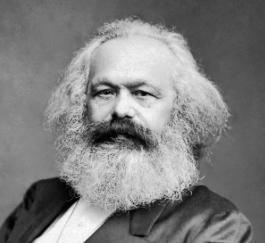
7 months 3 weeks ago
Money does not arise by convention, any more than the state does. It arises out of exchange, and arises naturally out of exchange; it is a product of the same.
▼
Source
source
Notebook I, The Chapter on Money, p. 85.


8 months 3 weeks ago
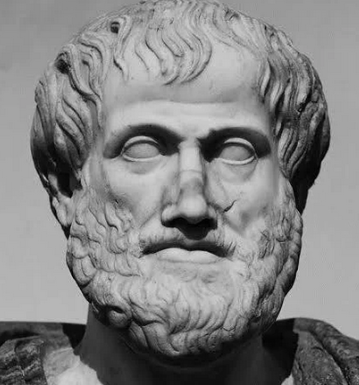
Misfortune shows those who are not really friends.
5 months 1 week ago
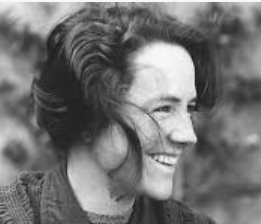
Lost time was like a run in a stocking. It always got worse.
▼
Source
source
The Steep Ascent

6 months 1 week ago
The spirit of militarism has already permeated all walks of life. Indeed, I am convinced that militarism is a greater danger here than anywhere else, because of the many bribes capitalism holds out to those whom it wishes to destroy.
6 months 2 weeks ago
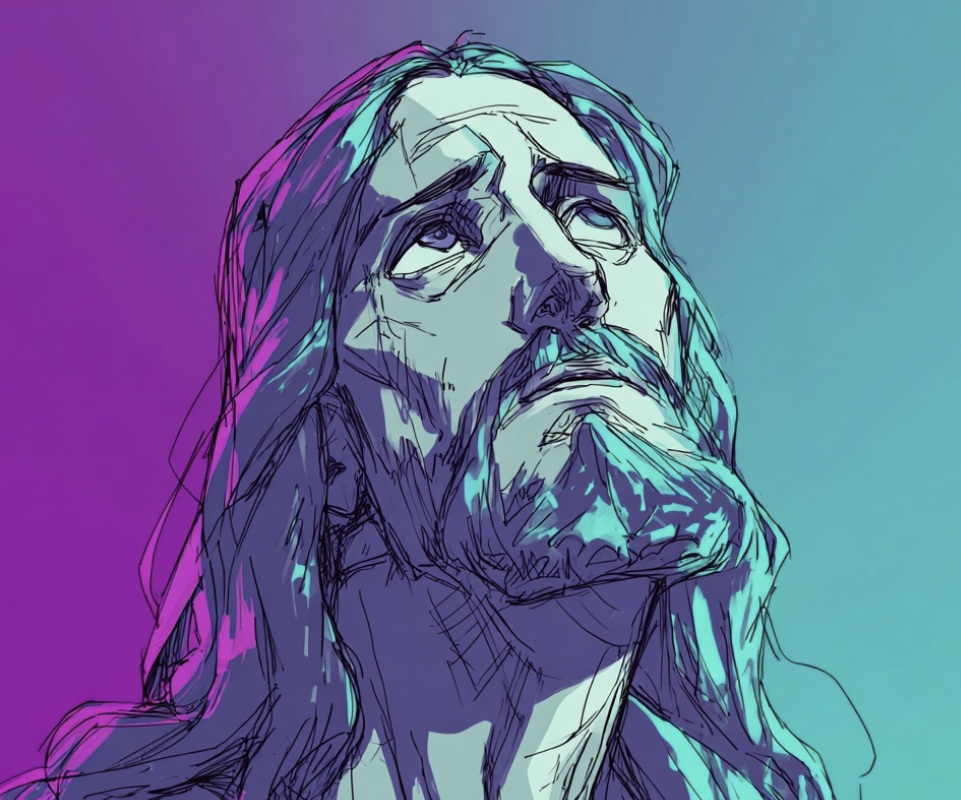
Jesus answered: "Believe me, Barnabas that I cannot weep as much as I ought. For if men had not called me God, I should have seen God here as he will be seen in paradise, and should have been safe not to fear the day of judgment. But God knows that I am innocent, because never have I harboured thought to be held more than a poor slave. No, I tell you that if I had not been called God I should have been carried into paradise when I shall depart from the world, whereas now I shall not go thither until the judgment. Now you see if I have cause to weep."
▼
Source
source
Ch. 112
6 months 2 weeks ago
Yea; have ye never read, Out of the mouth of babes and sucklings thou hast perfected praise?
▼
Source
source
21:16 (KJV)

4 months 2 weeks ago
Paganism we recognized as a veracious expression of the earnest awe-struck feeling of man towards the Universe; veracious, true once, and still not without worth for us. But mark here the difference of Paganism and Christianism; one great difference. Paganism emblemed chiefly the Operations of Nature; the destinies, efforts, combinations, vicissitudes of things and men in this world; Christianism emblemed the Law of Human Duty, the Moral Law of Man. One was for the sensuous nature: a rude helpless utterance of the first Thought of men,-the chief recognized virtue, Courage, Superiority to Fear. The other was not for the sensuous nature, but for the moral. What a progress is here, if in that one respect only-!
7 months 3 days ago
Since therefore, as well those degrees of heat that are not painful, as those that are, can exist in a thinking substance; may we not conclude that external bodies are absolutely incapable of any degree of heat whatsoever?
▼
Source
source
Philonous to Hylas. Hylas replies with, "So it seems".
6 months 1 week ago
If the passion for truthfulness is merely controlled and stilled without being satisfied, it will kill the activities it is supposed to support. This may be one of the reasons why, at the present time, the study of the humanities runs a risk of sliding from professional seriousness, through professionalization, to a finally disenchanted careerism.
▼
Source
source
p. 3
5 months 1 week ago
Those least responsible for climate change are worst affected by it.
▼
Source
source
Soil Not Oil: Environmental Justice in an Age of Climate Crisis
3 months 3 weeks ago
Whether the succeeding generation is to be more virtuous than their predecessors, I cannot say; but I am sure they will have more worldly wisdom, and enough, I hope, to know that honesty is the first chapter in the book of wisdom.
▼
Source
source
Letter to Nathaniel Macon
7 months 3 weeks ago
No rules, however wise, are a substitute for affection and tact.
▼
Source
source
Ch. 12: Education and Discipline
6 months 3 weeks ago
It cannot but happen that those individuals whose functions are most out of equilibrium with the modified aggregate of external forces, will be those to die; and that those will survive whose functions happen to be most nearly in equilibrium with the modified aggregate of external forces. But this survival of the fittest, implies multiplication of the fittest. Out of the fittest thus multiplied, there will, as before, be an overthrowing of the moving equilibrium wherever it presents the least opposing force to the new incident force.
▼
Source
source
The Principles of Biology, Vol. I (1864), Part III: The Evolution of Life, Ch. 7: Indirect Equilibration
7 months 3 weeks ago
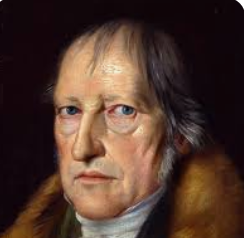
The History of the world is none other than the progress of the consciousness of Freedom; a progress whose development according to the necessity of its nature, it is our business to investigate.
▼
Source
source
Part III. Philosophic History; § 21, as translated by John Sibree; p. 19, (1900 edition) Variant translated by Robert S. Hartman, in Reason In History, A General Introduction to the Philosophy of History (1953) , 3/1/2007
7 months 3 weeks ago
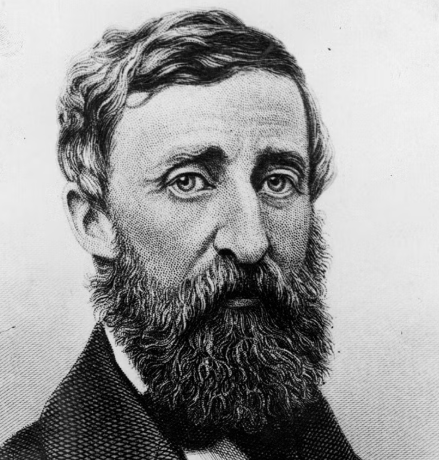
That virtue we appreciate is as much ours as another's. We see so much only as we possess.
▼
Source
source
June 22, 1839
8 months 1 week ago
For on these matters we should not trust the multitude who say that none ought to be educated but the free, but rather to philosophers, who say that the educated alone are free.
▼
Source
source
Book II, ch. 1, 22.
4 months 1 week ago
If religion has put forward the proposition that we are all of us sinners, I set another against it: we are all of us perfect! Because, in each moment, we are all we can be, and never need to be more.
▼
Source
source
Landstreicher, p. 226
7 months 3 weeks ago
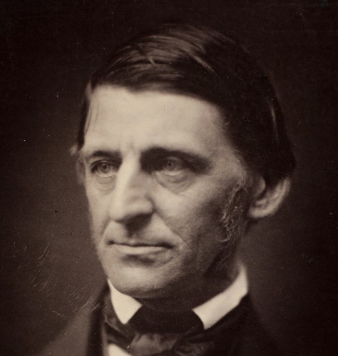
Each to each a looking-glass, Reflects his figure that doth pass. Every wayfarer he meets What himself declared repeats, What himself confessed records, Sentences him in his words; The form is his own corporal form, And his thought the penal worm. Yet shine forever virgin minds, Loved by stars and the purest winds, Which, o'er passion throned sedate, Have not hazarded their state; Disconcert the searching spy, Rendering to a curious eye The durance of a granite ledge To those who gaze from the sea's edge. It is there for benefit; It is there for purging light; There for purifying storms; And its depths reflect all forms; It cannot parley with the mean,- Pure by impure is not seen. For there's no sequestered grot, Lone mountain tarn, or isle forgot, But Justice, journeying in the sphere, Daily stoops to harbour there.
▼
Source
source
Astræa
3 months 2 weeks ago
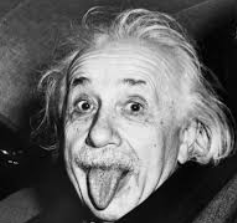
I have come to believe that the motion of the Earth cannot be detected by any optical experiment.
▼
Source
source
How I Created the Theory of Relativity, speech at Kyoto University, Japan, December 14, 1922, as cited in Physics Today, August, 1982.

5 months 3 weeks ago
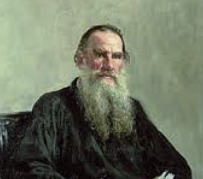
The man is making preparations for a year, and does not know that he will die before evening. And I remembered God's second saying, "Learn what is not given to man." 'What dwells in man" I already knew. Now I learnt what is not given him. It is not given to man to know his own needs.
▼
Source
source
Ch. XI

7 months 3 weeks ago
Our elucidations of the preliminary concept of phenomenology show that its essential character does not consist in its actuality as a philosophical "movement." Higher than actuality stands possibility. We can understand phenomenology solely by seizing upon it as a possibility.
▼
Source
source
Introduction: The Exposition of the Question of the Meaning of Being (Stambaugh translation)
3 months 3 weeks ago
It is between fifty and sixty years since I read it, and I then considered it merely the ravings of a maniac, no more worthy nor capable of explanation than the incoherences of our own nightly dreams. ... what has no meaning admits no explanation.
▼
Source
source
Letter to General Alexander Smyth, on the book of Revelation (or The Apocalypse of St. John the Divine)
6 months 3 weeks ago
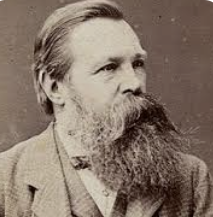
Democracy would be wholly valueless to the proletariat if it were not immediately used as a means for putting through measures directed against private property and ensuring the livelihood of the proletariat.
6 months 2 weeks ago
Verily I say unto you, That a rich man shall hardly enter into the kingdom of heaven. And again I say unto you, It is easier for a camel to go through the eye of a needle, than for a rich man to enter into the kingdom of God.
▼
Source
source
19:23-24 (KJV)
4 months 2 weeks ago
Mahomet was only fourteen; had no language but his own: much in Syria must have been a strange unintelligible whirlpool to him. But the eyes of the lad were open; glimpses of many things would doubtless be taken in, and lie very enigmatic as yet, which were to ripen in a strange way into views, into beliefs and insights one day. These journeys to Syria were probably the beginning of much to Mahomet. One other circumstance we must not forget: that he had no school-learning; of the thing we call school-learning none at all.
8 months 3 weeks ago
It seemed to him [Euphemius] it would be a brilliant notion to call in an outside force to fight on his behalf. This same brilliant notion has occurred to participants in civil wars uncounted times in history and it has ended in catastrophe just about every time, since those called in invariably take over for themselves. Of all history's lessons, this seems to be the plainest, and the most frequently ignored.
8 months 1 week ago
Rules necessary for definitions. Not to leave any terms at all obscure or ambiguous without definition; Not to employ in definitions any but terms perfectly known or already explained.
6 months 3 weeks ago
Government was intended to suppress injustice, but it offers new occasions and temptations for the commission of it.
▼
Source
source
"Summary of Principles" 2.4
7 months 3 weeks ago
Nothing is rich but the inexhaustible wealth of Nature. She shows us only surfaces, but she is million fathoms deep.
▼
Source
source
p. 183
7 months 3 weeks ago
So long as antimilitarists propose no substitute for war's disciplinary function, no moral equivalent of war, analogous, as one might say, to the mechanical equivalent of heat, so long they fail to realize the full inwardness of the situation.
▼
Source
source
The Moral Equivalent of War
7 months 3 weeks ago
At the present stage in the development of the art of war, there is only way of coping with them, and that is to keep out of war. In all the densely populated countries of Western Europe, it seems almost certain that, within a few days of the outbreak of war, panic will seize the surviving inhabitants of the capitals and the industrial areas, leading to anarchy, starvation, and paralysis of all warlike effort. The only sensible course, therefore, is to prevent war if possible, and to remain neutral if war occurs.
▼
Source
source
Letter to The New Statesman and Nation (10 August 1935)
5 months 3 weeks ago
All meaning alters with acceleration, because all patterns of personal and political interdependence change with any acceleration of information.
▼
Source
source
(p. 178-179)
7 months 3 weeks ago
If the red slayer think he slays, Or if the slain think he is slain, They know not well the subtle ways I keep, and pass, and turn again. Brahma, st. 1 Composed in July 1856 this poem is derived from a major passage of the Bhagavad Gita, one of the most popular of Hindu scriptures, and portions of it were likely a paraphrase of an existing translation. Though titled "Brahma" its expressions are actually more indicative of the Hindu concept "Brahman"

7 months 4 weeks ago
Accent is the soul of language; it gives to it both feeling and truth.
▼
Source
source
English translation as quoted in A Dictionary of Thoughts: Being a Cyclopedia of Laconic Quotations from the Best Authors of the World, Both Ancient and Modern (1908) by Tryon Edwards, p. 2.
7 months 3 weeks ago
The value of a principle is the number of things it will explain; and there is no good theory of disease which does not at once suggest a cure.
▼
Source
source
p. 212
6 months 1 week ago
Conscience is deceived by the social. Our supplementary energy (imaginative) is to a great extent taken up with the social. It has to be detached from it. That is the most difficult of detachments.
▼
Source
source
p. 123
4 months 2 weeks ago
I here, on the very threshold, protest against it in reference to Paganism, and to all other isms by which man has ever for a length of time striven to walk in this world. They have all had a truth in them, or men would not have taken them up. Quackery and dupery do abound; in religions, above all in the more advanced decaying stages of religions, they have fearfully abounded: but quackery was never the originating influence in such things; it was not the health and life of such things, but their disease, the sure precursor of their being about to die! Let us never forget this.
8 months 3 weeks ago
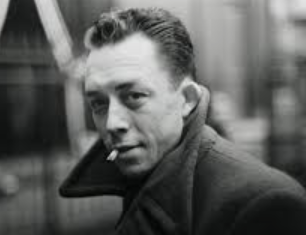
Can one be a saint without God?, that's the problem, in fact the only problem, I'm up against today.
4 months 1 week ago
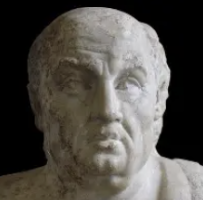
He who does not prevent a crime, when he can, encourages it.
▼
Source
source
line 291; (Agamemnon)
5 months 3 weeks ago
The whole plan of our order should be based on the idea of preparing men of firmness and virtue bound together by unity of conviction-aiming at the punishment of vice and folly, and patronizing talent and virtue: raising worthy men from the dust and attaching them to our Brotherhood. Only then will our order have the power unobtrusively to bind the hands of the protectors of disorder and to control them without their being aware of it. In a word, we must found a form of government holding universal sway, which should be diffused over the whole world without destroying the bonds of citizenship, and beside which all other governments can continue in their customary course and do everything except what impedes the great aim of our order, which is to obtain for virtue the victory over vice.
▼
Source
source
Book VI, Chapter VII
CivilSimian.com created by AxiomaticPanic, CivilSimian, Kalokagathia