

5 months 1 week ago
Right and wrong are the same in Palestine as anywhere else. What is peculiar about the Palestine conflict is that the world has listened to the party that has committed the offence and has turned a deaf ear to the victims.
▼
Source
source
Foreword to The Transformation of Palestine
8 months 3 weeks ago
One recognizes one's course by discovering the paths that stray from it.

8 months 3 weeks ago
Deep within every human being there still lives the anxiety over the possibility of being alone in the world, forgotten by God, overlooked among the millions and millions in this enormous household. One keeps this anxiety at a distance by looking at the many round about who are related to him as kin and friends, but the anxiety is still there, nevertheless, and one hardly dares think of how he would feel if all this were taken away.
7 months 3 weeks ago
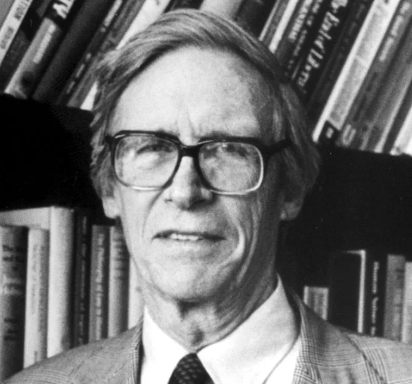
The difference principle, for example, requires that the higher expectations of the more advantaged contribute to the prospects of the least advantaged.
▼
Source
source
Chapter II, Section 16, pg. 95
8 months 2 weeks ago
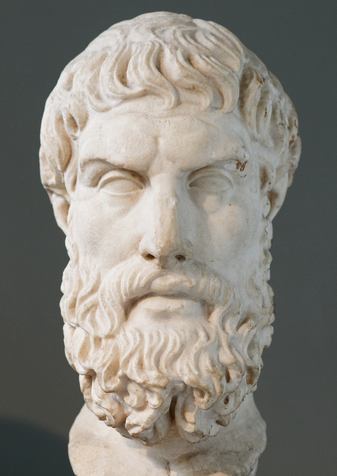
Self-sufficiency is the greatest of all wealth.
6 months 3 weeks ago
The capitalists soon had everything in their hands and nothing remained to the workers.

7 months 1 week ago
Happy is that City that hath a wise man to govern it.
7 months 3 weeks ago
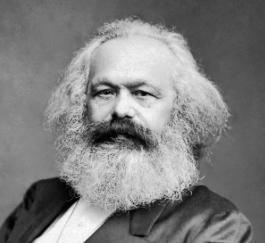
Everything great glitters, glitter begets ambition, and ambition can easily have caused the inspiration or what we thought to be inspiration. But reason can no longer restrain one who is lured by the fury of ambition. He tumbles where his vehement drive calls him; no longer does he choose his position, but rather chance and luster determine it.
6 months 2 weeks ago
Oblivious of Democritus, the unwilling materialists of our day have generally been awkwardly intellectual and quite incapable of laughter. If they have felt anything, they have felt melancholy. Their allegiance and affection were still fixed on those mythical sentimental worlds which they saw to be illusory. The mechanical world they believed in could not please them, in spite of its extent and fertility. Giving rhetorical vent to their spleen and prejudice, they exaggerated nature's meagreness and mathematical dryness. When their imagination was chilled they spoke of nature, most unwarrantably, as dead, and when their judgment was heated they took the next step and called it unreal.
▼
Source
source
Ch. 3 "Mechanism"
3 months 3 weeks ago
The moral sense, or conscience, is as much a part of man as his leg or arm. It is given to all human beings in a stronger or weaker degree, as force of members is given them in a greater or less degree. It may be strengthened by exercise, as may any particular limb of the body. This sense is submitted, indeed, in some degree, to the guidance of reason; but it is a small stock which is required for this: even a less one than what we call common sense. State a moral case to a ploughman and a professor. The former will decide it as well, and often better than the latter, because he has not been led astray by artificial rules.

7 months 3 weeks ago
To love at all is to be vulnerable. Love anything, and your heart will certainly be wrung and possibly be broken. If you want to make sure of keeping it intact, you must give your heart to no one, not even to an animal. Wrap it carefully round with hobbies and little luxuries; avoid all entanglements; lock it up safe in the casket or coffin of your selfishness. But in that casket - safe, dark, motionless, airless - it will change. It will not be broken; it will become unbreakable, impenetrable, irredeemable. The alternative to tragedy, or at least to the risk of tragedy, is damnation. The only place outside of Heaven where you can be perfectly safe from all the dangers and perturbations of love is Hell.

6 months 3 weeks ago
God is what survives the evidence that nothing deserves to be thought.
8 months ago
Truth springs from argument amongst friends.
8 months 3 weeks ago
There is no mystery in humans creation. Will performs this miracle. But at least there is no true creation without a secret.
5 months 4 weeks ago
Such would be the successive phases of the image:it is the reflection of a profound reality;it masks and denatures a profound reality;it masks the absence of a profound reality;it has no relation to any reality whatsoever: it is its own pure simulacrum.In the first case, the image is a good appearance-representation is of the sacramental order. In the second, it is an evil appearance-it is of the order of maleficence. In the third, it plays at being an appearance-it is of the order of sorcery. In the fourth, it is no longer of the order of appearances, but of simulation.

4 months 2 weeks ago
Why not? What is to hinder this Samson from governing? There is in him what far transcends all apprenticeships; in the man himself there exists a model of governing, something to govern by! There exists in him a heart-abhorrence of whatever is incoherent, pusillanimous, unveracious,-that is to say, chaotic, _un_governed; of the Devil, not of God. A man of this kind cannot help governing! He has the living ideal of a governor in him; and the incessant necessity of struggling to unfold the same out of him.
8 months 4 days ago
Man is certainly crazy. He could not make a mite, and he makes gods by the dozen.
▼
Source
source
Ch. 12
7 months 3 weeks ago
First, what do we mean by anguish? The existentialist frankly states that man is in anguish. His meaning is as follows-When a man commits himself to anything, fully realizing that he is not only choosing what he will be, but is thereby at the same time a legislator deciding for the whole of mankind-in such a moment a man cannot escape from the sense of complete and profound responsibility.
▼
Source
source
p. 30

7 months 3 weeks ago
Explore, and explore, and explore. Be neither chided nor flattered out of your position of perpetual inquiry. Neither dogmatise yourself, nor accept another's dogmatism. Why should you renounce your right to traverse the star-lit deserts of truth, for the premature comforts of an acre, house, and barn? Truth also has its roof, and bed, and board. Make yourself necessary to the world, and mankind will give you bread, and if not store of it, yet such as shall not take away your property in all men's possessions, in all men's affections, in art, in nature, and in hope.
4 months 1 week ago
Of course, however, the living voice and the intimacy of a common life will help you more than the written word. You must go to the scene of action, first, because men put more faith in their eyes than in their ears, and second, because the way is long if one follows precepts, but short and helpful, if one follows patterns.
▼
Source
source
Line 5. Alternate translation: Teaching by precept is a long road, but short and beneficial is the way by example.

7 months 4 weeks ago
As much in vain, perhaps, will they search ancient history for examples of the modern Slave-Trade. Too many nations enslaved the prisoners they took in war. But to go to nations with whom there is no war, who have no way provoked, without farther design of conquest, purely to catch inoffensive people, like wild beasts, for slaves, is an hight of outrage against Humanity and Justice, that seems left by Heathen nations to be practised by pretended Christians. How shameful are all attempts to colour and excuse it!
8 months 5 days ago
Like strawberry wives, that laid two or three great strawberries at the mouth of their pot, and all the rest were little ones.
▼
Source
source
No. 54
8 months ago
When profit diminishes, merchants are very apt to complain that trade decays; though the diminution of profit is the natural effect of its prosperity, or of a greater stock being employed in it than before.
▼
Source
source
Chapter IX
6 months 2 weeks ago
The quality of the human that precludes identifying the individual with the class is 'metaphysical' and has no place in empiricist epistemology. The pigeon hole into which a man is shoved circumscribes his fate.
▼
Source
source
p. 23.
8 months 2 weeks ago
Sincerity is the way of Heaven. The attainment of sincerity is the way of men. He who possesses sincerity is he who, without an effort, hits what is right, and apprehends, without the exercise of thought — he is the sage who naturally and easily embodies the right way. He who attains to sincerity is he who chooses what is good, and firmly holds it fast. To this attainment there are requisite the extensive study of what is good, accurate inquiry about it, careful reflection on it, the clear discrimination of it, and the earnest practice of it.
5 months 3 days ago
Human beings act, certainly. But none of them knows why they act as they do. There is a scattering of facts, which can be known and reported. Beyond these facts are the stories that are told. Human beings may behave like puppets, but no one is pulling the strings.
▼
Source
source
In The Puppet Theatre: Puppetry, Conspiracy and Ouija Boards (p. 136)
7 months 3 weeks ago
If life becomes hard to bear we think of improvements. But the most important and effective improvement, in our own attitude, hardly occurs to us, and we can decide on this only with the utmost difficulty.
▼
Source
source
p. 60e
8 months 1 week ago
It is not among extraordinary and fantastic things that excellence is to be found, of whatever kind it may be. We rise to attain it and become removed from it: it is oftenest necessary to stoop for it.
4 months 1 week ago
All the Good of mortals is mortal.
6 months 3 weeks ago
A standing army, for instance, is incompatible with freedom; because subordination and rigour are the very sinews of military discipline; and despotism is necessary to give vigour to enterprise that one will directs. A spirit inspired by romantic notions of honour, a kind of morality founded on the fashion of the age, can only be felt by a few officers, whilst the main body must be moved by command, like the waves of the sea; for the strong wind of authority pushes the crowd of subalterns forward, they scarcely know or care why, with headlong fury.
▼
Source
source
Ch. 1
6 months 2 weeks ago
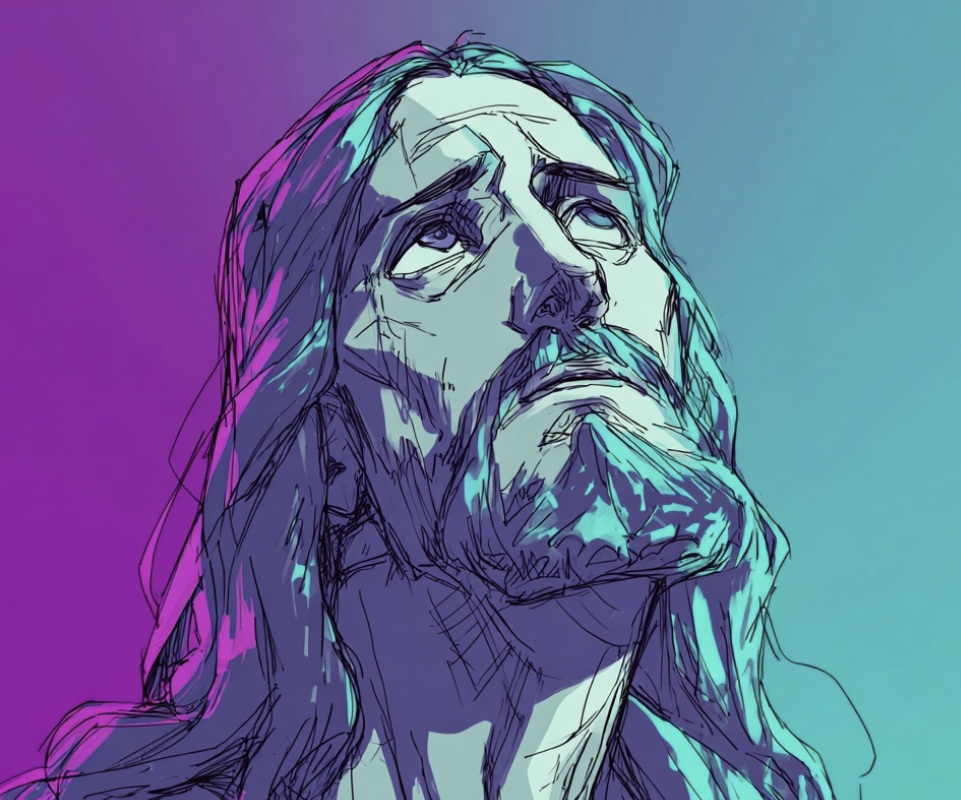
Whoever drinks from my mouth will become like me; I myself shall become that person, and the hidden things will be revealed to him.
6 months 2 weeks ago
The Kingdom is like a wise fisherman who cast his net into the sea and drew it up from the sea full of small fish. Among them the wise fisherman found a fine large fish. He threw all the small fish back into the sea and chose the large fish without difficulty. Whoever has ears to hear, let him hear.
8 months 2 weeks ago
Among the appliances to transform the people, sound and appearances are but trivial influences.
7 months 3 weeks ago
The good is the idea, or unity of the conception of the will with the particular will. Abstract right, well-being, the subjectivity of consciousness, and the contingency of external reality, are in their independent and separate existences superseded in this unity, although in their real essence they are contained in it and preserved. This unity is realized freedom, the absolute final cause of the world. Addition.-Every stage is properly the idea, but the earlier steps contain the idea only in more abstract form. The I, as person, is already the idea, although in its most abstract guise. The good is the idea more completely determined; it is the unity of the conception of will with the particular will. It is not something abstractly right, but has a real content, whose substance constitutes both right and well-being.
▼
Source
source
Georg Wilhelm Friedrich Hegel, Philosophy of Right translated by SW Dyde Queen's University Canada 1896 p. 123
4 months 1 week ago
Valor withers without adversity.
▼
Source
source
De Providentia (On Providence), 2.4
6 months ago
We are to admit no more causes of natural things than such as are both true and sufficient to explain their appearances.
▼
Source
source
"Rules of Reasoning in Philosophy" : Rule I

7 months 3 weeks ago
The painter is turning his eyes towards us only in so far as we happen to occupy the same position as his subject. We, the spectators, are an additional factor. Though greeted by that gaze, we are also dismissed by it, replaced by that which was always there before we were: the model itself. But, inversely, the painter's gaze, addressed to the void confronting him outside the picture, accepts as many models as there are spectators; in this precise but neutral place, the observer and the observed take part in a ceaseless exchange.
▼
Source
source
Las Menias
7 months 3 weeks ago
Does man think because he has found that thinking pays? Does he bring his children up because he has found it pays?
▼
Source
source
§ 467

7 months 4 weeks ago
All our knowledge falls with the bounds of experience.
▼
Source
source
A 146, B 185
7 months 3 weeks ago
People say law but they mean wealth.
▼
Source
source
1841
7 months 3 weeks ago
Man is a rational animal - so at least I have been told. Throughout a long life, I have looked diligently for evidence in favor of this statement, but so far I have not had the good fortune to come across it, though I have searched in many countries spread over three continents. Often paraphrased as "It has been said that man is a rational animal. All my life I have been searching for evidence which could support this."
6 months 1 week ago
Jung believed that alchemy is about the transmutation of the mind and the discovery of the self. Inevitably, he saw the male and female elements of the prima materia -- the king and queen of alchemy -- as the animus and anima; this seemed to indicate the (sic) alchemy is about psychological processes.
▼
Source
source
p. 103
6 months 2 weeks ago
Every intellectual effort sets us apart from the commonplace, and leads us by hidden and difficult paths to secluded spots where we find ourselves amid unaccustomed thoughts.
▼
Source
source
p. 15
7 months 4 weeks ago
The third of this kind of principles is : matter neither originates nor perishes; all the changes in the world concern form only ; a postulate which on the recommendation of common sense has spread through all philosophical schools, not because it is to be taken as having been found so, or as having been demonstrated by arguments a priori, but because if we were to admit that matter itself is fleeting and transitory, nothing at all that is stable and lasting would be left any longer to serve for the explication of phenomena according to universal and perpetual laws, and hence nothing at all would be left for the exercise of the intellect.

6 months 2 weeks ago
Society is eliminating the prerogatives and privileges of feudal. aristocratic culture together with its content. The fact that the transcending truths of the fine arts, the aesthetics of life and thought, were accessible only to the few wealthy and educated was the fault of a repressive society. But this fault is not corrected by paperbacks, general education, long-playing records, and the abolition of formal dress in the theater and concert hall. The cultural privileges expressed the injustice of freedom, the contradiction between ideology and reality, the separation of intellectual from material productivity; but they also provided a protected realm in which the tabooed truths could survive in abstract integrity-remote from the society which suppressed them.
▼
Source
source
pp. 64-65
CivilSimian.com created by AxiomaticPanic, CivilSimian, Kalokagathia