

3 months 3 weeks ago
Blot out vain pomp; check impulse; quench appetite; keep reason under its own control.
▼
Source
source
IX, 7

7 months 3 weeks ago
Immortality. I notice that as soon as writers broach this question they begin to quote. I hate quotation. Tell me what you know.
▼
Source
source
May 1849
6 months 2 weeks ago
What thinkest thou, Simon? of whom do the kings of the earth take custom or tribute? of their own children, or of strangers?
▼
Source
source
17:25 (KJV)
3 months 3 weeks ago
Whenever the people are well informed, they can be trusted with their own government; that whenever things get so far wrong as to attract their notice, they may be relied on to set them to rights.
▼
Source
source
Letter to Richard Price
7 months 4 weeks ago
The public use of a man's reason must be free at all times, and this alone can bring enlightenment among men...

4 months 2 weeks ago
Be not the slave of Words.
▼
Source
source
Bk. I, ch. 8.

3 months 3 weeks ago
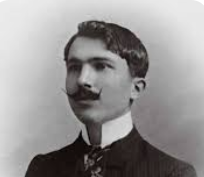
Cries rise up on every side. Who shouts? It is we who shout - the living, the dead, and the unborn. But at once we are crushed by fear, and we fall silent. And then we forget - out of laziness, out of habit, out of cowardice. But suddenly the Cry tears at our entrails once more, like an eagle. For the Cry is not outside us, it does not come from a great distance that we may escape it. It sits in the center of our hearts, and cries out. God shouts: "Burn your houses! I am coming! Whoever has a house cannot receive me! "Burn your ideas, smash your thoughts! Whoever has found the solution cannot find me."
7 months 4 weeks ago
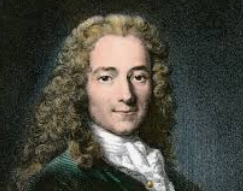
Ancient histories, as one of our wits has said, are but fables that have been agreed upon.
▼
Source
source
Jeannot et Colin, 1764
6 months 1 week ago
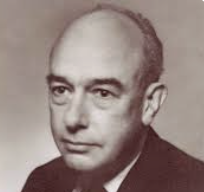
Life is agid. Life is fulgid. Life is a burgeoning, a quickening of the dim primordial urge in the murky wastes of time. Life is what the least of us make most of us feel the least of us make the most of.
▼
Source
source
Quine's response in 1988 when asked his philosophy of life. (He invented the word "agid".) It makes up the entire Chapter 54 in Quine in Dialogue (2008).
5 months 3 weeks ago
The argument of this book is that we, and all other animals, are machines created by our genes.
▼
Source
source
Ch. 1. Why Are People?
8 months 5 days ago
I doubt if a single individual could be found from the whole of mankind free from some form of insanity. The only difference is one of degree. A man who sees a gourd and takes it for his wife is called insane because this happens to very few people.
▼
Source
source
As quoted in Words from the Wise : Over 6,000 of the Smartest Things Ever Said (2007) by Rosemarie Jarski, p. 312. From The Praise of Folly.
6 months 2 weeks ago
The hypostasis of the particular methods of procedure employed by natural science ... results in the view that all theoretical differences which rest on historically conditioned antagonisms of interest are to be settles by a "crucial experiment" rather than by struggle and counter-struggle. The harmonious relation of individuals to one another becomes a fact, therefore, that has even more general character than a law of nature.
▼
Source
source
p. 148.
4 months 2 weeks ago
He has begun by supposing that light has a constant velocity... the same in all directions. This... could never be verified directly by experiment... The postulate... resembling the principle of sufficient reason... furnishes us with a new rule for the investigation of simultaneity.
8 months 3 weeks ago
Miniaturization doesn't actually make sense unless you miniaturize the very atoms of which matter is composed. Otherwise a tiny brain in a man the size of an insect, composed of normal atoms, is composed of too few atoms for the miniaturized man to be any more intelligent than the ant. Also, miniaturizing atoms is impossible according to the rules of quantum mechanics.
7 months 3 weeks ago
Nor knowest thou what argument Thy life to thy neighbor's creed has lent: All are needed by each one, Nothing is fair or good alone.
▼
Source
source
Each and All, st. 1
7 months 3 weeks ago
A pupil and a teacher. The pupil will not let anything be explained to him, for he continually interrupts with doubts, for instance as to the existence of things, the meaning for words, etc. The teacher says "Stop interrupting me and do as I tell you. So far your doubts don't make sense at all."
4 months 6 days ago
Mussolini is not an ordinary socialist. You will perhaps see him one day as a leader of a consecrated battalion, saluting the flags of Italy with his sword. He is an Italian of the fifteenth century, a condottiere. He is the only man with the strength to correct the weakness of the government.
▼
Source
source
As quoted in The Genesis of Georges Sorel, James H. Meisel, Ann Arbor, Wahr (1951), p. 220, n.21

6 months 1 week ago
Indeed much of the literature written about black folks in the post-civil rights era emphasized the need for jobs. Material advancement was deemed the pressing agenda. Mental health concerns were not a high priority.
8 months 4 days ago
Let us give Nature a chance; she knows her business better than we do.
▼
Source
source
Ch. 13

7 months 2 weeks ago
Human social institutions can effect the course of human evolution. Just as climate-change, food supply, predators, and other natural forces of selection have molded our nature, so too can our culture.
▼
Source
source
Chapter 6, A New Understanding Of Ethics, p. 172
5 months 1 week ago
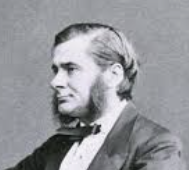
The chalk is no unimportant element in the masonry of the earth's crust, and it impresses a peculiar stamp, varying with the conditions to which it is exposed, on the scenery of the districts in which it occurs.
3 months 3 weeks ago
All that is harmony for you, my Universe, is in harmony with me as well. Nothing that comes at the right time for you is too early or too late for me. Everything is fruit to me that your seasons bring, Nature. All things come of you, have their being in you, and return to you.
▼
Source
source
IV, 23
6 months ago
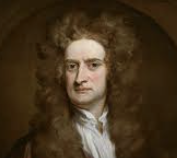
To every action there is always opposed an equal reaction; or, the mutual actions of two bodies upon each other are always equal, and directed to contrary parts.
▼
Source
source
Laws of Motion, III

6 months 1 week ago
The poor, stupid, free American citizen! Free to starve, free to tramp the highways of this great country, he enjoys universal suffrage, and, by that right, he has forged chains about his limbs. The reward that he receives is stringent labor laws prohibiting the right of boycott, of picketing, in fact, of everything, except the right to be robbed of the fruits of his labor.
6 months 2 weeks ago
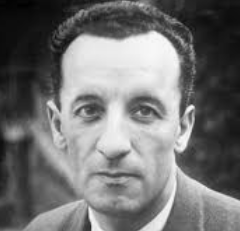
The world is nothing but 'world-as-meaning.'
▼
Source
source
p. xi
8 months 4 days ago
I do not speak the minds of others except to speak my own mind better.
▼
Source
source
Ch. 26. On the Education of Children

7 months 3 weeks ago
I have always thought respectable people scoundrels, and I look anxiously at my face every morning for signs of my becoming a scoundrel.
▼
Source
source
Quoted in Alan Wood Bertrand Russell: The Passionate Skeptic: A Biography, Vol. 2 (1958), p. 233
4 months 3 weeks ago
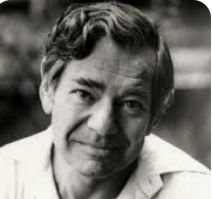
I agree with Paul that love is more important than faith and hope; but so are honesty, integrity, and moral courage. The world needs less faith and more love and nobility.
▼
Source
source
Preface
8 months 2 weeks ago
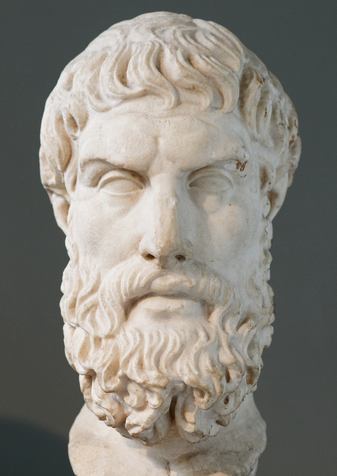
This happy state can only be obtained by a prudent care of the body, and a steady government of the mind. The diseases of the body are to be prevented by temperance, or cured by medicine, or rendered tolerable by patience.
4 months 2 weeks ago
Democracy is, by the nature of it, a self-canceling business; and it gives in the long run a net result of zero.
▼
Source
source
Ch. 6, Laissez-Faire.

7 months 2 weeks ago
Then take, good sir, your pleasure while you may; With life so short 'twere wrong to lose a day.
▼
Source
source
Book II, satire viii, line 96 (trans. Conington)

8 months 3 weeks ago
Martyrs must choose between being forgotten, mocked, or made use of. As for being understood, never!
7 months 3 weeks ago
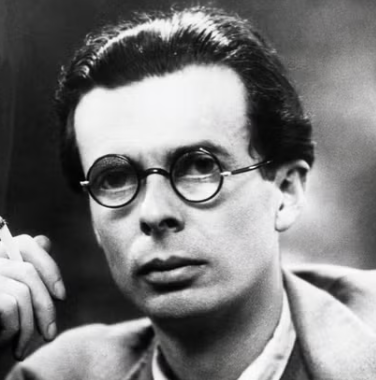
The Bhagavad-Gita is perhaps the most systematic scriptural statement of the Perennial Philosophy. To a world at war, a world that, because it lacks the intellectual and spiritual prerequisites to peace, can only hope to patch up some kind of precarious armed truce, it stands pointing, clearly and unmistakably, to the only road of escape from the self-imposed necessity of self-destruction.
6 months 3 weeks ago
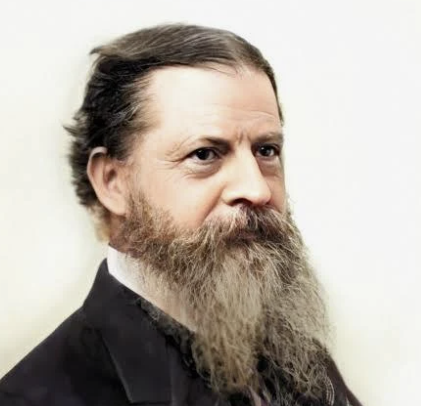
Some minds will jump here jump to the conclusion that a past idea cannot in any sense be present. But that is hasty and illogical. How extravagant too, to pronounce our whole knowledge of the past to be mere delusion! Yet it would seem that the past is completely beyond the bounds of possible experience as a Kantian thing-in-itself.
5 months 6 days ago
The wise man should restrain his senses like the crane and accomplish his purpose with due knowledge of his place, time and ability.
7 months 2 weeks ago
The years as they pass plunder us of one thing after another.
▼
Source
source
Book II, epistle ii, line 55
5 months 5 days ago
The existence of the mind-independent environment beyond one's world-simulation is a theoretical inference, not an empirical observation.
▼
Source
source
Postscript to review of Michael Lockwood's Mind, Brain and the Quantum, BLTC Research, Dec. 2016
6 months 4 days ago
Probability fractions arise from our knowledge and from our ignorance.
▼
Source
source
Chapter 14, Equipossibility, p. 132.
5 months 3 weeks ago
We are not arrogant, not hubristic, to celebrate the sheer bulk and detail of what we know through science. We are simply telling the honest and irrefutable truth. Also honest is the frank admission of how much we don't yet know - how much more work remains to be done. That is the very antithesis of hubristic arrogance. Science combines a massive contribution, in volume and detail, of what we do know with humility in proclaiming what we don't. Religion, by embarrassing contrast, has contributed literally zero to what we know, combined with huge hubristic confidence in the alleged facts it has simply made up.
▼
Source
source
The Intellectual and Moral Courage of Atheism
5 months 3 weeks ago
So long as we love we serve; so long as we are loved by others, I would almost say that we are indispensable; and no man is useless while he has a friend.
▼
Source
source
"Lay Morals" Ch. 4, in Lay Morals and Other Essays (1911).

7 months 3 weeks ago
It comes, it comes!' they sang. 'Sleepers awake! It comes, it comes, it comes.' One dreadful glance over my shoulder I essayed - not long enough to see (or did I see?) the rim of the sunrise that shoots Time dead with golden arrows and puts to flight all phantasmal shapes. Screaming, I buried my face in the fold of the Teacher's robe. 'The morning! The morning!' I cried. 'I am caught by the morning and I am a ghost.'
▼
Source
source
Ch. 14
8 months 4 days ago
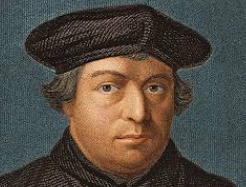
One ought to fast, watch, and labor to the extent that such activities are needed to harness the body's desires and longings; however, those who presume that they are justified by works pay no attention to the need for self-discipline but see the works themselves as the way to righteousness. They believe that if they do a great number of impressive works all will be well and righteousness will be the result. Sometimes this is pursued with such zeal that they become mentally unstable and their bodies are sapped of all strength. Such disastrous consequences demonstrate that the belief that we are justified and saved by works without faith is extremely foolish.
▼
Source
source
p. 73
5 months 2 weeks ago
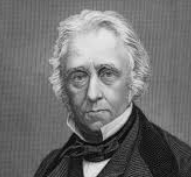
To sum up the whole, we should say that the aim of the Platonic philosophy was to exalt man into a god. The aim of the Baconian philosophy was to provide man with what he requires while he continues to be man. The aim of the Platonic philosophy was to raise us far above vulgar wants. The aim of the Baconian philosophy was to supply our vulgar wants. The former aim was noble; but the latter was attainable.
▼
Source
source
'Lord Bacon', The Edinburgh Review (July 1837), quoted in T. B. Macaulay, Critical and Historical Essays Contributed to The Edinburgh Review, Vol. II (1843), p. 395
7 months 3 weeks ago
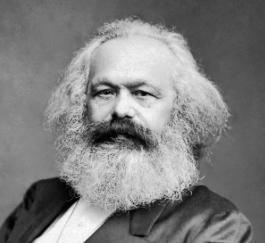
Ideas do not exist separately from language.
▼
Source
source
Notebook I, The Chapter on Money, p. 83.
7 months 3 weeks ago
We cannot suppose that an individual's thinking survives bodily death, since that destroys the organization of the brain and dissipates the energy which utilized the brain tracks. God and immortality, the central dogma of the Christian religion, find no support in science. But we in the West have come to think of them as the irreducible minimum of theology. No doubt people will continue to entertain these beliefs, because they are pleasant, just as it is pleasant to think ourselves virtuous and our enemies wicked. But for my part I cannot see any grounds for either. I do not pretend to be able to prove that there is no God. I equally cannot prove Satan is a fiction. The Christian God may exist, so might the Gods of Olympus, Ancient Egypt or Babylon; but no one of these hypotheses is more probable than any other. They lie outside the region of provable knowledge and there is no reason to consider any of them.
3 months 2 weeks ago
Everyone sits in the prison of his own ideas; he must burst it open, and that in his youth, and so try to test his ideas on reality.
5 months 1 week ago
I wonder why I bother to tell the truth when people ask me what I think of this and that and how I feel about this and that. I get so complicated and introspective that people often don't understand and are frankly puzzled and (naturally enough) bored. So why bother! It would be so much easier to say what they expected you to, and everything would be easy and pleasant.
CivilSimian.com created by AxiomaticPanic, CivilSimian, Kalokagathia