


7 months 3 weeks ago
It is said that "being" is the most universal and the emptiest concept. As such it resists every attempt at definition. Nor does this most universal and thus indefinable concept need any definition. Everybody uses it constantly and also already understands what is meant by it.
▼
Source
source
Introduction: The Exposition of the Question of the Meaning of Being (Stambaugh translation)
6 months 2 weeks ago
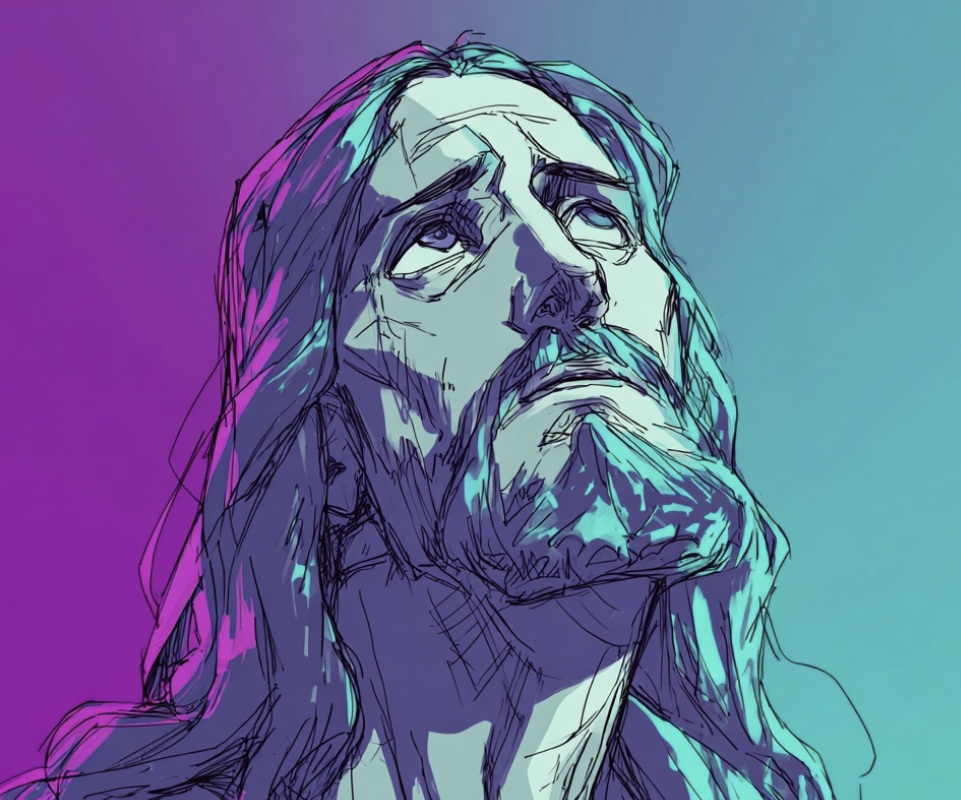
Blessed are the poor in spirit, for theirs is the kingdom of heaven. Blessed are those who mourn, for they will be comforted. Blessed are the meek, for they will inherit the earth. Blessed are those who hunger and thirst for righteousness, for they will be filled. Blessed are the merciful, for they will be shown mercy. Blessed are the pure in heart, for they will see God. Blessed are the peacemakers, for they will be called sons of God. Blessed are those who are persecuted because of righteousness, for theirs is the kingdom of heaven. Blessed are you when people insult you, persecute you and falsely say all kinds of evil against you because of me. Rejoice and be glad, because great is your reward in heaven, for in the same way they persecuted the prophets who were before you.
▼
Source
source
5:1 12 (NIV) Often referred to as "The Beatitudes" this is the start of "The Sermon on the Mount".

3 months 3 weeks ago
If Providence erases, it is no doubt in order to write.
▼
Source
source
Chapter II, p. 20
8 months 3 weeks ago
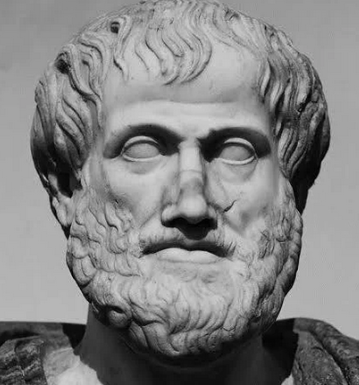
The first philosophers, in investigating the truth and the nature of things, wandered, as if led by ignorance, into a certain... path. Hence, they say that no being is either generated or corrupted, because it is necessary that what is generated should be generated either from being or non-being: but both these are impossible; for neither can being be generated, since it already is; and from nothing, nothing can be generated... And thus... they said that there were not many things, but that being alone had a subsistence. ...the ancient philosophers ...through this ignorance added so much to their want of knowledge, as to fancy that nothing else was generated or had a being; but they subverted all generation.
7 months 3 weeks ago
The life of God - the life which the mind apprehends and enjoys as it rises to the absolute unity of all things - may be described as a play of love with itself; but this idea sinks to an edifying truism, or even to a platitude, when it does not embrace in it the earnestness, the pain, the patience, and labor, involved in the negative aspect of things.
▼
Source
source
§ 19

4 months 2 weeks ago
It depends on what we read, after all manner of Professors have done their best for us.

7 months 1 week ago
Neither will the horse be adjudged to be generous, that is sumptuously adorned, but the horse whose nature is illustrious; nor is the man worthy who possesses great wealth, but he whose soul is generous.
▼
Source
source
Pythagorean Ethical Sentences From Stobæus

7 months 3 weeks ago
Great geniuses have the shortest biographies.
▼
Source
source
Plato; or, The Philosopher
4 months 2 weeks ago
Marxism was a philosophical or semi-philosophical doctrine and a political ideology which was used by the communist state as the main source of legitimacy and the obligatory faith.
▼
Source
source
New Preface, p. v
8 months ago
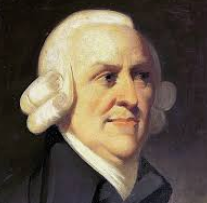
This disposition to admire, and almost to worship, the rich and powerful, and to despise or, at least, neglect persons of poor and mean conditions, though necessary both to establish and to maintain the distinction of ranks and the order of society, is, at the same time, the great and most universal cause of the corruption of our moral sentiments.
▼
Source
source
Section III, Chap. III.
5 months 3 weeks ago
The hardware world tends to move into software form at the speed of light.
6 months 2 weeks ago
The mass-man sees in the State an anonymous power, and feeling himself, like it, anonymous, he believes that the State is something of his own. Suppose that in the public life of a country some difficulty, conflict, or problem presents itself, the mass-man will tend to demand that the State intervene immediately and undertake a solution directly with its immense and unassailable resources. This is the gravest danger that to-day threatens civilisation: State intervention; the absorption of all spontaneous social effort by the State.
▼
Source
source
Chapter XIII: The Greatest Danger, The State

4 months 1 week ago
In the new order a Locke was free-with almost no danger of being interfered with-to think his sublime thoughts, to seek the first causes of all things, to understand the nature of things. He could talk with his friends and teach the young. And there was money enough. The academies and universities satisfied Socrates' demand to be fed in the prytaneum.
▼
Source
source
Commerce and Culture, p. 289.
8 months 1 week ago
The essence of the good is a certain kind of moral purpose, and that of the evil is a certain kind of moral purpose.
▼
Source
source
Book I, ch. 29, 1
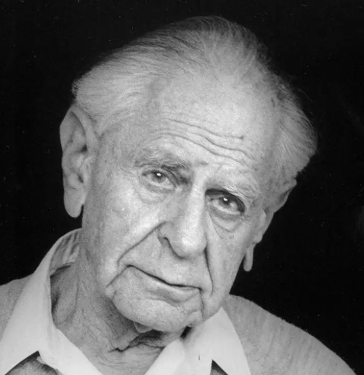
7 months 3 weeks ago
Diversity makes critical argument fruitful. ...[P]artners in an argument must share ...the wish to know, and the readiness to learn from the other ...by severely criticizing his views... and hearing... [the] reply. ...the so-called method of science consists in this kind of criticism.
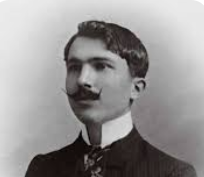
3 months 3 weeks ago
I hate all virtues based on food and bloated bellies;though food and drink are good, I'm better slaked and fedby that inhuman flame which burns in our black bowels.I like to name that flame which burns within me God!
▼
Source
source
Odysseus, Book XI, line 840
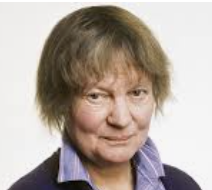
6 months 2 weeks ago
There is no substitute for the comfort supplied by the utterly taken-for-granted relationship.
▼
Source
source
A Severed Head (1961); 1976, p. 181.
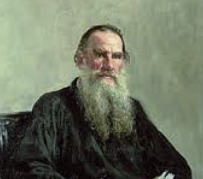
5 months 3 weeks ago
To attain this end we must secure a preponderance of virtue over vice and must endeavor to secure that the honest man may, even in this world, receive a lasting reward for his virtue. But in these great endeavors we are gravely hampered by the political institutions of today. What is to be done in these circumstances? To favor revolutions, overthrow everything, repel force by force?... No! We are very far from that. Every violent reform deserves censure, for it quite fails to remedy evil while men remain what they are, and also because wisdom needs no violence.
▼
Source
source
Book V, Ch. 7
6 months 3 weeks ago
History is mere Empiricism; it has only facts to communicate, and all its proofs are founded upon facts alone. To attempt to rise to Primeval History on this foundation of fact, or to argue by this means how such or such a thing might have been, and then to take for granted that it has been so in reality,is to stray beyond the limits of History, and produce an a priori History; just as the Philosophy of Nature, referred to in our preceding lecture, endeavoured to find an a priori Science of Physics.
▼
Source
source
p. 140
7 months 3 weeks ago
I fancy I need more than another to speak (rather than write), with such a formidable tendency to the lapidary style. I build my house of boulders.
▼
Source
source
Letter to Thomas Carlyle, 30 October 1841
5 months 3 weeks ago
The conscience of a man of our circle, if he retains but a scrap of it, cannot rest, and poisons all the comforts and enjoyments of life supplied to us by the labour of our brothers, who suffer and perish at that labour. And not only does every conscientious man feel this himself (he would be glad to forget it, but cannot do so in our age) but all the best part of science and art - that part which has not forgotten the purpose of its vocation - continually reminds us of our cruelty and of our unjustifiable position. The old firm justifications are all destroyed; the new ephemeral justifications of the progress of science for science's sake and art for art's sake do not stand the light of simple common sense. Men's consciences cannot be set at rest by new excuses, but only by a change of life which will make any justification of oneself unnecessary as there will be nothing needing justification.

7 months 3 weeks ago
All traditional logic habitually assumes that precise symbols are being employed. It is therefore not applicable to this terrestial life but only to an imagined celestial existence... logic takes us nearer to heaven than other studies.
▼
Source
source
Vagueness', first published in The Australasian Journal of Psychology and Philosophy, 1 June, 1923


7 months 1 day ago
Happiest are the people who give most happiness to others.
▼
Source
source
As quoted in Happyology by Harald W. Tietze, p. 28
8 months 1 week ago
Materials are indifferent, but the use which we make of them is not a matter of indifference.
▼
Source
source
Book II, ch. 5, 1
6 months 1 week ago
...Zen Buddhism, this religion of immanence.
6 months 3 weeks ago
The pleasures of self-approbation, together with the right cultivation of all our pleasures, require individual independence. Without independence men cannot become either wise, or useful, or happy.
▼
Source
source
"Summary of Principles" 1.3
8 months 5 days ago
Let men learn (as we have said above) the difference that exists between the idols of the human mind, and the ideas of the Divine mind. The former are mere arbitrary abstractions; the latter the true marks of the Creator on his creatures, as they are imprinted on, and defined in matter, by true and exquisite touches. Truth, therefore, and utility are here perfectly identical.
▼
Source
source
Aphorism 124
4 months 1 week ago
We give voice to our trivial cares, but suffer enormities in silence.
▼
Source
source
line 607; (Phaedra)
3 months 3 weeks ago
Cries rise up on every side. Who shouts? It is we who shout - the living, the dead, and the unborn. But at once we are crushed by fear, and we fall silent. And then we forget - out of laziness, out of habit, out of cowardice. But suddenly the Cry tears at our entrails once more, like an eagle. For the Cry is not outside us, it does not come from a great distance that we may escape it. It sits in the center of our hearts, and cries out. God shouts: "Burn your houses! I am coming! Whoever has a house cannot receive me! "Burn your ideas, smash your thoughts! Whoever has found the solution cannot find me."

6 months 3 weeks ago
Once man loses his faculty of indifference he becomes a potential murderer; once he transforms his idea into a god the consequences are incalculable. We kill only in the name of a god or of his counterfeits: the excesses provoked by the goddess Reason, by the concept of nation, class, or race are akin to those of the Inquisition or of the Reformation.

7 months 4 weeks ago
Men did not make the earth... It is the value of the improvements only, and not the earth itself, that is individual property... Every proprietor owes to the community a ground rent for the land which he holds.
▼
Source
source
Agrarian Justice
4 months 3 weeks ago
There is a class of writers who are ever boasting of the progress of civilization and of the human mind in modern times. If we were to credit their pretensions, we should be led to believe that the science of society had reached its highest degree of perfection, because old metaphysical and economic theories have been somewhat refined upon.In answer to their boasts of social progress, it is not sufficient to refer to the deeply-rooted social evils which exist, and which prey upon our boasted civilized social order. We will mention but a single one, the frightful increase of national debts and of taxation.
▼
Source
source
The Theory of Social Organization. Harmonian Man: Selected Writings of Charles Fourier

7 months 2 weeks ago
Speciesism-the word is not an attractive one, but I can think of no better term-is a prejudice or attitude of bias in favor of the interests of members of one's own species and against those of members of other species.
▼
Source
source
Ch. 1: All Animals Are Equal
6 months 1 week ago
Sovereignty, the freedom unto death, is threatening to a society that is organized around work and production.


5 months 3 days ago
For Leopardi evil is integral to the way the world works; but when he talks of evil he does not mean any kind of malign agency of the sort that Gnostics imagined. Evil is the suffering that is built into the scheme of things. 'What hope is there when evil is ordinary?' he asks. 'I mean, in an order where evil is necessary?' These rhetorical questions show why Leopardi had no interest in projects of revolution and reform. No type of human action - least of all the harlequinade of politics - could fundamentally alter a world in which evil was ordinary.
▼
Source
source
The Faith of Puppets: Leopardi and the Souls of Machines (p.35-6)
8 months 3 weeks ago
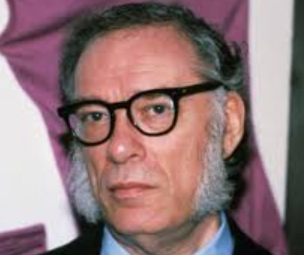
In the course of my fight with the school, I couldn't help but notice that I became a pariah. [...] Once, however, a fellow faculty member, making sure we were unobserved, said to me, "Isaac, the faculty is proud of you for your courage in fighting the administration for academic freedom."I said, "There's no courage involved in it. Don't you know my definition of academic freedom?""No. What's your definition of academic freedom?"I said, "Independent income."
4 months 3 weeks ago
Marriage and dependent children are a trap for the people! Morality carefully hides this distressing truth from us because it knows no remedy for the evil. But I , who bring a remedy must not dissimulate the woes from fathers, and I must not dissimulate from society its radical vice of pushing seven-eighths of all families into evil practices through poverty.
4 months 4 days ago
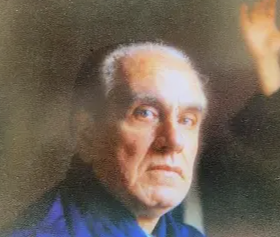
For a long time there have been no true sovereigns, monarchs by divine right capable of wielding sword and scepter, and symbols of a higher human ideal. More than a century ago, Juan Donoso Cortés stated that no kings existed capable of proclaiming themselves as such except "by the will of the nation," adding that, even if any had existed, they would not have been recognized. The few monarchies still surviving are notoriously impotent and empty, while the traditional nobility has lost its essential character as a political class and any existential prestige and rank along with it. Its current representatives may still interest our contemporaries when put on the same plane as film actors and actresses, sport heroes and opera stars, and when through some private, sentimental, or scandalous chance, they serve as fodder for magazine articles.
▼
Source
source
p. 172
8 months 4 weeks ago
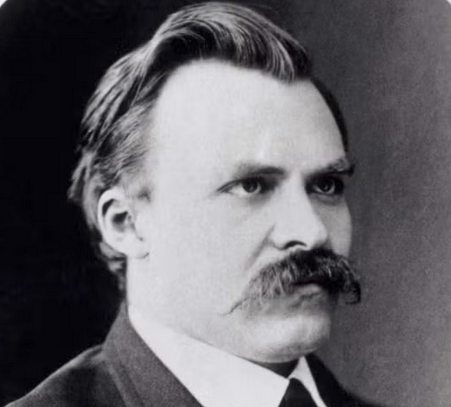
We believe that we know something about the things themselves when we speak of trees, colors, snow, and flowers; and yet we possess nothing but metaphors for things, metaphors which correspond in no way to the original entities.
6 months 3 weeks ago
My immediate consciousness, my absolute perception, cannot go beyond myself, - I have immediate knowledge only of myself, whatever I know further I know only by reasoning, in the same manner in which I have come to those conclusions concerning the original powers of Nature, which certainly do not lie within the circle of my perceptions. I, however, - that which I call myself, - am not the man-forming power of Nature, but only one of its manifestations ; and only of this manifestation am I conscious, not of that power, whose existence I have only discovered from the necessity of explaining my own.
▼
Source
source
Jane Sinnett, trans 1846 p. 13
7 months 2 weeks ago
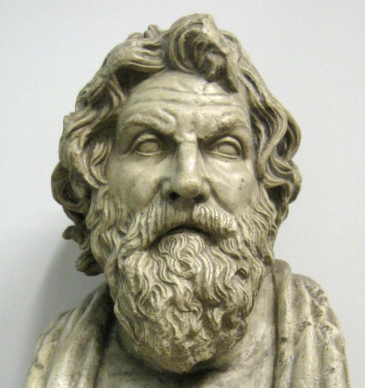
Once, when he was applauded by rascals, he remarked, "I am horribly afraid I have done something wrong."
▼
Source
source
§ 5
4 months 1 week ago
For love of bustle is not industry - it is only the restlessness of a hunted mind.
▼
Source
source
Line 5.
5 months 3 weeks ago
Everything is worth what its purchaser will pay for it.
▼
Source
source
Maxim 847
4 months 2 weeks ago
We call that fire of the black thunder-cloud "electricity," and lecture learnedly about it, and grind the like of it out of glass and silk: but what is it? What made it? Whence comes it? Whither goes it? Science has done much for us; but it is a poor science that would hide from us the great deep sacred infinitude of Nescience, whither we can never penetrate, on which all science swims as a mere superficial film. This world, after all our science and sciences, is still a miracle; wonderful, inscrutable, magical and more, to whosoever will think of it.
5 months 3 weeks ago
But one no longer wonders when one realizes that in the higher classes there is an unerring instinct of what tends to maintain and of what tends to destroy the organization by virtue of which they enjoy their privileges. The fashionable lady had certainly not reasoned out that if there were no capitalists and no army to defend them, her husband would have no fortune, and she could not have her entertainments and her ball-dresses. And the artist certainly does not argue that he needs the capitalists and the troops to defend them, so that they may buy his pictures. But instinct, replacing reason in this instance, guides them unerringly. And it is precisely this instinct which leads all men, with few exceptions, to support all the religious, political, and economic institutions which are to their advantage.
▼
Source
source
Chapter XII, Conclusion-Repent Ye, for the Kingdom of Heaven is at Hand
6 months 3 weeks ago
I'd rather offer my life as a sacrifice than be necessary to anything.
4 months 5 days ago
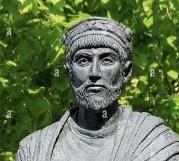
Must we then speak of this subject also: and shall we write concerning things that are not to be told, and shall we publish things not to be divulged, and secrets not to be spoken aloud? Who indeed is Attis or Gallos; who the Mother of the Gods; what is the reason of this rule of Chastity; moreover for what cause has such an institution been established among us from remote antiquity; handed down to us indeed from the most ancient of the Phrygians, but accepted in the first place by the Greeks - and those not the vulgar herd, but the Athenians - taught by the event that they had not done well in ridiculing him that was performing the rites of the Great Mother. For they are said to have insulted and driven off the Gallos, as one who was making innovations in religion: because they did not understand the character of the goddess, or how that she was the very "Deo", "Rhea," and " "Demeter" so much honoured amongst them themselves.
CivilSimian.com created by AxiomaticPanic, CivilSimian, Kalokagathia