

5 months 3 weeks ago
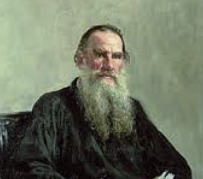
Three days later the little princess was buried, and Prince Andrei went up the steps to where the coffin stood, to give her the farewell kiss. And there in the coffin was the same face, though with closed eyes. "Ah, what have you done to me?" it still seemed to say, and Prince Andrei felt that something gave way in his soul and that he was guilty of a sin he could neither remedy nor forget.
▼
Source
source
Bk. IV, Ch. 9
6 months 2 weeks ago
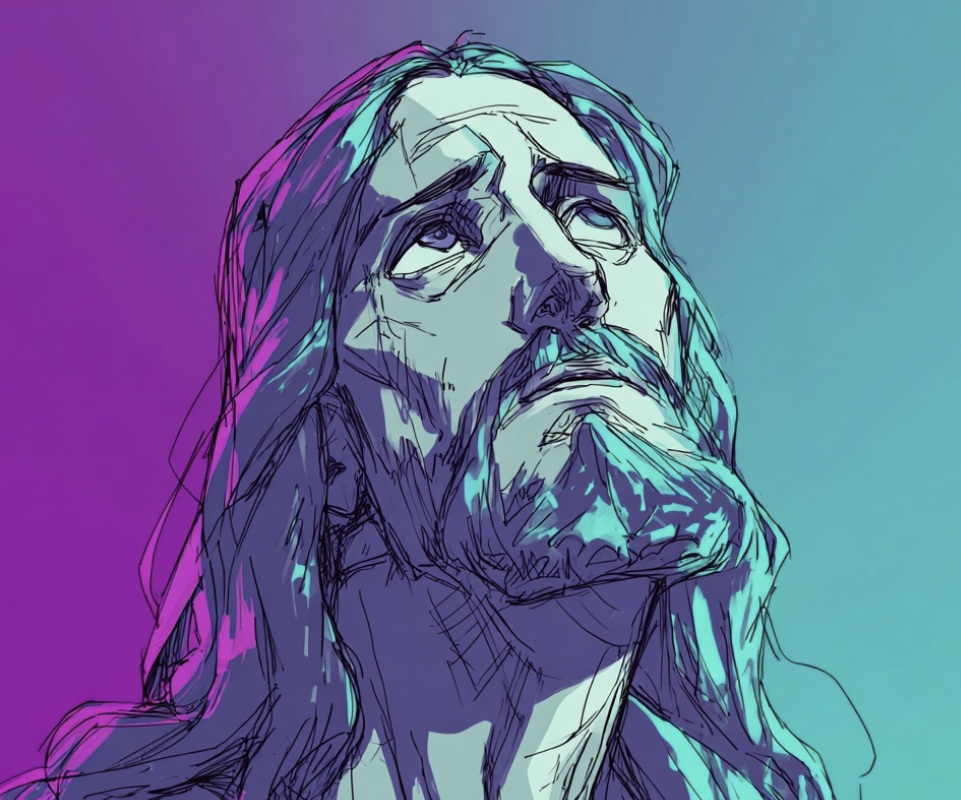
But everyone who hears these sayings of Mine, and does not do them, will be like a foolish man who built his house on the sand: and the rain descended, the floods came, and the winds blew and beat on that house; and it fell. And great was its fall.
▼
Source
source
Matthew 7:24-27 (NKJV) (Also Luke 6:47-49)


6 months 4 days ago
Philosophers today are as fond as ever of apriori arguments with ethical conclusions. One reason such arguments are always unsatisfying is that they always prove too much; when a philosopher 'solves' an ethical problem for one, one feels as if one had asked for a subway token and been given a passenger ticket valid for the first interplanetary passenger-carrying space ship instead.
▼
Source
source
How Not to Solve Ethical Problems
5 months 3 weeks ago
Headlines are icons, not literature.
▼
Source
source
(p. 5)
8 months 2 weeks ago
It is only the individual possessed of the most entire sincerity that can exist under Heaven, who can adjust the great invariable relations of mankind, establish the great fundamental virtues of humanity, and know the transforming and nurturing operations of Heaven and Earth; shall this individual have any being or anything beyond himself on which he depends? Call him man in his ideal, how earnest is he! Call him an abyss, how deep is he! Call him Heaven, how vast is he! Who can know him, but he who is indeed quick in apprehension, clear in discernment, of far-reaching intelligence, and all-embracing knowledge, possessing all Heavenly virtue?
7 months 2 days ago
There is no man alone, because every man is a Microcosm, and carries the whole world about him.
▼
Source
source
Section 10
7 months 3 weeks ago
I must confess that I am deeply troubled. I fear that human beings are intent upon acting out a vast deathwish and that it lies with us now to make every effort to promote resistance to the insanity and brutality of policies which encompass the extermination of hundreds of millions of human beings.
▼
Source
source
Letter to Rudolf Carnap, June 21, 1962

4 months 1 week ago
When the changes of our times gave you an opportunity, you restored to the use of man that genius of your father for which he had suffered, and made him in real truth immortal by publishing as an eternal memorial of him those books which that bravest of men had written with his own blood. You have done a great service to Roman literature: a large part of Cordus's books had been burned; a great service to posterity, who will receive a true account of events, which cost its author so dear; and a great service to himself, whose memory flourishes and ever will flourish, as long as men set any value upon the facts of Roman history, as long as anyone lives who wishes to review the deeds of our fathers, to know what a true Roman was like - one who still remained unconquered when all other necks were broken in to receive the yoke of Sejanus, one who was free in every thought, feeling, and act.
5 months 2 weeks ago
The working classes may be injuriously degraded and oppressed in three ways: 1st - When they are neglected in infancy 2nd - When they are overworked by their employer, and are thus rendered incompetent from ignorance to make a good use of high wages when they can procure them. 3rd - When they are paid low wages for their labour.
▼
Source
source
Two Memorials on Behalf of the Working Classes

6 months 3 weeks ago
Great joys, why do they bring us sadness? Because there remains from these excesses only a feeling of irrevocable loss and desertion which reaches a high degree of negative intensity. At such moments, instead of a gain, one keenly feels loss. sadness accompanies all those events in which life expends itself. its intensity is equal to its loss. Thus death causes the greatest sadness.
6 months 4 days ago
From any vocabulary of ideas we can build other ideas by formal combinations of signs. But not any set of ideas will be instructive. One must have the right ideas.
▼
Source
source
Chapter 15, Inductive Logic, p. 139.
6 months 6 days ago
There is no greater impediment to progress in the sciences than the desire to see it take place too quickly.
▼
Source
source
K 72
3 months 3 weeks ago
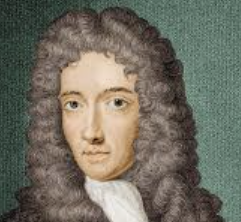
But if judicious men skilled in Chymical affairs shall once agree to write clearly and plainly of them, and thereby keep men from being stunn'd... or imposed upon by dark and empty Words; 'tis to be hop'd that these men finding that they can no longer write impertinently and absurdly, without being laugh'd at for doing so, will be reduc'd either to write nothing, or Books that may teach us something, and not rob men, as formerly, of invaluable Time; and so ceasing to trouble the world with Riddles or Impertinencies, we shall either by their Books receive an Advantage, or by their silence escape an Inconvenience.

7 months 3 weeks ago
...wickedness, when you examine it, turns out to be the pursuit of some good in the wrong way. You can be good for the mere sake of goodness: you cannot be bad for the mere sake of badness. You can do a kind action when you are not feeling kind and when it gives you no pleasure, simply because kindness is right; but no one ever did a cruel action simply because cruelty is wrong - only because cruelty was pleasant or useful to him. in other words badness cannot succeed even in being bad in the same way in which goodness is good. Goodness is, so to speak, itself: badness is only spoiled goodness.
▼
Source
source
Book II, Chapter 2, "The Invasion"

6 months 2 weeks ago
Hegel's theological discussion repeatedly asks what the true relation is between the individual man and a state that no longer satisfies his capacities but exists rather as an 'estranged' institution from which the active political interest of the citizens has disappeared. Hegel defined this state with almost the same categories as those of eighteenth century liberalism: the state rests on the consent of the individuals, it circumscribes their rights and duties and protects its members from those internal and external dangers that might threaten the perpetuation of the whole.
▼
Source
source
P. 32
7 months 3 weeks ago
I can imagine no man who will look with more horror on the End than a conscientious revolutionary who has, in a sense sincerely, been justifying cruelties and injustices inflicted on millions of his contemporaries by the benefits which he hopes to confer on future generations: generations who, as one terrible moment now reveals to him, were never going to exist. Then he will see the massacres, the faked trials, the deportations, to be all ineffaceably real, an essential part, his part, in the drama that has just ended: while the future Utopia had never been anything but a fantasy.

3 months 3 weeks ago
It has always been denied by the republican party in this country, that the Constitution had given the power of incorporation to Congress. On the establishment of the Bank of the United States, this was the great ground on which that establishment was combated; and the party prevailing supported it only on the argument of its being an incident to the power given them for raising money.
▼
Source
source
Letter to Dr. Maese (1809) ME 12:231 : The Writings of Thomas Jefferson "Memorial Edition" (20 Vols., 1903-04)
7 months 3 weeks ago
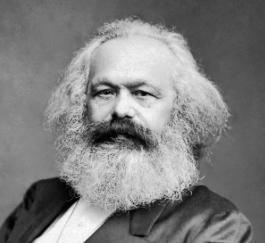
The religious world is but the reflex of the real world.
▼
Source
source
Vol. I, Ch. 1, Section 4, pg. 91.
4 months 6 days ago
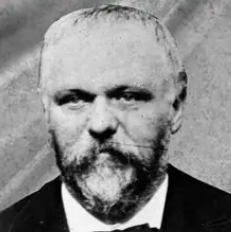
Proletarian violence, carried on as a pure and simple manifestation of the sentiment of class struggle, appears thus as a very fine and heroic thing; it is at the service of the immemorial interests of civilization; it is not perhaps the most appropriate method of obtaining immediate material advantages, but it may save the world from barbarism.
▼
Source
source
p. 85
8 months 3 weeks ago
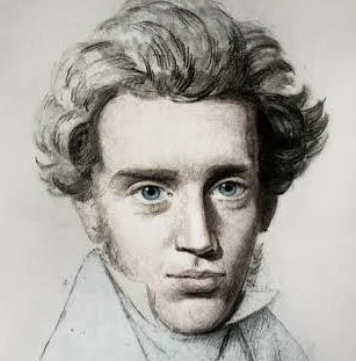
Forgetting when God does it in relation to sin, is the opposite of creating, since to create is to bring forth from nothing and to forget is to take back into nothing. What is hidden from my eyes, that I have never seen; but what is hidden behind my back, that I have seen. The one who loves forgives in this way; he forgives, he forgets, he blots out the sin, in love he turns toward the one he forgives; but when he turns toward him, he of course, cannot see what is lying behind his back.
8 months 4 days ago
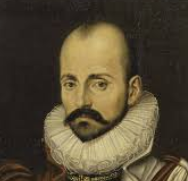
Virtue refuses facility for her companion ... the easy, gentle, and sloping path that guides the footsteps of a good natural disposition is not the path of true virtue. It demands a rough and thorny road.
▼
Source
source
Ch. 11. Of Cruelty (tr. Donald M. Frame)


6 months 1 week ago
No art can be judged by purely aesthetic standards, although a painting or a piece of music may appear to give a purely aesthetic pleasure. Aesthetic enjoyment is an intensification of the vital response, and this response forms the basis of all value judgements. The existentialist contends that all values are connected with the problems of human existence, the stature of man, the purpose of life. These values are inherent in all works of art, in addition to their aesthetic values, and are closely connected with them.
▼
Source
source
The Chicago Review, Volume 13, no. 2, 1959, p. 152-181
6 months 1 week ago
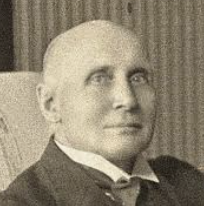
Rightness of limitation is essential for growth of reality.Unlimited possibility and abstract creativity can procure nothing. The limitation, and the basis arising from what is already actual, are both of them necessary and interconnected.
▼
Source
source
Religion in the Making (February 1926), Lecture IV: "Truth and Criticism".
7 months 3 weeks ago
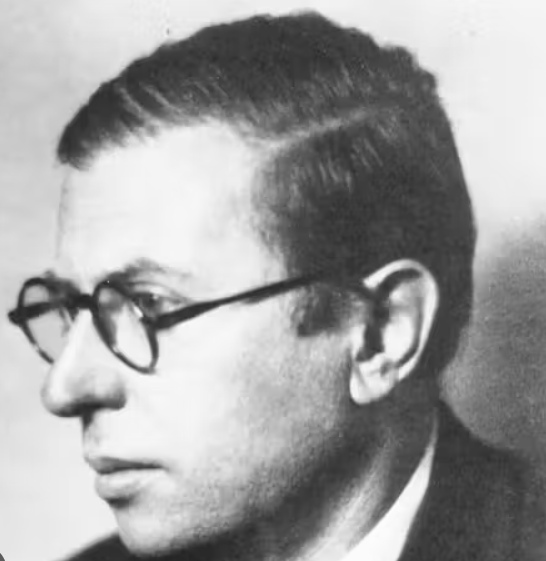
Either the USSR was not the country of socialism, in which case socialism didn't exist anywhere and doubtless, wasn't possible: or else, socialism was that, this abominable monster, this police state, the power of beasts of prey.
▼
Source
source
p. 184
6 months 3 weeks ago
When people come to me saying they want to kill themselves, I tell them, "What's your rush? You can kill yourself any time you like. So calm down. Suicide is a positive act." And they do calm down.
7 months 3 weeks ago
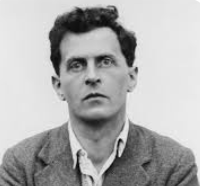
If someone asked us 'but is that true?' we might say "yes" to him; and if he demanded grounds we might say "I can't give you any grounds, but if you learn more you too will think the same."
7 months 3 weeks ago
Thee will find out in time that I have a great love of professing vile sentiments, I don't know why, unless it springs from long efforts to avoid priggery.
▼
Source
source
Letter to Alys Pearsall Smith (1894). Smith was a Quaker, thus the archaic use of "Thee" in this and other letters to her.
6 months 2 weeks ago
At one time in his life the apostate radically changes his political, religious or philosophical convictions by taking up all possible means of argumentation against that which he formerly held to be true, and lives now for the sake of its negation. His new ideas and opinions consist in continuous acts of revenge on his spiritual past.
▼
Source
source
Manfred Frings, Max Scheler (1996), p. 60

7 months 3 weeks ago
The most advanced nations are always those who navigate the most.
▼
Source
source
Civilization

7 months 1 day ago
The main business of religions is to purify, control, and restrain that excessive and exclusive taste for well-being which men acquire in times of equality.
▼
Source
source
Book One, Chapter V.
6 months 3 weeks ago
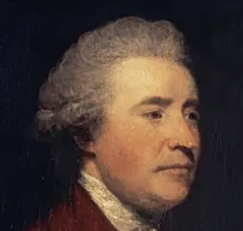
France has always more or less influenced manners in England; and when your fountain is choked up and polluted, the stream will not run long, or not run clear, with us, or perhaps with any nation. This gives all Europe, in my opinion, but too close and connected a concern in what is done in France. Excuse me, therefore, if I have dwelt too long on the atrocious spectacle of the 6th of October, 1789, or have given too much scope to the reflections which have arisen in my mind on occasion of the most important of all revolutions, which may be dated from that day, I mean a revolution in sentiments, manners, and moral opinions.

8 months 3 weeks ago
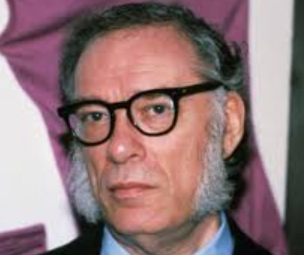
Where any answer is possible, all answers are meaningless.
3 months 3 weeks ago
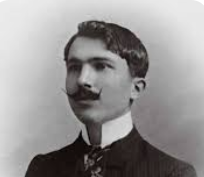
The major and almost only theme of all my work is the struggle of man with "God": the unyielding, inextinguishable struggle of the naked worm called "man" against the terrifying power and darkness of the forces within him and around him.
▼
Source
source
As quoted in Nikos Kazantzakis (1968) by Helen Kazantzakis, p. 507

3 months 3 weeks ago
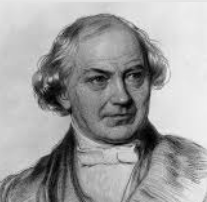
The 'Logic of Induction' consists in stating the Facts and the Inference in such a manner, that the evidence of the Inference is manifest; just as the Logic of Deduction consists in stating the Premises and the Conclusion in such a manner that the Evidence of the Conclusion is manifest.
4 months 1 week ago
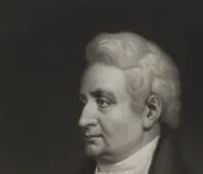
He not only overflowed with learning but stood in the slops.
▼
Source
source
On Macaulay; reported in Hesketh Pearson, The Smith of Smiths (London: Hamish Hamilton, 1934), p. 180
6 months 1 week ago
It reminds us that a man driven to desire to possess a certain female is a highly purposive individual. We have already noted that evolution tends to mark time when individuals have no reason to evolve. The same applies to individuals; they may be talented and intelligent, and yet waste their lives because they somehow lack the motivation to make use of these faculties. The best piece of luck that can befall any individual is to have a strong sense of purpose.
▼
Source
source
p. 225
3 months 3 weeks ago
Riemann has shewn that as there are different kinds of lines and surfaces, so there are different kinds of space of three dimensions; and that we can only find out by experience to which of these kinds the space in which we live belongs. In particular, the axioms of plane geometry are true within the limits of experiment on the surface of a sheet of paper, and yet we know that the sheet is really covered with a number of small ridges and furrows, upon which (the total curvature not being zero) these axioms are not true. Similarly, he says although the axioms of solid geometry are true within the limits of experiment for finite portions of our space, yet we have no reason to conclude that they are true for very small portions; and if any help can be got thereby for the explanation of physical phenomena, we may have reason to conclude that they are not true for very small portions of space.
▼
Source
source
Abstract
4 months 1 week ago
Socialism is the watchword and the catchword of our day. The socialist idea dominates the modem spirit. The masses approve of it. It expresses the thoughts and feelings of all; it has set its seal upon our time. When history comes to tell our story it will write above the chapter "The Epoch of Socialism." As yet, it is true, Socialism has not created a society which can be said to represent its ideal. But for more than a generation the policies of civilized nations have been directed towards nothing less than a gradual realization of Socialism.
▼
Source
source
Introduction : The Success of Socialist Ideas
6 months 2 weeks ago
When we rise out of [the night] into the new life and there begin to receive the signs, what can we know of that which - of him who gives them to us? Only what we experience from time to time from the signs themselves. If we name the speaker of this speech God, then it is always the God of a moment, a moment God.
▼
Source
source
Between Man and Man (1965), p. 15
8 months ago
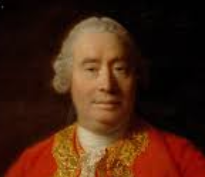
If reason (I mean abstract reason, derived from inquiries a priori) be not alike mute with regard to all questions concerning cause and effect, this sentence at least it will venture to pronounce, That a mental world, or universe of ideas, requires a cause as much, as does a material world, or universe of objects; and, if similar in its arrangement, must require a similar cause. For what is there in this subject, which should occasion a different conclusion or inference? In an abstract view, they are entirely alike; and no difficulty attends the one supposition, which is not common to both of them.
▼
Source
source
Philo to Cleanthes, Part IV
6 months 6 days ago
People often become scholars for the same reason they become soldiers: simply because they are unfit for any other station. Their right hand has to earn them a livelihood; one might say they lie down like bears in winter and seek sustenance from their paws.
▼
Source
source
B 41
CivilSimian.com created by AxiomaticPanic, CivilSimian, Kalokagathia