

7 months 3 weeks ago
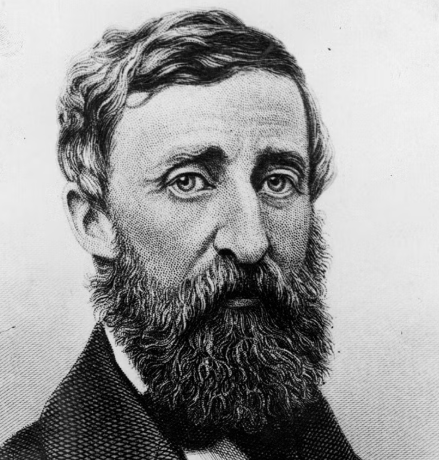
I take it for granted, when I am invited to lecture anywhere, - for I have had a little experience in that business, - that there is a desire to hear what I think on some subject, though I may be the greatest fool in the country, - and not that I should say pleasant things merely, or such as the audience will assent to; and I resolve, accordingly, that I will give them a strong dose of myself. They have sent for me, and engaged to pay for me, and I am determined that they shall have me, though I bore them beyond all precedent.
▼
Source
source
p. 484

4 months 3 weeks ago
No effective blueprint [of a political alternative to Empire] will ever arise from a theoretical articulation such as ours.
▼
Source
source
206

7 months 4 weeks ago
Let me have none of your Popish stuff! Get away with you, good morning.
▼
Source
source
Last words (June 1809), as quoted in The Fortnightly, vol. 25; vol. 31, p. 398

8 months 1 week ago
In his arms, my lady lay asleep, wrapped in a veil. He woke her then and trembling and obedient. She ate that burning heart out of his hand; Weeping I saw him then depart from me.
▼
Source
source
Chapter I, First Sonnet (tr. Mark Musa)
6 months 1 week ago
In the dominant Western religious system, the love of God is essentially the same as the belief in God, in God's existence, God's justice, God's love. The love of God is essentially a thought experience. In the Eastern religions and in mysticism, the love of God is an intense feeling experience of oneness, inseparably linked with the expression of this love in every act of living.
▼
Source
source
Ch. 2
7 months 3 weeks ago
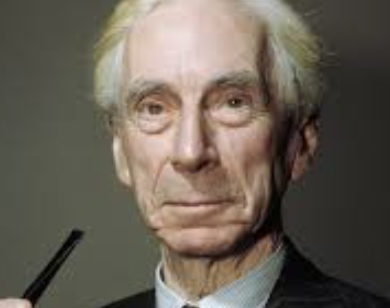
A religious creed differs from a scientific theory in claiming to embody eternal and absolutely certain truth, whereas science is always tentative, expecting that modification in its present theories will sooner or later be found necessary, and aware that its method is one which is logically incapable of arriving at a complete and final demonstration.
▼
Source
source
Religion and Science (1935), Ch. I: Ground of Conflict
3 months 2 weeks ago
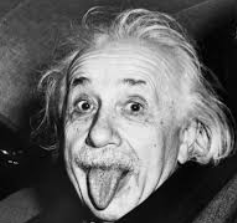
I was sitting in a chair in the patent office at Bern when all of sudden a thought occurred to me: If a person falls freely he will not feel his own weight. I was startled. This simple thought made a deep impression on me. It impelled me toward a theory of gravitation.

8 months 5 days ago
Time, which is the author of authors.
▼
Source
source
Book I, iv, 12
7 months 3 weeks ago
The real nature of the present revealed itself: it was what exists, all that was not present did not exist.
4 months 1 week ago
A great deal of talent is lost to the world for the want of a little courage. Every day sends to their graves a number of obscure men who have only remained obscure because their timidity has prevented them from making a first effort.
▼
Source
source
Lecture IX : On the Conduct of the Understanding

7 months 3 weeks ago
When nature removes a great man, people explore the horizon for a successor; but none comes, and none will. His class is extinguished with him. In some other and quite different field the next man will appear.
▼
Source
source
Uses of Great Men

7 months 4 weeks ago
Beneficence is a duty. He who often practices this, and sees his beneficent purpose succeed, comes at last really to love him whom he has benefited. When, therefore, it is said, "Thou shalt love thy neighbor as thyself," this does not mean, "Thou shalt first of all love, and by means of love (in the next place) do him good"; but: "Do good to thy neighbour, and this beneficence will produce in thee the love of men (as a settled habit of inclination to beneficence)."
▼
Source
source
Metaphysical Elements of Ethics (1780). Translated by Thomas Kingsmill Abbott, translation available at Philosophy.eserver.org. From section "Preliminary Notions of the Susceptibility of the Mind for Notions of Duty Generally", Part C ("Of love to men")

4 months 2 weeks ago
The Book had in a high degree excited us to self-activity, which is the best effect of any book.
▼
Source
source
Bk. I, ch. 4.
3 months 2 weeks ago
The meaning of relativity has been widely misunderstood. Philosophers play with the word, like a child with a doll. Relativity, as I see it, merely denotes that certain physical and mechanical facts, which have been regarded as positive and permanent, are relative with regard to certain other facts in the sphere of physics and mechanics. It does not mean that everything in life is relative and that we have the right to turn the whole world mischievously topsy-turvy.

7 months 2 weeks ago
I regard Peter as one of the great moralists, because I suspect that more than anyone he has helped to change the attitudes of very many people to the sufferings of animals. Peter is a utilitarian in normative ethics, and a humane attitude to animals is a natural corollary of utilitarianism. Utilitarian concern for animals goes back to Bentham, who, presumably alluding to the Kantians, said that the question was not whether animals can reason, but whether they can suffer.
▼
Source
source
J. J. C. Smart, Reply to Singer, in Philip Pettit, Richard Sylvan and Jean Norman (eds.), Metaphysics and Morality: Essays in Honour of J. J. C. Smart, Oxford, 1987, p. 192

7 months ago
There is hardly a member of Congress who can make up his mind to go home without having despatched at least one speech to his constituents; nor who will endure any interruption until he has introduced into his harangue whatever useful suggestions may be made touching the four-and-twenty States of which the Union is composed, and especially the district which he represents.
▼
Source
source
Book One, Chapter XXI.

4 months 2 weeks ago
Far from secularization inexorably leading to the death of religion, it has instead given birth to the search for new forms of religious life. The imminent victory of the Kingdom of Reason has never materialized. As a whole, mankind can never get rid of the need for religious self-identification: who am I, where did I come from, where do I fit in, why am I responsible, what does my life mean, how will I face death? Religion is a paramount aspect of human culture. Religious need cannot be excommunicated from culture by rationalist incantation. Man does not live by reason alone.
▼
Source
source
Interview with Nathan Gardels



7 months 1 day ago
Who will not commend the wit of astrology? Venus, born out of the sea, hath her exaltation in Pisces.
▼
Source
source
Commonplace notebooks, Part I

8 months 4 days ago
God might grant us riches, honours, life, and even health, to our own hurt; for every thing that is pleasing to us is not always good for us. If he sends us death, or an increase of sickness, instead of a cure, Vvrga tua et baculus, tuus ipsa me consolata sunt. "Thy rod and thy staff have comforted me," he does it by the rule of his providence, which better and more certainly discerns what is proper for us than we can do; and we ought to take it in good part, as coming from a wise and most friendly hand.
▼
Source
source
Ch. 12
6 months 2 weeks ago
Ideas are refined and multiplied in the commerce of minds. In their splendor, images effect a very simple communion of souls.
▼
Source
source
Introduction, sect. 4

5 months 3 weeks ago
There has been progress in design, but not progress in accomplishment.
▼
Source
source
Chapter 7 "Constructive Evolution" (p. 186)
7 months 3 weeks ago
It's not too much to say that every indication of Design in the Kosmos is evidence against the Omnipotence of the Designer. For what is meant by Design? Contrivance: the adaptation of means to an end. But the necessity for contrivance - the need of employing means - is a consequence of the limitation of power. Who would have recourse to means if to attain his end his mere word was sufficient? The very idea of means implies that the means have an efficacy which the direct action of the being who employs them has not. ...
8 months 3 weeks ago
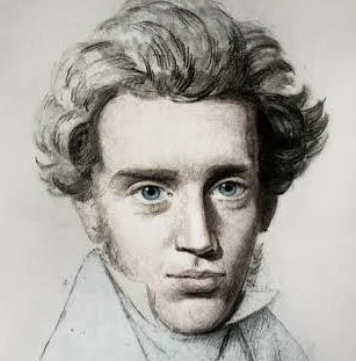
The similarity between Christ and Socrates consists essentially in their dissimilarity. Just as philosophy begins with doubt, so also a life that may be called human begins with irony.
5 months 3 weeks ago
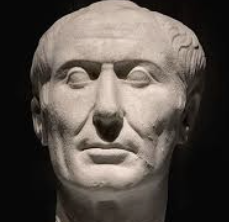
The poor man is ruined as soon as he begins to ape the rich.
▼
Source
source
Maxim 941
8 months 3 weeks ago
It is of this sort of divine service I used the expression that, in comparison with the Christianity of the New Testament, it is playing Christianity. The expression is essentially true and characterizes the thing perfectly. For what does it mean to play, when one reflects how the word must be understood in this connection? It means to imitate, to counterfeit, a danger when there is no danger, and to do it in such a way that the more art is applied to it, the more delusive the pretense is that the danger is present.
8 months ago
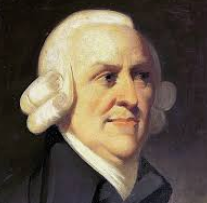
II. The tax which each individual is bound to pay ought to be certain, and not arbitrary.
▼
Source
source
Chapter II, Part II, p. 892.
6 months 2 weeks ago
No work of art can be instantaneously perceived because there is the no opportunity for conservation and increase in tension, and hence none for that release and unfolding which gives volume to a work of art.
▼
Source
source
p. 189
7 months 3 weeks ago
The worker becomes all the poorer the more wealth he produces, the more his production increases in power and range. The worker becomes an ever cheaper commodity the more commodities he creates. With the increasing value of the world of things proceeds in direct proportion the devaluation of the world of men. Labour produces not only commodities; it produces itself and the worker as a commodity - and does so in the proportion in which it produces commodities generally.
▼
Source
source
p. 71, The Marx-Engels Reader
5 months 2 weeks ago
Conservatism is itself a modernism, and in this lies the secret of its success.
▼
Source
source
"Eliot and Conservatism" (p. 194)

6 months 3 weeks ago
We want no foreign examples to rekindle in us the flame of liberty. The example of our own ancestors is abundantly sufficient to maintain the spirit of freedom in its full vigour, and to qualify it in all its exertions. The example of a wise, moral, well-natured, and well-tempered spirit of freedom, is that alone which can be useful to us, or in the least degree reputable or safe. Our fabric is so constituted; one part of it bears so much on the other, the parts, are so made for one another, and for nothing else, that to introduce any foreign matter into it, is to destroy it.
▼
Source
source
p. 471
6 months 3 weeks ago
We scarce ever had a prince, who by fraud, or violence, had not made some infringement on the constitution. We scarce ever had a parliament which knew, when it attempted to set limits to the royal authority, how to set limits to its own. Evils we have had continually calling for reformation, and reformations more grievous than any evils. Our boasted liberty sometimes trodden down, sometimes giddily set up, and ever precariously fluctuating and unsettled; it has only been kept alive by the blasts of continual feuds, wars, and conspiracies.
6 months 1 week ago
To be sure, exchange-value exerts its power in a special way in the realm of cultural goods. For in the world of commodities this realm appears to be exempted from the power of exchange, to be in an immediate relationship with the goods, and it is this appearance in turn which alone gives cultural goods their exchange-value. But they nevertheless simultaneously fall completely into the world of commodities, are produced for the market, and are aimed at the market.
▼
Source
source
p. 279
7 months 3 weeks ago
The best state for human nature is that in which, while no one is poor, no one desires to be richer, nor has any reason to fear being thrust back by the efforts of others to push themselves forward.
▼
Source
source
Book IV, Chapter VI, §2

6 months 2 weeks ago
Whit Meynell was a sociologist; he had got into an intellectual muddle early on in life and never managed to get out.
▼
Source
source
The Philosopher's Pupil (1983) p. 165.

5 months 2 weeks ago
I'm delighted to hear someone make the claim that there is moral progress because it can be such a incendiary thing to say, and its something that I say and deeply believe in.
3 months 3 weeks ago
Better that the nation grow poor for a cause we can honor, than grow rich for an end that is unknown. Who can regard without deep misgiving the process of accumulating wealth unaccompanied by a corresponding growth of knowledge as to the uses to which wealth must be applied? This is what we see in normal times, and the spectacle is profoundly disturbing. Far less disturbing at all events is that process of spending the wealth which we have now to witness.
▼
Source
source
"The Peacefulness of Being at War." in The New Republic (11 September 1915), p. 152.

3 months 3 weeks ago
The Constitution has made no provision for our holding foreign territory, still less for incorporating foreign nations into our Union. The Executive, in seizing the fugitive occurrence which so much advances the good of their country, have done an act beyond the Constitution. The Legislature, in casting behind them metaphysical subtleties and risking themselves like faithful servants, must ratify and pay for it, and throw themselves on their country for doing for them unauthorized what we know they would have done for themselves had they been in a situation to do it.
▼
Source
source
On the Louisiana Purchase, Letter to John Breckinridge
8 months 5 days ago
For a man to love again where he is loved, it is the charity of publicans contracted by mutual profit and good offices; but to love a man's enemies is one of the cunningest points of the law of Christ, and an imitation of the divine nature.
▼
Source
source
Of The Exaltation of Charity

6 months 1 week ago
Steiner goes further than this -- and this is his own central contribution to modern thought. He states that once we have made a habit of remembering Mozart and the stars, we shall find ourselves developing powers of 'spiritual vision.' We shall never again feel ourselves to be helpless victims of the external world.
▼
Source
source
p. 169

8 months 4 days ago
The hair is the finest ornament women have. . . . I like women to let their hair fall down their back, it is a most agreeable sight.
▼
Source
source
-- Table Talk, quoted in Luther On "Woman"
8 months 4 days ago
Writing does not cause misery. It is born of misery.

4 months 3 weeks ago
Any American ally will welcome Biden as president, will be happy that he was elected, but will be a little... distrustful because the Republicans could make a come-back in 2022. They could win the presidency again in 2024. ...There's is still a good third of the American public that remain very strong Trump voters. They're very angry and... are not going to go away... Therefore the ability of the United States to resume its role as the chief defender of the liberal order... is going to be contested, both domestically and... by American friends. If this leads to more self-reliance on their part, that may not be the worst thing in the world, but it is going to mean a very different kind of world order than the one I grew up arguing with Owen Harries about.
▼
Source
source
30:41:00
8 months 4 days ago
There is a sort of gratification in doing good which makes us rejoice in ourselves.
▼
Source
source
Book III, Ch. 2
7 months 3 weeks ago
Shall I tell you the secret of the true scholar? It is this: Every man I meet is my master at some point, and in that, I learn of him.
▼
Source
source
Greatness
7 months 3 weeks ago
Do you think that I count the days? There is only one day left, always starting over: it is given to us at dawn and taken away from us at dusk.
▼
Source
source
Act 10, sc. 2


5 months 5 days ago
Too many of our preferences reflect nasty behaviours and states of mind that were genetically adaptive in the ancestral environment. Instead, wouldn't it be better if we rewrote our own corrupt code?
▼
Source
source
The Abolitionist Project, Talks given at the FHI (Oxford University) and the Charity International Happiness Conference, 2007
6 months 3 weeks ago
It is a woman's outstanding characteristic that she can do anything for the love of a man. But those women who can achieve something important for the love of a thing are most exceptional, because this does not really agree with their nature. Love for a thing is a man's prerogative. But since masculine and feminine elements are united in our human nature, a man can live in the feminine part of himself, I and a woman in her masculine part. None the less the feminine element in man is only something in the background, as is the masculine element in woman. If one lives out the opposite sex in oneself one is living in one's own background, and one's real individuality suffers. A man should live as a man and a woman as a woman.
▼
Source
source
P. 243
CivilSimian.com created by AxiomaticPanic, CivilSimian, Kalokagathia