

3 months 3 weeks ago
Of liberty I would say that, in the whole plenitude of its extent, it is unobstructed action according to our will. But rightful liberty is unobstructed action according to our will within limits drawn around us by the equal rights of others. I do not add "within the limits of the law" because law is often but the tyrant's will, and always so when it violates the rights of the individual.
▼
Source
source
Letter to Isaac H. Tiffany
4 months 1 week ago
Imagine that nature is saying to us: "Those things of which you complain are the same for all. I cannot give anything easier to any man, but whoever wishes will make things easier for himself." In what way? By equanimity. You must suffer pain, and thirst, and hunger, and old age too, if a longer stay among men shall be granted you; you must be sick, and you must suffer loss and death.
7 months 3 weeks ago
This is not for me, I want an entirely rural spot.
▼
Source
source
C 1920, expressing displeasure at a village that had a park with a fountain.
8 months 4 days ago
The oldest and best known evil was ever more supportable than one that was new and untried.
▼
Source
source
Book III, Ch. 9. Of Vanity
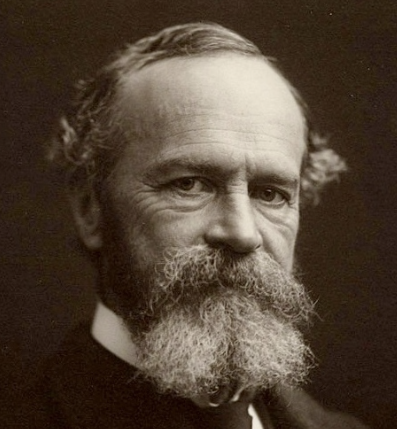
7 months 3 weeks ago
The practical consequence of such a[n individualistic] philosophy is the well-known democratic respect for the sacredness of individuality,-is, at any rate, the outward tolerance of whatever is not itself intolerant. These phrases are so familiar that they sound now rather dead in our ears. Once they had a passionate inner meaning. Such a passionate inner meaning they may easily acquire again if the pretension of our nation to inflict its own inner ideals and institutions vi et armis upon Orientals should meet with a resistance as obdurate as so far it has been gallant and spirited. Religiously and philosophically, our ancient national doctrine of live and let live may prove to have a far deeper meaning than our people now seem to imagine it to possess.
▼
Source
source
"Preface"
5 months 3 weeks ago
For tribal man, space was the uncontrollable mystery. For technological man it is time that occupies the same role.
▼
Source
source
p. 85; "Magic that Changes Mood")
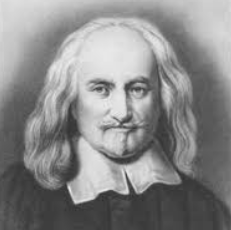
6 months 2 weeks ago
And Beasts that have Deliberation, must necessarily also have Will.
▼
Source
source
The First Part, Chapter 6, p. 28
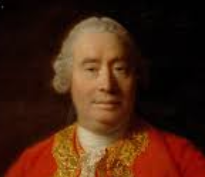
8 months ago
The life of man is of no greater importance to the universe than that of an oyster.
▼
Source
source
On Suicide

6 months 3 weeks ago
As soon as one returns to Doubt (if it could be said that one has ever left it), undertaking anything at all seems not so much useless as extravagant. Doubt works deep within you like a disease, or even more effectively, like a faith.
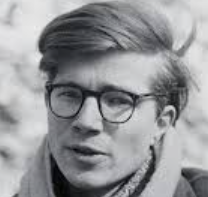
6 months 1 week ago
The outsider, Haller says, is a self-divided man; being self-divided, his chief desire is to be unified. He is selfish as a man with a lifelong raging toothache.
▼
Source
source
Chapter Three, The Romantic Outsider
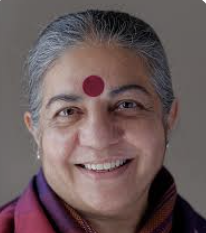
5 months 1 week ago
I think we have reached a stage now where we need to find solutions to economic injustice in the same place and in the same ways that we find solutions to sustainability. Sustainability on environmental grounds and justice in terms of everyone having a place in the production and consumption system - these are two aspects of the same issue. They have been artificially separated and have to be put back again in the Western way of thinking.
▼
Source
source
1998
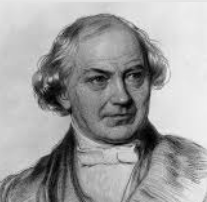
3 months 3 weeks ago
Facts are the materials of science, but all Facts involve Ideas. Since, in observing Facts, we cannot exclude Ideas, we must, for the purposes of science, take care that the Ideas are clear and rigorously applied.
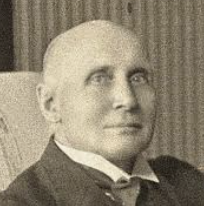
6 months 1 week ago
What is morality in any given time or place? It is what the majority then and there happen to like, and immorality is what they dislike.
▼
Source
source
Ch. 22, August 30, 1941.

4 months 1 week ago
The world is in an extremely dangerous situation, and serious diseases often require the risk of a dangerous cure - like the Pasteur serum for rabies.
▼
Source
source
Inside Information p. 4

4 months 2 weeks ago
Never till now, in the history of an Earth which to this hour nowhere refuses to grow corn if you will plough it, to yield shirts if you will spin and weave in it, did the mere manual two-handed worker (however it might fare with other workers) cry in vain for such "wages" as he means by "fair wages," namely food and warmth!
3 months 3 weeks ago
He who steadily observes the moral precepts in which all religions concur, will never be questioned at the gates of heaven as to the dogmas in which they all differ.
▼
Source
source
Letter to William Canby
3 months 3 weeks ago
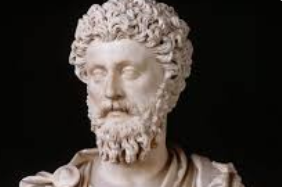
Constantly and, if it be possible, on the occasion of every impression on the soul, apply to it the principles of Physic, of Ethic, and of Dialectic.
▼
Source
source
VIII, 13
4 months 1 week ago
Apart from any other basis which might justify a superiority, education, as a power, raised him who possessed it over the weak, who lacked it, and the educated man counted in his circle, however large or small it was, as the mighty, the powerful, the imposing one: for he was an authority.
▼
Source
source
p. 12
8 months 4 days ago
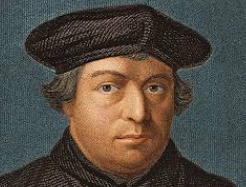
We do not become righteous by doing righteous deeds but, having been made righteous, we do righteous deeds.
▼
Source
source
Thesis 40
6 months 3 weeks ago
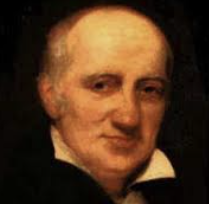
The illustrious archbishop of Cambray was of more worth than his chambermaid, and there are few of us that would hesitate to pronounce, if his palace were in flames, and the life of only one of them could be preserved, which of the two ought to be preferred ... Supposing the chambermaid had been my wife, my mother or my benefactor. This would not alter the truth of the proposition. The life of Fenelon would still be more valuable than that of the chambermaid; and justice, pure, unadulterated justice, would still have preferred that which was most valuable. Justice would have taught me to save the life of Fenelon at the expence of the other. What magic is there in the pronoun "my", to overturn the decisions of everlasting truth?
▼
Source
source
Vol.1, bk. 2, ch. 2

7 months 4 weeks ago
If we take a survey of ages and of countries, we shall find the women, almost - without exception - at all times and in all places, adored and oppressed. Man, who has never neglected an opportunity of exerting his power, in paying homage to their beauty, has always availed himself of their weakness He has been at once their tyrant and their slave.
5 months 3 weeks ago
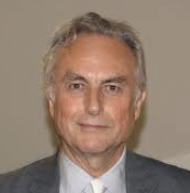
Eternity is best spent under a general anesthetic - which is what is going to happen.
▼
Source
source
Interview with Joe Rogan on The Joe Rogan Experience (2019);
8 months 5 days ago
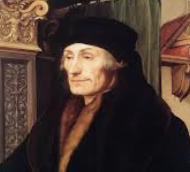
Do not be guilty of possessing a library of learned books while lacking learning yourself.
▼
Source
source
Letter to Christian Northoff (1497), as translated in Collected Works of Erasmus (1974), p. 115
4 months 3 weeks ago
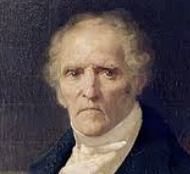
An empire derives no advantage from the caresses of two turtledoves who spend a year cooing to each other in public meetings.
▼
Source
source
Charles Fourier: The Visionary and His World, J. Beecher (1986), p. 315
8 months 2 weeks ago
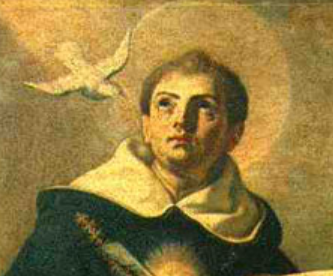
Anything done against faith or conscience is sinful.
▼
Source
source
Commentary on Romans, cap 14, I 3


4 months 3 weeks ago
The polarization has a number of different roots. The economic... fact that many working class voters have been left behind by the prosperity of globalization. ...The more important division is a cultural one ...the feeling on the part of many populist voters, that they are not being respected by the elites that are running the country... [H]ere, all of the identity issues... play themselves out.
▼
Source
source
22:57
4 months 2 weeks ago
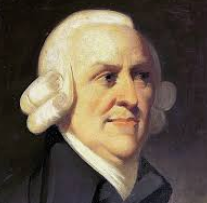
In all European countries, especially in England, one class of Captains and commanders of men, recognizable as the beginning of a new real and not imaginary "Aristocracy," has already in some measure developed itself: the Captains of Industry;-happily the class who above all, or at least first of all, are wanted in this time. In the doing of material work, we have already men among us that can command bodies of men. And surely, on the other hand, there is no lack of men needing to be commanded: the sad class of brother-men whom we had to describe as "Hodge's emancipated horses," reduced to roving famine,-this too has in all countries developed itself; and, in fatal geometrical progression, is ever more developing itself, with a rapidity which alarms every one. On this ground, if not on all manner of other grounds, it may be truly said, the "Organization of Labor" (not organizable by the mad methods tried hitherto) is the universal vital Problem of the world.
8 months ago
There is not a negro from the coast of Africa who does not, in this respect, possess a degree of magnanimity which the soul of his sordid master is too often scarce capable of conceiving. Fortune never exerted more cruelly her empire over mankind, than when she subjected those nations of heroes to the refuse of the jails of Europe, to wretches who possess the virtues neither of the countries which they come from, nor of those which they go to, and whose levity, brutality, and baseness, so justly expose them to the contempt of the vanquished.
▼
Source
source
Chap. II.
5 months 3 weeks ago
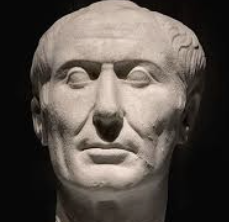
For him who loves labor, there is always something to do.
▼
Source
source
Maxim 219
6 months 2 weeks ago
Desire, to know why, and how, CURIOSITY; such as is in no living creature but Man; so that Man is distinguished, not only by his Reason; but also by this singular Passion from other Animals; in whom the appetite of food, and other pleasures of Sense, by predominance, take away the care of knowing causes; which is a Lust of the mind, that by a perseverance of delight in the continual and indefatigable generation of Knowledge, exceedeth the short vehemence of any carnal Pleasure.
▼
Source
source
The First Part, Chapter 6, p. 26
8 months 4 days ago
Virtue refuses facility for her companion ... the easy, gentle, and sloping path that guides the footsteps of a good natural disposition is not the path of true virtue. It demands a rough and thorny road.
▼
Source
source
Ch. 11. Of Cruelty (tr. Donald M. Frame)

7 months 3 weeks ago
Our minds thus grow in spots; and like grease-spots, the spots spread. But we let them spread as little as possible: we keep unaltered as much of our old knowledge, as many of our old prejudices and beliefs, as we can. We patch and tinker more than we renew. The novelty soaks in; it stains the ancient mass; but it is also tinged by what absorbs it.
▼
Source
source
Lecture V, Pragmatism and Common Sense
5 months 3 weeks ago
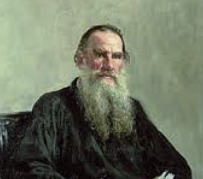
We measure the earth, sun, stars, and ocean depths. We burrow into the depths of the earth for gold. We search for rivers and mountains on the moon. We discover new stars and know their magnitudes. We sound the depths of gorges and build clever machines. Each day brings a new invention. What don't we think of! What can't we do! But there is something else, the most important thing of all, that we are missing. We do not know exactly what it is. We are like a small child who knows he does not feel well but cannot explain why. We are uneasy, because we know a lot of superfluous facts; but we do not know what is really important-ourselves.
▼
Source
source
p. 10
7 months 3 weeks ago
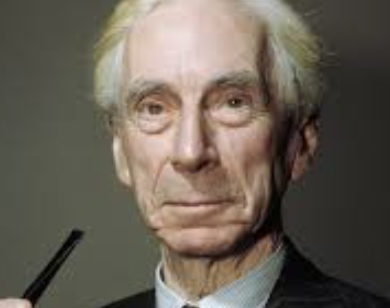
I remain convinced that obstinate addiction to ordinary language in our private thoughts is one of the main obstacles to progress in philosophy.
▼
Source
source
Quoted in Library of Living Philosophers: The Philosophy of Bertrand Russell, 1944
8 months 3 weeks ago
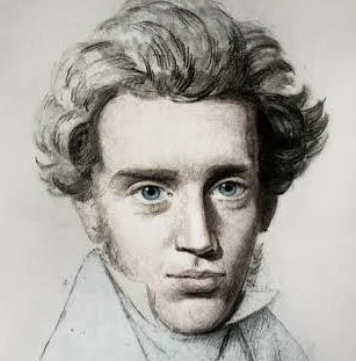
One sticks one's finger into the soil to tell by the smell in what land one is: I stick my finger in existence - it smells of nothing. Where am I? Who am I? How came I here? What is this thing called the world? What does this world mean? Who is it that has lured me into the world? Why was I not consulted, why not made acquainted with its manners and customs instead of throwing me into the ranks, as if I had been bought by a kidnapper, a dealer in souls? How did I obtain an interest in this big enterprise they call reality? Why should I have an interest in it? Is it not a voluntary concern? And if I am to be compelled to take part in it, where is the director? I should like to make a remark to him. Is there no director? Whither shall I turn with my complaint?
4 months 1 week ago
Mercy often means giving death, not life.
▼
Source
source
line 329
8 months 3 weeks ago
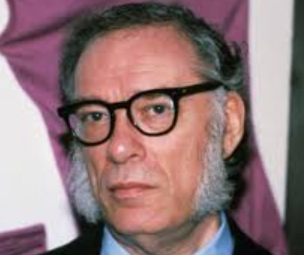
It's funny the respectable names you can give to superstition.

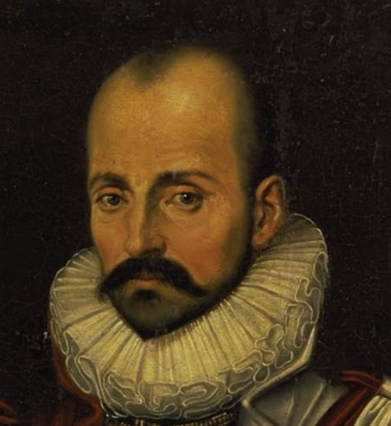
4 months 3 weeks ago
From all these indignities, such as the very beasts of the field would not endure, you can deliver yourselves if you try, not by taking action, but merely by willing to be free.
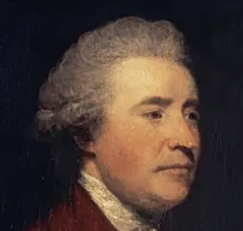
6 months 3 weeks ago
The Revolution and Hanover succession had been objects of the highest veneration to the old Whigs. They thought them not only proofs of the sober and steady spirit of liberty which guided their ancestors; but of their wisdom and provident care of posterity.-The modern Whigs have quite other notions of these events and actions. They do not deny that Mr. Burke has given truly the words of the acts of parliament which secured the succession, and the just sense of them. They attack not him but the law.
▼
Source
source
p. 436
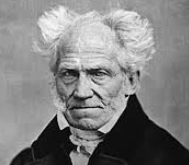
7 months 4 weeks ago
Pride is an established conviction of one's own paramount worth in some particular respect, while vanity is the desire of rousing such a conviction in others, and it is generally accompanied by the secret hope of ultimately coming to the same conviction oneself. Pride works from within; it is the direct appreciation of oneself. Vanity is the desire to arrive at this appreciation indirectly, from without.
▼
Source
source
Vol. 1, Ch. 4, § 2
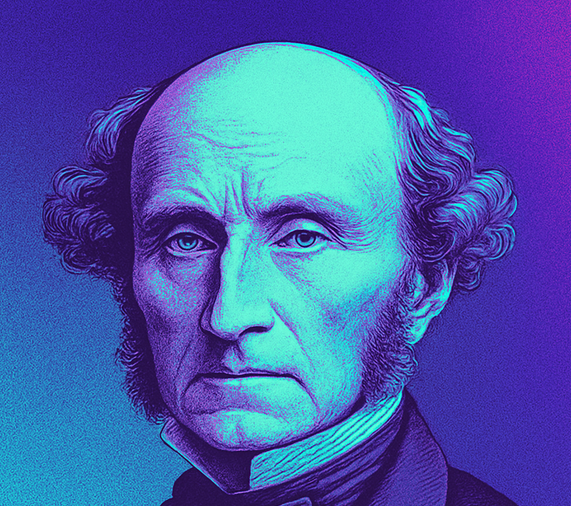
7 months 3 weeks ago
Two very different ideas are usually confounded under the name democracy. The pure idea of democracy, according to its definition, is the government of the whole people by the whole people, equally represented. Democracy, as commonly conceived and hitherto practiced, is the government of the whole people by a mere majority of the people exclusively represented. The former is synonymous with the equality of all citizens; the latter, strangely confounded with it, is a government of privilege in favor of the numerical majority, who alone possess practically any voice in the state. This is the inevitable consequence of the manner in which the votes are now taken, to the complete disfranchisement of minorities.
▼
Source
source
Ch. VII: Of True and False Democracy; Representation of All, and Representation of the Majority only (p. 247)
4 months 1 week ago
I commend you and rejoice in the fact that you are persistent in your studies, and that, putting all else aside, you make it each day your endeavour to become a better man.
6 months 1 week ago
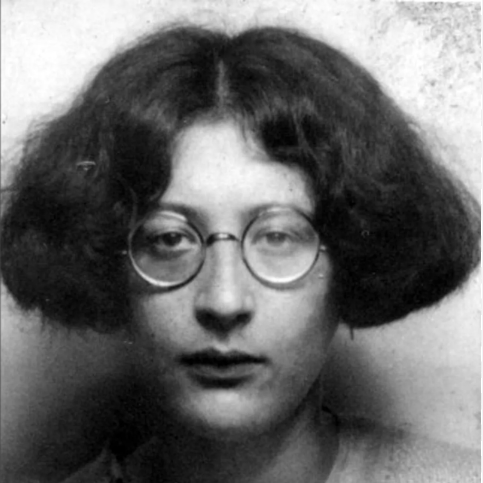
It is impossible to feel equal respect for things that are in fact unequal unless the respect is given to something that is identical in all of them. Men are unequal in all their relations with the things of this world, without exception. The only thing that is identical in all men is the presence of a link with the reality outside the world. All human beings are absolutely identical in so far as they can be thought of as consisting of a centre, which is an unquenchable desire for good, surrounded by an accretion of psychical and bodily matter.
7 months 4 weeks ago
A company of solemn tyrants is impervious to all seductions.
▼
Source
source
"Tyranny", 1764
8 months 4 weeks ago
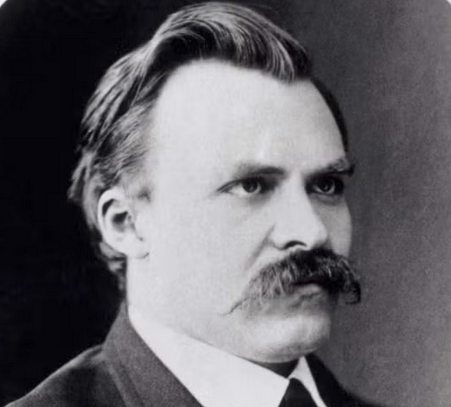
Are designations congruent with things? Is language the adequate expression of all realities? It is only by means of forgetfulness that man can ever reach the point of fancying himself to possess a "truth" of the grade just indicated. If he will not be satisfied with truth in the form of tautology, that is to say, if he will not be content with empty husks, then he will always exchange truths for illusions.
3 months 3 weeks ago
It is rare that the public sentiment decides immorally or unwisely, and the individual who differs from it ought to distrust and examine well his own opinion.
▼
Source
source
Letter to William Findley, Washington (21 March 1801); published in Thomas Jefferson - A chronology of his thoughts (2002) by Jerry Holmes, p. 175
CivilSimian.com created by AxiomaticPanic, CivilSimian, Kalokagathia