

4 months 6 days ago
Proletarian violence, carried on as a pure and simple manifestation of the sentiment of class struggle, appears thus as a very fine and heroic thing; it is at the service of the immemorial interests of civilization; it is not perhaps the most appropriate method of obtaining immediate material advantages, but it may save the world from barbarism.
▼
Source
source
p. 85
3 months 3 weeks ago
It should be remembered, as an axiom of eternal truth in politics, that whatever power in any government is independent, is absolute also; in theory only, at first, while the spirit of the people is up, but in practice, as fast as that relaxes. Independence can be trusted nowhere but with the people in mass. They are inherently independent of all but moral law.
▼
Source
source
Letter to Judge Spencer Roane
7 months 3 weeks ago
Obey the voice at eve obeyed at prime.
▼
Source
source
Terminus
7 months 3 weeks ago
The second matter in which Mill's principles condemn existing legislation is homosexuality. If two adults voluntarily enter into such a relation, this is a matter which concerns them only, and in which, therefore, the community ought not to intervene. If it were still believed, as it once was, that the toleration of such behavior would expose the community to the fate of Sodom and Gomorrah, the community would have every right to intervene. But it does not acquire a right to intervene merely on the ground that such conduct is thought wicked. The criminal law may rightly be invoked to prevent violence or fraud inflicted upon unwilling victims, but it ought not to be invoked when whatever damage there may be is suffered only by the agents-always assuming that the agents are adults.
▼
Source
source
p. 139
6 months 3 weeks ago
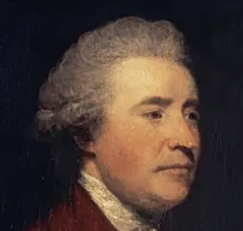
...no Monarchy limited or unlimited, nor any of the old Republics, can possibly be safe as long as this strange, nameless, wild, enthusiastic thing is established in the Center of Europe.
▼
Source
source
Letter to John Trevor (January 1791), quoted in Alfred Cobban and Robert A. Smith (eds.), The Correspondence of Edmund Burke, Volume VI: July 1789-December 1791 (1967), p. 218
6 months 3 weeks ago
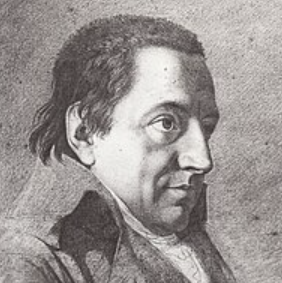
There is nothing whatever in Existence but immediate and living Thought:-Thought, I say, but by no means a thinking substance, a dead body in which thought inheres,-with which no-thought indeed a no-thinker is full surely at hand:-Thought, I say, and also the real Life of this Thought, which at bot tom is the Divine Life; both of which-Thought and , this its real Life-are molten together into one inward organic Unity; like as, outwardly, they are one simple, identical, eternal, and unchangeable Unity.
▼
Source
source
P. 56
6 months 3 weeks ago
Melancholy redeems this universe, and yet it is melancholy that separates us from it.
5 months 3 weeks ago
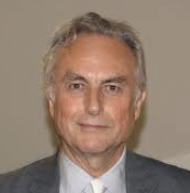
The popularity of the paranormal, oddly enough, might even be grounds for encouragement. I think that the appetite for mystery, the enthusiasm for that which we do not understand, is healthy and to be fostered. It is the same appetite which drives the best of true science, and it is an appetite which true science is best qualified to satisfy.
5 months 3 weeks ago
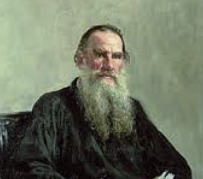
The universal hypocrisy has so entered into the flesh and blood of all classes of our modern society, it has reached such a pitch that nothing in that way can rouse indignation. Hypocrisy in the Greek means "acting," and acting-playing a part-is always possible. Chapter XII, Conclusion-Repent Ye, for the Kingdom of Heaven is at Hand Variant Translation: Hypocrisy with good reason means the same as acting, and anybody can pretend - act a part.
8 months 5 days ago
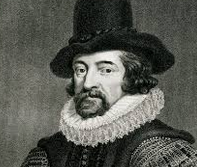
The unassisted hand and the understanding left to itself possess but little power. Effects are produced by the means of instruments and helps, which the understanding requires no less than the hand; and as instruments either promote or regulate the motion of the hand, so those that are applied to the mind prompt or protect the understanding.
▼
Source
source
Aphorism 2
6 months 3 weeks ago
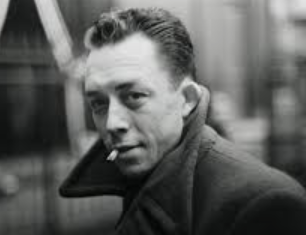
Whenever I happen to be in a city of any size, I marvel that riots do not break out everyday: Massacres, unspeakable carnage, a doomsday chaos. How can so many human beings coexist in a space so confined without hating each other to death?
8 months 3 weeks ago
...there are more things to admire in men than to despise.


6 months 3 weeks ago
A living language can stand on a higher level of culture in comparison with another, but it can never in itself attain that perfection of development which a dead language quite easily attains. In the latter the connotation of words is fixed, and the possibilities of suitable combinations will also gradually become exhausted. Hence, he who wishes to speak this language must speak it just as it is; but, after he has once learnt to do this, the language speaks itself in his mouth and thinks and imagines for him.
▼
Source
source
Consequences of the Difference p. 85
5 months 3 weeks ago
Language is a form of organized stutter.
▼
Source
source
Interview with John Lennon, December 1969, CBS Television

7 months 2 weeks ago
At one level, this movement on behalf of oppressed farm animals is emotional...Yet the movement is also the product of a deep intellectual ferment pioneered by the Princeton scholar Peter Singer...This idea popularized by Professor Singer - that we have ethical obligations that transcend our species - is one whose time appears to have come...What we're seeing now is an interesting moral moment: a grass-roots effort by members of one species to promote the welfare of others...animal rights are now firmly on the mainstream ethical agenda.
▼
Source
source
Nicholas Kristof, "Humanity Even for Nonhumans," in The New York Times (8 April 2009).
7 months 4 weeks ago
Our labour preserves us from three great evils -- weariness, vice, and want.
7 months 2 weeks ago
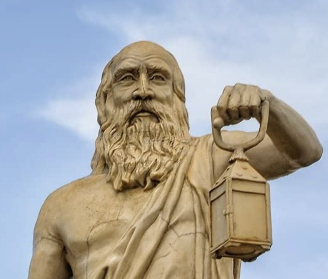
When some one reminded him that the people of Sinope had sentenced him to exile, he said, "And I sentenced them to stay at home."
▼
Source
source
Diogenes Laërtius, vi. 49
5 months 3 weeks ago
Effects are perceived, whereas causes are conceived. Effects always preceed causes in the actual developmental order.
▼
Source
source
(p. 303)
7 months 3 weeks ago
Be gentle with them, Timothy. They want to be free, but they don't know how. Teach them. Reassure them.
▼
Source
source
Reported to be Huxley's last words to Timothy Leary, which Huxley whispered from his deathbed. Quoted in Leary, Timothy (1990) . "Life on a Grounded Space Colony".

8 months 3 weeks ago
The papers were always talking about the debt owed to society. According to them, it had to be paid. But that doesn't speak to the imagination. What really counted was the possibility of escape, a leap to freedom, out of the implacable ritual, a wild run for it that would give whatever chance for hope there was. Of course, hope meant being cut down on some street corner, as you ran like mad, by a random bullet. But when I really thought it through, nothing was going to allow me such a luxury. Everything was against it; I would just be caught up in the machinery again.

6 months 1 week ago
From that point, my universe went on crumbling; new cracks appeared all the time. I could see that the pleasant securities of childhood, all of those warm little human emotions, all of those trivial aims and purposes that we allow to rule our lives, were an illusion. We were like sheep munching grass, unaware that the butcher's lorry is already on its way. I got used to living with a deep, underlying feeling of uncertainty that no one around me seemed to share. It was rather like living on death row.
▼
Source
source
pp. 12-13
8 months 3 weeks ago
The most exciting phrase to hear in science, the one that heralds new discoveries, is not 'Eureka!', but 'That's funny ...'
6 months 2 weeks ago
The function of objective thinking is to reduce all phenomena which bear witness to the union of subject and world, putting in their place the clear idea of the object as in itself and of the subject as pure consciousness. It therefore severs the links which unite the thing and the embodied subject, leaving only sensible qualities to make up our world (to the exclusion of the modes of appearance which we have described), and preferably visual qualities, because these give the impression of being autonomous, and because they are less directly linked to our body and present us with an object rather than introducing us into an atmosphere. But in reality all things are concretions of a setting, and any explicit perception of a thing survives in virtue of a previous communication with a certain atmosphere.
▼
Source
source
p. 374
7 months 4 weeks ago
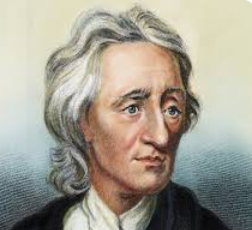
Encourage therefore his inquisitiveness all you can, by satisfying his demands, and informing his judgement, as far as it is capable. When his reasons are any way tolerable, let him find the credit and commendation of it, without being laugh'd at for his mistake be gently put into the right; and if he shew a forwardness to be reasoning about things that come in his way, take care, as much as you can, that no body check this inclination in him, or mislead it by captious or fallacious ways of talking with him. For when all is done, this is the highest and most important faculty of our minds, deserves the greatest care and attention in cultivating it: the right improvement, and exercise of our reason being the highest perfection that a man can attain to in his life.
▼
Source
source
Sec. 122
7 months 2 weeks ago
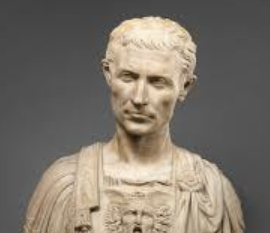
It is worth observing, how we feel ourselves affected in reading the characters of Cæsar, and Cato, as they are so finely drawn and contrasted in Salust. In one, the ignoscendo, largiundo; in the other, nil largiundo. In one, the miseris perfugium; in the other, malis perniciem. In the latter we have much to admire, much to reverence, and perhaps something to fear; we respect him, but we respect him at a distance. The former makes us familiar with him; we love him, and he leads us whither he pleases.
▼
Source
source
Edmund Burke, A Philosophical Enquiry into the Origin of Our Ideas of the Sublime and Beautiful (2nd ed. 1759), pp. 206-207
8 months ago
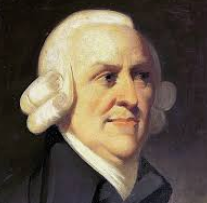
When I endeavour to examine my own conduct, when I endeavour to pass sentence upon it, and either to approve or condemn it, it is evident that, in all such cases, I divide myself, as it were, into two persons; and that I, the examiner and judge, represent a different character from that other I, the person whose conduct is examined into and judged of.
▼
Source
source
Chap. I.
6 months 3 weeks ago
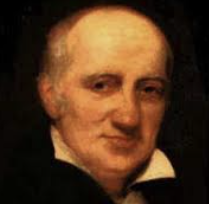
The reason a man lives under any particular government is partly a necessity; he cannot easily avoid living under some government, and it is often scarcely in his power to abandon the country in which he was born: it is also partly, a choice of evil; no man can be said, in this case, to enjoy that freedom which is essential to the forming a contract unless it could be shown that he had a power of instituting, somewhere, a government adapted to his own conceptions.
▼
Source
source
Book III, "Of Obedience"
6 months 3 weeks ago
Great joys, why do they bring us sadness? Because there remains from these excesses only a feeling of irrevocable loss and desertion which reaches a high degree of negative intensity. At such moments, instead of a gain, one keenly feels loss. sadness accompanies all those events in which life expends itself. its intensity is equal to its loss. Thus death causes the greatest sadness.

6 months 2 weeks ago
Hegel's philosophy was an integral part of the culture which authoritarianism had to overcome. It is therefore no accident that the National Socialist assault on Hegel begins with the repudiation of his political theory.
▼
Source
source
P. 411
4 months 3 weeks ago
It is certain that nature inclines us toward the amorous orgy, just as much as toward the gastronomic orgy, and that while both are blameworthy in the excess, they would become praiseworthy in an order in which they could be equilibrated.
▼
Source
source
Charles Fourier: The Visionary and His World, J. Beecher (1986), p. 310

7 months 2 weeks ago
By Thy perfect Intelligence, O MazdaThou didst first create us having bodies and spiritual consciences,And by Thy Thought gave our selves the power of thought, word, and deed.Thus leaving us free to choose our faith at our own will.
▼
Source
source
Ahunuvaiti Gatha; Yasna 31, 11.
8 months ago
You need only look around you, replied PHILO, to satisfy yourself with regard to this question. A tree bestows order and organisation on that tree which springs from it, without knowing the order; an animal in the same manner on its offspring; a bird on its nest; and instances of this kind are even more frequent in the world than those of order, which arise from reason and contrivance. To say, that all this order in animals and vegetables proceeds ultimately from design, is begging the question; nor can that great point be ascertained otherwise than by proving, a priori, both that order is, from its nature, inseparably attached to thought; and that it can never of itself, or from original unknown principles, belong to matter.
▼
Source
source
Philo to Demea, Part VII
6 months 6 days ago
The greatest events occur without intention playing any part in them; chance makes good mistakes and undoes the most carefully planned undertaking. The world's greatest events are not produced, they happen.
▼
Source
source
K 68

8 months 4 days ago
T is so much to be a king, that he only is so by being so. The strange lustre that surrounds him conceals and shrouds him from us; our sight is there broken and dissipated, being stopped and filled by the prevailing light.
▼
Source
source
Book III, Ch. 7. Of the Inconveniences of Greatness
3 months 3 weeks ago
Truth will do well enough if left to shift for herself. She seldom has received much aid from the power of great men to whom she is rarely known & seldom welcome. She has no need of force to procure entrance into the minds of men. Error indeed has often prevailed by the assistance of power or force. Truth is the proper & sufficient antagonist to error.
▼
Source
source
Notes on Religion (October 1776), published in The Writings of Thomas Jefferson : 1816-1826 (1899) edited by Paul Leicester Ford, v. 2, p. 102
6 months 3 weeks ago
The slave frees himself when, of all the relations of private property, he abolishes only the relation of slavery and thereby becomes a proletarian; the proletarian can free himself only by abolishing private property in general.
6 months 3 weeks ago
In a republic, that paradise of debility, the politician is a petty tyrant who obeys the laws.
8 months 3 weeks ago
In every rebellion is to be found the metaphysical demand for unity, the impossibility of capturing it, and the construction of a substitute universe.

7 months 3 weeks ago
Eating and reading are two pleasures that combine admirably.
5 months 4 weeks ago
We live in a world where there is more and more information, and less and less meaning.
▼
Source
source
"The Implosion of Meaning in the Media," p. 79
6 months 3 weeks ago
Our whole past experience is continually in our consciousness, though most of it sunk to a great depth of dimness. I think of consciousness as a bottomless lake, whose waters seem transparent, yet into which we can clearly see but a little way.
▼
Source
source
Vol. VII, par. 547
CivilSimian.com created by AxiomaticPanic, CivilSimian, Kalokagathia