
If people did not sometimes do silly things, nothing intelligent would ever get done.
Or indeed we may say again, it is in what I called Portrait-painting, delineating of men and things, especially of men, that Shakspeare is great. All the greatness of the man comes out decisively here. It is unexampled, I think, that calm creative perspicacity of Shakspeare. The thing he looks at reveals not this or that face of it, but its inmost heart and generic secret: it dissolves itself as in light before him, so that he discerns the perfect structure of it. Creative, we said: poetic creation, what is this too but seeing the thing sufficiently? The word that will describe the thing, follows of itself from such clear intense sight of the thing. And is not Shakspeare's morality, his valour, candour, tolerance, truthfulness; his whole victorious strength and greatness, which can triumph over such obstructions, visible there too? Great as the world!
Abbot Terrasson tells us that if the size of a book were measured not by the number of its pages but by the time required to understand it, then we could say about many books that they would be much shorter were they not so short.
Necessity gives the law without itself acknowledging one.
Of all human and ancient opinions concerning religion, that seems to me the most likely and most excusable, that acknowledged God as an incomprehensible power, the original and preserver of all things, all goodness, all perfection, receiving and taking in good part the honour and reverence that man paid him, under what method, name, or ceremonies soever
In the field of philosophy Kant was the first to take the next decisive step towards the point of view that not only the qualities revealed by the senses, but also space and spatial characteristics have no objective significance in the absolute sense; in other words, that space, too, is only a form of our perception.
A whale is not a fish in natural history, but it is a fish in commerce and law. A plea that human laws which mention fish do not apply to whales, would be rejected at once by an intelligent judge.
On the more conservative side... Liberalism has been associated with... the right to own private property... one of the most fundamental individual rights that is protected in true liberal societies, and that right is... what made possible the modern economic world. As any economist would tell you, without secure property rights and contract enforcement, you don't get investment and therefore economic growth.
The recognition by one person of another's personality takes place by means to some extent identical to the means by which he is conscious of his own personality. The idea of the second personality, which is as much as to say that second personality itself, enters within the direct consciousness of the first person, and is immediately perceived as his ego, though less strongly. At the same time, the opposition between the two persons is perceived, so that the externality of the second is perceived.
What happens to one man may happen to all.
Before we as individuals are even conscious of our existence we have been profoundly influenced for a considerable time (since before birth) by our relationship to other individuals who have complicated histories, and are members of a society which has an infinitely more complicated and longer history than they do (and are members of it at a particular time and place in that history); and by the time we are able to make conscious choices we are already making use of categories in a language which has reached a particular degree of development through the lives of countless generations of human beings before us. . . . We are social creatures to the inmost centre of our being. The notion that one can begin anything at all from scratch, free from the past, or unindebted to others, could not conceivably be more wrong.
As for the Mystical Writers scrupling to Communicate their Knowledge, they might less to their own Disparagement, and to the trouble of their Readers, have conceal'd it by writing no Books, then by Writing bad ones. If Themistius were here, he would not stick to say that Chymists write thus darkly, not because they think their Notions too precious to be explain'd, but because they fear that if they were explain'd, men would discern, that they are farr from being precious.
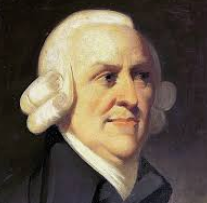
The annual produce of the land and labour of any nation can be increased in its value by no other means, but by increasing either the number of its productive labourers, or the productive powers of those labourers who had before been employed.
Human vanity cherishes the absurd notion that our species is the final goal of evolution.
We are but numbers, born to consume resources.
The ethic of Reverence for Life is the ethic of Love widened into universality.
It is trifling to believe in what you do or in what others do. You should avoid simulacra and even "realities"; you should take up a position external to everything and everyone, drive off or grind down your appetites, live, according to a Hindu adage, with as few desires as a "solitary elephant.
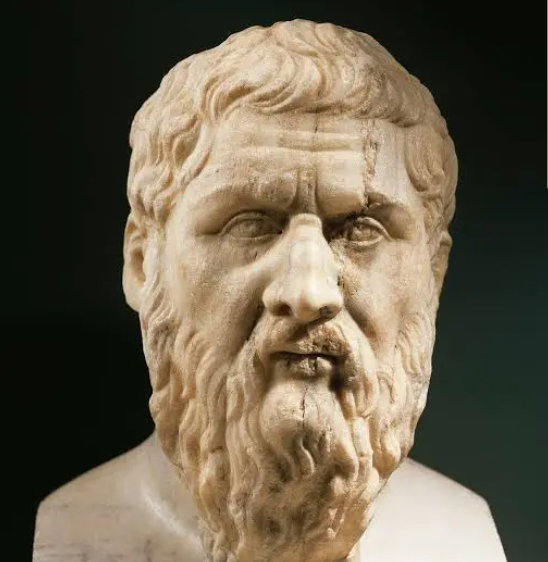
Of our desires some are natural and necessary, others are natural but not necessary; and others are neither natural nor necessary, but are due to groundless opinion.
There is, I think, a spontaneous resurgence of thinking that centers on protection of life, celebrating life, enjoying life as both our highest duty and our most powerful form of resistance against a violent and brutal system that globalizes not just trade, but fascism, and denies civil liberties and freedoms.
Real culture lives by sympathies and admirations, not by dislikes and disdain - under all misleading wrappings it pounces unerringly upon the human core.
"Let us work without reasoning," said Martin; "it is the only way to make life endurable."
Very little of the great cruelty shown by men can really be attributed to cruel instinct. Most of it comes from thoughtlessness or inherited habit. The roots of cruelty, therefore, are not so much strong as widespread. But the time must come when inhumanity protected by custom and thoughtlessness will succumb before humanity championed by thought. Let us work that this time may come.
This language controls by reducing the linguistic forms and symbols of reflection, abstraction, development, contradiction; by substituting images for concepts. It denies or absorbs the transcendent vocabulary; it does not search for but establishes and imposes truth and falsehood.
It is not by prayer and humility that you cause things to go as you wish, but by acquiring a knowledge of natural laws.
Whether we and our politicians know it or not, Nature is party to all our deals and decisions, and she has more votes, a longer memory, and a sterner sense of justice than we do.
I can die when I wish to: that is my elixir of life.
When a sixth of the population of a nation which has undertaken to be the refuge of liberty are slaves, and a whole country is unjustly overrun and conquered by a foreign army, and subjected to military law, I think that it is not too soon for honest men to rebel and revolutionize. What makes this duty the more urgent is the fact that the country so overrun is not our own, but ours is the invading army.
Marx explains the alienation of labor as exemplified in, first, the relation of the worker to the product of his labor and, second, the relation of the worker to his own activity. P. 276
It is certain that nature inclines us toward the amorous orgy, just as much as toward the gastronomic orgy, and that while both are blameworthy in the excess, they would become praiseworthy in an order in which they could be equilibrated.
Old-fashioned determinism was what we may call hard determinism. It did not shrink from such words as fatality, bondage of the will, necessitation, and the like. Nowadays, we have a soft determinism which abhors harsh words, and, repudiating fatality, necessity, and even predetermination, says that its real name is freedom; for freedom is only necessity understood, and bondage to the highest is identical with true freedom.
Consider any individual at any period of his life, and you will always find him preoccupied with fresh plans to increase his comfort.
To be without some of the things you want is an indispensable part of happiness.
Skepticism is an exercise in defascination.
My first advice (on how not to grow old) would be to choose you ancestors carefully. Although both my parents died young, I have done well in this respect as regards my other ancestors. My maternal grandfather, it is true, was cut off in the flower of his youth, at the age of sixty-seven, but my other three grandparents all lived to be over eighty. Of remoter ancestors I can only discover one who did not live to a great age, and he died of a disease which is now rare, namely, having his head cut off.
Some impose upon the world that they believe that which they do not; others, more in number, make themselves believe that they believe, not being able to penetrate into what it is to believe.
We have chosen Mahomet not as the most eminent Prophet; but as the one we are freest to speak of. He is by no means the truest of Prophets; but I do esteem him a true one. Farther, as there is no danger of our becoming, any of us, Mahometans, I mean to say all the good of him I justly can. It is the way to get at his secret: let us try to understand what he meant with the world; what the world meant and means with him, will then be a more answerable question. Our current hypothesis about Mahomet, that he was a scheming Impostor, a Falsehood incarnate, that his religion is a mere mass of quackery and fatuity, begins really to be now untenable to any one. The lies, which well-meaning zeal has heaped round this man, are disgraceful to ourselves only.
Seek first the virtues of the mind; and other things either will come, or will not be wanted.
Everybody knows there is no fineness or accuracy of suppression; if you hold down one thing, you hold down the adjoining.
While both are dear, Piety requires us to honor truth above our friends.
Women dream till they have no longer the strength to dream; those dreams against which they so struggle, so honestly, vigorously, and conscientiously, and so in vain, yet which are their life, without which they could not have lived; those dreams go at last. All their plans and visions seem vanished, and they know not where; gone, and they cannot recall them. They do not even remember them. And they are left without the food of reality or of hope. Later in life, they neither desire nor dream, neither of activity, nor of love, nor of intellect. The last often survives the longest. They wish, if their experiences would benefit anybody, to give them to someone. But they never find an hour free in which to collect their thoughts, and so discouragement becomes ever deeper and deeper, and they less and less capable of undertaking anything.
Man needs difficulties; they are necessary for health.
He that is not on my side is against me, and he that does not gather with me scatters.
An intuitionist conception of justice is, one might say, but half a conception.
Whatever you do, crush the infamous thing, and love those who love you.
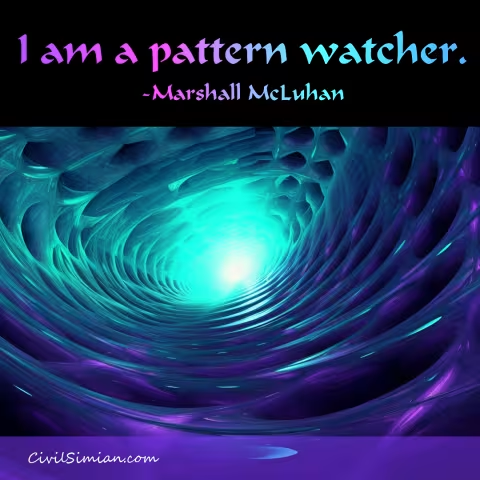
The role of the artist is to create an Anti-environment as a means of perception and adjustment.
Every change in the social order, every revolution in property relations, is the necessary consequence of the creation of new forces of production which no longer fit into the old property relations. Private property has not always existed. When, towards the end of the Middle Ages, there arose a new mode of production which could not be carried on under the then existing feudal and guild forms of property, this manufacture, which had outgrown the old property relations, created a new property form, private property. And for manufacture and the earliest stage of development of big industry, private property was the only possible property form; the social order based on it was the only possible social order.
CivilSimian.com created by AxiomaticPanic, CivilSimian, Kalokagathia