

7 months 4 weeks ago
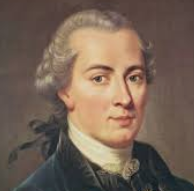
Even if there never have been actions arising from such pure sources, what is at issue here is not whether this or that happened; that, instead, reason by itself and independently of all appearances commands what ought to happen; that, accordingly, actions of which the world has perhaps so far given no example, and whose very practicability might be very much doubted by one who bases everything on experience, are still inflexibly commanded by reason ... because ... duty ... lies, prior to all experience, in the idea of a reason determing the will by means of apriori grounds.

6 months 3 weeks ago
If I were to be totally sincere, I would say that I do not know why I live and why I do not stop living. The answer probably lies in the irrational character of life which maintains itself without reason.

4 months 1 week ago
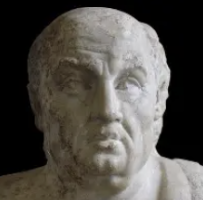
"Although," said he [Cato], "all the world has fallen under one man's sway, although Caesar's legions guard the land, his fleets the sea, and Caesar's troops beset the city gates, yet Cato has a way of escape; with one single hand he will open a wide path to freedom. This sword, unstained and blameless even in civil war, shall at last do good and noble service: the freedom which it could not give to his country it shall give to Cato!
▼
Source
source
De Providentia (On Providence), 2.10; translation by John W. Basore
8 months 2 weeks ago
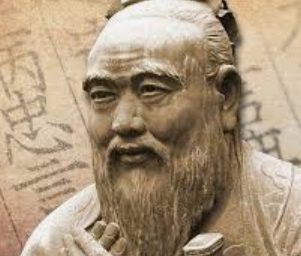
Guide the people by law, subdue them by punishment; they may shun crime, but will be void of shame. Guide them by example, subdue them by courtesy; they will learn shame, and come to be good.
6 months 3 weeks ago
I posit myself as rational, that is, as free. In doing so I have the representation of freedom. In the same undivided act I posit other free beings. Hence, I describe through my power of imagination a sphere of freedom, which these many separate beings divide amongst themselves. I do not ascribe to myself all the freedom which I have posited, because I must also posit other free beings, and must ascribe part of it to them. Thus, in appropriating freedom to myself, I at the same time restrict myself, by leaving freedom to others.
▼
Source
source
P. 7-8
6 months 2 weeks ago
Are not five sparrows sold for two farthings, and not one of them is forgotten before God? But even the very hairs of your head are all numbered. Fear not therefore: ye are of more value than many sparrows.
▼
Source
source
12:6-7
4 months 4 days ago
The Chinese believe that when there are too many policemen, there can be no individual liberty, when there are too many lawyers, there can be no justice, and when there are too many soldiers, there can be no peace.
▼
Source
source
Between Tears And Laughter (1943), p. 71.
7 months 3 weeks ago
Totalitarianism in power invariably replaces all first-rate talents, regardless of their sympathies, with those crackpots and fools whose lack of intelligence and creativity is still the best guarantee of their loyalty.
▼
Source
source
Part 3, Chapter 10
6 months 3 weeks ago
Lord, give me the capacity of never praying, spare me the insanity of all worship, let this temptation of love pass from me which would deliver me forever unto You. Let the void spread between my heart and heaven! I have no desire to people my deserts by Your presence, to tyrannize my nights by Your light, to dissolve my Siberias beneath Your sun.
6 months 1 week ago
Faith which does not doubt is dead faith.
▼
Source
source
La Agonía del Cristianismo (The Agony of Christianity)
4 months 1 week ago
Anyone who proposes to do good must not expect people to roll stones out of his way, but must accept his lot calmly if they even roll a few more upon it. A strength which becomes clearer and stronger through its experience of such obstacles is the only strength that can conquer them. Resistance is only a waste of strength.
▼
Source
source
p. 164
5 months 1 week ago
Religion holds the solution to all problems of human relationship, whether they are between parents and children or nation and nation. Sooner or later, man has always had to decide whether he worships his own power or the power of God. When threats force him to look at the limitations of his human power, he's often ready to seek his spiritual one. What we need is patience and awe of God's plan in human history!
▼
Source
source
In Quote: The Weekly Digest, vol. 38, no. 19 (8 November 1959) p. 13
7 months 3 weeks ago
Without effort and change, human life cannot remain good. It is not a finished Utopia that we ought to desire, but a world where imagination and hope are alive and active.

7 months 3 weeks ago
People say law but they mean wealth.
▼
Source
source
1841
6 months 3 weeks ago
It is comparatively easy for the philosopher in his closet to invent imaginary schemes of policy, and to shew how mankind, if they were without passions and without prejudices, might best be united in the form of a political community. But, unfortunately, men in all ages are the creatures of passions, perpetually prompting them to defy the rein, and break loose from the dictates of sobriety and speculation.
▼
Source
source
History of the Commonwealth of England. From its Commencement, to the Restoration of Charles the Second. Volume the Fourth. Oliver, Lord Protector (1828), p. 579
6 months 3 weeks ago
We always love . . . despite; and that "despite" covers an infinity.
6 months 3 weeks ago
Each of us is born with a share of purity, predestined to be corrupted by our commerce with mankind, by that sin against solitude.
6 months 2 weeks ago
Science is the knowledge of Consequences, and dependence of one fact upon another: by which, out of that we can presently do, we know how to do something else when we will, or the like, another time.
▼
Source
source
The First Part, Chapter 5, p. 21
6 months 2 weeks ago
Is it not altogether absurd that, under actual circumstances, the average man does not feel spontaneously, and without being preached at, an ardent enthusiasm for those sciences and the related ones of biology?... Every day furnishes a new invention which this average man utilises. Every day produces a new anesthetic or vaccine from which this average man benefits. ... How is it, nevertheless, that there is no sign of the masses imposing on themselves any sacrifice of money or attention in order to endow science more worthily? Far from this being the case, the post-war period has converted the man of science into a new social pariah.
▼
Source
source
Chap.IX: The Primitive and the Technical
6 months 3 weeks ago
We regret not having the courage to make such and such decision; we regret much more having made one - any one. Better no action than the consequences of an action.
7 months 1 week ago
That which exercises reason is more excellent than that which does not exercise reason; there is nothing more excellent than the universe, therefore the universe exercises reason.
▼
Source
source
As quoted in De Natura Deorum by Cicero, ii. 8.; iii. 9.
5 months 2 weeks ago
There is surely no contradiction in saying that a certain section of the community may be quite competent to protect the persons and property of the rest, yet quite unfit to direct our opinions, or to superintend our private habits.
▼
Source
source
p. 246
3 months 2 weeks ago
We are inclined to overemphasize the material influences in history. The Russians especially make this mistake. Intellectual values and ethnic influences, tradition and emotional factors are equally important. If this were not the case, Europe would today be a federated state, not a madhouse of nationalism.

6 months 3 weeks ago
Mere parsimony is not economy. Expense, and great expense, may be an essential part in true economy.

7 months 3 weeks ago
The only non-Christians who seemed to me really to know anything were the Romantics; and a good many of them were dangerously tinged with something like religion, even at times with Christianity. The upshot of it all could nearly be expressed in a perversion of Roland's great line in the Chanson: 'Christians are wrong, but all the rest are bores.'
7 months 2 weeks ago
Men have made an idol of luck as an excuse for their own thoughtlessness. Luck seldom measures swords with wisdom. Most things in life quick wit and sharp vision can set right.
6 months 3 weeks ago
Nor is there any embarrassment in the fact that we're ridiculous, isn't it true? For it's actually so, we are ridiculous, light-minded, with bad habits, we're bored, we don't know how to look, how to understand, we're all like that, all, you, and I, and they! Now, you're not offended when I tell you to your face that you're ridiculous? And if so, aren't you material? You know, in my opinion it's sometimes even good to be ridiculous, if not better: we can the sooner forgive each other, the sooner humble ourselves; we can't understand everything at once, we can't start right out with perfection! To achieve perfection, one must first begin by not understanding many things! And if we understand too quickly, we may not understand well. This I tell you, you, who have already been able to understand. .. and not understand ... so much. I'm not afraid for you now.
▼
Source
source
Part 4, Chapter ?
7 months 3 weeks ago
Opinion is like a pendulum and obeys the same law. If it goes past the centre of gravity on one side, it must go a like distance on the other; and it is only after a certain time that it finds the true point at which it can remain at rest.
▼
Source
source
Vol. 2 "Further Psychological Observations" as translated in Essays and Aphorisms (1970), as translated by R. J. Hollingdale

5 months 2 weeks ago
To teach virtue we must educate the emotions, and this means learning "what to feel" in the various circumstances that prompt them.
▼
Source
source
"Knowledge and Feeling" (p. 37)
7 months 3 weeks ago
Epicurus, the great teacher of happiness, has correctly and finely divided human needs into three classes. First there are the natural and necessary needs which, if they are not satisfied, cause pain. Consequently, they are only victus et amictus [food and clothing] and are easy to satisfy. Then we have those that are natural yet not necessary, that is, the needs for sexual satisfaction. ... These needs are more difficult to satisfy. Finally, there are those that are neither natural nor necessary, the needs for luxury, extravagance, pomp, and splendour, which are without end and very difficult to satisfy.
▼
Source
source
E. Payne, trans. (1974) Vol. 1, p. 346
5 months 2 weeks ago
All of us need an identity which unites us with our neighbours, our countrymen, those people who are subject to the same rules and the same laws as us, those people with whom we might one day have to fight side by side to protect our inheritance, those people with whom we will suffer when attacked, those people whose destinies are in some way tied up with our own.
▼
Source
source
Rivers of Blood BBC2 documentary
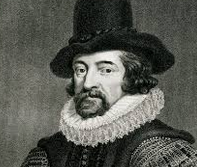
8 months 5 days ago
I bequeath my soul to God (...). My body to be buried obscurely. For my name and memory, I leave it to men's charitable speeches, and to foreign nations, and the next age.
▼
Source
source
His Will, 1626
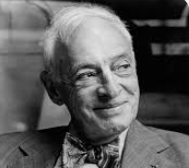
5 months 2 weeks ago
In an age of enormities, the emotions are naturally weakened. We are continually called upon to have feelings - about genocide, for instance, or about famine or the blowing up of passenger planes - and we are all aware that we are incapable of reacting appropriately. A guilty consciousness of emotional inadequacy or impotence makes people doubt their own human weight.
▼
Source
source
"The Distracted Public" (1990), p. 156
6 months 2 weeks ago
But Aversion wee have for things, not only which we know have hurt us; but also that we do not know whether they will hurt us, or not.
▼
Source
source
The First Part, Chapter 6, p. 24
6 months 2 weeks ago
As also the great number of Corporations; which are as it were many lesser Common-wealths in the bowels of a greater, like wormes in the entrayles of a natural man.
▼
Source
source
The Second Part, Chapter 29, p. 174
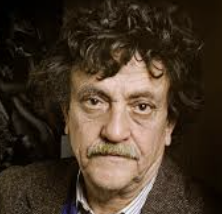
5 months 3 weeks ago
What should young people do with their lives today? Many things, obviously. But the most daring thing is to create stable communities in which the terrible disease of loneliness can be cured.
▼
Source
source
Commencement Address to Hobart and William Smith Colleges, May 26, 1974
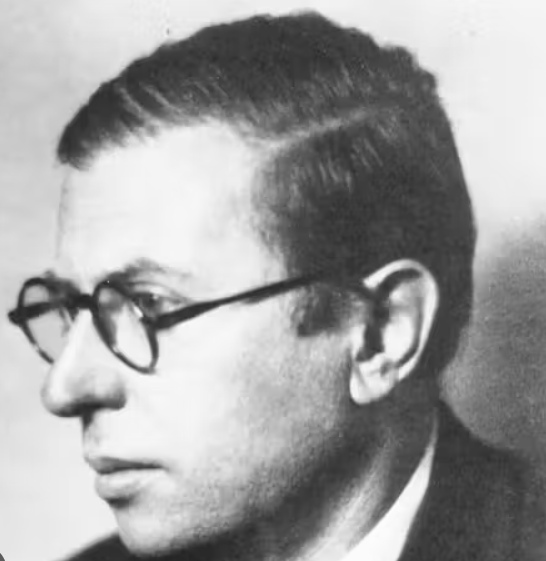
7 months 3 weeks ago
I know nothing, I am neither woman nor girl; I have been living in a dream and when someone kissed me, it made me want to laugh. Now I am here before you, it seems as though I have just awakened and it is morning.
▼
Source
source
Act 6, sc. 2
4 months 3 weeks ago
The old form of trade union, which was born in the nineteenth century and aimed primarily at negotiating wages for a specific trade is no longer sufficient. First of all, as we have been arguing, the old trade unions are not able to represent the unemployed, the poor, or even the mobile and flexible post-Fordist workers with short term contracts, all of whom participate actively in social production and increase social wealth. Second, the old unions are divided according to the various products and tasks defined in the heyday of industrial production - a miners' union, a pipefitters' union, a machinists' union and so forth. Today, insofar as the conditions and the relations of labor are becoming common, these traditional divisions (or even newly defined divisions) no longer make sense and serve only as an obstacle. Finally the old unions have become purely economic, not political, organization.
▼
Source
source
136
3 months 3 weeks ago
Let what will be said or done, preserve your sang-froid immovably, and to every obstacle, oppose patience, perseverance, and soothing language.
▼
Source
source
Letter to William Short
4 months 3 weeks ago
Woman is degraded and made to believe that nature destined her exclusively to menial domestic labors, which in the combined order will be so abridged as to be performed without oppression to either sex.
▼
Source
source
The Theory of Social Organization
4 months 1 week ago
That most knowing of persons - gossip.
▼
Source
source
Line 1.
6 months 3 weeks ago
Pure mathematics is religion.
CivilSimian.com created by AxiomaticPanic, CivilSimian, Kalokagathia