


4 months 2 weeks ago
Consider the great elements of human enjoyment, the attainments and possessions that exalt man's life to its present height, and see what part of these he owes to institutions, to Mechanism of any kind; and what to the instinctive, unbounded force, which Nature herself lent him.
6 months 2 weeks ago
All forms of tampering with human beings, getting at them, shaping them against their will to your own pattern, all thought control and conditioning is, therefore, a denial of that in men which makes them men and their values ultimate.
6 months 1 week ago
What is it that distinguishes man from animals? It is not his upright posture. That was present in the apes long before the brain began to develop. Nor is it the use of tools. It is something altogether new, a previously unknown quality: self-awareness. Animals, too, have awareness. They are aware of objects; they know this is one thing and that another. But when the human being as such was born he had a new and different consciousness, a consciousness of himself; he knew that he existed and that he was something different, something apart from nature, apart from other people, too. He experienced himself. He was aware that he thought and felt. As far as we know, there is nothing analogous to this anywhere in the animal kingdom. That is the specific quality that makes human beings human.
▼
Source
source
Affluence and Ennui in Our Society in For the Love of Life (1986) translated by Robert and Rita Kimber
7 months 3 weeks ago
The trail of the human serpent is thus over everything.
▼
Source
source
Lecture II, What Pragmatism Means

7 months ago
We are far more liable to catch the vices than the virtues of our associates.
▼
Source
source
As quoted in Thesaurus of Epigrams: A New Classified Collection of Witty Remarks, Bon Mots and Toasts (1942) by Edmund Fuller
7 months 3 weeks ago
As if there could be true stories: things happen in one way, and we retell them in the opposite way.

7 months 3 weeks ago
United States! the ages plead, - Present and Past in under-song, - Go put your creed into your deed, Nor speak with double tongue.
▼
Source
source
Ode, st. 5

8 months 1 week ago
There is no order between created being and non-being, but there is between created and uncreated being.
▼
Source
source
q. 7, art. 9, ad 8

7 months 3 weeks ago
You will have seen that my brother died suddenly in Marseilles. I inherit from him a title, but not a penny of money, as he was bankrupt. A title is a great nuisance to me, and I am at a loss what to do, but at any rate I do not wish it employed in connection with any of my literary work. There is, so far as I know, only one method of getting rid of it, which is to be attainted of high treason, and this would involve my head being cut off on Tower Hill. This method seems to me perhaps somewhat extreme...
▼
Source
source
Letter to W. W. Norton, 11 March, 1931

3 months 3 weeks ago
They have retired into the Judiciary as a stronghold. There the remains of federalism are to be preserved and fed from the Treasury; and from that battery all the works of republicanism are to be beaten down and erased.
▼
Source
source
Letter to J. Dickinson
7 months 4 weeks ago
Lands for the purposes of pleasure and magnificence, parks, gardens, public walks, &c. possessions which are every where considered as causes of expence, not as sources of revenue, seem to be the only lands which, in a great and civilized monarchy, ought to belong the crown.
▼
Source
source
Chapter II, Part I, p. 891.
7 months 4 weeks ago
The difference between the most dissimilar characters, between a philosopher and a common street porter, for example, seems to arise not so much from nature, as from habit, custom, and education.
▼
Source
source
Chapter II, p. 17.
5 months 3 weeks ago
When the ricochets of atomic billiards chance to put together an object that has a certain, seemingly innocent property, something momentous happens in the universe. That property is an ability to self-replicate; that is, the object is able to use the surrounding materials to make exact copies of itself, including replicas of such minor flaws in copying as may occasionally arise. What will follow from this singular occurrence, anywhere in the universe, is Darwinian selection and hence the baroque extravaganza that, on this planet, we call life. Never were so many facts explained by so few assumptions. Not only does the Darwinian theory command superabundant power to explain. Its economy in doing so has a sinewy elegance, a poetic beauty that outclasses even the most haunting of the world's origin myths.
▼
Source
source
Preface
6 months 1 week ago
I hope I shall never live to see Anarchism become thoroughly respectable, for then I shall have to look for a new ideal.
▼
Source
source
Letter to Helen Keller (1916), published by "The American Foundation for the Blind"

6 months 2 weeks ago
The Superego, in censoring the unconscious and in implanting conscience, also censors the censor.
▼
Source
source
p. 76
7 months 3 weeks ago
If we are uncritical we shall always find what we want: we shall look for, and find, confirmations, and we shall look away from, and not see, whatever might be dangerous to our pet theories. In this way it is only too easy to obtain what appears to be overwhelming evidence in favor of a theory which, if approached critically, would have been refuted.
▼
Source
source
The Poverty of Historicism (1957) Ch. 29 The Unity of Method
8 months 3 weeks ago
Generals are usually a conservative force who can be relied on to oppose social change.
7 months 3 weeks ago
... the fight against suffering must be considered a duty, while the right to care for the happiness of others must be considered a privilege confined to the close circle of their friends. ... Pain, suffering, injustice, and their prevention, these are the eternal problems of public morals, the 'agenda' of public policy ...
▼
Source
source
Vol. 2, Ch. 24 "Oracular Philosophy and the Revolt against Reason"
7 months 3 weeks ago
Malthus's population principle was quite as much a banner, and a point of union among us, as any opinion specially belonging to Bentham. This great doctrine, originally brought forward as an argument against the indefinite improvability of human affairs, we took up with ardent zeal in the contrary sense, as indicating the sole means of realizing that improvability by securing full employment at high wages to the whole labouring population through a voluntary restriction of the increase of their numbers.
▼
Source
source
(p. 105)
7 months 3 weeks ago
Death is not an event in life: we do not live to experience death. If we take eternity to mean not infinite temporal duration but timelessness, then eternal life belongs to those who live in the present. Our life has no end in just the way in which our visual field has no limits.
4 months 2 weeks ago
I am more and more convinced that poetry is the universal possession of mankind, revealing itself everywhere and at all times in hundreds and hundreds of men. ... I therefore like to look about me in foreign nations, and advise everyone to do the same. National literature is now a rather unmeaning term; the epoch of world literature is at hand, and everyone must strive to hasten its approach.
▼
Source
source
Conversations with Eckermann
6 months 1 week ago
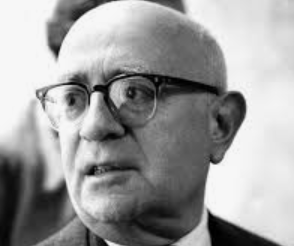
The phrase, the world wants to be deceived, has become truer than had ever been intended. People are not only, as the saying goes, falling for the swindle; if it guarantees them even the most fleeting gratification they desire a deception which is nonetheless transparent to them. They force their eyes shut and voice approval, in a kind of self-loathing, for what is meted out to them, knowing fully the purpose for which it is manufactured. Without admitting it they sense that their lives would be completely intolerable as soon as they no longer clung to satisfactions which are none at all.
▼
Source
source
Section 10
3 months 3 weeks ago
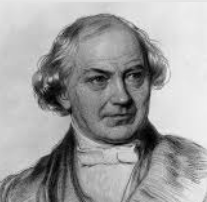
Coexistent polarities are fundamentally identical.
8 months 4 days ago
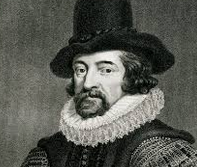
It is not the pleasure of curiosity, nor the quiet of resolution, nor the raising of the spirit, nor victory of wit, nor faculty of speech that are the true ends of knowledge, but it is a restitution and reinvesting, in great part, of man to the sovereignty and power, for whensoever he shall be able to call the creatures by their true names, he shall again command them.
▼
Source
source
Valerius Terminus: Of the Interpretation of Nature (ca. 1603), in Works, Vol. I, p. 83; The Works of Francis Bacon (1819), Vol. 2, p. 133
7 months 3 weeks ago
We plant trees, we build stone houses, we redeem the waste, we make prospective laws, we found colleges and hospitals, for remote generations.
7 months 3 weeks ago
It is the same thing: killing, dying, it is the same thing: one is just as alone in each. He is lucky, he will only die once. As for me, for ten days I have been killing him at every minute. Hugo to Jessica, on his plans to kill.
▼
Source
source
Hoederer, Act 5, sc. 2
8 months 3 weeks ago
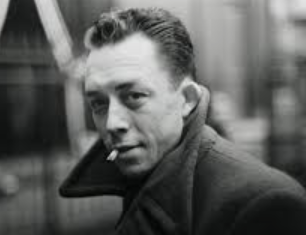
Nothing can discourage the appetite for divinity in the heart of man.
6 months 1 week ago
The Kropotkins, the Perovskayas, the Breshkovskayas, and hosts of others repudiated wealth and station and refused to serve King Mammon. They went among the people, not to lift them up but themselves to be lifted up, to be instructed, and in return to give themselves wholly to the people. That accounts for the heroism, the art, the literature of Russia, the unity between the people, the mujik and the intellectual. That to some extent explains the literature of all European countries, the fact that the Strindbergs, the Hauptmanns, the Wedekinds, the Brieux, the Mirbeaus, the Steinlins and Rodins have never dissociated themselves from the people.
6 months 3 weeks ago
Nothing less will content me, than whole America.
7 months 2 weeks ago
Being asked what learning is the most necessary, he replied, "How to get rid of having anything to unlearn.
▼
Source
source
" § 7
7 months 4 weeks ago
People of the same trade seldom meet together, even for merriment and diversion, but the conversation ends in a conspiracy against the public, or in some contrivance to raise prices. It is impossible indeed to prevent such meetings, by any law which either could be executed, or would be consistent with liberty or justice. But though the law cannot hinder people of the same trade from sometimes assembling together, it ought to do nothing to facilitate such assemblies; much less to render them necessary.
▼
Source
source
Chapter X, Part II, p. 152.
4 months 1 week ago
Everything over which I have might that cannot be torn from me remains my property; well, then let might decide about property, and I will expect everything from my might! Alien might, might that I leave to another, makes me an owned slave: then let my own might make me an owner. Let me then withdraw the might that I have conceded to others out of ignorance regarding the strength of my own might! Let me say to myself, what my might reaches to is my property; and let me claim as property everything that I feel myself strong enough to attain, and let me extend my actual property as far as I entitle, that is, empower, myself to take.
▼
Source
source
Cambridge 1995, p. 227, 228
6 months 4 days ago
Organizations are systems of coordinated action among individuals and groups whose preferences, information, interests, or knowledge differ. Organization theories describe the delicate conversion of conflict into cooperation, the mobilization of resources, and the coordination of effort that facilitate the joint survival of an organization and its members.
▼
Source
source
Simon (1993. p. 2); Cited in Mario Catalani, Giuseppe F. Clerico (1996) Decision making structures. p. 1.
5 months 1 week ago
The value of the goal lies in the goal itself; and therefore the goal cannot be attained unless it is pursued for its own sake.
▼
Source
source
Vol. 12
5 months 2 weeks ago
It is surely delightful, Sir, to look forward to that period when a series of liberal and prudent measures shall have delivered islands, so highly favoured by the bounty of Providence, from the curse inflicted on them by the frantic rapacity of man. Then the peasant of the Antilles will no longer crawl in listless and trembling dejection round a plantation from whose fruits he must derive no advantage, and a hut whose door yields him no protection; but, when his cheerful and voluntary labour is performed, he will return with the firm step and erect brow of a British citizen from the field which is his freehold to the cottage which is his castle.
▼
Source
source
Speech to a meeting of the Anti-Slavery Society held in Freemasons' Tavern (25 June 1824), quoted in Report of the Committee of the Society for the Mitigation and Gradual Abolition of Slavery Throughout the British Dominions, Volume I (1824), p. 77

6 months 2 weeks ago
... classic philosophy maintained that change, and consequently time, are marks of inferior reality, holding that true and ultimate reality is immutable and eternal. Human reasons, all too human, have given birth to the idea that over and beyond the lower realm of things that shift like the sands on the seashore there is the kingdom of the unchanging, of the complete, the perfect. The grounds for the belief are couched in the technical language of philosophy, but the grounds for the cause is the heart's desire for surcease from change, struggle, and uncertainty. The eternal and immutable is the consummation of mortal man's quest for certainty.
7 months 3 weeks ago
The only thing we are naturally afraid of is pain, or loss of pleasure. And because these are not annexed to any shape, colour, or size of visible objects, we are frighted of none of them, till either we have felt pain from them, or have notions put into us that they will do us harm.
▼
Source
source
Sec. 115

6 months 3 weeks ago
One of the biggest paradoxes of our world: memories vanish when we want to remember, but fix themselves permanently in the mind when we want to forget.
6 months 3 weeks ago
I'd rather offer my life as a sacrifice than be necessary to anything.
6 months 3 weeks ago
We understand God by everything in ourselves that is fragmentary, incomplete, and inopportune.
6 months 3 weeks ago
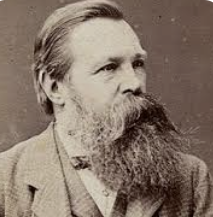
The class of big capitalists, who, in all civilized countries, are already in almost exclusive possession of all the means of subsistance and of the instruments (machines, factories) and materials necessary for the production of the means of subsistence. This is the bourgeois class, or the bourgeoisie.
6 months 1 week ago
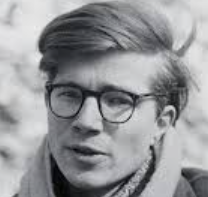
Man should possess an infinite appetite for life. It should be self-evident to him, all the time, that life is superb, glorious, endlessly rich, infinitely desirable. At present, because he is in a midway position between the brute and the truly human, he is always getting bored, depressed, weary of life. He has become so top-heavy with civilisation that he cannot contact the springs of pure vitality. Control of the prefrontal cortex will change all of this. He will cease to cast nostalgic glances towards the womb, for he will realise that death is no escape. Man is a creature of life and the daylight; his destiny lies in total objectivity.
▼
Source
source
pp. 317-318
6 months 3 weeks ago
And now I ask, whether, with this map of misgovernment before me, I can suppose myself bound by my vote to continue, upon any principles of pretended public faith, the management of these countries in those hands? If I kept such a faith (which in reality is no better than a fides latronum) with what is called the Company, I must break the faith, the covenant, the solemn, original, indispensable oath, in which I am bound, by the eternal frame and constitution of things, to the whole human race.
▼
Source
source
Speech in the House of Commons on India (1 December 1783), quoted in The Parliamentary Register: Or, History of the Proceedings and Debates of the House of Commons, Volume XII (1782), p. 247
7 months 3 weeks ago
Change is one thing, progress is another.
7 months 3 weeks ago
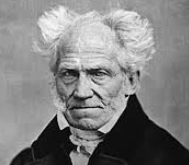
There are, first of all, two kinds of authors: those who write for the subject's sake, and those who write for writing's sake. The first kind have had thoughts or experiences which seem to them worth communicating, while the second kind need money and consequently write for money.
5 months 3 weeks ago
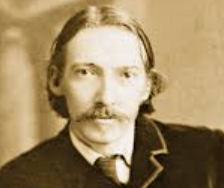
People trifle with love. Now, I deny that love is a strong passion. Fear is the strong passion; it is with fear that you must trifle, if you wish to taste the intensest joys of living.
▼
Source
source
The Suicide Club, Story of the Young Man with the Cream Tarts.
CivilSimian.com created by AxiomaticPanic, CivilSimian, Kalokagathia