
The correct relationship between the higher and lower classes, the appropriate mutual interaction between the two is, as such, the true underlying support on which the improvement of the human species rests. The higher classes constitute the mind of the single large whole of humanity; the lower classes constitute its limbs; the former are the thinking and designing part, the latter the executive part.
If, in my retirement to the humble station of a private citizen, I am accompanied with the esteem and approbation of my fellow citizens, trophies obtained by the blood-stained steel, or the tattered flags of the tented field, will never be envied. The care of human life and happiness, and not their destruction, is the first and only legitimate object of good government.
It is better to fight with a few good men against all the wicked, than with many wicked men against a few good men.
Fame and wealth without wisdom are unsafe possessions.
Of all things nothing exists that is not by its substance the offspring of ocean. But why will you have me tell this to the vulgar? Although better to have been shrouded in silence, it nevertheless has been spoken; at all events I declare it, although all men will not readily receive the same.
By abstaining from all definite content, whether as formal logic and theory of science or as the legend of Being beyond all beings, philosophy declared its bankruptcy regarding concrete social goals.
Principles of Earth Democracy, #10: Earth Democracy connects people in circles of care, cooperation, and compassion instead of dividing them through competition and conflict, fear and hatred. In the face of a world of greed, inequality, and overconsumption, Earth Democracy globalizes compassion, justice, and sustainability.
If you say that this is absurd, that we cannot be in love with everyone at once, I merely point out to you that, as a matter of fact, certain persons do exist with an enormous capacity for friendship and for taking delight in other people's lives; and that such person know more of truth than if their hearts were not so big. The vice of ordinary Jack and Jill affection is not its intensity, but its exclusions and its jealousies. Leave those out, and you see that the ideal I am holding up before you, however impracticable to-day, yet contains nothing intrinsically absurd.
I must interpret the life about me as I interpret the life that is my own. My life is full of meaning to me. The life around me must be full of significance to itself. If I am to expect others to respect my life, then I must respect the other life I see, however strange it may be to mine. And not only other human life, but all kinds of life: life above mine, if there be such life; life below mine, as I know it to exist. Ethics in our Western world has hitherto been largely limited to the relations of man to man. But that is a limited ethics. We need a boundless ethics which will include the animals also.
The Superior Man has nothing to compete for. But if he must compete, he does it in an archery match, wherein he ascends to his position, bowing in deference. Descending, he drinks (or has [the winner] drink) the ritual cup. Note: Bowing is a courtesy for the host who invites him as well drinking a cup.
All that Mankind has done, thought, gained or been: it is lying as in magic preservation in the pages of Books.
The problem with all this--the problem I discussed in the first lecture--is that if the causes/background conditions distinction is fundamentally subjective, not descriptive of the world in itself, then current philosophical explanations of the metaphysical nature of reference are bankrupt.
The new order contradicts reason so fundamentally that reason does not dare to doubt it. Even the consciousness of oppression fades. The more incommensurate become the concentration of power and the helplessness of the individual, the more difficult for him to penetrate the human origin of his misery.
The noble simplicity in the works of nature only too often originates in the noble shortsightedness of him who observes it.
We are obliged to regard many of our original minds as crazy - at least until we have become as clever as they are.
Every man is a new method.
In principle and in practice, in a right track and in a wrong one, the rarest of all human qualities is consistency.
All men are in need of help and depend on one another. Human solidarity is the necessary condition for the unfolding of any one individual.
Agesilaus was very fond of his children; and it is reported that once toying with them he got astride upon a reed as upon a horse, and rode about the room; and being seen by one of his friends, he desired him not to speak of it till he had children of his own.
For Genet, Beauty will be the offensive weapon that will enable him to beat the just on their own ground: that of value.
Crime in full glory consolidates authority by the sacred fear it inspires.
Many things about our bodies would not seem to us so filthy and obscene if we did not have the idea of nobility in our heads.
We understand God by everything in ourselves that is fragmentary, incomplete, and inopportune.
Is God willing to prevent evil, but not able? Then he is not omnipotent. Is he able, but not willing? Then he is malevolent. Is he both able and willing? Then whence cometh evil? Is he neither able nor willing? Then why call him God?
Life after all is made up of eating and sleeping, of meeting and saying good-by to friends, of reunions and farewell parties, of tears and laughter, of having a haircut once in two weeks, of watering a potted flower and watching one's neighbor fall off his roof.
Time passes quickly with lovers.
When the man governed by self-interest, the god of this world, does not renounce it but merely refines it by the use of reason and extends it beyond the constricting boundary of the present, he is represented (Luke XVI, 3-9) as one who, in his very person [as servant], defrauds his master [self- interest] and wins from him sacrifices in behalf of "duty."
The goal of maximizing the welfare of all may be better achieved by an ethic that accepts our inclinations and harnesses them so that, taken as a whole, the system works to everyone's advantage.
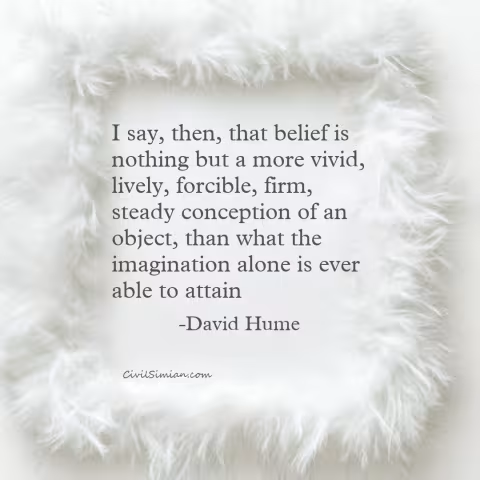
To believe is to know you believe, and to know you believe is not to believe.
I am responsible for everything ... except for my very responsibility, for I am not the foundation of my being. Therefore everything takes place as if I were compelled to be responsible. I am abandoned in the world ... in the sense that I find myself suddenly alone and without help, engaged in a world for which I bear the whole responsibility without being able, whatever I do, to tear myself away from this responsibility for an instant.
I should like to believe my people's religion, which was just what I could wish, but alas, it is impossible. I have really no religion, for my God, being a spirit shown merely by reason to exist, his properties utterly unknown, is no help to my life. I have not the parson's comfortable doctrine that every good action has its reward, and every sin is forgiven. My whole religion is this: do every duty, and expect no reward for it, either here or hereafter.
Freedom is the absolute right of every human being to seek no other sanction for his actions but his own conscience, to determine these actions solely by his own will, and consequently to owe his first responsibility to himself alone.
This is how I recognize an authentic poet: by frequenting him, living a long time in the intimacy of his work, something changes in myself, not so much my inclinations or my tastes as my very blood, as if a subtle disease had been injected to alter its course, its density and nature. To live around a true poet is to feel your blood run thin, to dream a paradise of anemia, and to hear, in your veins, the rustle of tears.
To expect, indeed, that the freedom of trade should ever be entirely restored in Great Britain, is as absurd as to expect that an Oceana or Utopia should never be established in it.
The newspaper is a corporate symbolist poem, environmental and invisible, as poem.
Yet its essence was the certitude that his life was not totally at the mercy of chance. Somehow, it was more important than that. This sense of power inside his head - which he could intensify by pulling a face and wrinkling up the muscles of his forehead - aroused a glow of optimism, an expectation of exciting events. He knew that for him, fate held something special in store.
Assume, provisionally at any rate, a utilitarian ethic. The abolitionist project follows naturally, in "our" parochial corner of Hilbert space at least. On its completion, if not before, we should aim to develop superintelligence to maximise the well-being of the fragment of the cosmos accessible to beneficent intervention. And when we are sure - absolutely sure - that we have done literally everything we can do to eradicate suffering elsewhere, perhaps we should forget about its very existence.
You must go to Mahometanism, to Buddhism, to the East, to the Sufis & Fakirs, to Pantheism, for the right growth of mysticism.
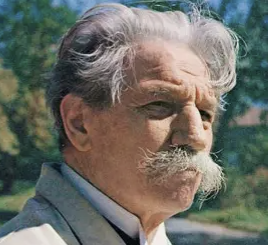
I'm not one of those who wants to stop Christian traditions. This is historically a Christian country. I'm a cultural Christian the same way as many of my friends call themselves cultural Jews or cultural Muslims. So, yes, I love singing carols along with everybody else. I'm not one of those who wants to purge our society of our Christian history.
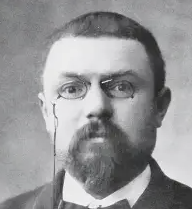
All happiness or unhappiness solely depends upon the quality of the object to which we are attached by love.
Making money is not without its value, but nothing is baser than to make it by wrong-doing.
The empirical research of the last fifteen years on the structure of large organizations seems to confirm the hypothesis of Herbert Simon that human cognitive limits are a basic limiting factor in determining organization structures .
What interest, zest, or excitement can there be in achieving the right way, unless we are enabled to feel that the wrong way is also a possible and a natural way, - nay, more, a menacing and an imminent way? And what sense can there be in condemning ourselves for taking the wrong way, unless we need have done nothing of the sort, unless the right way was open to us as well? I cannot understand the willingness to act, no matter how we feel, without the belief that acts are really good and bad.
But what can be the attraction of getting to know such a tiny section of nature thoroughly, while one leaves everything subtler and more complex shyly and timidly alone? Does the product of such a modest effort deserve to be called by the proud name of a theory of the universe? In my belief the name is justified; for the general laws on which the structure of theoretical physics is based claim to be valid for any natural phenomenon whatsoever. With them, it ought to be possible to arrive at the description, that is to say, the theory, of every natural process, including life, by means of pure deduction, if that process of deduction were not far beyond the capacity of the human intellect. The physicist's renunciation of completeness for his cosmos is therefore not a matter of fundamental principle.
How can even the lowest mind, if he reflects at all the marvels of this earth and sky, the brilliant fashioning of plants and animals, remain blind to the fact that this wonderful world with its settled order must have a maker to design, determine and direct it?
CivilSimian.com created by AxiomaticPanic, CivilSimian, Kalokagathia