

3 months 3 weeks ago
It is always necessary to call men back to history, which is the first master in politics, or more exactly the only master.
▼
Source
source
p. 120
6 months 5 days ago
It is a question whether, when we break a murderer on the wheel, we do not fall into the error a child makes when it hits the chair it has bumped into.
▼
Source
source
J 146


4 months 2 weeks ago
In the long run my observations have convinced me that some men, reasoning preposterously, first establish some conclusion in their minds which, either because of its being their own or because of their having received it from some person who has their entire confidence, impresses them so deeply that one finds it impossible ever to get it out of their heads. Such arguments in support of their fixed idea as they hit upon themselves or hear set forth by others, no matter how simple and stupid these may be, gain their instant acceptance and applause. On the other hand whatever is brought forward against it, however ingenious and conclusive, they receive with disdain or with hot rage - if indeed it does not make them ill. Beside themselves with passion, some of them would not be backward even about scheming to suppress and silence their adversaries.
▼
Source
source
p. 322
6 months 1 week ago
Modern empiricism has been conditioned in large part by two dogmas. One is a belief in some fundamental cleavage between truths which are analytic, or grounded in meanings independently of matters of fact, and truths which are synthetic, or grounded in fact. The other dogma is reductionism: the belief that each meaningful statement is equivalent to some logical construct upon terms which refer to immediate experience. Both dogmas, I shall argue, are ill-founded. One effect of abandoning them is, as we shall see, a blurring of the supposed boundary between speculative metaphysics and natural science. Another effect is a shift toward pragmatism.
▼
Source
source
"Two dogmas of Empiricism"
4 months 1 week ago
It is the quality of a great soul to scorn great things and to prefer that which is ordinary rather than that which is too great.
5 months 3 weeks ago
For man to be able to live he must either not see the infinite, or have such an explanation of the meaning of life as will connect the finite with the infinite.
▼
Source
source
Ch. 9
7 months 3 weeks ago
The idea that in order to get clear about the meaning of a general term one had to find the common element in all its applications has shackled philosophical investigation; for it has not only led to no result, but also made the philosopher dismiss as irrelevant the concrete cases, which alone could have helped him understand the usage of the general term.
▼
Source
source
p. 19
8 months 4 days ago
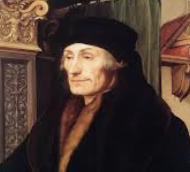
I have no patience with those who say that sexual excitement is shameful and that venereal stimuli have their origin not in nature, but in sin. Nothing is so far from the truth. As if marriage, whose function cannot be fulfilled without these incitements, did not rise above blame. In other living creatures, where do these incitements come from? From nature or from sin? From nature, of course. It must borne in mind that in the apetites of the body there is very little difference between man and other living creatures. Finally, we defile by our imagination what of its own nature is fair and holy. If we were willing to evaluate things not according to the opinion of the crowd, but according to nature itself, how is it less repulsive to eat, chew, digest, evacuate, and sleep after the fashion of dumb animals, than to enjoy lawful and permitted carnal relations?
▼
Source
source
In Praise of Marriage (1519), in Erasmus on Women (1996) Erika Rummel
4 months 2 weeks ago
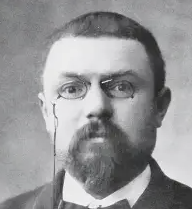
Roemer used eclipses of the satellites of Jupiter, and sought how much the event fell behind its prediction. But... this prediction is made... by... astronomic laws; for instance Newton's... The velocity of light... is adopted, such that the astronomic laws compatible with this value may be as simple as possible.
5 months 4 weeks ago
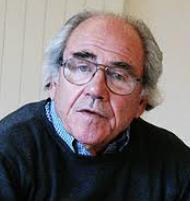
For it is with the same imperialism that present-day simulators try to make the real, all of the real, coincide with their simulation models.
▼
Source
source
"The Precession of Simulacra," pp. 1-2
7 months 3 weeks ago
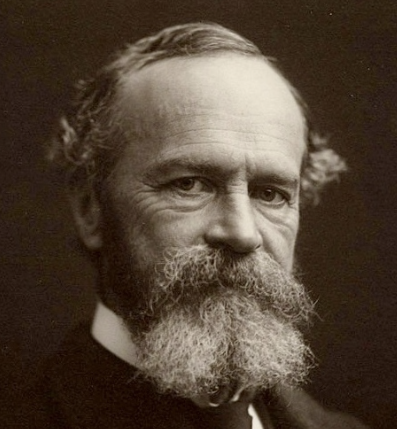
My thinking is first and last and always for the sake of my doing.
▼
Source
source
Sometimes paraphrased as "Thinking is for doing", perhaps originally by S.T. Fiske (1992) Ch. 22
8 months 4 weeks ago
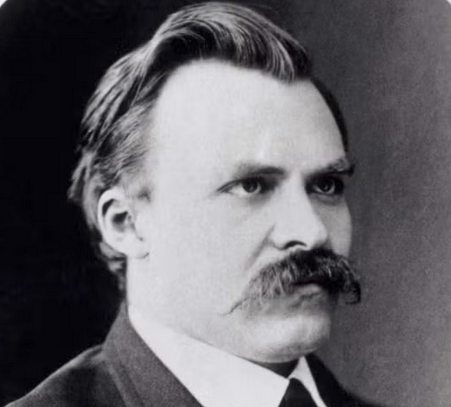
He who humbleth himself wants to be exalted.
7 months 4 weeks ago
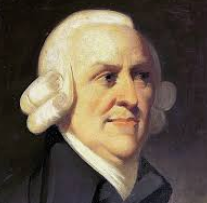
But bounty and hospitality very seldom lead to extravagance; though vanity almost always does.
▼
Source
source
Chapter III, Part V, p. 987.
6 months 1 week ago
I could see clearly that this problem could only be solved on the individual and personal level; political revolt is irrelevant. Both Camus and Sartre had been neatly hog-tied by their earlier radicalism. Camus came to see that rebellion is a political roundabout that revolves back to the same old tyranny; too ashamed to admit that he had outgrown his leftism, he found himself in an intellectual cul-de-sac. Sartre accused Camus of being a reactionary; but he paid for his own refusal to reexamine his political convictions by congealing into a grotesque attitude of permanent indignation, shaking his fist at some abstract Authority. Where politics is concerned, he seemed determined to be guided by his emotions.
▼
Source
source
p. 101
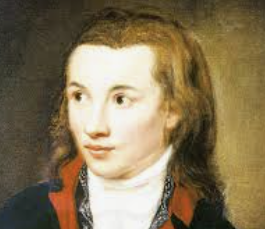
6 months 3 weeks ago
Pure mathematics is religion.
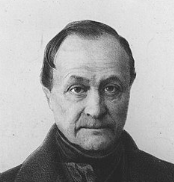
7 months ago
The dead govern the living.
▼
Source
source
Le Catéchisme positiviste
8 months 4 weeks ago
A thinker sees his own actions as experiments and questions as attempts to find out something. Success and failure are for him answers above all.

4 months 2 weeks ago
Had there not been a natural goodness and indestructible force in my father, I see not how be could have bodied himself forth from these mean impediments. I suppose good precepts were not wanting. There was the Bible to read. Old John Orr, the schoolmaster, used from time to time to lodge with them; be was religious and enthusiastic (though in practice irregular with drink). In my grandfather, also, there seems to have been a certain geniality; for instance, he and a neighbor, Thomas Hogg, read "Anson's Voyages;" also tho "Arabian Nights," for which latter my father, armed with zealous conviction, scrupled not to censure them openly. By one means and another, at an early age he had acquired principles, lights that not only flickered, but shone steadily to guide his way.
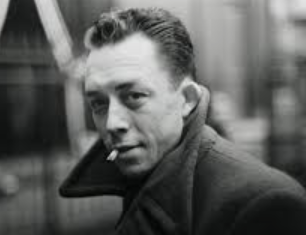
8 months 3 weeks ago
Nothing is harder to understand than a symbolic work. A symbol always transcends the one who makes use of it and makes him say in reality more than he is aware of expressing.
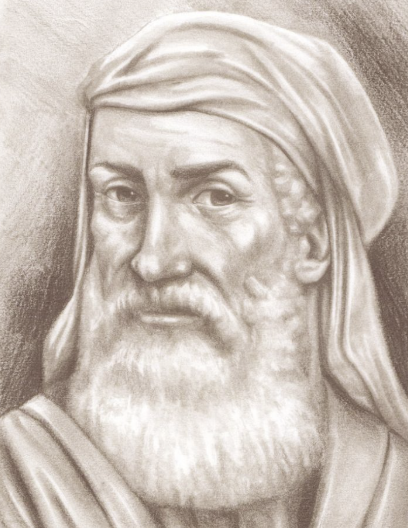
6 months 1 week ago
Not to be loved is a misfortune, but it is an insult to be loved no longer.
▼
Source
source
No. 3. (Zachi writing to Usbek)
5 months 3 weeks ago
There is no penalty attached to a lover's oath.
▼
Source
source
Maxim 23
6 months 3 weeks ago
The dynamic principle of fantasy is play, a characteristic also of the child, and as such it appears inconsistent with the principle of serious work. But without this playing with fantasy no creative work has ever yet come to birth. The debt we owe to the play of imagination is incalculable. It is therefore short-sighted to treat fantasy, on account of its risky or unacceptable nature, as a thing of little worth.
▼
Source
source
Ch. 1, p. 82
8 months 4 weeks ago
It is not enough to prove something, one has also to seduce or elevate people to it. That is why the man of knowledge should learn how to speak his wisdom: and often in such a way that it sounds like folly!
7 months 4 weeks ago
Civil government, so far as it is instituted for the security of property, is in reality instituted for the defence of the rich against the poor, or of those who have some property against those who have none at all.
▼
Source
source
Chapter I, Part II, 775.
7 months 4 weeks ago
There is nothing in any object, consider'd in itself, which can afford us a reason for drawing a conclusion beyond it; even after the observation of the frequent or constant conjunction of objects, we have no reason to draw any inference concerning any object beyond those of which we have had experience.
▼
Source
source
Part 3, Section 12
6 months 3 weeks ago
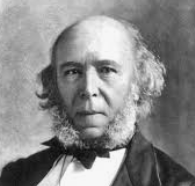
We too often forget that not only is there "a soul of goodness in things evil," but very generally also, a soul of truth in things erroneous.
▼
Source
source
Pt. I, The Unknowable; Ch. I, Religion and Science; quoting from "There is some soul of goodness in things evil / Would men observingly distil it out", William Shakespeare, Henry V, act iv. sc. i

3 months 3 weeks ago
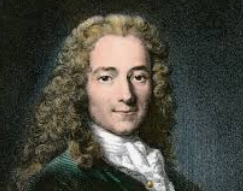
I believe the Indian then to be in body and mind equal to the white man.
5 months 1 week ago
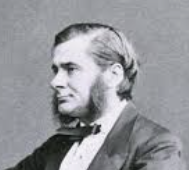
I adopt Mr. Darwin's hypothesis, therefore, subject to the production of proof that physiological species may be produced by selective breeding; just as a physical philosopher may accept the undulatory theory of light, subject to the proof of the existence of the hypothetical ether; or as the chemist adopts the atomic theory, subject to the proof of the existence of atoms; and for exactly the same reasons, namely, that it has an immense amount of primâ facie probability: that it is the only means at present within reach of reducing the chaos of observed facts to order; and lastly, that it is the most powerful instrument of investigation which has been presented to naturalists since the invention of the natural system of classification and the commencement of the systematic study of embryology.
▼
Source
source
Ch.2, p. 128
8 months 2 weeks ago
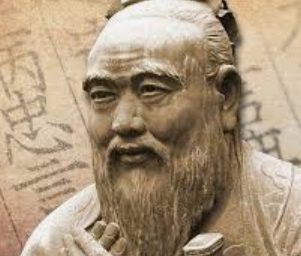
Benevolence is the characteristic element of humanity.
3 months 3 weeks ago
The various philosophies of life presented themselves as a conquest of materialism, or in any case, they readily claimed it. That does not change anything: their valuations, revaluations, and explanations of disvalue have been emptied into the over-all secularization stream, where they have only hastened the tendency to unlearn, which is a neutralizing process, after all.
6 months 3 weeks ago
Dying people often become childish.
▼
Source
source
Act II.
6 months 5 days ago
What I do not like about our definitions of genius is that there is in them nothing of the day of judgment, nothing of resounding through eternity and nothing of the footsteps of the Almighty.
▼
Source
source
E 92
6 months 2 weeks ago
I have said these things to you so that by means of me you may have peace. In the world you will have tribulation, but take courage! I have conquered the world.
▼
Source
source
16:33, NWT
6 months 3 weeks ago
It appears to me impossible that I should cease to exist, or that this active, restless spirit, equally alive to joy and sorrow, should only be organised dust - ready to fly abroad the moment the spring snaps, or the spark goes out which kept it together. Surely something resides in this heart that is not perishable, and life is more than a dream.

7 months 2 weeks ago
But let there be no misunderstanding: it is not that a real man, the object of knowledge, philosophical reflection or technological intervention, has been substituted for the soul, the illusion of theologians. The man described for us, whom we are invited to free, is already in himself the effect of a subjection more profound than himself. A 'soul' inhabits him and brings him to existence, which is itself a factor in the mastery that power exercises over the body. The soul is the effect and instrument of a political anatomy; the soul is the prison of the body.
6 months 1 week ago
We should have with each person the relationship of one conception of the universe to another conception of the universe, and not to a part of the universe.
▼
Source
source
p. 129
4 months 2 weeks ago
A well-written Life is almost as rare as a well-spent one.
▼
Source
source
Richter (1827).
3 months 3 weeks ago
In the middle ages of Christianity opposition to the State opinions was hushed. The consequence was, Christianity became loaded with all the Romish follies. Nothing but free argument, raillery & even ridicule will preserve the purity of religion.
▼
Source
source
Notes on Religion (October 1776), published in The Works of Thomas Jefferson in Twelve Volumes, Federal Edition, Paul Leicester Ford, ed., New York: G. P. Putnam's Sons, 1904, Vol. 2, p. 256
8 months 4 days ago
For man seeketh in society comfort, use, and protection: and they be three wisdoms of divers natures, which do often sever: wisdom of the behaviour, wisdom of business, and wisdom of state.
▼
Source
source
Book II, xxiii
12 months 1 day ago
Think about the strangeness of today's situation. Thirty, forty years ago, we were still debating about what the future will be: communist, fascist, capitalist, whatever. Today, nobody even debates these issues. We all silently accept global capitalism is here to stay. On the other hand, we are obsessed with cosmic catastrophes: the whole life on earth disintegrating, because of some virus, because of an asteroid hitting the earth, and so on. So the paradox is, that it's much easier to imagine the end of all life on earth than a much more modest radical change in capitalism.

6 months 3 weeks ago
The initial revelation of any monastery: everything is nothing. Thus begin all mysticisms. It is less than one step from nothing to God, for God is the positive expression of nothingness.
7 months 4 weeks ago
All wars are accordingly so many attempts (not in the intention of man, but in the intention of Nature) to establish new relations among states, and through the destruction or at least the dismemberment of all of them to create new political bodies, which, again, either internally or externally, cannot maintain themselves and which must thus suffer like revolutions; until finally, through the best possible civic constitution and common agreement and legislation in external affairs, a state is created which, like a civic commonwealth, can maintain itself automatically.
▼
Source
source
Seventh Thesis
4 months 2 weeks ago
The principal aim of mathematical education is to develop certain faculties of the mind, and among these intuition is not the least precious. It is through it that the mathematical world remains in touch with the real world, and even if pure mathematics could do without it, we should still have to have recourse to it to fill up the gulf that separates the symbol from reality.
▼
Source
source
Part II. Ch. 2 : Mathematical Definitions and Education, p. 128
3 months 2 weeks ago
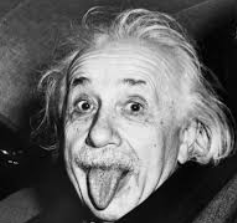
The most beautiful fate of a physical theory is to point the way to the establishment of a more inclusive theory, in which it lives on as a limiting case.

7 months 1 week ago
If there be light, then there is darkness; if cold, heat; if height, depth; if solid, fluid; if hard, soft; if rough, smooth; if calm, tempest; if prosperity, adversity; if life, death.
▼
Source
source
As quoted in Bibliotheca Sacra and Theological Review by ? Vol. IV, No. 8 (1847) by Dallas Theological Seminary, p. 107
CivilSimian.com created by AxiomaticPanic, CivilSimian, Kalokagathia