


8 months 4 days ago
The world thought well of my schoolmaster guardian, because he was neither a liar, nor a scamp, nor a gambler; but he was coarse, avaricious, and ignorant; he knew nothing beyond the confused lessons which he taught to his classes. He imagined that in forcing a youth to become a monk he would be offering a sacrifice acceptable to God. He used to boast of the many victims which he devoted annually to Dominic and Francis and Benedict.
▼
Source
source
As quoted in Life and Letters of Erasmus: Lectures Delivered at Oxford 1893-4 (1899) by James Anthony Froude

3 months 3 weeks ago
It is not enough for a wise man to study nature and truth; he should dare state truth for the benefit of the few who are willing and able to think.



6 months 3 weeks ago
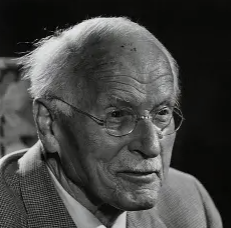
We are so captivated by and entangled in our subjective consciousness that we have forgotten the age-old fact that God speaks chiefly through dreams and visions.
▼
Source
source
The Symbolic Life (1953); also in Man and His Symbols
7 months 3 weeks ago
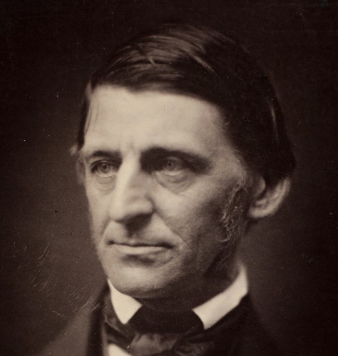
There are men who astonish and delight, men who instruct and guide. Some men's words I remember so well that I must often use them to express my thought. Yes, because I perceive that we have heard the same truth, but they have heard it better.
▼
Source
source
Character
7 months 4 weeks ago
Every man, as the Stoics used to say, is first and principally recommended to his own care; and every man is certainly, in every respect, fitter and abler to take care of himself than of any other person. Every man feels his own pleasures and his own pains more sensibly than those of other people. The former are the original sensations; the latter the reflected or sympathetic images of those sensations. The former may be said to be the substance; the latter the shadow.
▼
Source
source
Section II, Chap. I.
6 months 1 week ago
Nobody is bound to have an optimistic outlook on the future: that is not a precept of the Christian religion. ... It is a matter of immense importance that illusions should be dispelled and man come face to face with positive realities.
▼
Source
source
p. 131
5 months 3 weeks ago
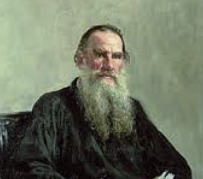
Every one who has a heart and eyes sees that you, working men, are obliged to pass your lives in want and in hard labor, which is useless to you, while other men, who do not work, enjoy the fruits of your labor-that you are the slaves of these men, and that this ought not to exist.
▼
Source
source
To the Working People, Complete Works, trans. Leo Wiener, Vol 24, p. 129
5 months 3 weeks ago
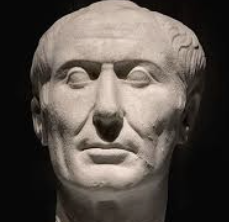
Learn to see in another's calamity the ills which you should avoid.
▼
Source
source
Maxim 120

6 months 1 week ago
Husserl has shown that man's prejudices go a great deal deeper than his intellect or his emotions. Consciousness itself is 'prejudiced' - that is to say, intentional.
▼
Source
source
p. 54
8 months 3 weeks ago
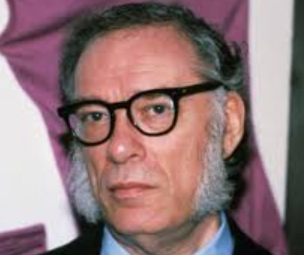
Straightforward preaching spoils the effectiveness of a story. If you can't resist the impulse to improve your fellow human beings, do it subtly.

8 months 1 week ago
Men are eager to tread underfoot what they have once too much feared.
▼
Source
source
Book V, line 1140 (tr. Rouse)

5 months 2 days ago
In the world as we find it, even the barest requirements of a life worth living cannot all be always met in full. Toppling a tyranny may trigger civil war. Protecting a broad range of liberal freedoms may result in the regime that guarantees them being short lived. At the same time, supporting a strong state as a bulwark against anarchy may worsen the abuse of power. Wise policy can temper these conflicts. It cannot hope to overcome them.
▼
Source
source
'Modus Vivendi' (p.28)
5 months 1 week ago
One cannot collect all the beautiful shells on the beach. One can collect only a few, and they are more beautiful if they are few.
▼
Source
source
p. 114
6 months 5 days ago
Once the good man was dead, one wore his hat and another his sword as he had worn them, a third had himself barbered as he had, a fourth walked as he did, but the honest man that he was - nobody any longer wanted to be that.
▼
Source
source
C 36
3 months 3 weeks ago
There is no man so fortunate that there shall not be by him when he is dying some who are pleased with what is going to happen. Suppose that he was a good and a wise man, will there not be at least some one to say to himself, Let us at last breathe freely, being relieved from this schoolmaster? It is true that he was harsh to none of us, but I perceive that he tacitly condemns us.-This is what is said of a good man. But in our own case how many other things are there for which there are many who wish to get rid of us.
▼
Source
source
X, 36
7 months 2 weeks ago
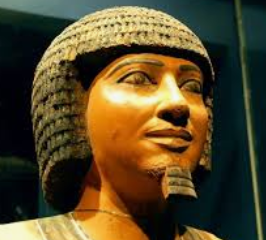
Beware an act of avarice; it is bad and incurable disease.
▼
Source
source
Maxim no. 19.
5 months 3 weeks ago
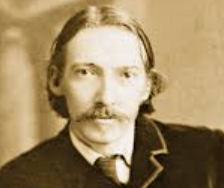
The old land is still the true love, the others are but pleasant infidelities.
▼
Source
source
Pt. I, ch. IV
6 months 1 week ago
This is a strange -- and rather alarming -- realisation. For it clearly implies that masturbation is one of our highest faculties that human beings have developed. Many animals masturbate -- but never without the presence of another animal, or some similar stimulus. A human being can masturbate in an empty room: a triumph of pure imagination.
▼
Source
source
p. 90
7 months 3 weeks ago
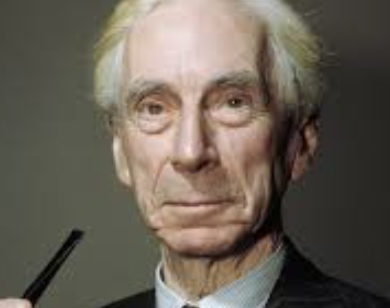
The greatest challenge to any thinker is stating the problem in a way that will allow a solution.
▼
Source
source
Attributed to Russell in Crainer's The Ultimate Book of Business Quotations (1997), p. 258
7 months 2 weeks ago
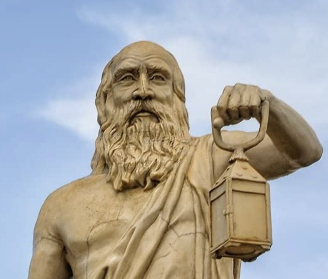
He used to reason as follows: 'Everything belongs to the gods; the wise are friends of the gods; friends hold all things in common; ergo, everything belongs to the wise.'
▼
Source
source
Diogenes Laërtius, vi. 37, as reported in Diogenes the Cynic: Sayings and Anecdotes as translated by Robin Hard (Oxford: 2012), p. 13

4 months 2 weeks ago
The stupendous Fourth Estate, whose wide world-embracing influences what eye can take in?
6 months 5 days ago
Nothing can contribute more to peace of soul than the lack of any opinion whatever.
▼
Source
source
E 11
4 months 3 days ago
It is a cliché that the modern scientific vision has desacralized the world, and the world desacralized by scientific knowledge has become one of the existential elements that make up modern man, all the more so to the degree that he is "civilized." Ever since he has been subject to compulsory education, his mind has been stuffed with "positive" scientific notions; he cannot avoid seeing in a soulless light everything that surrounds him, and therefore acts destructively. What, for example, could the symbol of the sunset of a dynasty, like the Japanese, mean to him when he knows scientifically what the sun is: merely a star, at which one can even fire missiles.
▼
Source
source
p. 138
5 months 2 days ago
An old fairy tale has it that science began with the rejection of superstition. In fact it was the rejection of rationalism that gave birth to scientific inquiry. Ancient and medieval thinkers believed the world could be understood by applying first principles. Modern science begins when observation and experiment come first, and the results are accepted even when what they show seems to be impossible.
▼
Source
source
Foreword: Two Attempts to Cheat Death (pp. 5-6)
6 months 3 weeks ago
The statue of Freedom has not been cast yet, the furnace is hot, we can all still burn our fingers.
▼
Source
source
Act I.
6 months 5 days ago
The fly that doesn't want to be swatted is most secure when it lights on the fly-swatter.
▼
Source
source
J 70 Variant translation: The fly that does not want to be swatted is safest if it sits on the fly-swat.
7 months 4 weeks ago
There is no method of reasoning more common, and yet none more blameable, than, in philosophical disputes, to endeavour the refutation of any hypothesis, by a pretence of its dangerous consequences to religion and morality. When any opinion leads to absurdities, it is certainly false; but it is not certain that an opinion is false, because it is of dangerous consequence. Such topics, therefore, ought entirely to be forborne; as serving nothing to the discovery of truth, but only to make the person of an antagonist odious.
▼
Source
source
Of Liberty and Necessity, Part II
6 months 3 weeks ago
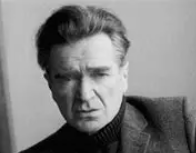
The only thing the young should be taught is that there is virtually nothing to be hoped for from life. One dreams of a Catalogue of Disappointments which would include all the disillusionments reserved for each and every one of us, to be posted in the schools.
6 months 1 week ago
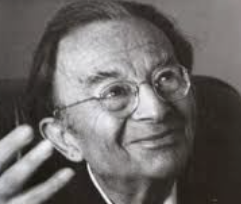
The narcissistic, the domineering, the possessive woman can succeed in being a "loving" mother as long as the child is small. Only the really loving woman, the woman who is happier in giving than in taking, who is firmly rooted in her own existence, can be a loving mother when the child is in the process of separation.
▼
Source
source
Ch. 2
8 months 4 days ago
In living bodies, how all the various limbs harmonize, and mutually combine, for common defence against injury! What can be more heterogeneous, and unlike, than the body and the soul? and yet with what strong bonds nature has united them, is evident from the pang of separation. As life itself is nothing else but the concordant union of body and soul, so is health the harmonious cooperation of all the parts and functions of the body.
7 months 3 weeks ago
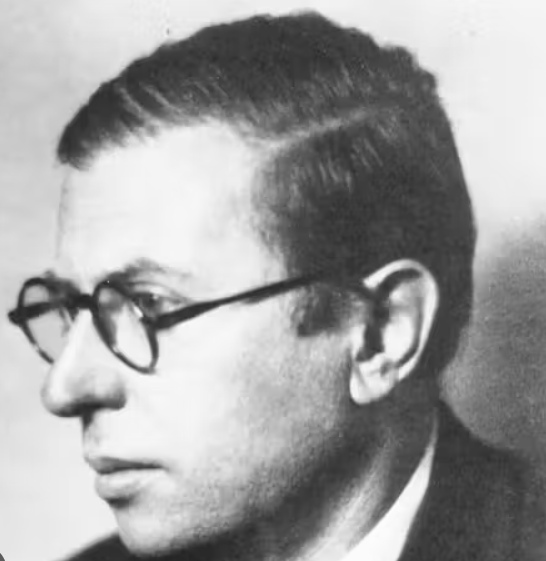
All-powerful god, who am I but the fear that I inspire in others?
▼
Source
source
King Aegistheus to Jupiter, Act 2
5 months 4 weeks ago
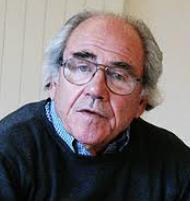
The "hard law of value," the "law set in stone"-when it abandons us, what sadness, what panic! This is why there are still good days left to fascist and authoritarian methods, because they revive something of the violence necessary to life-whether suffered or inflicted. The violence of ritual, the violence of work, the violence of knowledge, the violence of blood, the violence of power and of the political is good! It is clear, luminous, the relations of force, contradictions, exploitation, repression! This is lacking today, and the need for it makes itself felt.
▼
Source
source
"Value's Last Tango," p. 156
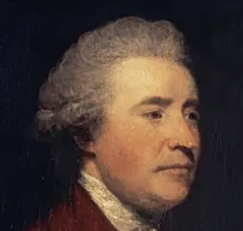
6 months 3 weeks ago
Difficulty is a severe instructor, set over us by the supreme ordinance of a parental Guardian and Legislator, who knows us better than we know ourselves, as he loves us better too. Pater ipse colendi haud facilem esse viam voluit. He that wrestles with us strengthens our nerves, and sharpens our skill. Our antagonist is our helper.
▼
Source
source
Volume iii, p. 453
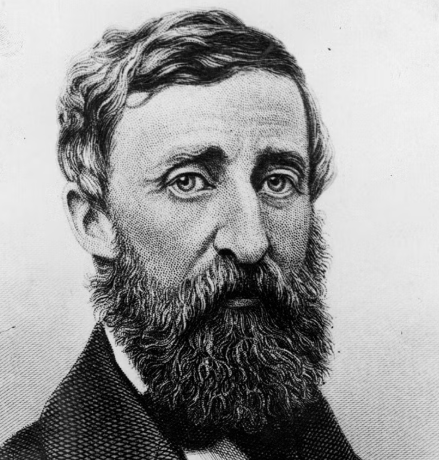
7 months 3 weeks ago
It is so hard to forget what it is worse than useless to remember! If I am to be a thoroughfare, I prefer that it be of the mountain-brooks, the Parnassian streams, and not the town-sewers. There is inspiration, that gossip which comes to the ear of the attentive mind from the courts of heaven. There is the profane and stale revelation of the bar-room and the police court. The same ear is fitted to receive both communications. Only the character of the hearer determines to which it shall be open, and to which closed. I believe that the mind can be permanently profaned by the habit of attending to trivial things, so that all our thoughts shall be tinged with triviality.
▼
Source
source
p. 492
4 months 2 weeks ago
Children and fools speak the truth; and somehow they find happiness in their sincerity.
▼
Source
source
Ch. 1 : Our life begins
7 months 4 weeks ago
The most perfect philosophy of the natural kind only staves off our ignorance a little longer: as perhaps the most perfect philosophy of the moral or metaphysical kind serves only to discover larger portions of it. Thus the observation of human blindness and weakness is the result of all philosophy, and meets us at every turn, in spite of our endeavours to elude or avoid it.
▼
Source
source
Section 4 : Sceptical Doubts Concerning The Operations of The Understanding
7 months 3 weeks ago
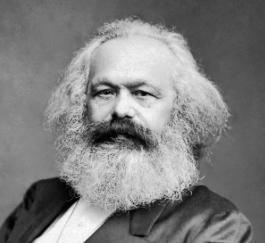
The commodity is first of all, an external object, a thing which through its qualities satisfies human needs of whatever kind. The nature of these needs, whether they arise, for example, from the stomach, or the imagination, makes no difference. Nor does it matter here how the thing satisfies man's need, whether directly as a means of subsistence, i.e. an object of consumption, or indirectly as a means of production.
▼
Source
source
Vol. I, Ch. 1, Section 1, pg. 41.

8 months 1 week ago
The method of not erring is sought by all the world. The logicians profess to guide it, the geometricians alone attain it, and apart from science, and the imitations of it, there are no true demonstrations.
6 months 1 week ago
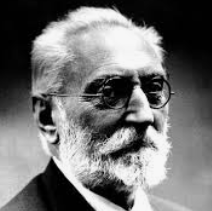
And love, above all when it struggles against destiny, overwhelms us with the feeling of the vanity of this world of appearances and gives us a glimpse of another world, in which destiny is overcome and liberty is law.
3 months 3 weeks ago
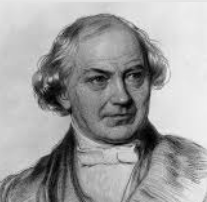
[W]e can ascend to remote periods by a chain of causes, but in none can we ascend to a 'beginning' of the chain.
6 months 2 weeks ago
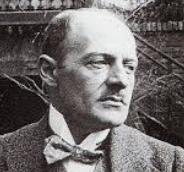
When we cannot obtain a thing, we comfort ourselves with the reassuring thought that it is not worth nearly as much as we believed.
▼
Source
source
L. Coser, trans. (1973), p. 73
5 months 3 weeks ago
Logos is the formal cause of the kosmos and all things, responsible for their nature and configuration.
▼
Source
source
p. 37

6 months 1 week ago
Zen Buddhism is inspired by a basic trust in the Here, a basic trust in the world.
7 months 3 weeks ago
I am a rationalist. ...I mean ...[I] wish... to understand the world, and to learn by arguing with others. (...I do not say a rationalist holds the mistaken theory that men are... rational.)
CivilSimian.com created by AxiomaticPanic, CivilSimian, Kalokagathia