

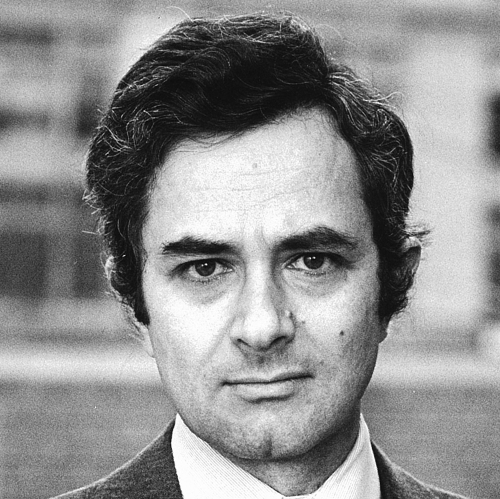
7 months 2 weeks ago
The distance between oneself and other persons and other species can fall anywhere on a continuum. Even for other persons the understanding of what it is like to be them is only partial, and when one moves to species very different from oneself, a lesser degree of partial understanding may still be available. The imagination is remarkably flexible. My point, however, is not that we cannot know what it is like to be a bat. I am not raising that epistemological problem. My point is rather that even to form a conception of what it is like to be a bat and a fortiori to know what it is like to be a bat, one must take up the bat's point of view.
▼
Source
source
p. 172, note 8.
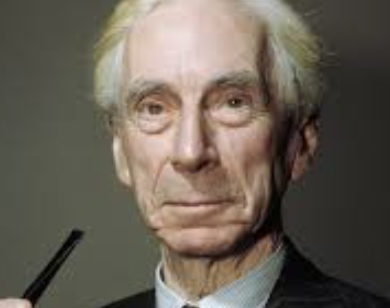
7 months 3 weeks ago
Pure Mathematics is the class of all propositions of the form "p implies q," where p and q are propositions containing one or more variables, the same in the two propositions, and neither p nor q contains any constants except logical constants. And logical constants are all notions definable in terms of the following: Implication, the relation of a term to a class of which it is a member, the notion of such that, the notion of relation, and such further notions as may be involved in the general notion of propositions of the above form. In addition to these, mathematics uses a notion which is not a constituent of the propositions which it considers, namely the notion of truth.
▼
Source
source
Principles of Mathematics (1903), Ch. I: Definition of Pure Mathematics, p. 3
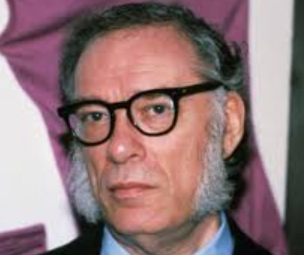
8 months 3 weeks ago
Trantor could win even such a war, but perhaps not without paying a price that would make victory only a pleasanter name for defeat.
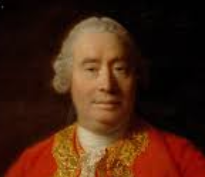
7 months 4 weeks ago
Truth springs from argument amongst friends.
7 months 3 weeks ago
He thought it happier to be dead, To die for Beauty, than live for bread.
▼
Source
source
Beauty
6 months 3 weeks ago
History is mere Empiricism; it has only facts to communicate, and all its proofs are founded upon facts alone. To attempt to rise to Primeval History on this foundation of fact, or to argue by this means how such or such a thing might have been, and then to take for granted that it has been so in reality,is to stray beyond the limits of History, and produce an a priori History; just as the Philosophy of Nature, referred to in our preceding lecture, endeavoured to find an a priori Science of Physics.
▼
Source
source
p. 140
7 months ago
Pithy sentences are like sharp nails which force truth upon our memory.
▼
Source
source
As quoted in A Dictionary of Thoughts : Being a Cyclopedia of Laconic Quotations (1908) by Tryon Edwards, p. 338
6 months 3 weeks ago
Not official revolutionary commissars in any sort of sashes, but rather revolutionary propagandists are to be dispatched into all the provinces and communes and particularly among the peasants who cannot be revolutionised by principles, nor by the decrees of any dictatorship, but only by the act of revolution itself, that is to say, by the consequences that will inevitably ensure in every commune from complete cessation of the legal and official existence of the state.
7 months 3 weeks ago
While it is true that science cannot decide questions of value, that is because they cannot be intellectually decided at all, and lie outside the realm of truth and falsehood. Whatever knowledge is attainable, must be attained by scientific methods; and what science cannot discover, mankind cannot know.
▼
Source
source
Religion and Science (1935), Ch. IX: Science of Ethics.
5 months 3 weeks ago
Schizophrenia may be a necessary consequence of literacy.
▼
Source
source
(p. 26)
5 months 3 weeks ago
The revolutionaries say: "The government organization is bad in this and that respect; it must be destroyed and replaced by this and that." But a Christian says: "I know nothing about the governmental organization, or in how far it is good or bad, and for the same reason I do not want to support it."
▼
Source
source
Chapter IX, The Acceptance of the Christian Conception of Life will Emancipate Men from the Miseries of our Pagan Life
6 months 1 week ago
It is the business of the future to be dangerous; and it is among the merits of science that it equips the future for its duties.
▼
Source
source
Ch. 13: "Requisites for Social Progress", p. 291
8 months 3 days ago
The plague of man is boasting of his knowledge.
▼
Source
source
Ch. 12 (tr. ?)
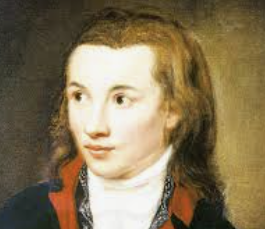
6 months 3 weeks ago
Nature is an Æolian Harp, a musical instrument; whose tones again are keys to higher strings in us.
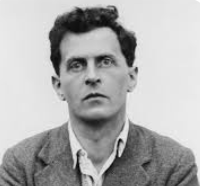
7 months 3 weeks ago
What should we gain by a definition, as it can only lead us to other undefined terms?
▼
Source
source
p. 26
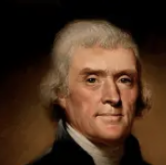
3 months 3 weeks ago
One of our fan-coloring biographers, who paints small men as very great, inquired of me lately with real affection too, whether he might consider as authentic, the change of my religion much spoken of in some circles. Now this supposed that they knew what had been my religion before, taking for it the word of their priests, whom I certainly never made the confidants of my creed. My answer was "say nothing of my religion. It is known to my God and myself alone. Its evidence before the world is to be sought in my life; if that has been honest and dutiful to society, the religion which has regulated it cannot be a bad one."
▼
Source
source
Letter to John Adams (11 January 1817), published in The Works of Thomas Jefferson in Twelve Volumes, Federal Edition, Paul Leicester Ford, ed., New York: G. P. Putnam's Sons, 1904, Vol. 12, pp. 48-49
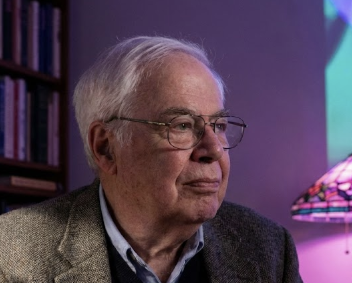
7 months 2 weeks ago
I think of the course of human history as a long, swelling, increasingly polyphonic poem - a poem that leads up to nothing save itself. When the species is extinct, "human nature's total message" will not be a set of propositions, but a set of vocabularies - the more, and the more various, the better.
▼
Source
source
Response to Hartshorne in 'Rorty and Pragmatism, The Philosopher Responds to his Critics', p. 33
7 months 3 weeks ago
Men being, as has been said, by nature, all free, equal and independent, no one can be put out of this estate, and subjected to the political power of another, without his own consent.
▼
Source
source
Second Treatise of Government, Ch. VIII, sec. 95


7 months 3 weeks ago
As the variable capital always stays in the hands of the capitalist in some form or other, it cannot be claimed in any way that it converts itself into revenue for anyone.
▼
Source
source
Vol. II, Ch. XX, p. 452.

7 months 3 weeks ago
Lead, follow, or get out of the way.
▼
Source
source
George S. Patton: "Lead me, follow me, or get out of my way", as quoted in Pocket Patriot: Quotes from American Heroes (2005) edited by Kelly Nickell, p. 157
7 months 3 weeks ago
The best lightning-rod for your protection is your own spine.
▼
Source
source
p. 236
7 months 3 weeks ago
The ways by which you may get money almost without exception lead downward. To have done anything by which you earned money merely is to have been truly idle or worse. If the laborer gets no more than the wages which his employer pays him, he is cheated, he cheats himself.
▼
Source
source
p. 486

7 months 3 weeks ago
The rush to California, for instance, and the attitude, not merely of merchants, but of philosophers and prophets, so called, in relation to it, reflect the greatest disgrace on mankind. That so many are ready to live by luck, and so get the means of commanding the labor of others less lucky, without contributing any value to society!
▼
Source
source
p. 487
6 months 5 days ago
Much can be inferred about a man from his mistress: in her one beholds his weaknesses and his dreams.
▼
Source
source
F 88
6 months 1 week ago
Humility consists of knowing that in this world the whole soul, not only what we term the ego in its totality, but also the supernatural part of the soul, which is God present in it, is subject to time and to the vicissitudes of change. There must be absolutely acceptance of the possibility that everything material in us should be destroyed. But we must simultaneously accept and repudiate the possibility that the supernatural part of the soul should disappear.
▼
Source
source
"Concerning the Our Father" in Waiting on God (1972), Routledge & Kegan Paul edition, p. 153
8 months 3 weeks ago
To succeed, planning alone is insufficient. One must improvise as well.
7 months 3 weeks ago
The worst of misfortunes is still a stroke of luck, since one feels oneself living when one experiences it.
▼
Source
source
p. 275
6 months 2 weeks ago
Facts, facts, facts,' cries the scientist if he wants to emphasize the necessity of a firm foundation for science. What is a fact? A fact is a thought that is true. But the scientist will surely not recognize something which depends on men's varying states of mind to be the firm foundation of science.
▼
Source
source
Gottlob Frege (1956). "The thought: A logical inquiry" in: Peter Ludlow (1997) Readings in the Philosophy of Language. p. 27


7 months 2 weeks ago
It seems to me that the current political task in a society like ours is to criticize the working of institutions that are apparently the most neutral and independent, to criticize these institutions and attack them in such a way that the political violence that exercises itself obscurely through them becomes manifest, so that one can fight against them.
▼
Source
source
Debate with Noam Chomsky, École Supérieure de Technologie à Eindhoven, November 1971
7 months 3 weeks ago
The idea that the poor should have leisure has always been shocking to the rich.
▼
Source
source
Ch. 1: In Praise of Idleness
7 months 1 week ago
Scilurus on his death-bed, being about to leave four-score sons surviving, offered a bundle of darts to each of them, and bade them break them. When all refused, drawing out one by one, he easily broke them,-thus teaching them that if they held together, they would continue strong; but if they fell out and were divided, they would become weak.
▼
Source
source
31 Scilurus
8 months 3 days ago
And I myself, in Rome, heard it said openly in the streets, "If there is a hell, then Rome is built on it." That is, "After the devil himself, there is no worse folk than the pope and his followers."
▼
Source
source
Against the Roman Papacy, An Institution of the Devil
5 months 3 weeks ago
Computers can do better than ever what needn't be done at all. Making sense is still a human monopoly.
▼
Source
source
(p. 109)
3 months 3 weeks ago
It may possibly be true that, to continue to live on and to act in a world like ours, it is vitally necessary to seek a way out of this uncertainty of multiple alternatives; and accordingly people may be led to embrace some immediate goal as if it were absolute, by which they hope to make their problems appear concrete and real. But it is not primarily the man of action who seeks the absolute and immutable, but rather it is he who wishes to induce others to hold on to the status quo because he feels comfortable and smug under conditions as they are.
5 months 3 weeks ago
When a person inflates his own importance, he does not see his own sins; and his sins get bigger right along with him.
▼
Source
source
p. 108
6 months 1 week ago
Traditional philosophy's claim to totality, culminating in the thesis that the real is rational, is indistinguishable from apologetics.
▼
Source
source
p. 7
8 months 1 week ago
Rules for Demonstrations. I. Not to undertake to demonstrate any thing that is so evident of itself that nothing can be given that is clearer to prove it. II. To prove all propositions at all obscure, and to employ in their proof only very evident maxims or propositions already admitted or demonstrated. III. To always mentally substitute definitions in the place of things defined, in order not to be misled by the ambiguity of terms which have been restricted by definitions.
7 months 3 weeks ago
People are said to believe in God, or to disbelieve in Adam and Eve. But in such cases what is believed or disbelieved is that there is an entity answering a certain description. This, which can be believed or disbelieved is quite different from the actual entity (if any) which does answer the description. Thus the matter of belief is, in all cases, different in kind from the matter of sensation or presentation, and error is in no way analogous to hallucination. A hallucination is a fact, not an error; what is erroneous is a judgment based upon it.
▼
Source
source
On the Nature of Acquaintance: Neutral Monism, 1914

3 months 3 weeks ago
If one's organism is... the preeminent advantage, and the source of all others, education is the second. The best made brain would be a total loss without it...
7 months 4 weeks ago
Eloquence, when at its highest pitch, leaves little room for reason or reflection; but addressing itself entirely to the fancy or the affections, captivates the willing hearers, and subdues their understanding. Happily, this pitch it seldom attains. But what a Tully or a Demosthenes could scarcely effect over a Roman or Athenian audience, every Capuchin, every itinerant or stationary teacher can perform over the generality of mankind, and in a higher degree, by touching such gross and vulgar passions.
▼
Source
source
Section 10 : Of Miracles Pt. 2
6 months 3 weeks ago
The entire universe is perfused with signs, if it is not composed exclusively of signs.
▼
Source
source
Quoted in Essays in Zoosemiotics (1990) by Thomas A. Sebeok
6 months 3 weeks ago
If the people are happy, united, wealthy, and powerful, we presume the rest. We conclude that to be good from whence good is derived.
7 months 2 weeks ago
If I had to lay bets, my bet would be that everything is going to go to hell, but, you know, what else have we got except hope?
▼
Source
source
"Richard Rorty Interviewed by Gideon Lewis-Kraus." The Believer, June 2003.

7 months 1 week ago
If there be light, then there is darkness; if cold, heat; if height, depth; if solid, fluid; if hard, soft; if rough, smooth; if calm, tempest; if prosperity, adversity; if life, death.
▼
Source
source
As quoted in Bibliotheca Sacra and Theological Review by ? Vol. IV, No. 8 (1847) by Dallas Theological Seminary, p. 107
6 months 1 week ago
The key to a Christian conception of studies is the realization that prayer consists of attention. It is the orientation of all the attention of which the soul is capable toward God. The quality of the attention counts for much in the quality of the prayer. Warmth of heart cannot make up for it.
▼
Source
source
"Reflections on the Right Use of School Studies with a View to the Love of God"
CivilSimian.com created by AxiomaticPanic, CivilSimian, Kalokagathia