

4 months 3 days ago
All men and women have passions, natural desires and noble ambitions, and also a conscience; they have sex, hunger, fear, anger, and are subject to sickness, pain, suffering and death. Culture consists in bringing about the expression of these passions and desires in harmony.
▼
Source
source
p. 20



6 months 1 week ago
Art is the symbol of the two noblest human efforts: to construct and to refrain from destruction.
▼
Source
source
The Pre-War Notebook (1933-1939), published in First and Last Notebooks (1970) edited by Richard Rees
8 months 4 weeks ago
Where there is happiness, there is found pleasure in nonsense. The transformation of experience into its opposite, of the suitable into the unsuitable, the obligatory into the optional (but in such a manner that this process produces no injury and is only imagined in jest), is a pleasure; ...
4 months 6 days ago
For us in Russia, communism is a dead dog, while, for many people in the West, it is still a living lion.
▼
Source
source
BBC Radio broadcast, Russian service, as quoted in The Listener
7 months 2 weeks ago
No differeance without alterity, no alterity without singularity, no singularity without here-now.
▼
Source
source
Injunctions of Marx, p,31

12 months 1 day ago
The wreck of the Titanic functions as a sublime object: a positive, material object elevated to the status of the impossible Thing. And perhaps all the effort to articulate the metaphysical meaning of the Titanic is nothing but an attempt to escape this terrifying impact of the Thing, an attempt to domesticate the Thing by reducing it to its symbolic status, by providing it with a meaning. We usually say that the fascinating presence of a Thing obscures its meaning; here, the opposite is true: the meaning obscures the terrifying impact of its presence.
8 months 3 weeks ago
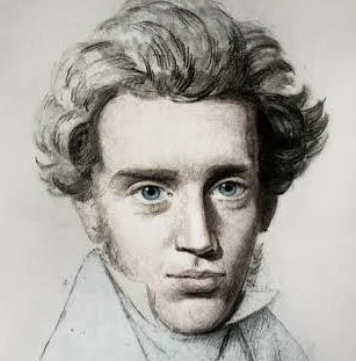
The greatest danger, that of losing one's own self, may pass off as quietly as if it were nothing; every other loss, that of an arm, a leg, five dollars, a wife etc., is sure to be noticed.
4 months 3 weeks ago
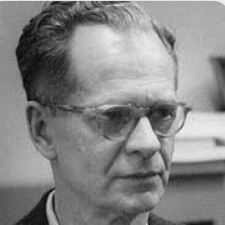
Man's power appears to have increased out of all proportion to his wisdom. He has never been in a better position to build a healthy, happy, and productive world; yet things have perhaps never seemed so black.
▼
Source
source
Science and Human Behavior

3 months 3 weeks ago
I deplore with you the putrid state into which our newspapers have passed, and the malignity, the vulgarity, & mendacious spirit of those who write for them: and I enclose you a recent sample, the production of a New England judge, as a proof of the abyss of degradation into which we are fallen. These ordures are rapidly depraving the public taste and lessening its relish for sound food. As vehicles of information and a curb on our functionaries, they have rendered themselves useless by forfeiting all title to belief. That this has in a great degree been produced by the violence and malignity of party spirit I agree with you...
▼
Source
source
Letter to Walter Jones (2 January 1814)
6 months 4 days ago
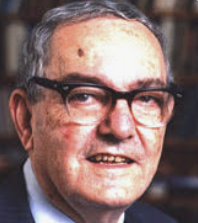
A major task in organizing is to determine, first, where the knowledge is located that can provide the various kinds of factual premises that decisions require.
▼
Source
source
p. 24.
3 months 3 weeks ago
May it be to the world, what I believe it will be, (to some parts sooner, to others later, but finally to all), the signal of arousing men to burst the chains under which monkish ignorance and superstition had persuaded them to bind themselves, and to assume the blessings and security of self-government.
▼
Source
source
Letter to Roger C. Weightman, on the decision for Independence made in 1776, often quoted as if in reference solely to the document the Declaration of Independence

8 months 3 days ago
Is it not a noble farce, wherein kings, republics, and emperors have for so many ages played their parts, and to which the whole vast universe serves for a theatre?
▼
Source
source
Book II, Ch. 36. Of the most Excellent Men
6 months 1 week ago
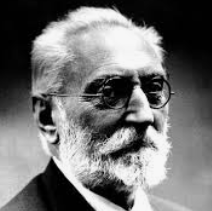
Science is a cemetery of dead ideas, even though life may issue from them.

7 months 3 weeks ago
Speed, it seems to me, provides the one genuinely modern pleasure.
▼
Source
source
Wanted, A New Pleasure
6 months 3 weeks ago
Self-knowledge - the bitterest knowledge of all and also the kind we cultivate least: what is the use of catching ourselves out, morning to night, in the act of illusion, pitilessly tracing each act back to its root, and losing case after case before our own tribunal?
7 months 3 weeks ago
Capitals accumulate faster than the population; thus wages; thus population; thus grain prices; thus the difficulty of production and hence the exchange values.
▼
Source
source
Notebook III, The Chapter on Capital, p. 271.
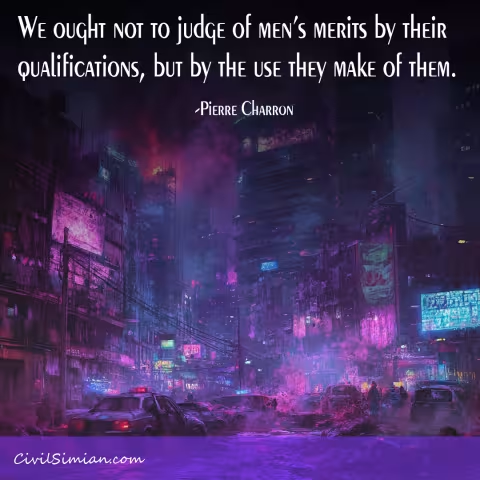

6 months 2 weeks ago
Thou shalt love the Lord thy God with all thy heart, and with all thy soul, and with all thy mind. This is the first and great commandment. And the second is like unto it, Thou shalt love thy neighbour as thyself. On these two commandments hang all the law and the prophets.
▼
Source
source
22:37-40 (KJV)
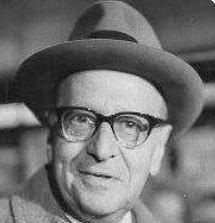
6 months 2 weeks ago
All things in nature become identical with the phenomena they present when submitted to the practices of our laboratories, whose problems no less than their apparatus express in turn the problems and interests of society as it is. This view may be compared with that of a criminologist maintaining that trustworthy knowledge of a human being can be obtained only by the well-tested and streamlined examining methods applied to a suspect in the hands of the metropolitan police.
▼
Source
source
describing the pragmatist view, p. 49.
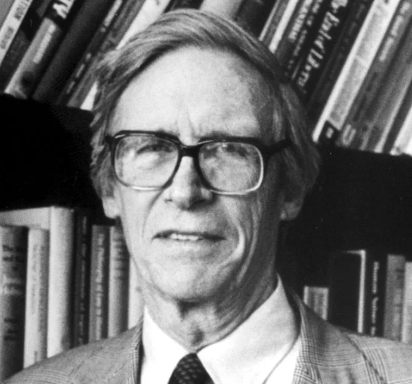
7 months 3 weeks ago
An intolerant sect has no right to complain when it is denied an equal liberty. ... A person's right to complain is limited to principles he acknowledges himself.
▼
Source
source
p. 217
6 months 1 week ago
The capacity to give one's attention to a sufferer is a very rare and difficult thing; it is almost a miracle; it is a miracle. Nearly all those who think they have this capacity do not possess it. Warmth of heart, impulsiveness, pity are not enough.
6 months 1 week ago
Any madness in us gains from being expressed, because in this way one gives a human form to what separates us from humanity.
▼
Source
source
p. 76
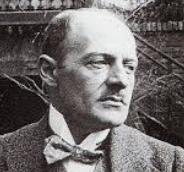
6 months 2 weeks ago
We have a tendency to overcome any strong tension between desire and impotence by depreciating or denying the positive value of the desired object.
▼
Source
source
L. Coser, trans. (1973), p. 73
6 months 1 week ago
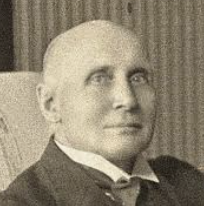
Often things realised in thought are more vivid than than the same things in inattentive physical experience. But the things apprehended as mental are always subject to the condition that we come to a stop when we come to explore ever higher grades of complexity in their realised relationships. We always find tat we have thought of just this - whatever it may be - and of no more.
▼
Source
source
Ch. 10: "Abstraction", p. 239
7 months 3 weeks ago
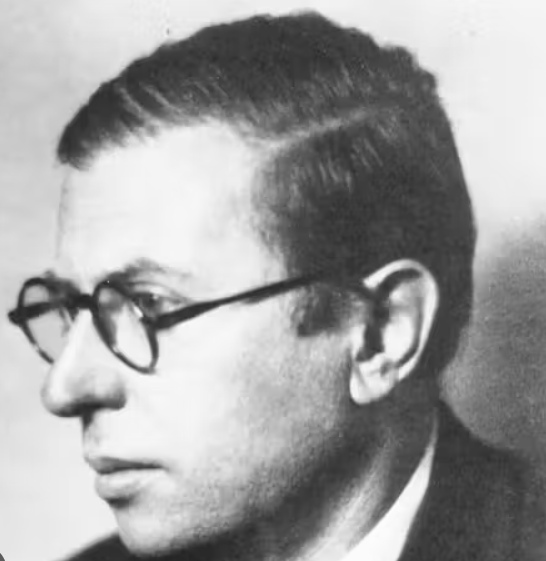
Catherine: Why commit Evil? Goetz: Because Good has already been done. Catherine: Who has done it? Goetz: God the Father. I, on the other hand, am improvising.
▼
Source
source
Act 3, sc. 4
7 months 4 weeks ago
A metaphysics of morals is therefore indispensably necessary, not merely because of a motive to speculation - for investigating the source of the practical basic principles that lie a priori in our reason - but also because morals themselves remain subject to all sorts of corruption as long as we are without that clue and supreme norm by which to appraise them correctly...
3 months 3 weeks ago
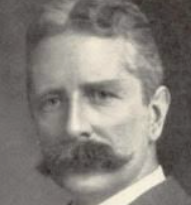
Though science makes no use for poetry, poetry is enriched by science. Poetry "takes up" the scientific vision and re-expresses its truths, but always in forms which compel us to look beyond them to the total object which is telling its own story and standing in its own rights. In this the poet and the philosopher are one. Using language as the lever, they lift thought above the levels where words perplex and retard its flight, and leave it, at last, standing face to face with the object which reveals itself.
8 months 3 weeks ago
I will not by suppression, or by performing tricks, try to produce the impression that the ordinary Christianity in the land and the Christianity of the New Testament are alike. "What Do I Want?"
7 months 3 weeks ago
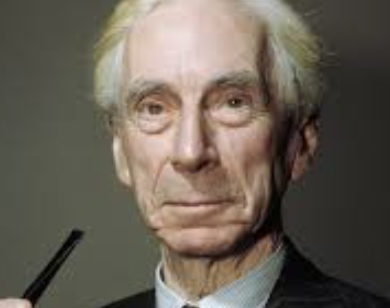
A physicist looks for causes; that does not necessarily imply that there are causes everywhere. A man may look for gold without assuming that there is gold everywhere; if he finds gold, well and good, if he doesn't he's had bad luck. The same is true when the physicists look for causes.
▼
Source
source
BBC Radio Debate on the Existence of God, Russell vs. Copleston, 1948
3 months 3 weeks ago
I am not alone in my fear, nor alone in my hope, nor alone in my shouting. A tremendous host, an onrush of the Universe fears, hopes, and shouts with me. I am an improvised bridge, and when Someone passes over me, I crumble away behind Him.
7 months 4 weeks ago
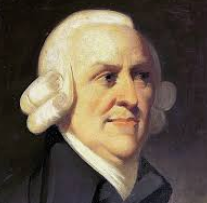
III. Every tax ought to be levied at the time, or in the manner, in which it is most likely to be convenient for the contributor to pay it.
▼
Source
source
Chapter II Part II, p. 893.
6 months 2 weeks ago
The Bible is literature, not dogma.
3 months 3 weeks ago
I have ever deemed it more honorable and profitable, too, to set a good example than to follow a bad one.
▼
Source
source
As quoted in The Life and Writings of Thomas Jefferson : Including All of His Important Utterances on Public Questions (1900) by Samuel E. Forman, p. 429

7 months 2 weeks ago
The different pieces of evidence did not constitute so many neutral elements, until such time as they could be gathered together into a single body of evidence that would bring the final certainty of guilt. Each piece of evidence aroused a particular degree of abomination. Guilt did not begin when all the evidence was gathered together; piece by piece, it was constituted by each of the elements that made it possible to recognize a guilty person. Thus a semi-proof did not leave the suspect innocent until such time as it was completed; it made him semi-guilty; slight evidence of a serious crime marked someone as slightly criminal. In short, penal demonstration did not obey a dualistic system: true or false; but a principle of continuous gradation; a degree reached in the demonstration already formed a degree of guilt and consequently involved a degree of punishment.
▼
Source
source
Chapter One, The body of the condemned, pp.23
7 months 3 weeks ago
Anyone wanting a new house picks one from among those built on speculation or still in process of construction. The builder no longer works for his customers but for the market.
▼
Source
source
Vol. II, Ch. XII, p. 237.

4 months 2 weeks ago
Instruction, that mysterious communing of Wisdom with Ignorance, is no longer an indefinable tentative process, requiring a study of individual aptitudes, and a perpetual variation of means and methods, to attain the same end; but a secure, universal, straightforward business, to be conducted in the gross, by proper mechanism.
8 months 3 days ago
I want to be seen here in my simple, natural, ordinary fashion, without straining or artifice; for it is myself that I portray...I am myself the matter of my book. To the Reader
▼
Source
source
tr. Donald M. Frame, 1957

5 months 4 weeks ago
One may dream of a culture where everyone bursts into laughter when someone says: this is true, this is real.
8 months 3 weeks ago
It is necessary that every thing which is harmonized, should be generated from that which is void of harmony, and that which is void of harmony from that which is harmonized. ...But there is no difference, whether this is asserted of harmony, or of order, or composition... the same reason will apply to all of these.

7 months 2 weeks ago
Throw moderation to the winds, and the greatest pleasures bring the greatest pains.
7 months 3 weeks ago
I am particularly grateful to Nozick for his unfailing help and encouragement during the last stages.
▼
Source
source
Preface, pg. xii
7 months 3 weeks ago
It might be plausibly maintained, that in almost every one of the leading controversies, past or present, in social philosophy, both sides were in the right in what they affirmed, though wrong in what they denied.
▼
Source
source
J. S. Mill, Dissertations and discussions: political, philosophical, and historical, Volume 2, H. Holt, 1864, p. 11.
5 months 4 weeks ago
In default of any other proof, the thumb would convince me of the existence of a God.
▼
Source
source
Stanislas (1856)
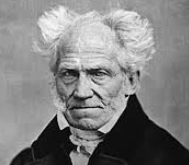
7 months 3 weeks ago
Money is human happiness in the abstract: he, then, who is no longer capable of enjoying human happiness in the concrete devotes his heart entirely to money.
▼
Source
source
Vol. 2, Ch. 26, § 320
4 months 2 weeks ago
Pragmatism starts from assumptions similar to those of empiriocriticism, but differs from the latter by its striking formulations, loose aphorisms, and analytical unscrupulousness.
▼
Source
source
Chapter Seven, Pragmatism and Positivism, p. 166
5 months 3 weeks ago
If a work of art is to explore new environments, it is not to be regarded as a blueprint but rather as a form of action-painting.
▼
Source
source
To Wilfred Watson, October 6 1965. Letters of Marshall McLuhan (1987), p. 325
CivilSimian.com created by AxiomaticPanic, CivilSimian, Kalokagathia