

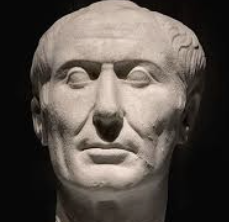
5 months 3 weeks ago
Learn to see in another's calamity the ills which you should avoid.
▼
Source
source
Maxim 120


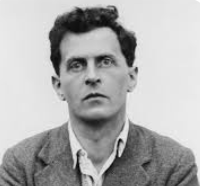
7 months 3 weeks ago
We must plow through the whole of language.
▼
Source
source
Ch. 7 : Remarks on Frazer's Golden Bough, p. 131

7 months 1 week ago
Rest satisfied with doing well, and leave others to talk of you as they please.
▼
Source
source
As quoted in The World's Laconics: Or, The Best Thoughts of the Best Authors (1853) by Everard Berkeley Variant: Rest satisfied with doing well, and leave others to talk of you as they will.
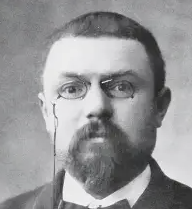
4 months 2 weeks ago
Is not my present nearer my past of yesterday than the present of Sirius?
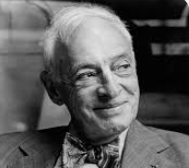
5 months 2 weeks ago
Writers, poets, painters, musicians, philosophers, political thinkers, to name only a few of the categories affected, must woo their readers, viewers, listeners, from distraction. To this we must add, for simple realism demands it, that these same writers, painters, etc., are themselves the children of distraction. As such, they are peculiarly qualified to approach the distracted multitudes. They will have experienced the seductions as well as the destructiveness of the forces we have been considering here. This is the destructive element in which we do not need to be summoned to immerse ourselves, for we were born to it.
▼
Source
source
The Distracted Public (1990), p. 167

4 months 2 weeks ago
A great soul, any sincere soul, knows not what he is,-alternates between the highest height and the lowest depth; can, of all things, the least measure-Himself! What others take him for, and what he guesses that he may be; these two items strangely act on one another, help to determine one another. With all men reverently admiring him; with his own wild soul full of noble ardors and affections, of whirlwind chaotic darkness and glorious new light; a divine Universe bursting all into godlike beauty round him, and no man to whom the like ever had befallen, what could he think himself to be?
4 months 1 week ago
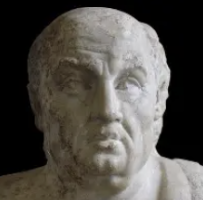
And we cannot change this order of things; but what we can do is to acquire stout hearts, worthy of good men, thereby courageously enduring chance and placing ourselves in harmony with Nature.
4 months 2 weeks ago
This poor amphibious Pope too gives loaves to the Poor; has in him more good latent than he is himself aware of. His poor Jesuits, in the late Italian Cholera, were, with a few German Doctors, the only creatures whom dastard terror had not driven mad: they descended fearless into all gulfs and bedlams; watched over the pillow of the dying, with help, with counsel and hope; shone as luminous fixed stars, when all else had gone out in chaotic night: honour to them!
4 months 1 week ago
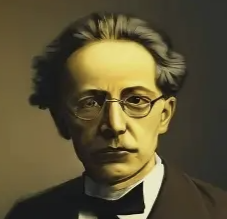
The republic is nothing whatever but - absolute monarchy; for it makes no difference whether the monarch is called prince or people, both being a 'majesty'.
▼
Source
source
Cambridge 1995, p. 202, 203
3 months 3 weeks ago
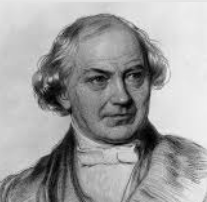
The assumption of a Final Cause in the structure of each part of animals and plants is as inevitable as the assumption of an Efficient Cause for every event. The maxim that in organized bodies nothing is 'in vain', is as necessarily true as the maxim that nothing happens 'by chance'.

7 months 2 weeks ago
A real subjection is born mechanically from a fictitious relation. So it is not necessary to use force to constrain the convict to good behavior, the madman to calm, the worker to work, the schoolboy to application, the patient to the observation of the regulations.
▼
Source
source
Part Four, Complete and austere institutions
7 months 3 weeks ago
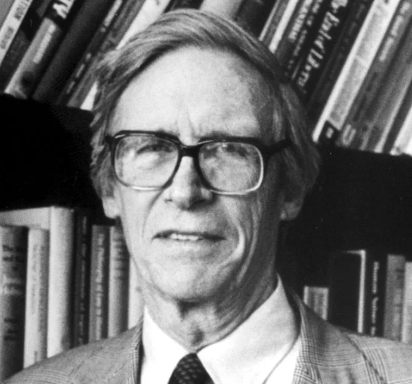
The principles of justice are chosen behind a veil of ignorance.
▼
Source
source
Chapter I, Section 3, pg. 12
4 months 3 weeks ago
It has always been the task of formal education to set up behavior which would prove useful or enjoyable later in a student's life.
▼
Source
source
As quoted in Performance-based Assessment for Middle and High School Physical Education (2002) by Jacalyn Lea Lund and Mary Fortman Kirk, p. 165
7 months 3 weeks ago
The second matter in which Mill's principles condemn existing legislation is homosexuality. If two adults voluntarily enter into such a relation, this is a matter which concerns them only, and in which, therefore, the community ought not to intervene. If it were still believed, as it once was, that the toleration of such behavior would expose the community to the fate of Sodom and Gomorrah, the community would have every right to intervene. But it does not acquire a right to intervene merely on the ground that such conduct is thought wicked. The criminal law may rightly be invoked to prevent violence or fraud inflicted upon unwilling victims, but it ought not to be invoked when whatever damage there may be is suffered only by the agents-always assuming that the agents are adults.
▼
Source
source
p. 139
7 months 3 weeks ago
I cannot get from the nature of the proposition to the individual logical operations!!! That is, I cannot bring out how far the proposition is the picture of the situation. I am almost inclined to give up all my efforts.
▼
Source
source
Journal entries (12 March 1915 and 15 March 1915) p. 41
7 months 2 weeks ago
My principal motive is the belief that we can still make admirable sense of our lives even if we cease to have ... "an ambition of transcendence."
▼
Source
source
Introduction to Objectivity, Relativism, and Truth: Philosophical Papers, Volume I (1991).

8 months 3 weeks ago
The world evades us because it becomes itself again. That stage scenery masked by habit becomes what it is. It withdraws at a distance from us.
7 months ago
We are all instruments endowed with feeling and memory. Our senses are so many strings that are struck by surrounding objects and that also frequently strike themselves.
▼
Source
source
"Conversation Between D'Alembert and Diderot"


7 months 3 weeks ago
"They would say," he answered, "that you do not fail in obedience through lack of love, but have lost love because you never attempted obedience."
▼
Source
source
Ch. 7 : The Pendragon, section 2
3 months 3 weeks ago
The Leninist agrarian reform has created a new and powerful layer of popular enemies of socialism on the countryside, enemies whose resistance will be much more dangerous and stubborn than that of the noble large landowners.
▼
Source
source
Chapter Two

5 months 3 weeks ago
Think about the two qualities that a virus, or any sort of parasitic replicator, demands of a friendly medium, the two qualities that make cellular machinery so friendly towards parasitic DNA, and that make computers so friendly towards computer viruses. These qualities are, firstly, a readiness to replicate information accurately, perhaps with some mistakes that are subsequently reproduced accurately; and, secondly, a readiness to obey instructions encoded in the information so replicated.

8 months 1 week ago
Superstition is now in her turn cast down and trampled underfoot, whilst we by the victory are exalted high as heaven.
▼
Source
source
Book I, lines 78-79 (tr. W. H. D. Rouse)
7 months 3 weeks ago
Capacity for the nobler feelings is in most natures a very tender plant, easily killed, not only by hostile influences, but by the mere want of sustenance; and in the majority of young persons it speedily dies away if the occupations to which their position in life has devoted them, and the society into which it has thrown them, are not favourable to keeping that higher capacity in existence.
▼
Source
source
Ch. 2
6 months 3 weeks ago
The best definition of man is: a being that goes on two legs and is ungrateful.
▼
Source
source
Part 1, Chapter 8 (tr. David Magarshack, 1950) The best definition of man is: a biped, ungrateful.

7 months 2 weeks ago
Indulge in no wrathfulness, for a man when he indulges in wrath becomes then forgetful of his duty and good works . . . and sin and crime of every kind occur unto his mind, and until the subsiding of the wrath he is said to be just like Ahareman.
8 months 3 weeks ago
O light! This is the cry of all the characters of ancient drama brought face to face with their fate. This last resort was ours, too, and I knew it now. In the middle of winter I at last discovered that there was in me an invincible summer. Return to Tipasa (1954) Variant translation: In the depths of winter, I finally learned that within me there lay an invincible summer.

6 months 1 week ago
What are novels? What is the secret of the charm of every romance that ever was written? The first thing in a good novel is to place the persons together in circumstances which naturally call out the high feelings and thoughts of the character, which afford food for sympathy between them on these points - romantic events they are called. The second is that the heroine has generally no family ties (almost invariably no mother), or, if she has, these do not interfere with her entire independence. These two things constitute the main charm of reading novels.

5 months 2 days ago
Human beings act, certainly. But none of them knows why they act as they do. There is a scattering of facts, which can be known and reported. Beyond these facts are the stories that are told. Human beings may behave like puppets, but no one is pulling the strings.
▼
Source
source
In The Puppet Theatre: Puppetry, Conspiracy and Ouija Boards (p. 136)

12 months 1 day ago
Ideology is not a dreamlike illusion that we build to escape insupportable; in its basic dimension, it is a fantasy-construction which serves as a support for our reality itself; an illusion which structures our effective, real social relations and thereby masks some insupportable, real, impossible kernel.
8 months 3 weeks ago
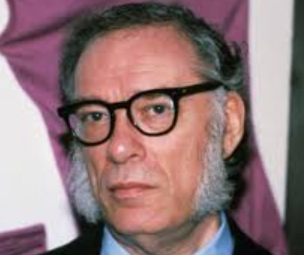
The undramatic fact is that I just think and think and think until I have something [for a story], and there is nothing marvelous or artistic about the phenomenon.

6 months 3 weeks ago
In their nomination to office they will not appoint to the exercise of authority as to a pitiful job, but as to a holy function.
▼
Source
source
Volume iii, p. 356

8 months 1 week ago
For it still seemed to me that it is not we who sin, but some other nature sinned in us. And it gratified my pride to be beyond blame, and when I did anything wrong not to have to confess that I had done wrong. I loved to excuse my soul and to accuse something else inside me (I knew not what) but which was not I. But, assuredly, it was I, and it was my impiety that had divided me against myself. That sin then was all the more incurable because I did not deem myself a sinner.
▼
Source
source
A. Outler, trans. (Dover: 2002), Book 5, Chapter 10, p. 77

5 months 2 weeks ago
Hayek's theory of evolutionary rationality shows how traditions and customs (those surrounding sexual relations, for example) might be reasonable solutions to complex social problems, even when, and especially when, no clear rational grounds can be provided to the individual for obeying them. These customs have been selected by the ''invisible hand'' of social reproduction, and societies that reject them will soon enter the condition of ''maladaptation,'' which is the normal prelude to extinction.
▼
Source
source
Hayek and conservatism, in Edward Feser (ed.), The Cambridge Companion to Hayek
7 months 3 weeks ago
The world is full of conflicts; and, overshadowing all minor conflicts, the titanic struggle between Communism and anti-Communism. Almost everybody who is politically conscious has strong feelings about one or more of these issues; but we want you, if you can, to set aside such feelings and consider yourselves only as members of a biological species which has had a remarkable history, and whose disappearance none of us can desire. We shall try to say no single word which should appeal to one group rather than to another. All, equally, are in peril, and, if the peril is understood, there is hope that they may collectively avert it.
6 months 3 weeks ago
We are taught to believe that a desire of domineering over our countrymen is love to our country; and those who hate civil war abet rebellion, and that the amiable and conciliatory virtues of lenity, moderation, and tenderness to the privileges of those who depend on this kingdom are a sort of treason to the state. It is impossible that we should remain long in a situation, which breeds such notions and dispositions, without some great alteration in the national character.
6 months 1 week ago
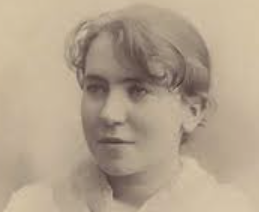
There is no reason whatever to assume that woman, in her climb to emancipation, has been, or will be, helped by the ballot.
4 months 2 weeks ago
Music is well said to be the speech of angels.
▼
Source
source
The Opera (1852).
7 months 3 weeks ago
A philosopher who is not taking part in discussions is like a boxer who never goes into the ring.
▼
Source
source
Conversation of 1930

7 months 3 weeks ago
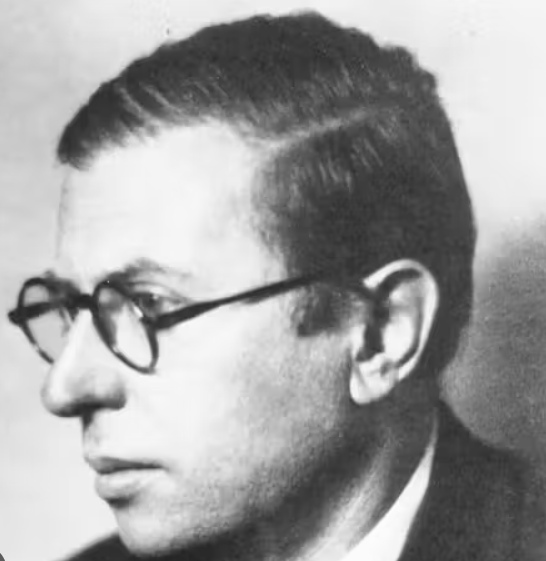
I exist, that is all, and I find it nauseating.
8 months 3 weeks ago
To have time was at once the most magnificent and the most dangerous of experiments. Idleness is fatal only to the mediocre.
6 months 3 weeks ago
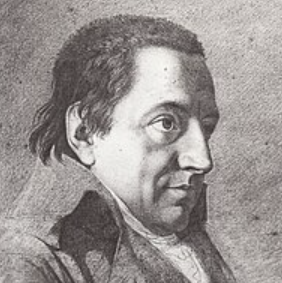
Of what I am, I know no more than that I am, but here no tie is necessary between subject and object. My own being is this tie, I am at once the subject knowing, and the object known of; and this reflection or return of the knowledge on itself is what I designate by the term I, if I have any determinate meaning.
▼
Source
source
Jane Sinnett, trans 1846 p. 50
8 months 3 weeks ago
Scientists have pushed back the horizon of time from the biblical 6,000 years to 4,600,000,000 years for the age of Earth a 760,000-fold increase.
6 months 3 weeks ago
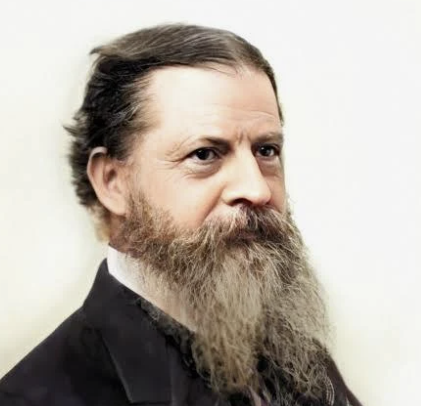
Here we must make one of those inductive applications of the law of continuity which have produced such great results in all of the positive sciences. We must extend the law of insistency into the future. Plainly, the insistency of a future idea with reference to the present is a quantity affected by the minus sign; for it is the present that affects the future, if there be any effect, not the future that affects the present.

3 months 3 weeks ago
I can never join Calvin in addressing his god. He was indeed an Atheist, which I can never be; or rather his religion was Daemonism. If ever man worshipped a false god, he did. The being described in his 5 points is not the God whom you and I acknowledge and adore, the Creator and benevolent governor of the world; but a daemon of malignant spirit. It would be more pardonable to believe in no god at all, than to blaspheme him by the atrocious attributes of Calvin. Indeed I think that every Christian sect gives a great handle to Atheism by their general dogma that, without a revelation, there would not be sufficient proof of the being of a god.
▼
Source
source
Letter to John Adams (11 April 1823) (Scan at The Library of Congress)
CivilSimian.com created by AxiomaticPanic, CivilSimian, Kalokagathia