

7 months 4 weeks ago
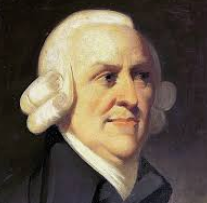
In every country it always is and must be the interest of the great body of the people to buy whatever they want of those who sell it cheapest. The proposition is so very manifest that it seems ridiculous to take any pains to prove it; nor could it ever have been called in question had not the interested sophistry of merchants and manufacturers confounded the common sense of mankind. Their interest is, in this respect, directly opposite to that of the great body of the people.
▼
Source
source
Chapter III, Part II, p. 531.
4 months 2 weeks ago
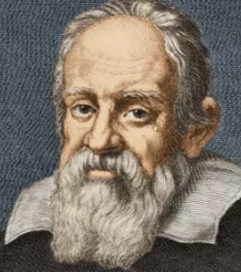
What has philosophy got to do with measuring anything? It's the mathematicians you have to trust, and they measure the skies like we measure a field.
▼
Source
source
Matteo in Concerning the New Star
8 months 3 weeks ago
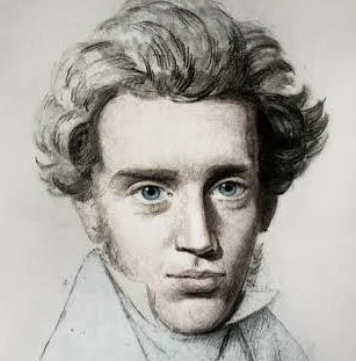
From the Christian point of view it stands firm that the truly Christian venturing requires probability.
8 months 3 weeks ago
When God chooses to let himself be born in lowliness, when he who holds all possibilities in his hand takes upon himself the form of a lowly servant, when he goes about defenseless and lets people do with him what they will, he surely must know well enough what he is doing and why he wills it; but for all that it is he who has people in his power and not they who have power over him-so history ought not play Mr. Malapert by this wanting to make manifest who he was.

7 months 3 weeks ago
We are born helpless. As soon as we are fully conscious we discover loneliness. We need others physically, emotionally, intellectually; we need them if we are to know anything, even ourselves.
▼
Source
source
Introduction
3 months 3 weeks ago
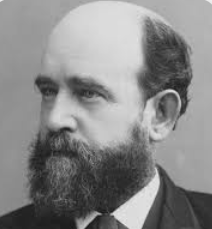
The rights of men to the use of land are not joint rights: they are equal rights. Were there only one man on earth, he would have a right to the use of the whole earth or any part of the earth. When there is more than one man on earth, the right to the use of land that any one of them would have, were he alone, is not abrogated: it is only limited. The right of each to the use of land is still a direct, original right, which he holds of himself, and not by the gift or consent of the others; but it has become limited by the similar rights of the others, and is therefore an equal right.
▼
Source
source
Part I : Declaration, Ch. III : "Social Statics" - The Right of Property
4 months 2 weeks ago
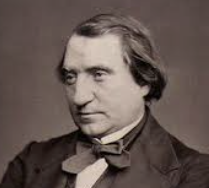
I can die when I wish to: that is my elixir of life.
▼
Source
source
The Republic.
6 months 2 weeks ago
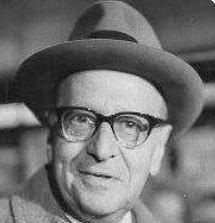
Reason as an organ for perceiving the true nature of reality and determining the guiding principles of our lives has come to be regarded as obsolete.
▼
Source
source
p. 18.
7 months 4 weeks ago
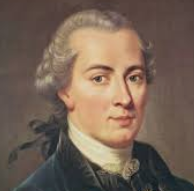
Thoughts without content are empty, intuitions without concepts are blind. The understanding can intuit nothing, the senses can think nothing. Only through their unison can knowledge arise.
▼
Source
source
A 51, B 75

8 months 1 week ago
What once sprung from earth sinks back into the earth.
▼
Source
source
Book II, lines 999-1000 (tr. Bailey)

6 months 3 weeks ago
On its pass through finitude, the being-for-itself of the counter-image expresses itself most potently as ""I-ness", as self-identical individuality. Just as a planet in its orbit no sooner reaches its farthest distance from the center than it returns to its closest proximity, so the point of the farthest distance from God, the I-ness, is also the moment of its return to the Absolute, of the re-absorption into the ideal.
▼
Source
source
P. 30
6 months 3 weeks ago
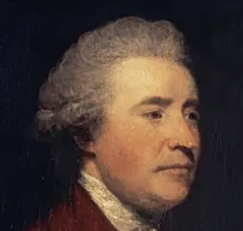
We have an enemy, to whose virtues we can owe nothing; but on this occasion we are infinitely obliged to one of his vices. We owe more to his insolence than to our own precaution.
▼
Source
source
p.3
5 months 3 weeks ago
Primitivism has become the vulgar cliche of much modern art and speculation.
▼
Source
source
(p. 77)
7 months 2 days ago
Solicitation and effort or conation belong properly to animate beings alone. When they are attributed to other things, they must be taken in a metaphorical sense; but a philosopher should abstain from metaphor.
▼
Source
source
Paragraph 3
7 months 3 weeks ago
Wisdom and contrivance are shown in overcoming difficulties, so there is no place for them in a Being for whom no difficulties exist.
▼
Source
source
pages 176-177; Early Modern Texts page 16
7 months 3 weeks ago
I never turned recreant to intellectual culture, or ceased to consider the power and practice of analysis as an essential condition both of individual and of social improvement. But I thought that it had consequences which required to be corrected, by joining other kinds of cultivation with it. The maintenance of a due balance among the faculties, now seemed to me of primary importance. The cultivation of the feelings became one of the cardinal points in my ethical and philosophical creed.
▼
Source
source
(pp. 143-144)
3 months 3 weeks ago
Blessed are those eyes that have seen more water than any man! Blessed be that haughty mind that aimed at the greatest hope! May you be blessed who row the current your life longand now with dry unfreshened lips descend to Hadesto find the hidden deathless springs and slake your thirst! My son, it's death who keeps and pours the deathless waters.
▼
Source
source
Voice of the Nile, from Odysseus' story, Book VIII, line 1290 (the first line is taken from an Egyptian hieroglyph.)
8 months 3 weeks ago
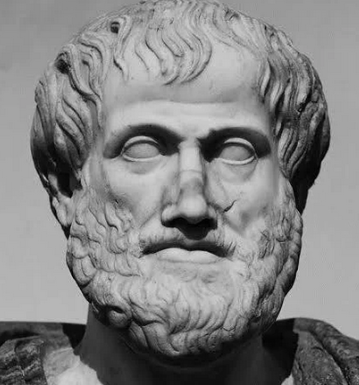
But it is clear there is a difference in the ends proposed: for in some cases they are activities, and in others results beyond the mere activities, and where there are certain ends beyond and beside the actions, the results are naturally superior to the activities. Now, as there are numerous kinds of actions and numerous arts and sciences, it follows that the ends are also various. Thus the end of the healing art is health, of ship-building ships, of strategy victory, of economy wealth.

6 months 2 weeks ago
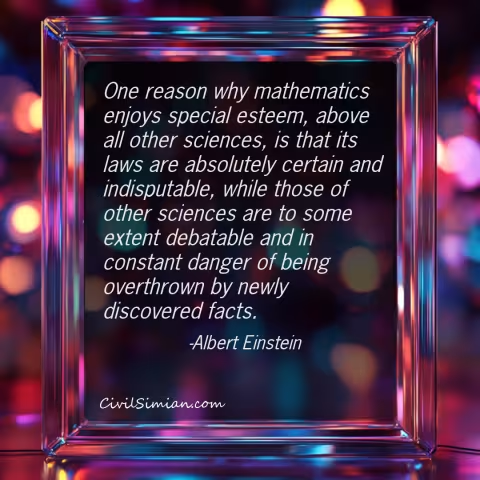
The way in which a society organizes the life of its members ... is one "project" of realization among others. But once the project has become operative in the basic institutions and relations, it tends to become exclusive and to determine the development of the society as a whole.
▼
Source
source
p. xlviii

7 months 3 weeks ago
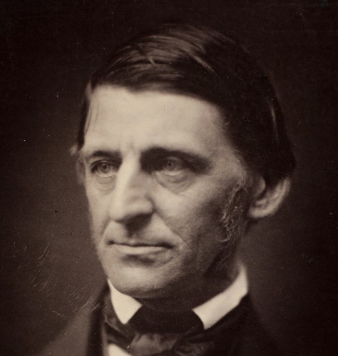
But genius looks forward: the eyes of men are set in his forehead, not in his hindhead: man hopes: genius creates.
▼
Source
source
par. 18
5 months 3 weeks ago
We now live in a technologically prepared environment that blankets the earth itself. The humanly contrived environment of electric information and power has begun to take precedence over the old environment of "nature." Nature, as it were, begins to be the content of our technology.
▼
Source
source
p. 276
6 months 3 weeks ago
A self-respecting man is a man without a country. A fatherland is birdlime...
4 months 4 days ago
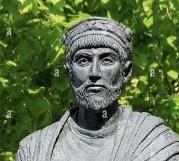
I make known unto thee how He hath provided for the bodily health of us all, by having produced Æsculapius, the Preserver of the universe; and how he hath communicated to us virtue of every kind, by sending down Aphrodite in company with Athene for our guardian; having made it all but a law that no one should use copulation except for the end of generating his like. For this reason truly, according to his revolutions and seasons, do the various vegetable and animal races feel themselves stirred towards the generation of their kind. What need is there to magnify the glory of his rays, and of his light? A night without moon, and without stars, how terrible is it! Let anyone reflect on this, in order that he may estimate how great a blessing is the light we derive from the Sun!
6 months 2 weeks ago
Hegel's philosophy revolved about the universality of reason; it was a rational system with its every part (the subjective as well as the objective spheres) integrated into a comprehensive whole. Marx shows that capitalist society first put such a universality into practice.
▼
Source
source
P. 286-287
3 months 3 weeks ago
This is the moment of greatest crisis. This is the signal for the March to begin. If you do not hear this Cry tearing at your entrails, do not set out.
7 months 3 weeks ago
There are two classes of poets - the poets by education and practice, these we respect; and poets by nature, these we love.
▼
Source
source
Parnassus (1874) Preface
4 months 1 week ago
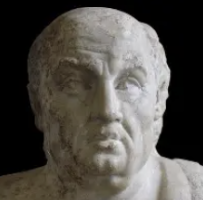
Nothing becomes so offensive so quickly as grief. When fresh it finds someone to console it, but when it becomes chronic, it is ridiculed and rightly.
▼
Source
source
Line 13.
7 months 4 weeks ago
I freely admit that the remembrance of David Hume was the very thing that many years ago first interrupted my dogmatic slumber and gave a completely different direction to my researches in the field of speculative philosophy.
6 months 5 days ago
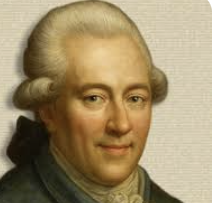
Sickness is mankind's greatest defect.
▼
Source
source
F 100
7 months 3 weeks ago
Of course, he who has put forth his total strength in fit actions, has the richest return of wisdom.
▼
Source
source
par. 28
7 months 3 weeks ago
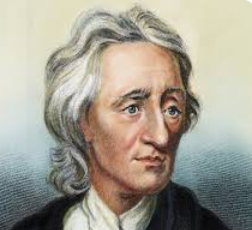
The law of faith, being a covenant of free grace, God alone can appoint what shall be necessarily believed by everyone whom He will justify. What is the faith which He will accept and account for righteousness, depends wholly on his good pleasure. For it is of grace, and not of right, that this faith is accepted. And therefore He alone can set the measures of it: and what he has so appointed and declared is alone necessary. No-body can add to these fundamental articles of faith; nor make any other necessary, but what God himself hath made, and declared to be so. And what these are which God requires of those who will enter into, and receive the benefits of the new covenant, has already been shown. An explicit belief of these is absolutely required of all those to whom the gospel of Jesus Christ is preached, and salvation through his name proposed.
▼
Source
source
§ 156

8 months 4 weeks ago
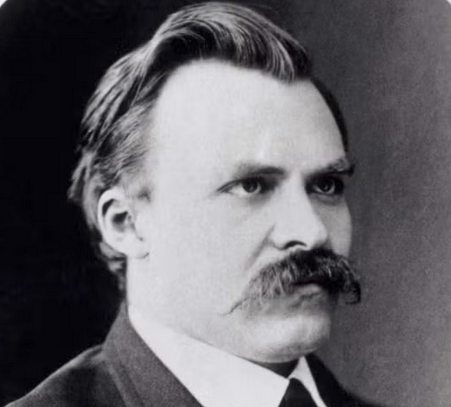
The reasons and purposes for habits are always lies that are added only after some people begin to attack these habits and to ask for reasons and purposes. At this point the conservatives of all ages are thoroughly dishonest: they add lies.
5 months 2 days ago
Knowledge grows, but human beings remain much the same.Belief in progress is a relic of the Christian view of history as a universal narrative, and an intellectually rigorous atheism would start by questioning it.
5 months 2 weeks ago
The culture of a civilization is the art and literature through which it rises to consciousness of itself and defines its vision of the world.
▼
Source
source
"What is Culture?" (p. 2)
6 months 3 weeks ago
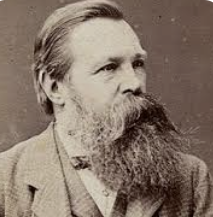
So long as it is not possible to produce so much that there is enough for all, with more left over for expanding the social capital and extending the forces of production - so long as this is not possible, there must always be a ruling class directing the use of society's productive forces, and a poor, oppressed class. How these classes are constituted depends on the stage of development.

4 months 2 weeks ago
Bukharin, like Lenin, regarded the system of basing economic life on mass terror not as a transient necessity but as a permanent principle of socialist organization. He did not shrink from justifying all means of coercion and held, like Trotsky at the same period, that the new system called essentially for the militarization of labour - i.e. the use of police and military force to compel the whole population to work in such places and conditions as the state might arbitrarily decree. Indeed, once the market is abolished there is no longer any free sale of labour or competition between workers, and police coercion is therefore the only means of allocating "human resources". If hired labour is eliminated, only compulsory labour remains. In other words, socialism - as conceived by both Trotsky and Bukharin at this time - is a permanent, nation-wide labour camp.
▼
Source
source
(pg. 28-9)
7 months 3 weeks ago
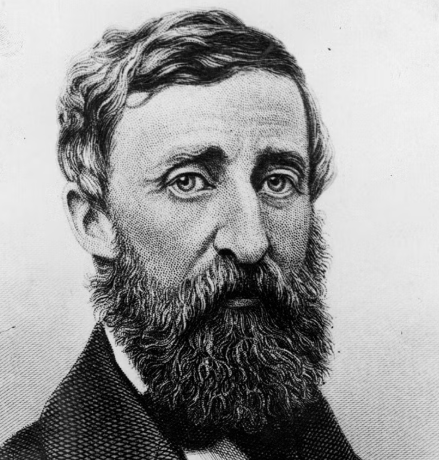
For eighteen hundred years, though perchance I have no right to say it, the New Testament has been written; yet where is the legislator who has wisdom and practical talent enough to avail himself of the light which it sheds on the science of legislation?
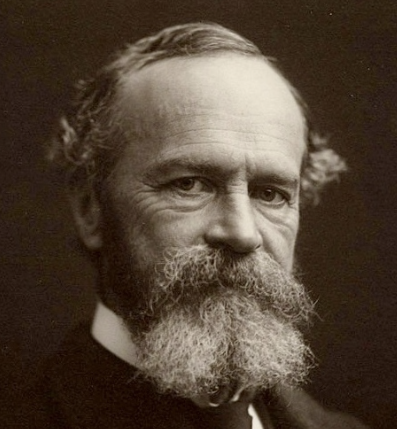
7 months 3 weeks ago
When memory begins to decay, proper names are what go first ...[C]ommon qualities and names have contracted an infinitely greater number of associations ...than the names of most of the persons ...Their memory is better organized. ...'Organization' means numerous associations; and the more numerous the associations, the greater the number of paths of recall. For the same reason... words... which form the grammatical framework of all our speech, are the very last to decay.
▼
Source
source
Ch. 16
7 months 3 weeks ago
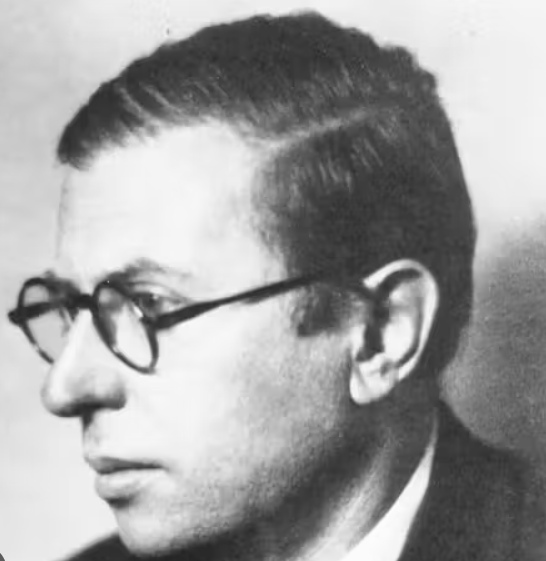
I entered the Communist Party because its cause was just and I will leave it when it ceases to be just.
▼
Source
source
Hugo to Hoederer, Act 5, sc. 3

6 months 2 weeks ago
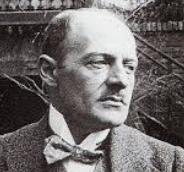
The ultimate goal of the arriviste's aspirations is not to acquire a thing of value, but to be more highly esteemed than others. He merely uses the "thing" as an indifferent occasion for overcoming the oppressive feeling of inferiority which results from his constant comparisons.
▼
Source
source
L. Coser, trans. (1973), pp. 55-56
6 months 3 weeks ago
Big industry, competition and generally the individualistic organization of production have become a fetter which it must and will shatter.
6 months 3 weeks ago
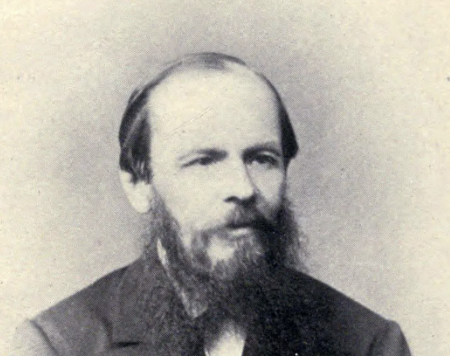
I have never in my life met a man like him for noble simplicity, and boundless truthfulness. I understood from the way he talked that anyone who chose could deceive him, and that he would forgive anyone afterwards who had deceived him, and that was why I grew to love him.
▼
Source
source
Part 4, Chapter 8
CivilSimian.com created by AxiomaticPanic, CivilSimian, Kalokagathia