

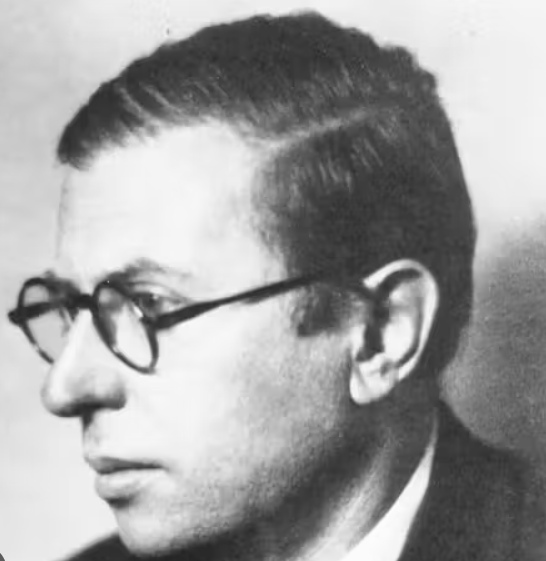
7 months 3 weeks ago
One is still what one is going to cease to be and already what one is going to become. One lives one's death, one dies one's life.
▼
Source
source
Book 2, "The Melodious Child Dead in Me"
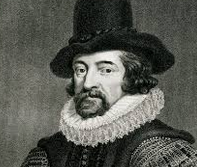
8 months 4 days ago
States as great engines move slowly.
▼
Source
source
Book II
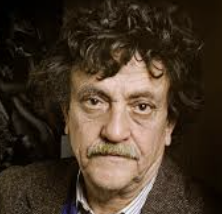
5 months 3 weeks ago
All these people talk so eloquently about getting back to good old-fashioned values. Well, as an old poop I can remember back to when we had those old-fashioned values, and I say let's get back to the good old-fashioned First Amendment of the good old-fashioned Constitution of the United States-and to hell with the censors! Give me knowledge or give me death!
▼
Source
source
As quoted in "An Interview with Kurt Vonnegut, Jr., Carey Horwitz, Library Journal, Apr. 15, 1973: 1131
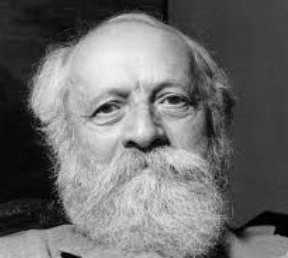
6 months 2 weeks ago
God ... desires His creature to be able to oppose Him. He has given that creature freedom. ... When man turns away from evil with that whole measure of power with which he is able to rebel against God, then he has truly turned to God.
▼
Source
source
p. 44
3 months 2 weeks ago
The moral decline we are compelled to witness and the suffering it engenders are so oppressive that one cannot ignore them even for a moment. No matter how deeply one immerses oneself in work, a haunting feeling of inescapable tragedy persists. Still, there are moments when one feels free from one's own identification with human limitations and inadequacies. At such moments, one imagines that one stands on some spot of a small planet, gazing in amazement at the cold yet profoundly moving beauty of the eternal, the unfathomable: life and death flow into one, and there is neither evolution nor destiny; only being.
▼
Source
source
Letter to Queen Mother Elisabeth of Belgium (9 January 1939), asking for her help in getting an elderly cousin of his out of Germany and into Belgium. Quoted in Einstein on Peace edited by Otto Nathan and Heinz Norden (1960), p. 282


5 months 4 weeks ago
But it is not to be conceived that mere mechanical causes could give birth to so many regular motions: since the Comets range over all parts of the heavens, in very eccentric orbits. For by that kind of motion they pass easily through the orbs of the Planets, and with great rapidity; and in their aphelions, where they move the slowest, and are detain'd the longest, they recede to the greatest distances from each other, and thence suffer the least disturbance from their mutual attractions.
6 months 4 days ago
The sure conviction that we could if we wanted to is the reason so many good minds are idle.
▼
Source
source
K 27
6 months 3 weeks ago
I suddenly stopped and looked out at the sea and thought, my God, how beautiful this is ... for 26 years I had never really looked at it before.
▼
Source
source
On his greater appreciation of the scenery of the world, after his near-death experience, as quoted in "Did atheist philosopher see God when he 'died'?" by William Cash, in National Post (3 March 2001).

8 months 3 days ago
For my own part, I may desire in general to be other than I am; I may condemn and dislike my whole form, and beg of Almighty God for an entire reformation, and that He will please to pardon my natural infirmity: but I ought not to call this repentance, methinks, no more than the being dissatisfied that I am not an angel or Cato. My actions are regular, and conformable to what I am and to my condition; I can do no better; and repentance does not properly touch things that are not in our power; sorrow does.. I imagine an infinite number of natures more elevated and regular than mine; and yet I do not for all that improve my faculties, no more than my arm or will grow more strong and vigorous for conceiving those of another to be so.
▼
Source
source
Ch. 2
6 months 3 weeks ago
We have an enemy, to whose virtues we can owe nothing; but on this occasion we are infinitely obliged to one of his vices. We owe more to his insolence than to our own precaution.
▼
Source
source
p.3

7 months 2 weeks ago
Mathematics is as little a natural science as philosophy is one of the humanities. Philosophy in its essence belongs as little in the philosophical faculty as mathematics belongs to natural science. To house philosophy and mathematics in this way today seems to be a blemish or a mistake in the catalog of the universities. Plato put over the entrance to his Academy the words: "Let no one who has not grasped the mathematical enter here!"
▼
Source
source
p. 69,75
6 months 1 week ago
Rather, power is most powerful, most stable, where it creates a feeling of freedom and where it does not need to resort to violence.
6 months 1 week ago
If a young girl is being forced into a brothel she will not talk about her rights. In such a situation the word would sound ludicrously inadequate.
▼
Source
source
p. 63
5 months 3 weeks ago
The unformulated message of an assembly of news items from every quarter of the globe is that the world today is one city. All war is civil war. All suffering is our own.
▼
Source
source
p. 291
3 months 3 weeks ago
Descend you weary-laden, descend in the dark earth,help me to finish swiftly my dread master's shroud,let each hem hold my pain, each corner hide a crow,a lean, voracious crow to peck his heart out bit by bit.
▼
Source
source
Slave's prayer, Book XI, line 708
7 months 3 weeks ago
Life is a task to be done. It is a fine thing to say defunctus est; it means that the man has done his task.
▼
Source
source
"On the Sufferings of the World"
8 months 2 weeks ago
He who is not satisfied with a little, is satisfied with nothing.

6 months 1 week ago
Steiner goes further than this -- and this is his own central contribution to modern thought. He states that once we have made a habit of remembering Mozart and the stars, we shall find ourselves developing powers of 'spiritual vision.' We shall never again feel ourselves to be helpless victims of the external world.
▼
Source
source
p. 169
7 months 3 weeks ago
Hence money may be dirt, although dirt is not money.
▼
Source
source
Vol. I, Ch. 3, Section 2, pg. 123.
8 months 3 weeks ago
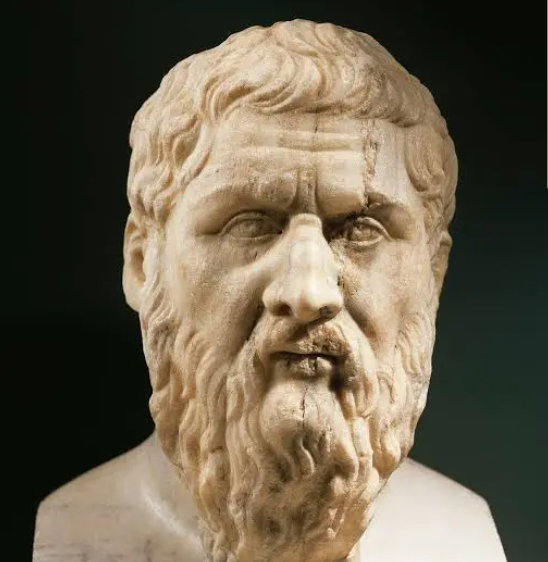
The attempt to separate everything from everything else is not only not in good taste but also shows that a man is utterly uncultivated and unphilosophical. The complete separation of each thing from all is the utterly final obliteration of all discourse. For our power of discourse is derived from the interweaving of the classes or ideas with one another.
3 months 3 weeks ago
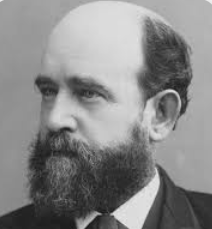
Those who are most to be considered, those for whose help the struggle must be made, if labor is to be enfranchised, and social justice won, are those least able to help or struggle for themselves, those who have no advantage of property or skill or intelligence, - the men and women who are at the very bottom of the social scale. In securing the equal rights of these we shall secure the equal rights of all. Hence it is, as Mazzini said, that it is around the standard of duty rather than around the standard of self-interest that men must rally to win the rights of man. And herein may we see the deep philosophy of Him who bade men love their neighbors as themselves. In that spirit, and in no other, is the power to solve social problems and carry civilization onward.
▼
Source
source
Ch. 21 : Conclusion
7 months 3 weeks ago
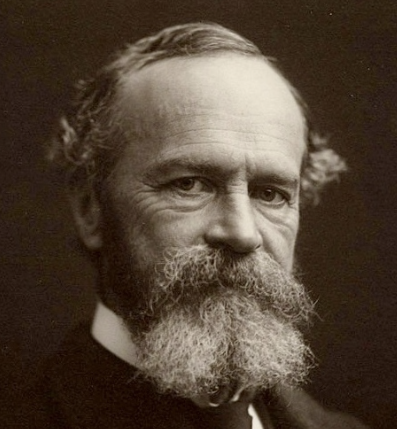
Alexander's career was piracy pure and simple, nothing but an orgy of power and plunder, made romantic by the character of the hero. There was no rational purpose in it, and the moment he died his generals and governors attacked one another.
6 months 4 days ago
Popular presentation today is all too often that which puts the mob in a position to talk about something without understanding it.
▼
Source
source
G 32

4 months 2 weeks ago
What the Universities have mainly done-what I have found the University did for me, was that it taught me to read in various languages and various sciences, so that I could go into the books that treated of these things, and try anything I wanted to make myself master of gradually, as I found it suit me. Whatever you may think of all that, the clearest and most imperative duty lies on every one of you to be assiduous in your reading; and learn to be good readers, which is, perhaps, a more difficult thing than you imagine. Learn to be discriminative in your reading-to read all kinds of things that you have an interest in, and that you find to be really fit for what you are engaged in.
6 months 3 weeks ago
Mankind will never be, in an eminent degree, virtuous and happy till each man shall possess that portion of distinction and no more, to which he is entitled by his personal merits. The dissolution of aristocracy is equally the interest of the oppressor and the oppressed. The one will be delivered from the listlessness of tyranny, and the other from the brutalizing operation of servitude.
▼
Source
source
Book V, Chapter 11, "Moral Effects of Aristocracy"

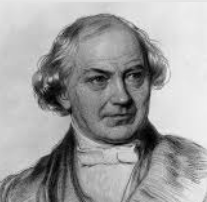
3 months 3 weeks ago
The Plan of the System, may aim at a Natural or an Artificial System. But no classes can be absolutely artificial, for if they were, no assertions could be made concerning them.
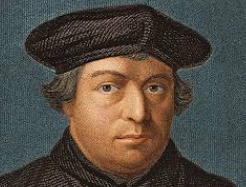
8 months 3 days ago
God the Almighty has made our rulers mad; they actually think they can do-and order their subjects to do-whatever they please. And the subjects make the mistake of believing that they, in turn, are bound to obey their rulers in everything.
▼
Source
source
p. 83
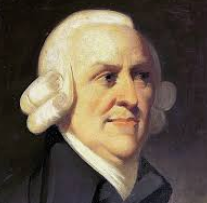
7 months 4 weeks ago
There is no art which one government sooner learns of another than that of draining money from the pockets of the people.
▼
Source
source
Chapter II, Part II, Appendix to Articles I and II.
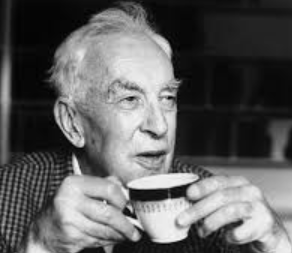
5 months 1 week ago
The value of the goal lies in the goal itself; and therefore the goal cannot be attained unless it is pursued for its own sake.
▼
Source
source
Vol. 12

7 months ago
The First thing that strikes a traveler in the United States is the innumerable multitude of those who seek to emerge from their original condition; and the second is the rarity of lofty ambition to be observed in the midst of the universally ambitious stir of society. No Americans are devoid of a yearning desire to rise, but hardly any appear to entertain hopes of great magnitude or to pursue very lofty aims. All are constantly seeking to acquire property, power, and reputation.
▼
Source
source
Book Three, Chapter XIX.
7 months 3 weeks ago
We are obviously heading for revolution-something I have never once doubted since 1850. The first act will include a by no means gratifying rehash of the stupidities of '48-'49. However, that's how world history runs its course, and one has to take it as one finds it.
▼
Source
source
Letter to Ludwig Kugelmann (28 December 1862), quoted in The Collected Works of Karl Marx and Friedrich Engels: Volume 41. Letters 1860-64 (2010), p. 437
3 months 3 weeks ago
It is between fifty and sixty years since I read it, and I then considered it merely the ravings of a maniac, no more worthy nor capable of explanation than the incoherences of our own nightly dreams. ... what has no meaning admits no explanation.
▼
Source
source
Letter to General Alexander Smyth, on the book of Revelation (or The Apocalypse of St. John the Divine)

7 months 3 weeks ago
It is error only, and not truth, that shrinks from inquiry.
4 months 1 week ago
Kindly remember that he whom you call your slave sprang from the same stock, is smiled upon by the same skies, and on equal terms with yourself breathes, lives and dies. It is just as possible for you to see in him a free-born man as for him to see in you a slave.
▼
Source
source
Line 10.
7 months 2 weeks ago
The sun provides the moon with its brightness.
▼
Source
source
Fragment in Plutarch De facie in orbe lunae, 929b, as quoted in The Riverside Dictionary of Biography (2005), p. 23
6 months 1 week ago
In all philosophic theory there is an ultimate which is actual in virtue of its accidents. It is only then capable of characterization through its accidental embodiments, and apart from these accidents is devoid of actuality. In the philosophy of organism this ultimate is termed creativity; and [[God] is its primordial, non-temporal accident. In monistic philosophies, Spinoza's or absolute idealism, this ultimate is God, who is also equivalently termed The Absolute. In such monistic schemes, the ultimate is illegitimately allowed a final, eminent reality, beyond that ascribed to any of its accidents. In this general position the philosophy of organism seems to approximate more to some strains of Indian, or Chinese, thought, than to western Asiatic, or European, thought. One side makes process ultimate; the other side makes fact ultimate.
▼
Source
source
Pt. I, ch. 1, sec. 2.
4 months 1 week ago
Yes, so it is that knowledge itself must die in order to blossom forth again in death as will; the freedom of thought, belief, and conscience, these wonderful flowers of three centuries will sink back into the lap of mother earth so that a new freedom, the freedom will, will be nourished with its most noble juices.
▼
Source
source
p. 19
5 months 4 weeks ago
I have not been able to discover the cause of those properties of gravity from phenomena, and I frame no hypotheses; for whatever is not deduced from the phenomena is to be called a hypothesis, and hypotheses, whether metaphysical or physical, whether of occult qualities or mechanical, have no place in experimental philosophy.
▼
Source
source
Letter to Robert Hooke (15 February 1676) [5 February 1676 (O.S.)]
4 months 1 week ago
As the French say, there are three sexes - men, women, and clergymen.
▼
Source
source
Vol. I, ch. 9, p. 313

4 months 2 weeks ago
Never has there been one possessed of complete sincerity who did not move others. Never has there been one who had not sincerity who was able to move others.
▼
Source
source
Discipline and Character, no. 55
6 months 3 weeks ago
The more cunning a man is, the less he suspects that he will be caught in a simple thing. The more cunning a man is, the simpler the trap he must be caught in.
4 months 4 days ago
Of all things nothing exists that is not by its substance the offspring of ocean. But why will you have me tell this to the vulgar? Although better to have been shrouded in silence, it nevertheless has been spoken; at all events I declare it, although all men will not readily receive the same.
3 months 3 weeks ago
Death's dry bones glowed with light in the erotic darkbut he woke not nor felt the two warm bodies merge;the male worm then took heart and in his wife's ear whispered:"With one sweet kiss, dear wife, we've conquered conquering Death!"
▼
Source
source
Orpheus' song, Book III, line 178

6 months 2 weeks ago
Master, we saw one casting out devils in thy name; and we forbad him, because he followeth not with us. And Jesus said unto him, Forbid him not: for he that is not against us is for us.
▼
Source
source
Luke 9:49-50 (KJV)
5 months 2 weeks ago
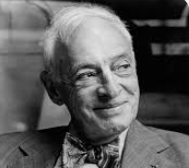
Americans must be the most sententious people in history. Far too busy to be religious, they have always felt that they sorely needed guidance.
▼
Source
source
The Jefferson Lectures (1977), p. 139
3 months 3 weeks ago
With clarity and quiet, I look upon the world and say: All that I see, hear, taste, smell, and touch are the creations of my mind. The sun comes up and the sun goes down in my skull. Out of one of my temples the sun rises, and into the other the sun sets. The stars shine in my brain; ideas, men, animals browse in my temporal head; songs and weeping fill the twisted shells of my ears and storm the air for a moment.
7 months 3 weeks ago
No difference of rank, position, or birth, is so great as the gulf that separates the countless millions who use their head only in the service of their belly, in other words, look upon it as an instrument of the will, and those very few and rare persons who have the courage to say: No! my head is too good for that; it shall be active only in its own service; it shall try to comprehend the wondrous and varied spectacle of this world and then reproduce it in some form, whether as art or as literature, that may answer to my character as an individual.
▼
Source
source
On Genius, Parerga and Paralipomena, Chapter III

6 months 3 weeks ago
Endless brooding over a question undermines you as much as a dull pain.
CivilSimian.com created by AxiomaticPanic, CivilSimian, Kalokagathia