

3 months 3 weeks ago
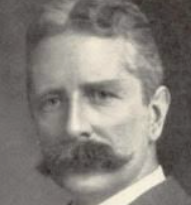
Philosophy has been called the search for the Permanent amid the changing. With this account of philosophy there is no need to quarrel. But having accepted it, a distinction remains to be observed, a distinction of capital importance, which we are in constant danger of forgetting. It is one thing to find the Permanent; it is another thing to find a form of words in which the Permanent shall stand permanently expressed. It is one thing to experience something fixed and changeless; it is another thing to fix this something by a changeless definition. The first may be possible, while the second remains impossible for ever.
6 months 3 weeks ago
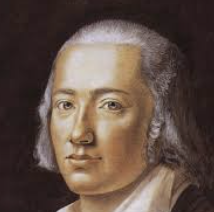
What has always made the state a hell on earth has been precisely that man has tried to make it heaven.
7 months 4 weeks ago
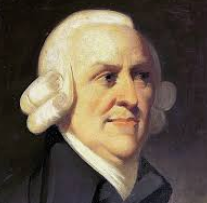
Fear is in almost all cases a wretched instrument of government, and ought in particular never to be employed against any order of men who have the smallest pretensions to independency.
▼
Source
source
Chapter I, Part III, p. 862.
3 months 2 weeks ago
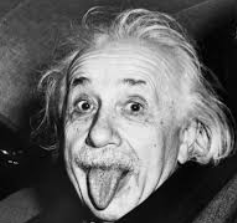
Much reading after a certain age diverts the mind from its creative pursuits. Any man who reads too much and uses his own brain too little falls into lazy habits of thinking, just as the man who spends too much time in the theaters is apt to be content with living vicariously instead of living his own life.

4 months 2 weeks ago
A loving heart is the beginning of all knowledge.
▼
Source
source
Article on Biography.
4 months 6 days ago
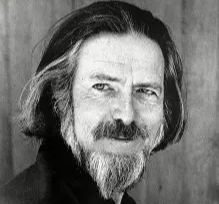
Additionally, in the United States, we define manliness in terms of aggression. I think it must be because we're frightened. We put on a show of being tough guys, but it's completely unnecessary, you know. If you have what it takes, you don't need to put on an act, and you certainly don't need to beat nature into submission. Why be hostile to nature?
▼
Source
source
p. 8



3 months 3 weeks ago
What I stand for is what I stand on.
▼
Source
source
Below in A Part
5 months 3 weeks ago
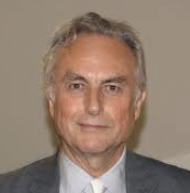
Another force driving progressive evolution is the so-called "arms-race." Prey animals evolve faster running speeds because predators do. Consequently predators have to evolve even faster running speeds, and so on, in an escalating spiral. Such arms races probably account for the spectacularly advanced engineering of eyes, ears, brains, bat "radar" and all the other high-tech weaponry that animals display.

3 months 3 weeks ago
The Pythagoreans thought those who teach for the sake of reward show themselves worse than sculptors, or artists who perform the work sitting. For these, when someone orders wood to make a statue of Hermes, search for wood suited to receive the proper form; while those pretend that they can readily produce the works of virtue from every nature.

7 months 3 weeks ago
Don't waste yourself in rejection, nor bark against the bad, but chant the beauty of the good.
▼
Source
source
Success
5 months 3 weeks ago
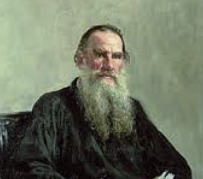
We measure the earth, sun, stars, and ocean depths. We burrow into the depths of the earth for gold. We search for rivers and mountains on the moon. We discover new stars and know their magnitudes. We sound the depths of gorges and build clever machines. Each day brings a new invention. What don't we think of! What can't we do! But there is something else, the most important thing of all, that we are missing. We do not know exactly what it is. We are like a small child who knows he does not feel well but cannot explain why. We are uneasy, because we know a lot of superfluous facts; but we do not know what is really important-ourselves.
▼
Source
source
p. 10
5 months 3 weeks ago
A real work of art destroys, in the consciousness of the receiver, the separation between himself and the artist.
3 months 3 weeks ago
My entire soul is a cry, and all my work the commentary on that cry.
▼
Source
source
Author's Introduction, p. 15
5 months 1 week ago
I finished the Iliad to-day... I never admired the old fellow so much, or was so strongly moved by him. What a privilege genius like his enjoys! I could not tear myself away. I read the last five books at a stretch during my walk to-day, and was at last forced to turn into a bypath, lest the parties of walkers should see me blubbering for imaginary beings, the creations of a ballad-maker who has been dead two thousand seven hundred years. What is the power and glory of Caesar and Alexander to that? Think what it would be to be assured that the inhabitants of Monomotapa would weep over one's writings.
▼
Source
source
Anno Domini 4551! Letter to his niece Margaret (August 1851), quoted in George Otto Trevelyan, The Life and Letters of Lord Macaulay, Volume II (1876), pp. 186-187
7 months 3 weeks ago
He that knows anything, knows this, in the first place, that he need not seek long for instances of his ignorance.
▼
Source
source
Book IV, Ch. 3, sec. 22

7 months 2 weeks ago
Philosophy will not be able to bring about a direct change of the present state of the world. This is true not only of philosophy but of all merely human meditations and endeavors. Only a god can still save us. I think the only possibility of salvation left to us is to prepare readiness, through thinking and poetry, for the appearance of the god or for the absence of the god during the decline; so that we do not, simply put, die meaningless deaths, but that when we decline, we decline in the face of the absent god.
5 months 3 weeks ago
Feelings, the most diverse, very strong and very weak, very significant and very worthless, very bad and very good, if only they infect the reader, the spectator, the listener, constitute the subject of art.
7 months 2 weeks ago
There is no more light in a genius than in any other honest man-but he has a particular kind of lens to concentrate this light into a burning point.
▼
Source
source
p. 41e
7 months 3 weeks ago
That which parents should take care of... is to distinguish between the wants of fancy, and those of nature.
▼
Source
source
Sec. 107
6 months 1 week ago
But as far as our own world is concerned, its gradual leveling-down - or, we might say, its death - appears to be proved. And how will this process affect the fate of our spirit? Will it wane with the degradation of the energy of our world and return to unconsciousness, or will it grow according as the utilizable energy diminishes and by virtue of the very efforts that it makes to retard this degradation and to dominate Nature? - for this it is that constitutes the life of the spirit. May it be that consciousness and its extended support are two powers in contraposition, the one growing at the expense of the other?
4 months 3 days ago
A vague uncritical idealism always lends itself to ridicule and too much of it might be a danger to mankind, leading it round in a futile wild-goose chase for imaginary ideals.
▼
Source
source
Ch. I : The Awakening, p. 4
5 months 3 weeks ago
Possibility is not a luxury; it is as crucial as bread. Undoing Gender.
▼
Source
source
Psychology Press. 2004. p. 29. ISBN 978-0-415-96922-2.
8 months 3 weeks ago
How then to enforce peace? Not by reason, certainly, nor by education. If a man could not look at the fact of peace and the fact of war and choose the former in preference to the latter, what additional argument could persuade him? What could be more eloquent as a condemnation of war than war itself? What tremendous feat of dialectic could carry with it a tenth the power of a single gutted ship with its ghastly cargo?
6 months 1 week ago
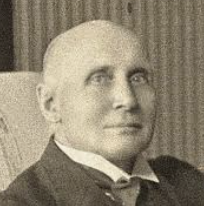
A culture is in its finest flower before it begins to analyze itself.
▼
Source
source
Ch. 22, August 17, 1941.

4 months 2 weeks ago
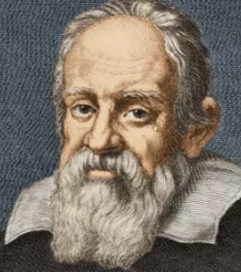
I was obliged to retract, like a good Catholic, this opinion of mine; and as a punishment my dialogue was prohibited; and after five months being dismissed from Rome (at the time that the city of Florence was infected with plague), the habitation which with generous pity was assigned to me, was that of the dearest friend I had in Siena, Monsignor the Archbishop Piccolomini, whose most agreeable conversation I enjoyed with such quite and satisfaction of mind, that having there resumed my studies, I discovered and demonstrated a great number on the mechanical conclusions on the resistance of solids ... after about five months, the pestilence having ceased, the confinement of that house was changed by His Holiness for the freedom of the country so agreeable to me, whence I returned to the villa of Bellosguardo, and afterwards to Arcetri, where I still breathe salubrious air near my dear native-country Florence.
▼
Source
source
Stay sane. p. 251-253
8 months 2 days ago
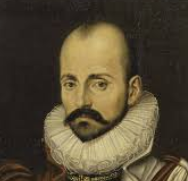
We only labor to stuff the memory, and leave the conscience and the understanding unfurnished and void.
▼
Source
source
Book I, Ch. 25
6 months 3 weeks ago
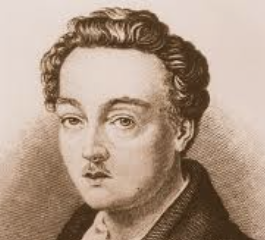
Murder begins where self-defense ends.
▼
Source
source
Act I.

3 months 3 weeks ago
To preserve the freedom of the human mind then and freedom of the press, every spirit should be ready to devote itself to martyrdom; for as long as we may think as we will, and speak as we think, the condition of man will proceed in improvement. The generation which is going off the stage has deserved well of mankind for the struggles it has made, and for having arrested the course of despotism which had overwhelmed the world for thousands and thousands of years. If there seems to be danger that the ground they have gained will be lost again, that danger comes from the generation your contemporary. But that the enthusiasm which characterizes youth should lift its parricide hands against freedom and science would be such a monstrous phenomenon as I cannot place among possible things in this age and country.
▼
Source
source
Letter to William Green Mumford
8 months 3 weeks ago
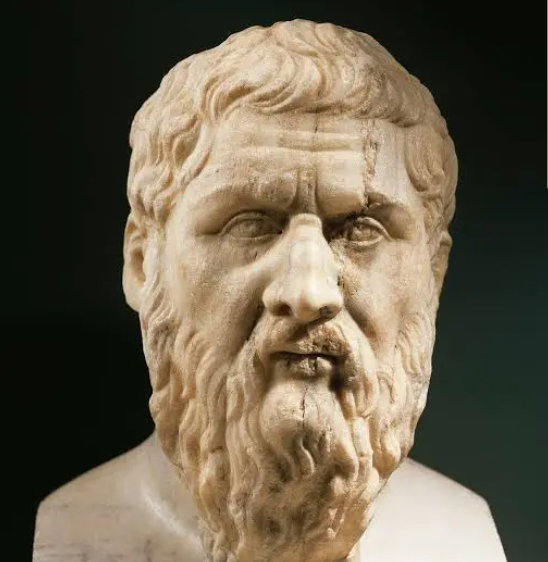
We certainly must contend by every argument against him who does away with knowledge or reason or mind and then makes any dogmatic assertion about anything. The philosopher, who pays the highest honor to these things, must necessarily, as it seems, because of them refuse to accept the theory of those who say the universe is at rest, whether as a unity or in many forms, and must also refuse utterly to listen to those who say that being is universal motion; he must say that being and the universe consist of both.
7 months 3 weeks ago
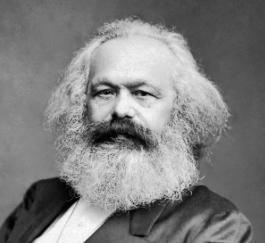
In every stock-jobbing swindle everyone knows that some time or other the crash must come, but every one hopes that it may fall on the head of his neighbour, after he himself has caught the shower of gold and placed it in safety.
▼
Source
source
Vol. I, Ch. 10, Section 5, pg. 296.
7 months 3 weeks ago
Most people, at a crisis, feel more loyalty to their nation than to their class.
▼
Source
source
Ch. 8: Economic Power
7 months 3 weeks ago
Do not yet see, that, if the single man plant himself indomitably on his instincts, and there abide, the huge world will come round to him.
▼
Source
source
par. 43
6 months 2 weeks ago
We cannot avoid conflict, conflict with society, other individuals and with oneself. Conflicts may be the sources of defeat, lost life and a limitation of our potentiality but they may also lead to greater depth of living and the birth of more far-reaching unities, which flourish in the tensions that engender them.
▼
Source
source
As quoted in Turning Conflict Into Profit : A Roadmap for Resolving Personal and Organizational Disputes (2005) by Larry Axelrod and Rowland Johnson
5 months 1 week ago
If...we look at the essential characteristics of the Whig and the Tory, we may consider each of them as the representative of a great principle, essential to the welfare of nations. One is, in an especial manner, the guardian of liberty, and the other, of order. One is the moving power, and the other the steadying power of the state. One is the sail, without which society would make no progress, the other the ballast, without which there would be small safety in a tempest.
▼
Source
source
The Earl of Chatham', The Edinburgh Review (October 1844), quoted in T. B. Macaulay, Critical and Historical Essays Contributed to The Edinburgh Review: A New Edition (1852), p. 725


6 months 1 week ago
It reminds us that a man driven to desire to possess a certain female is a highly purposive individual. We have already noted that evolution tends to mark time when individuals have no reason to evolve. The same applies to individuals; they may be talented and intelligent, and yet waste their lives because they somehow lack the motivation to make use of these faculties. The best piece of luck that can befall any individual is to have a strong sense of purpose.
▼
Source
source
p. 225
6 months 3 weeks ago
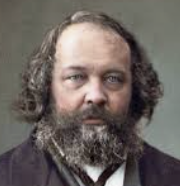
Political Freedom without economic equality is a pretense, a fraud, a lie; and the workers want no lying.
▼
Source
source
The Red Association

6 months 3 weeks ago
I like thought which preserves a whiff of flesh and blood, and I prefer a thousand times an idea rising from sexual tension or nervous depression to empty abstraction.
4 months 2 weeks ago
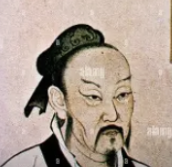
The way of learning is none other than finding the lost mind.
▼
Source
source
6A:11, as translated by Wing-tsit Chan in A Source Book in Chinese Philosophy (1963), p. 58
6 months 3 weeks ago
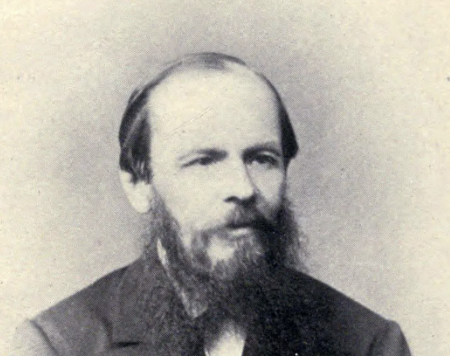
To be in love is not the same as loving. You can be in love with a woman and still hate her.
4 months 2 weeks ago
Democracy, which means despair of finding any Heroes to govern you, and contented putting up with the want of them,-alas, thou too, mein Lieber, seest well how close it is of kin to Atheism, and other sad Isms: he who discovers no God whatever, how shall he discover Heroes, the visible Temples of God?

5 months 2 days ago
The irony of the post-Cold War period is that the fall of communism was followed by the rise of another utopian ideology. In American and Britain, and to a lesser extent other Western countries, a type of market fundamentalism became the guiding philosophy. The collapse of American power that is underway is the predictable upshot.
7 months 2 weeks ago
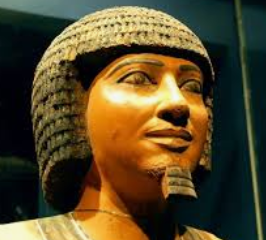
Be a craftsman in speech that thou mayest be strong, for the strength of one is the tongue, and speech is mightier than all fighting.
▼
Source
source
Translated by J. H. Breasted, The Dawn of Conscience (New York: Charles Scribner's Sons, 1933) p. 131
6 months 3 weeks ago
No psychic value can disappear without being replaced by another of equivalent intensity.
▼
Source
source
p. 209
3 months 3 weeks ago
Religion is a subject on which I have ever been most scrupulously reserved. I have considered it as a matter between every man and his Maker in which no other, and far less the public, had a right to intermeddle.
▼
Source
source
Letter to Richard Rush
6 months 3 weeks ago
But we must not forget that only a very few people are artists in life; that the art of life is the most distinguished and rarest of all the arts. Modern Man in Search of a Soul.
▼
Source
source
Section - The Stages of Life

6 months 3 weeks ago
Nor is prescription of government formed upon blind unmeaning prejudices-for man is a most unwise, and a most wise, being. The individual is foolish. The multitude, for the moment, is foolish, when they act without deliberation; but the species is wise, and when time is given to it, as a species it almost always acts right.
▼
Source
source
Speech in the House of Commons against William Pitt's motion for parliamentary reform (7 May 1782)
CivilSimian.com created by AxiomaticPanic, CivilSimian, Kalokagathia