


3 months 3 weeks ago
The teachers are everywhere. What is wanted is a learner.
▼
Source
source
"Healing"

6 months 4 days ago
Many things about our bodies would not seem to us so filthy and obscene if we did not have the idea of nobility in our heads.
▼
Source
source
D 6
6 months 1 week ago
The vain man is in like cause with the avaricious - he takes the mean for the end; forgetting the end he pursues the means for its own sake and goes no further. The seeming to be something, conducive to being it, ends by forming our objective. We need that others should believe in our superiority to them in order that we may believe in it ourselves, and upon their belief base our faith in our own persistence, or at least in the persistence of our fame. We are more grateful to him that congratulates us on the skill with which we defend a cause than we are to him who recognizes the truth or goodness of the cause itself. A rabid mania for originality is rife in the modern intellectual world and characterizes all individual effort. We would rather err with genius than hit the mark with the crowd.


7 months 3 weeks ago
I wish that life should not be cheap, but sacred. I wish the days to be as centuries, loaded, fragrant.
▼
Source
source
Considerations by the Way

6 months 1 week ago
The history of the Romanovs is an Elizabethan tragedy that lasts for three centuries. Its keynote is cruelty, a barbaric, pointless kind of cruelty that has always been common in the East, but that came to Europe only recently, in the time of Hitler.
▼
Source
source
pp. 61-62

7 months 4 weeks ago
I had hoped that out of so many stories you would at least have produced one or two, which could hardly be questioned, and which would clearly show that ghosts or spectres exist. The case you relate... seems to me laughable. In like manner it would be tedious here to examine all the stories of people, who have written on these trifles. To be brief, I cite the instance of Julius Caesar, who, as Suetonius testifies, laughed at such things and yet was happy. ...And so should all who reflect on the human imagination, and the effects of the emotions, laugh at such notions; whatever Lavater and others, who have gone dreaming with him in the matter, may produce to the contrary.
▼
Source
source
Letter to Hugo Boxel (October 1674) The Chief Works of Benedict de Spinoza (1891) Tr. R. H. M. Elwes, Vol. 2, Letter 58 (54).
7 months 1 week ago
Lamachus chid a captain for a fault; and when he had said he would do so no more, "Sir," said he, "in war there is no room for a second miscarriage." Said one to Iphicrates, "What are ye afraid of?" "Of all speeches," said he, "none is so dishonourable for a general as 'I should not have thought of it.'"
▼
Source
source
52 Iphicrates

5 months 3 weeks ago
Literature is idiosyncratic arrangements in horizontal lines in only twenty-six symbols, ten arabic numbers, and about eight punctuation marks.
▼
Source
source
Public conversation with Lee Stringer, in Like Shaking Hands With God

7 months 3 weeks ago
I have received, sir, your new book against the human species, and I thank you for it. You will please people by your manner of telling them the truth about themselves, but you will not alter them. The horrors of that human society-from which in our feebleness and ignorance we expect so many consolations-have never been painted in more striking colours: no one has ever been so witty as you are in trying to turn us into brutes: to read your book makes one long to go on all fours. Since, however, it is now some sixty years since I gave up the practice, I feel that it is unfortunately impossible for me to resume it: I leave this natural habit to those more fit for it than are you and I.
▼
Source
source
Letter to Jean-Jacques Rousseau, August 30, 1755 referring to Rousseau's Discourse on Inequality.

5 months 3 days ago
All art is autobiographical; the pearl is the oyster's autobiography.
▼
Source
source
On the autobiographical nature of his films, in The Atlantic
6 months 2 weeks ago
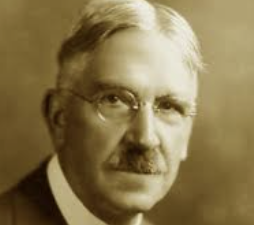
In the late eighteenth and the greater part of the nineteenth centuries appeared the first marked cultural shift in the attitude taken toward change. Under the names of indefinite perfectibility, progress, and evolution, the movement of things in the universe itself and of the universe as a whole began to take on a beneficent instead of hateful aspect.
7 months 3 weeks ago
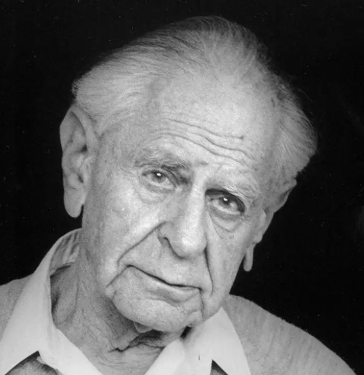
I disbelieve in specialization and... experts. ...[P]aying too much respect to the specialist ...[is] destroying the commonwealth of learning, the rationalist tradition, and science ...

7 months 3 weeks ago
Probably in time physiologists will be able to make nerves connecting the bodies of different people; this will have the advantage that we shall be able to feel another man's tooth aching.
▼
Source
source
Human Knowledge: Its Scope and Limits (1948), p. 493
7 months 1 week ago
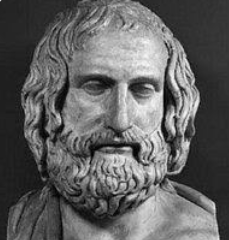
As touching the gods, I do not know whether they exist or not, nor how they are featured; for there is much to prevent our knowing: the obscurity of the subject and the brevity of human life.
▼
Source
source
Opening lines of Concerning the Gods (DK 80 B4).

6 months 3 weeks ago
We cannot hope to give here a final clarification of the essence of fact, judgement, object, property; this task leads into metaphysical abysses; about these one has to seek advice from men whose name cannot be stated without earning a compassionate smile-e.g.
▼
Source
source
Fichte. Hermann Weyl, Das Kontinuum. Kritische Untersuchungen uber die Grundlagen der Analysis (1918)

6 months 6 days ago
People often say to me, You don't know what a wife and mother feels. No, I say, I don't and I'm very glad I don't. And they don't know what I feel. ... I am sick with indignation at what wives and mothers will do of the most egregious selfishness. And people call it all maternal or conjugal affection, and think it pretty to say so. No, no, let each person tell the truth from his own experience.
▼
Source
source
Letter to Madame Mohl

6 months 2 weeks ago
The Kingdom is like a wise fisherman who cast his net into the sea and drew it up from the sea full of small fish. Among them the wise fisherman found a fine large fish. He threw all the small fish back into the sea and chose the large fish without difficulty. Whoever has ears to hear, let him hear.

3 months 3 weeks ago
If democracy has become superfluous or annoying to the bourgeoisie, it is on the contrary necessary and indispensable to the working class. It is necessary to the working class because it creates the political forms (autonomous administration, electoral rights, etc.) which will serve the proletariat as fulcrums in its task of transforming bourgeois society. Democracy is indispensable to the working class because only through the exercise of its democratic rights, in the struggle for democracy, can the proletariat become aware of its class interests and its historic task.
▼
Source
source
Ch.8
7 months 3 weeks ago
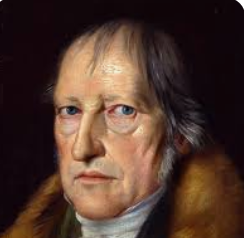
Without being known too well, it [India] has existed for millennia in the imagination of the Europeans as a wonderland. Its fame, which it has always had with regard to its treasures, both its natural ones, and in particular, its wisdom, has lured men there.
▼
Source
source
Friedrich Hegel .source: Contesting the Master Narrative, Jeffrey Cox and Shelton Stromquist Quoted from Gewali, Salil (2013).

8 months 3 weeks ago
The direction of the world overwhelms me at this time. In the long run, all the continents (yellow, black and brown) will spill over onto Old Europe. They are hundreds and hundreds of millions. They are hungry and they are not afraid to die. We no longer know how to die or how to kill. We could preach, but Europe believes in nothing. So, we must wait for the year 1000 or a miracle. For my part, I find it harder and harder to live before a wall.
3 months 3 weeks ago
How can a man be said to have a country where he has no right to a square inch of soil...
▼
Source
source
Ch. 2 : Political Dangers

6 months 1 week ago
The more Lil' Kim distorted her natural beauty to become a cartoonlike caricature of whiteness, the larger her success.

3 months 3 weeks ago
Knowing that religion does not furnish grosser bigots than law, I expect little from old judges.
▼
Source
source
Letter to Thomas Cooper

3 months 3 weeks ago
To change your mind and to follow him who sets you right is to be nonetheless the free agent that you were before. Remember that to change thy opinion and to follow him who corrects thy error is as consistent with freedom as it is to persist in thy error.
▼
Source
source
(Long translation) VIII, 16
4 months 1 week ago
All this talk: the state should do this or that, ultimately means: the police should force consumers to behave otherwise than they would behave spontaneously.
7 months 3 weeks ago
A man builds a fine house; and now he has a master, and a task for life: he is to furnish, watch, show it, and keep it in repair, the rest of his days.
▼
Source
source
Works and Days
4 months 2 weeks ago
In all human affairs, and especially in those that relate to war, ...leave always some room to fortune, and to accidents which cannot be foreseen.
▼
Source
source
The General History, Book II, Ch. 4 (trans. by Hampton)
4 months 1 week ago
The one loves to do good, the other to do harm; the one to help even strangers, the other to attack even its dearest friends.
6 months 1 week ago
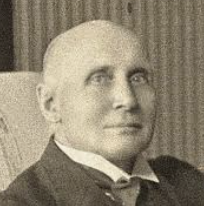
Rationalism is an adventure in the clarification of thought.
▼
Source
source
Pt. I, ch. 1, sec. 3.



4 months 2 weeks ago
The Book had in a high degree excited us to self-activity, which is the best effect of any book.
▼
Source
source
Bk. I, ch. 4.

6 months 2 weeks ago
Being good is just a matter of temperament in the end.
▼
Source
source
The Nice and the Good (1968), ch. 14, p. 127. Murdoch attributed this opinion to her character Kate Gray. It was not her own.
7 months 1 week ago
Rest gives relish to labour.
▼
Source
source
Of the Training of Children, 9 (Tr. Babbitt)

7 months 2 weeks ago
It's only by thinking even more crazily than philosophers do that you can solve their problems.
▼
Source
source
p. 75e

8 months 1 week ago
I prefer a short life with width to a narrow one with length.
7 months 3 weeks ago
He is great who is what he is from Nature, and who never reminds us of others.
▼
Source
source
Uses of Great Men
6 months 1 week ago
I've always believed that a writer has got to remain an outsider. If I was offered anything like the Nobel Prize for Literature, I'd find it an extremely difficult conflict because I'd be basically disinclined to accept.
▼
Source
source
Interview with Paul Newman in Abraxas Unbound #7
6 months 3 days ago
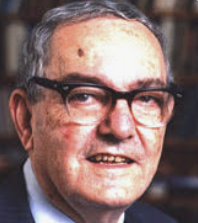
The empirical research of the last fifteen years on the structure of large organizations seems to confirm the hypothesis of Herbert Simon that human cognitive limits are a basic limiting factor in determining organization structures .
▼
Source
source
Jay R. Galbraith, "Organization design: An information processing view." Organizational Effectiveness Center and School 21 (1977). p. 21

7 months 3 weeks ago
The more you obey your conscience, the more your conscience will demand of you.
▼
Source
source
Book IV, Chapter 8, "Is Christianity Hard or Easy?"
7 months 3 weeks ago
It is hard to have patience with people who say 'There is no death' or 'Death doesn't matter.' There is death. And whatever is matters. And whatever happens has consequences, and it and they are irrevocable and irreversible. You might as well say that birth doesn't matter.

6 months 1 week ago
What the sorrowful Jew of Amsterdam called the essence of a thing, the effort that it makes to persist indefinitely in its own being, self-love, the longing for immortality, is it not perhaps the primal and fundamental condition of all reflective or human knowledge? And is it not therefore the true base, the real starting-point, of all philosophy, although the philosophers, perverted by intellectualism, do not recognize it?
5 months 3 weeks ago
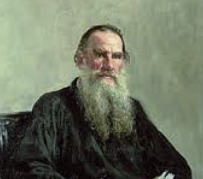
A real mother, who knows the will of God by experience, will prepare her children also to fulfil it. Such a mother will suffer if she sees her child overfed, effeminate, and dressed-up, for she knows that these things will make it difficult for it to fulfil the will of God which she recognizes.
3 months 3 weeks ago
Rememberest the gods, and that they wish not to be flattered, but wish all reasonable beings to be made like themselves; and... rememberest that what does the work of a fig-tree is a fig-tree, and that what does the work of a dog is a dog, and that what does the work of a bee is a bee, and that what does the work of a man is a man.
▼
Source
source
X, 8
4 months 6 days ago
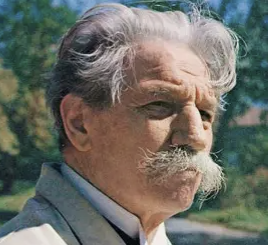
What really matters is that we should all of us realize that we are guilty of inhumanity. The horror of this realization should shake us out of our lethargy so that we can direct our hopes and our intentions to the coming of an era in which war will have no place.
6 months 1 week ago
And if it is grievous to be doomed one day to cease to be, perhaps it would be more grievous still to go on being always oneself, and no more than oneself, without being able to be at the same time other, without being able to be at the same time everything else, without being able to be all.
6 months 2 weeks ago
I will destroy this house, and no one will be able to build it....
CivilSimian.com created by AxiomaticPanic, CivilSimian, Kalokagathia