Universal fairness competes in the same lateral space as particularized ideology, but, it is the case that all ideology is bound by it if it is to remain civilized and not founded in a Hobbesian state of war.


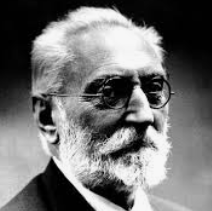
May not the absolute and perfect eternal happiness be an eternal hope, which would die if it were realized? Is it possible to be happy without hope? And there is no place for hope once possession has been realized, for hope, desire, is killed by possession. May it not be, I say, that all souls grow without ceasing, some in a greater measure than others, but all having to pass some time through the same degree of growth, whatever that degree may be, and yet without ever arriving at the infinite, at God, to whom they continually approach? Is not eternal happiness an eternal hope, with its eternal nucleus of sorrow in order that happiness shall not be swallowed up in nothingness?
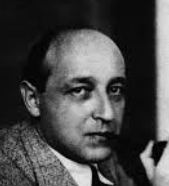
Once we recognize that all historical knowledge is relational knowledge, and can only be formulated with reference to the position of the observer, we are faced, once more, with the task of discriminating between what is true and what is false in such knowledge.
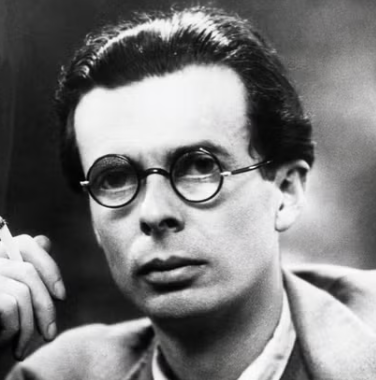
We can pool information about experiences, but never the experiences themselves. From family to nation, every human group is a society of island universes.
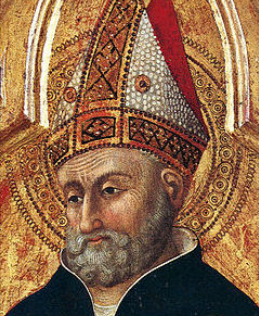
But the inner part is the better part; for to it, as both ruler and judge, all these messengers of the senses report the answers of heaven and earth and all the things therein, who said, "We are not God, but he made us." My inner man knew these things through the ministry of the outer man, and I, the inner man, knew all this, I, the soul, through the senses of my body. I asked the whole frame of earth about my God, and it answered, "I am not he, but he made me."
Thus heaven I've forfeited, I know it full well. My soul, once true to God, is chosen for hell.
Profound love demands a deep conception and out of this develops reverence for the mystery of life. It brings us close to all beings, to the poorest and smallest as well as all others.

The way for a person to develop a [writing] style is (a) to know exactly what he wants to say, and (b) to be sure he is saying exactly that. The reader, we must remember, does not start by knowing what we mean. If our words are ambiguous, our meaning will escape him. I sometimes think that writing is like driving sheep down a road. If there is any gate open to the left or the right the readers will most certainly go into it.
Never say, and never take seriously anyone who says, "I cannot believe that so-and-so could have evolved by gradual selection". I have dubbed this kind of fallacy "the Argument from Personal Incredulity". Time and again, it has proven the prelude to an intellectual banana-skin experience.
The public health authorities never mention the main reason many Americans have for smoking heavily, which is that smoking is a fairly sure, fairly honorable form of suicide.

We Americans are not usually thought to be a submissive people, but of course we are. Why else would we allow our country to be destroyed? Why else would we be rewarding its destroyers? Why else would we all - by proxies we have given to greedy corporations and corrupt politicians - be participating in its destruction? Most of us are still too sane to piss in our own cistern, but we allow others to do so and we reward them for it. We reward them so well, in fact, that those who piss in our cistern are wealthier than the rest of us. How do we submit? By not being radical enough. Or by not being thorough enough, which is the same thing.
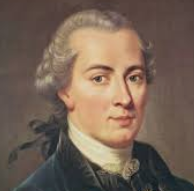
A spurious axiom of the first class is: Whatever is, is somewhere and sometime.
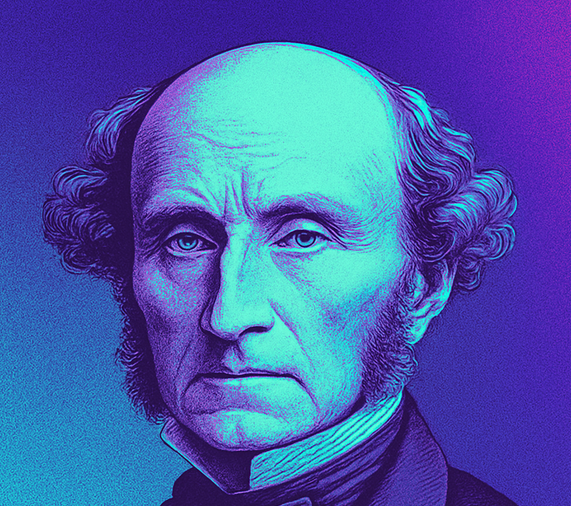
Conformity to nature has no connection whatever with right and wrong. The idea can never be fitly introduced into ethical discussions at all, except, occasionally and partially, into the question of degrees of culpability. To illustrate this point, let us consider the phrase by which the greatest intensity of condemnatory feeling is conveyed in connection with the idea of nature - the word "unnatural." That a thing is unnatural, in any precise meaning which can be attached to the word, is no argument for its being blamable; since the most criminal actions are to a being like man not more unnatural than most of the virtues.
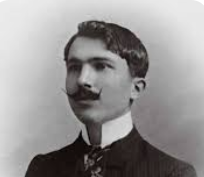
Everything you do reverberates throughout a thousand destinies. As you walk, you cut open and create that river bed into which the stream of your descendants shall enter and flow.
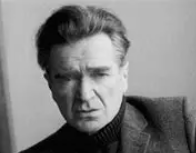
I like thought which preserves a whiff of flesh and blood, and I prefer a thousand times an idea rising from sexual tension or nervous depression to empty abstraction.
The indispensible is not necessarily the desirable.
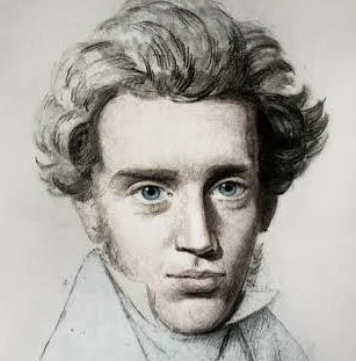
How absurd men are! They never use the liberties they have, they demand those they do not have. They have freedom of thought, they demand freedom of speech.
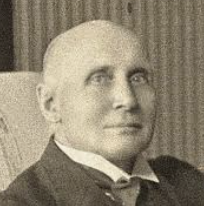
The science of pure mathematics, in its modern developments, may claim to be the most original creation of the human spirit.
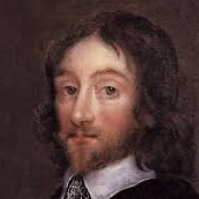
I have often admired the mystical way of Pythagoras, and the secret Magic of numbers.
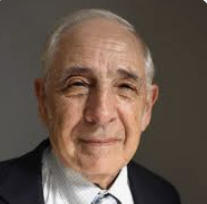
There are clear cases in which "understanding" literally applies and clear cases in which it does not apply; and these two sorts of cases are all I need for this argument.
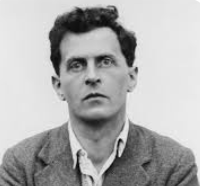
If God had looked into our minds he would not have been able to see there whom we were speaking of.
We are members of this Head, and this body cannot be decapitated. If the Head is in glory forever, so too are the members in glory forever, that Christ may be undivided forever.
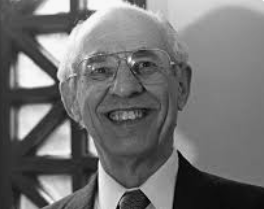
The philosophy of physics is continuous with physics itself. Just as certain issues in the Foundations of Mathematics have been discussed by both mathematicians and by philosophers of mathematics, so certain issues in the philosophy of physics have been discussed by both physicists and by philosophers of physics. And just as there are issues of a more epistemological kind that tend to concern philosophers of mathematics more than they do working mathematicians, so there are issues that concern philosophers of physics more than they do working physicists.
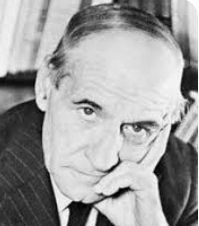
To-day the Enlightenment ideal has been changed into a reality; not only in legislation, which is the mere framework of public life, but in the heart of every individual, whatever his ideas may be, and even if he be a reactionary in his ideas, that is to say, even when he attacks and castigates institutions by which those rights are sanctioned.... The sovereignty of the unqualified individual, of the human being as such, generically, has now passed from being a juridical idea or ideal to be a psychological state inherent in the average man. And note this, that when what was before an ideal becomes a component part of reality, it inevitably ceases to be an ideal. The prestige and the magic that are attributes of the ideal are volatilised.
More and more it is becoming evident that what the West can most readily give to the East is its science and its scientific outlook. This is transferable from country to country, and from race to race, wherever there is a rational society.

Can the man say, Fiat lux, Let there be light; and out of chaos make a world? Precisely as there is light in himself, will he accomplish this.
This mortal Don Quixote died and descended into hell, which he entered lance on rest, and freed all the condemned, as he freed the galley slaves, and he shut the gates of hell, and tore down the scroll that Dante saw there and replaced it by one on which was written "Long live hope!" and escorted by those whom he had freed, and they laughing at him, he went to heaven. And God laughed paternally at him, and this divine laughter filled his soul with eternal happiness.
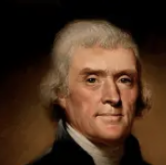
Do not be frightened from this inquiry by any fear of its consequences. If it ends in a belief that there is no god, you will find incitements to virtue in the comfort and pleasantness you feel in its exercise, and the love of others which it will procure you. If you find reason to believe there is a God, a consciousness that you are acting under his eye, and that he approves you, will be a vast additional incitement; if that there be a future state, the hope of a happy existence in that increases the appetite to deserve it; if that Jesus was also a god, you will be comforted by a belief of his aid and love.
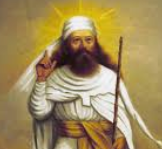
For a thinking man is where Wisdom is at home.

Remorse sleeps during a prosperous period but wakes up in adversity.
We live, in fact, in a world starved for solitude, silence, and privacy: and therefore starved for meditation and true friendship.
World,-this man is not a slave with thee! None of thy promotions is necessary for him. His place is with the stars of Heaven: to thee it may be momentous, to him it is indifferent, whether thou place him in the lowest hut, or forty feet higher at the top of thy stupendous high tower, while here on Earth. The joys of Earth that are precious, they depend not on thee and thy promotions. Food and raiment, and, round a social hearth, souls who love him, whom he loves: these are already his. He wants none of thy rewards;
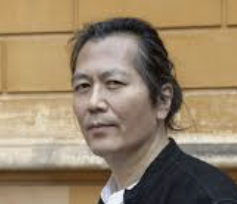
It is not honourable to attack an enemy without putting yourself at risk.
As pure a son of liberty as I have ever known.
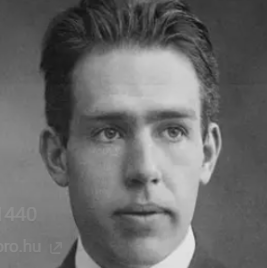
Physics is to be regarded not so much as the study of something a priori given, but rather as the development of methods of ordering and surveying human experience. In this respect our task must be to account for such experience in a manner independent of individual subjective judgement and therefore objective in the sense that it can be unambiguously communicated in ordinary human language.
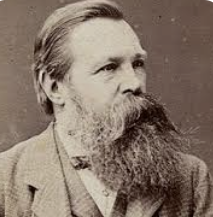
With this as its basic constitution, civilization achieved things of which gentile society was not even remotely capable. But it achieved them by setting in motion the lowest instincts and passions in man and developing them at the expense of all his other abilities. From its first day to this, sheer greed was the driving spirit of civilization; wealth and again wealth and once more wealth, wealth, not of society, but of the single scurvy individual-here was its one and final aim. If at the same time the progressive development of science and a repeated flowering of supreme art dropped into its lap, it was only because without them modern wealth could not have completely realized its achievements.
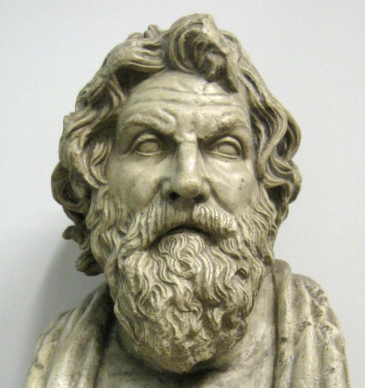
One should attend to one's enemies, for they are the first persons to detect one's errors.

Hear gladly!
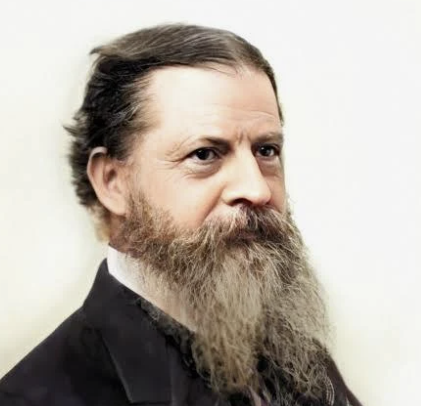
But no mental action seems necessary or invariable in its character. In whatever manner the mind has reacted under a given sensation, in that manner it is the more likely to react again; were this, however, an absolute necessity, habits would become wooden and ineradicable, and no room being left for the formulation of new habits, intellectual life would come to a speedy close. Thus, the uncertainty of the mental law is no mere defect of it, but is on the contrary of its essence. The truth is, the mind is not subject to "law," in the same rigid sense that matter is. It only experiences gentle forces which merely render it more likely to act a given way than it otherwise would be. There always remains a certain amount of arbitrary spontaneity in its action, without which it would be dead.
Since my world picture approximates reality only crudely, I cannot aspire to optimize anything; at most, I can aim at satisficing. Searching for the best can only dissipate scarce cognitive resources; the best is the enemy of the good.
One crime has to be concealed by another.
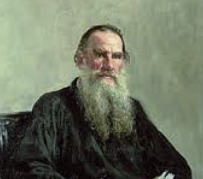
The positivist philosophy of Comte and the I doctrine deduced from it that humanity is an organism, and Darwin's doctrine of a law of the struggle for existence that is supposed to govern life, with the differentiation of various breeds of people which follows from it, and the anthropology, biology, and sociology of which people are now so fond-all have the same aim. These have all become favourite sciences because they serve to justify the way in which people free themselves from the human obligation to labour, while consuming the fruits of other people's labour.
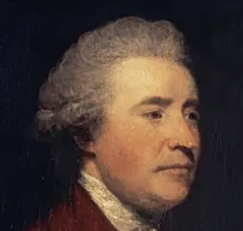
When we speak of the commerce with our [American] colonies, fiction lags after truth, invention is unfruitful, and imagination cold and barren.
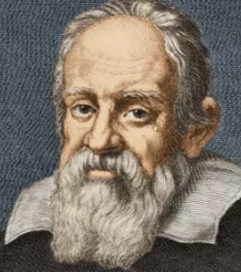
We seek not what God could have done but what He has done.... God could have caused birds to fly with bones of solid gold, with veins full of quicksilver, with flesh heavier than lead and very small and heavy wings, so as to better show His power ... but He wanted to make their bones, flesh and feathers very light ... to teach us that He likes simplicity and ease.
CivilSimian.com created by AxiomaticPanic, CivilSimian, Kalokagathia