

7 months 4 weeks ago
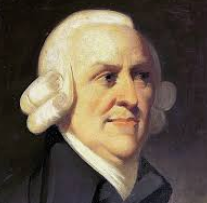
A very poor man may be said in some sense to have a demand for a coach and six; he might like to have it; but his demand is not an effectual demand, as the commodity can never be brought to market in order to satisfy it.
▼
Source
source
Chapter VII, p. 67.
6 months 2 weeks ago
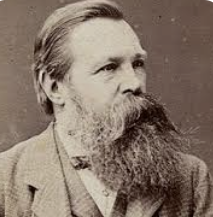
What will be the influence of communist society on the family? It will transform the relations between the sexes into a purely private matter which concerns only the persons involved and into which society has no occasion to intervene. It can do this since it does away with private property and educates children on a communal basis, and in this way removes the two bases of traditional marriage - the dependence rooted in private property, of the women on the man, and of the children on the parents.

6 months 3 weeks ago
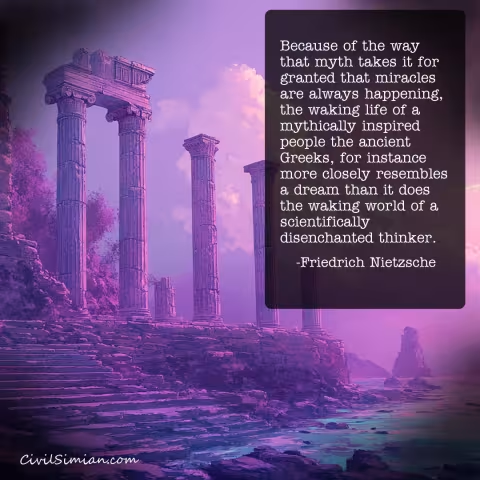
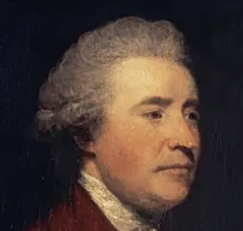
One may observe, that men of all persuasions confine the word persecution, and all the ill ideas of injustice and violence which belong to it, solely to those severities which are exercised upon themselves, or upon the party they are inclined to favour. Whatever is inflicted upon others, is a just punishment upon obstinate impiety, and not a restraint upon conscientious differences.
▼
Source
source
Volume II, p. 146

8 months 2 days ago
When I play with my cat, who knows if I am not a pastime to her more than she is to me?
▼
Source
source
Ch. 12 (tr. Donald M. Frame) , tr. David Wills, 2008
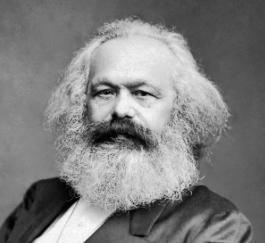
7 months 3 weeks ago
Last words are for fools who haven't said enough.
▼
Source
source
Various attributions,

7 months 1 day ago
We indeed, who are beings of finite powers, are forced to make use of instruments. And the use of an instrument sheweth the agent to be limited by rules of another's prescription, and that he cannot obtain his end but in such a way, and by such conditions. Whence it seems a clear consequence, that the supreme unlimited agent useth no tool or instrument at all. The will of an Omnipotent Spirit is no sooner exerted than executed, without the application of means; which, if they are employed by inferior agents, it is not upon account of any real efficacy that is in them, or necessary aptitude to produce any effect, but merely in compliance with the laws of nature, or those conditions prescribed to them by the First Cause, who is Himself above all limitation or prescription whatsoever.
▼
Source
source
Philonous to Hylas. The Second Dialogue
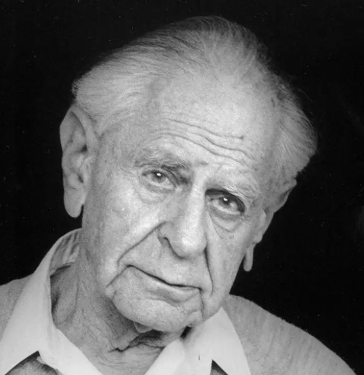
7 months 3 weeks ago
What a monument of human smallness is this idea of the philosopher king. What a contrast between it and the simplicity of humaneness of Socrates, who warned the statesmen against the danger of being dazzled by his own power, excellence, and wisdom, and who tried to teach him what matters most - that we are all frail human beings. What a decline from this world of irony and reason and truthfulness down to Plato's kingdom of the sage whose magical powers raise him high above ordinary men; although not quite high enough to forgo the use of lies, or to neglect the sorry trade of every shaman - the selling of spells, of breeding spells, in exchange for power over his fellow-men.
▼
Source
source
Vol. 1, Ch 8 "The Philosopher King"
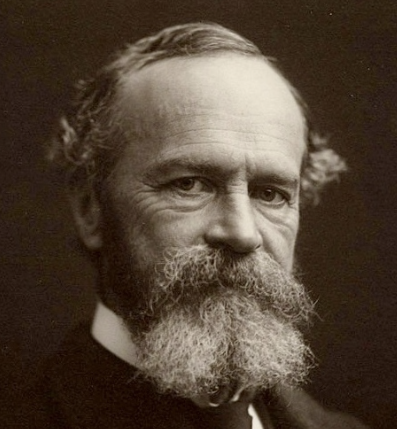
7 months 3 weeks ago
The deadliest enemies of nations are not their foreign foes; they always dwell within their borders. And from these internal enemies civilization is always in need of being saved. The nation blest above all nations is she in whom the civic genius of the people does the saving day by day, by acts without external picturesqueness; by speaking, writing, voting reasonably; by smiting corruption swiftly; by good temper between parties; by the people knowing true men when they see them, and preferring them as leaders to rabid partisans or empty quacks.
▼
Source
source
Robert Gould Shaw: Oration upon the Unveiling of the Shaw Monument
7 months 3 weeks ago
How can I, who was not able to retain my own past, hope to save that of another?
6 months 1 week ago
In organized groups such as the army or the Church there is either no mention of love whatsoever between the members, or it is expressed only in a sublimated and indirect way, through the mediation of some religious imagine in the love of whom the members unite and whose all-embracing love they are supposed to imitate in their attitude towards each other. ... It is one of the basic tenets of fascist leadership to keep primary libidinal energy on an unconscious level so as to divert its manifestations in a way suitable to political ends.
▼
Source
source
"Freudian Theory and the Pattern of Fascist Propaganda," The Essential Frankfurt School Reader (1982), p. 123

7 months ago
A man may be in as just possession of Truth as of a City, and yet be forced to surrender.
▼
Source
source
Section 6
7 months 3 weeks ago
A bureaucracy always tends to become a pedantocracy.
▼
Source
source
Ch. VI: Of the Infirmities and Dangers to Which Representative Government Is Liable (p. 234)
6 months 3 weeks ago
Circumstances (which with some gentlemen pass for nothing) give in reality to every political principle its distinguishing colour, and discriminating effect. The circumstances are what render every civil and political scheme beneficial or noxious to mankind.

6 months 2 weeks ago
Technical progress and more comfortable living permit the systematic inclusion of libidinal components into the realm of commodity production and exchange. But no matter how controlled the mobilization of instinctual energy may be (it sometimes amounts to a scientific management of libido), no matter how much it may serve as a prop for the status quo-it is also gratifying to the managed individuals, just as racing the outboard motor, pushing the power lawn mower, and speeding the automobile are fun.
▼
Source
source
p. 75
7 months 2 weeks ago
He used to reason as follows: 'Everything belongs to the gods; the wise are friends of the gods; friends hold all things in common; ergo, everything belongs to the wise.'
▼
Source
source
Diogenes Laërtius, vi. 37, as reported in Diogenes the Cynic: Sayings and Anecdotes as translated by Robin Hard (Oxford: 2012), p. 13
5 months 3 weeks ago
Gutenberg made all history available as classified data: the transportable book brought the world of the dead into the space of the gentlemen's library; the telegraph brought the entire world of the living to the workman's breakfast table.
▼
Source
source
(p. 15)
7 months 3 weeks ago
The sentiment of reality can indeed attach itself so strongly to our object of belief that our whole life is polarized through and through, so to speak, by its sense of the existence of the thing believed in, and yet that thing, for the purpose of definite description, can hardly be said to be present to our mind at all.
▼
Source
source
Lecture III, "The Reality of the Unseen"

7 months 2 weeks ago
Form displays the relation itself as the state of original comportment toward beings, the festive state in which the being itself in its essence is celebrated and thus for the first time placed in the open.
▼
Source
source
p. 119

6 months 2 weeks ago
The harvest truly is plenteous, but the labourers are few; Pray ye therefore the Lord of the harvest, that he will send forth labourers into his harvest.
▼
Source
source
9:37-38 (KJV)
5 months 3 weeks ago
The interiorization of the technology of the phonetic alphabet translates man from the magical world of the ear to the neutral visual world.
▼
Source
source
(p. 21)
7 months 2 weeks ago
I would in fact tend to have more confidence in the outcome of a democratic decision if there was a minority that voted against it, than if it was unanimous... Social psychology has amply shown the strength of this bandwagon effect.
▼
Source
source
Habermas (1993) "Further reflections on the public sphere", in: Craig Calhoun Eds. Habermas and the Public Sphere. MIT Press. p. 441
7 months 4 weeks ago
In the long-run the workman may be as necessary to his master as his master is to him, but the necessity is not so immediate.
▼
Source
source
Chapter VIII, p. 80.
5 months 3 weeks ago
Never promise more than you can perform.
▼
Source
source
Maxim 528
5 months 3 weeks ago
A series of accidents creates a positively lighthearted state.
▼
Source
source
Chapter 4
3 months 3 weeks ago
To cleave that sea in the gentle autumnal season, murmuring the name of each islet, is to my mind the joy most apt to transport the heart of man into paradise.
▼
Source
source
On the Aegean Sea, in Ch. 2

6 months 1 week ago
We can know only one thing about God - that he is what we are not. Our wretchedness alone is an image of this. The more we contemplate it, the more we contemplate him.
▼
Source
source
p. 216

3 months 3 weeks ago
How can anyone see the only way the world can be saved and not be forced to weep?
7 months 4 weeks ago
The tolls for the maintenance of a high road, cannot with any safety be made the property of private persons.
▼
Source
source
Chapter I, Part III, Article I, p. 786 (See also.. Public-private partnerships).
7 months 3 weeks ago
If the red slayer think he slays, Or if the slain think he is slain, They know not well the subtle ways I keep, and pass, and turn again. Brahma, st. 1 Composed in July 1856 this poem is derived from a major passage of the Bhagavad Gita, one of the most popular of Hindu scriptures, and portions of it were likely a paraphrase of an existing translation. Though titled "Brahma" its expressions are actually more indicative of the Hindu concept "Brahman"
6 months 2 weeks ago
When ethics thus moves into the domain of politics and becomes morality, the possibility of violence appears because of the threat of the application of such absolutist forms of thought. Further, although the moral agent must remain free in order to avoid the totalizing domination of the state, morality must still be grounded in the ethical relation of the face-to-face.
▼
Source
source
Steven Bindeman, Levinas: The Face of Otherness and the Ethics of Therapy

6 months 1 week ago
The evolutionary urge drives man to seek for intenser forms of fulfillment, since his basic urge is for more life, more consciousness, and this contentment has an air of stagnation that the healthy mind rejects. (This recognition lies at the centre of my own 'outsider theory': that there are human beings to whom comfort means nothing, but whose happiness consists in following an obscure inner-drive, an 'appetite for reality'.)
▼
Source
source
p. 32

5 months 4 weeks ago
To explain all nature is too difficult a task for any one man or even for any one age. 'Tis much better to do a little with certainty, & leave the rest for others that come after you, than to explain all things by conjecture without making sure of any thing.
▼
Source
source
Statement from unpublished notes for the Preface to Opticks (1704) quoted in Never at Rest: A Biography of Isaac Newton (1983) by Richard S. Westfall, p. 643
7 months 3 weeks ago
I've got a one-dimensional mind.
▼
Source
source
Said to Rupert Crawshay-Williams; Russell Remembered (1970), p. 31
7 months 2 weeks ago
The usage of the words "public" and "public sphere" betrays a multiplicity of concurrent meanings. Their origins go back to various historical phases and, when applied synchronically to the conditions of a bourgeois society that is industrially advanced and constituted as a social-welfare state, they fuse into a clouded amalgam. Yet the very conditions that make the inherited language seem inappropriate appear to require these words, however confused their employment.
▼
Source
source
p. 1 as cited in: Gandy, M (1997) "Ecology, modernity and the intellectual legacy of the Frankfurt School". In: Light, A and Smith, JM, (eds.) Space, Place and Environmental Ethics. p. 240
7 months 4 weeks ago
The administration of the great system of the universe, however, the care of the universal happiness of all rational and sensible beings, is the business of God and not of man. To man is allotted a much humbler department, but one much more suitable to the weakness of his powers, and to the narrowness of his comprehension; the care of his own happiness, of that of his family, his friends, his country: that he is occupied in contemplating the more sublime, can never be an excuse for his neglecting the more humble department.
▼
Source
source
Section II, Chap. III.

4 months 2 weeks ago
He that has a secret should not only hide it, but hide that he has it to hide.
▼
Source
source
Pt. II, Bk. I, ch. 7.

5 months 3 days ago
It is hard to imagine an experience more horrific than being eaten alive. Most of us would prefer not to imagine what it must feel like. Note that the photographer here had to persuade the park ranger to violate the park rules and put the baby elephant out of his misery.By analogy, suppose it were lawful to visit Third World countries for photoshoots but illegal to "interfere" and help a stricken human baby. Is there a fundamental difference between "ethical" intervention to help humans and "sentimental" pleas to "interfere" and help non-humans? Should we encourage the preservation of life-forms such as the hyena in their current guise? Or do the value judgements underlying the "science" of conservation biology need to be re-examined?
▼
Source
source
"Hyenas Eat Baby Elephant Alive: The Case for Intervention"

7 months 2 weeks ago
No differeance without alterity, no alterity without singularity, no singularity without here-now.
▼
Source
source
Injunctions of Marx, p,31
6 months 1 week ago
Underlying the concept of positivity is the conviction that the positive is intrinsically positive in itself, without anyone pausing to ask what is to be regarded as positive. ... It is significant and really quite interesting that the term 'positive' actually contains this ambivalence. On the one hand, 'positive' means what is given, is postulated, is there-as when we speak of positivism as the philosophy that sticks to the facts. But, equally, 'positive' also refers to the good, the approvable, in a certain sense, the ideal. And I imagine that this semantic constellation expresses with precision what countless people actually feel to be the case.
▼
Source
source
p. 18

8 months 3 weeks ago
Civilizations have always been pyramidal in structure. As one climbs toward the apex of the social edifice, there is increased leisure and increasing opportunity to pursue happiness. As one climbs, one finds also fewer and fewer people to enjoy this more and more. Invariably, there is a preponderance of the dispossessed. And remember this, no matter how well off the bottom layers of the pyramid might be on an absolute scale, they are always dispossessed in comparison with the apex.So there is always social friction in ordinary human societies. The action of social revolution and the reaction of guarding against such revolution or combating it once it has begun are the causes of a great deal of the human misery with which history is permeated.

5 months 1 day ago
With other beliefs crumbling, many seek to return to what they piously describe as "Enlightenment values". But these values were not as unambiguously benign as is nowadays commonly supposed.
▼
Source
source
2015
7 months 3 weeks ago
Only the great generalizations survive. The sharp words of the Declaration of Independence, lampooned then and since as 'glittering generalities,' have turned out blazing ubiquities that will burn forever and ever.
▼
Source
source
From a lecture on Books given in the Fraternity Course in Boston in 1864
7 months 2 weeks ago
What is the case, the fact, is the existence of atomic facts.
▼
Source
source
(2) Original German: Was der Fall ist, die Tatsache, ist das Bestehen von Sachverhalten.
CivilSimian.com created by AxiomaticPanic, CivilSimian, Kalokagathia