


7 months 3 weeks ago
What I had to say was so clear and I felt it so deeply that I am amazed by the tediousness, repetitiousness, verbiage, and disorder of this writing. What would have made it lively and vehement coming from another's pen is precisely what has made it dull and slack coming from mine. The subject was myself, and I no longer found on my own interest that zeal and vigor of courage which can exalt a generous soul only for another person's cause.
▼
Source
source
On the Subject and Form of This Writing; translated by Judith R. Bush, Christopher Kelly, Roger D. Masters
7 months 3 weeks ago
Beating is the worst, and therefore the last means to be us'd in the correction of children, and that only in the cases of extremity, after all gently ways have been try'd, and proved unsuccessful; which, if well observ'd, there will very seldom be any need of blows.
▼
Source
source
Sec. 84
7 months 3 weeks ago
I pre-suppose, of course, a reader who is willing to learn something new and therefore to think for himself.
▼
Source
source
Author's prefaces to the First Edition.
7 months 3 weeks ago
A great affliction of all Philistines is that idealities afford them no entertainment, but to escape from boredom they are always in need of realities.
▼
Source
source
E. Payne, trans. (1974) Vol. 1, p. 345

6 months 1 week ago
Zen Buddhism is inspired by a basic trust in the Here, a basic trust in the world.
6 months 3 weeks ago
Affection requires a firmer foundation than sympathy, and few people have a principle of action sufficiently stable to produce rectitude of feeling; for in spite of all the arguments I have heard to justify deviations from duty, I am persuaded that even the most spontaneous sensations are more under the direction of principle than weak people are willing to allow.
▼
Source
source
Letter 17

6 months 2 weeks ago
The historical world, in so far as it is built, organized, and shaped by the conscious activity of thinking subjects, is a realm of mind. But the mind is fully realized and exists in its true form only when it indulges in its proper activity, namely, in art, religion, and philosophy.
▼
Source
source
P. 87
4 months 1 week ago
But the wise man is fortified against all inroads; he is alert; he will not retreat before the attack of poverty, or of sorrow, or of disgrace, or of pain. He will walk undaunted both against them and among them.
6 months 1 week ago
Like monarchy, monotheism had a martial origin. "It is only on the march and it time of war," says Robertson Smith in The Prophets of Israel, "that a nomad people feels any urgent need of a central authority, and so it came about that in the first beginnings of national organization, centering in the sanctuary of the ark, Israel was thought of mainly as a host of Jehovah. the very name of Israel is martial, and means 'God (El) fighteth,' and Jehovah in the Old Testament is Iahwé Cebāôth - the Jehovah of the armies of Israel. It was on the battlefield that Jehovah's presence was most clearly realized; but in primitive nations the leader in time of war is also the natural judge in time of peace."
7 months 3 weeks ago
I opened with that which good Catholics have more than once made to Huguenots. "My dear sir," said I, "were you ever baptized?" "No, friend," replied the Quaker, "nor any of my brethren." "Zounds!" said I to him, "you are not Christians then!" "Friend," replied the old man, in a soft tone of voice, "do not swear; we are Christians, but we do not think that sprinkling a few drops of water on a child's head makes him a Christian." "My God!" exclaimed I, shocked at his impiety, "have you then forgotten that Christ was baptized by St. John?" "Friend," replied the mild Quaker, "once again, do not swear. Christ was baptized by John, but He Himself never baptized any one; now we profess ourselves disciples of Christ, and not of John." "Mercy on us," cried I, "what a fine subject you would be for the holy inquisitor! In the name of God, my good old man, let me baptize you."
▼
Source
source
Voltaire's account of his conversations with Andrew Pit
3 months 3 weeks ago
Not to live as if you had endless years ahead of you. Death overshadows you. While you're alive and able-be good.
▼
Source
source
(Hays translation) IV, 17
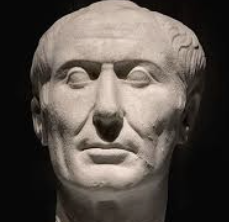
5 months 3 weeks ago
No one should be judge in his own cause.
▼
Source
source
Maxim 545
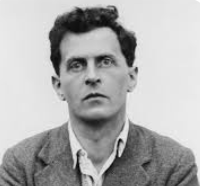
7 months 2 weeks ago
When I obey a rule, I do not choose. I obey the rule blindly.
▼
Source
source
§ 219
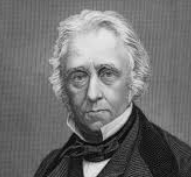
5 months 1 week ago
Those who compare the age in which their lot has fallen with a golden age which exists only in imagination, may talk of degeneracy and decay; but no man who is correctly informed as to the past, will be disposed to take a morose or desponding view of the present.
▼
Source
source
Vol. I, ch. 1


6 months 2 weeks ago
German idealism rescued philosophy from the attack of British empiricism, and the struggle between the two became not merely a clash of different philosophical school, but a struggle for philosophy as such.
▼
Source
source
P. 16
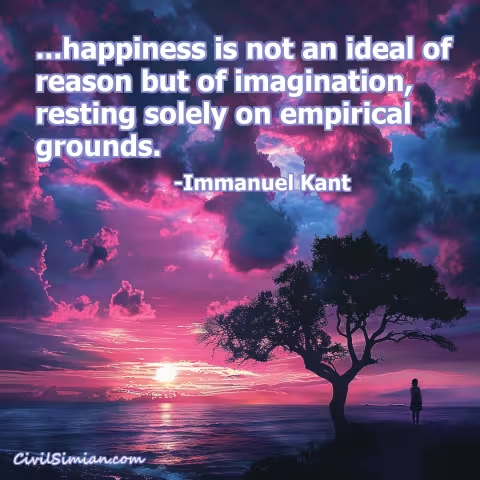
5 months 2 weeks ago
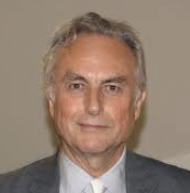
But if you can breed cattle for milk yield, horses for running speed, and dogs for herding skill, why on Earth should it be impossible to breed humans for mathematical, musical or athletic ability? Objections such as "these are not one-dimensional abilities" apply equally to cows, horses and dogs and never stopped anybody in practice. I wonder whether, some 60 years after Hitler's death, we might at least venture to ask what the moral difference is between breeding for musical ability and forcing a child to take music lessons. Or why it is acceptable to train fast runners and high jumpers but not to breed them. I can think of some answers, and they are good ones, which would probably end up persuading me. But hasn't the time come when we should stop being frightened even to put the question?
▼
Source
source
From the Afterword, The Herald, Glasgow, Scotland, 20 November 2006
7 months 2 weeks ago
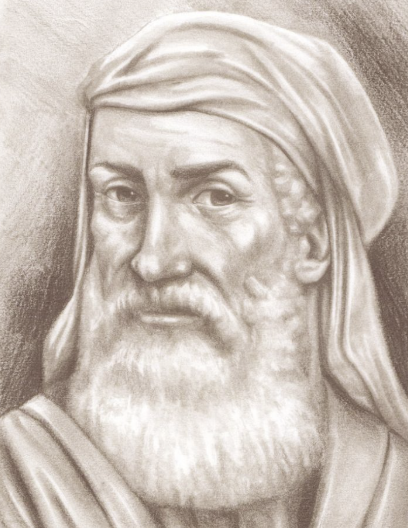
The sight of both eyes becomes one.
▼
Source
source
fr. 88
6 months 2 weeks ago
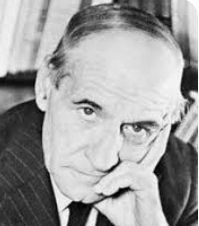
That Marxism should triumph in Russia, where there is no industry, would be the greatest contradiction that Marxism could undergo. But there is no such contradiction, for there is no such triumph. Russia is Marxist more or less as the Germans of the Holy Roman Empire were Romans.
▼
Source
source
Chapter XIV: Who Rules The World?
5 months 3 weeks ago
Language is a sense, like touch.
▼
Source
source
(p. 271)
3 months 3 weeks ago
"Do not die that we may not die," the dead cry out within you. "We had no time to enjoy the women we desired; be in time, sleep with them! We had no time to turn our thoughts into deeds; turn them into deeds! We had no time to grasp and to crystallize the face of our hope; make it firm!" ... But you must choose with care whom to hurl down again into the chasms of your blood, and whom you shall permit to mount once more into the light and the earth.
3 months 3 weeks ago
Man, servant and interpreter of Nature, does and understands only as much as he has observed of the order of Nature, either in reality or in mind; he neither knows nor can do more.

8 months 2 days ago
Wars begin when you will, but they do not end when you please.
▼
Source
source
Book III, Chapter 7.
3 months 3 weeks ago
"Since we cannot change reality, let us change the eyes which see reality," says one of my favorite Byzantine mystics. I did this when a child; I do it now as well in the most creative moments of my life.
▼
Source
source
"The Son", Ch. 4, p. 45
7 months 2 weeks ago
It is often remarked that nothing we do now will matter in a million years. But if that is true, then by the same token, nothing that will be the case in a million years matters now.
▼
Source
source
"The Absurd" (1971), p. 11.
8 months 1 week ago
Nothing can be produced from nothing.
▼
Source
source
Book I, lines 156-157 (tr. Munro) Variant translations: Nothing can be created from nothing. Nothing can be created out of nothing.
7 months 3 weeks ago
Whenever I have read any part of the Vedas, I have felt that some unearthly and unknown light illuminated me. In the great teaching of the Vedas, there is no touch of sectarianism. It is of all ages, climes and nationalities and is the royal road for the attainment of the Great Knowledge. When I am at it, I feel that I am under the spangled heavens of a summer night.
▼
Source
source
Quoted in Bansi Pandit, The Hindu Mind (B & V Enterprises, 1996) p. 307
4 months 1 week ago
No social co-operation under the division of labour is possible when some people or unions of people are granted the right to prevent by violence and the threat of violence other people from working. When enforced by violence, a strike in vital branches of production or a general strike are tantamount to a revolutionary destruction of society.
8 months 3 weeks ago
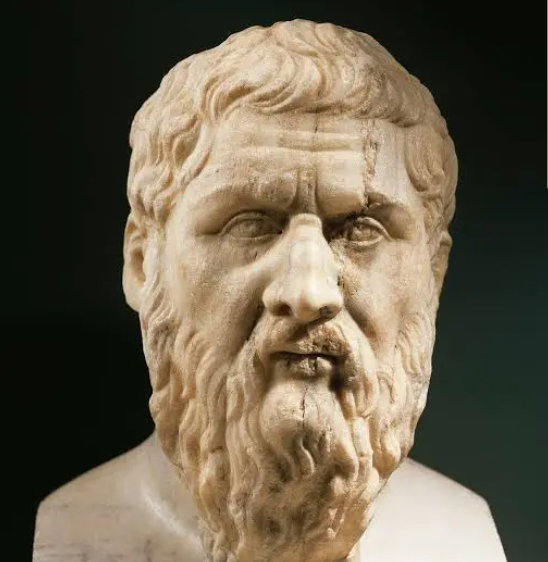
Of these not right forms of government, monarchy, when bound by good written rules, which we call laws, is the best of all the six; but without law it is hard and most oppressive to live with. The government of the few must be considered intermediate, both in good and in evil. The government of the multitude is weak in all respects and able to do nothing great, either good or bad, when compared with the other forms of government, therefore of all these governments when they are lawful, this is the worst, and when they are all lawless it is the best.
5 months 4 days ago
The serpent, the king, the tiger, the stinging wasp, the small child, the dog owned by other people, and the fool: these seven ought not to be awakened from sleep.
5 months 3 weeks ago
All media exists to invest our lives with artificial perception and arbitrary values.
▼
Source
source
(p. 199)

7 months 6 days ago
If there be light, then there is darkness; if cold, heat; if height, depth; if solid, fluid; if hard, soft; if rough, smooth; if calm, tempest; if prosperity, adversity; if life, death.
▼
Source
source
As quoted in Bibliotheca Sacra and Theological Review by ? Vol. IV, No. 8 (1847) by Dallas Theological Seminary, p. 107
7 months 3 weeks ago
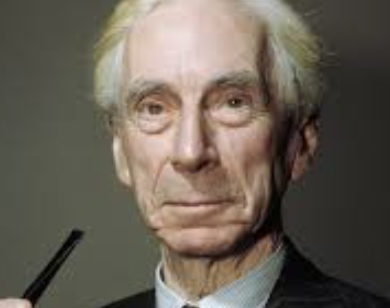
I have lived in the pursuit of a vision, both personal and social. Personal: to care for what is noble, for what is beautiful, for what is gentle; to allow moments of insight to give wisdom at more mundane times. Social: to see in imagination the society that is to be created, where individuals grow freely, and where hate and greed and envy die because there is nothing to nourish them. These things I believe, and the world, for all its horrors, has left me unshaken.
7 months 4 weeks ago
What a noble privilege is it of human reason to attain the knowledge of the supreme Being; and, from the visible works of nature, be enabled to infer so sublime a principle as its supreme Creator? But turn the reverse of the medal. Survey most nations and most ages. Examine the religious principles, which have, in fact, prevailed in the world. You will scarcely be persuaded, that they are any thing but sick men's dreams: Or perhaps will regard them more as the playsome whimsies of monkies in human shape, than the serious, positive, dogmatical asseverations of a being, who dignifies himself with the name of rational.
▼
Source
source
Part XV - General corollary
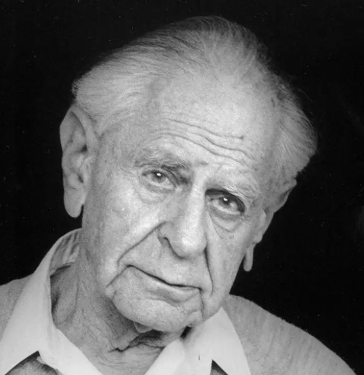
7 months 3 weeks ago
I am a rationalist. ...I mean ...[I] wish... to understand the world, and to learn by arguing with others. (...I do not say a rationalist holds the mistaken theory that men are... rational.)
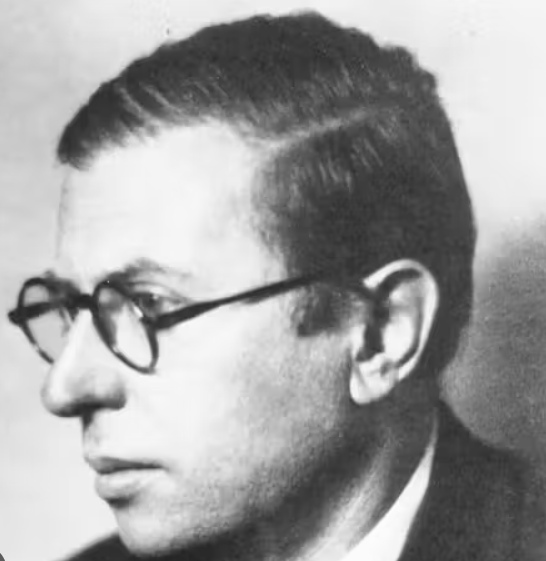
7 months 3 weeks ago
Generosity is nothing else than a craze to possess. All which I abandon, all which I give, I enjoy in a higher manner through the fact that I give it away.... To give is to enjoy possessively the object which one gives.
▼
Source
source
Part 2

7 months 3 weeks ago
The human imagination has seldom had before it an object so sublimely ordered as the medieval cosmos. If it has an aesthetic fault, it is perhaps, for us who have known romanticism, a shade too ordered. For all its vast spaces it might in the end afflict us with a kind of claustrophobia. Is there nowhere any vagueness? No undiscovered by-ways? No twilight? Can we never really get out of doors?
▼
Source
source
The Discarded Image: An Introduction to Medieval and Renaissance Literature, 1964

4 months 1 week ago
I am owner of my might, and I am so when I know myself as unique. In the unique one the owner himself returns into his creative nothing, of which he is born. Every higher essence above me, be it God, be it man, weakens the feeling of my uniqueness, and pales only before the sun of this consciousness. If I concern myself for myself, the unique one, then my concern rests on its transitory, mortal creator, who consumes himself, and I may say: All things are nothing to me.
▼
Source
source
Dover 2005, p. 366
6 months 2 weeks ago
Either one defines "personality" and "individuality" in terms of their possibilities within the established form of civilization, in which case their realization is for the vast majority tantamount to successful adjustment. Or one defines them in terms of their transcending content, including their socially denied potentialities beyond (and beneath) their actual existence; in this case, their realization would imply transgression, beyond the established form of civilization, to radically new modes of "personality" and "individuality" incompatible with the prevailing ones. Today, this would mean "curing" the patient to become a rebel or (which is saying the same thing) a martyr.
▼
Source
source
"Critique of Neo-Freudian Revisionism"
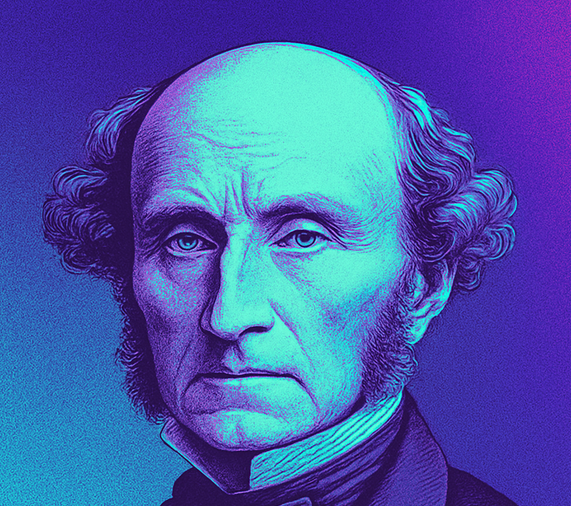
7 months 3 weeks ago
He who knows only his own side of the case, knows little of that. His reasons may be good, and no one may have been able to refute them. But if he is equally unable to refute the reasons on the opposite side; if he does not so much as know what they are, he has no ground for preferring either opinion.
▼
Source
source
Ch. II: Of the Liberty of Thought and Discussion
4 months 1 week ago
Would not anyone who is a man have his slumbers broken by a war-trumpet rather than by a chorus of serenaders?

6 months 2 weeks ago
Liberalism - it is well to recall this today-is the supreme form of generosity; it is the right which the majority concedes to minorities and hence it is the noblest cry that has ever resounded in this planet. It announces the determination to share existence with the enemy; more than that, with an enemy which is weak. It was incredible that the human species should have arrived at so noble an attitude, so paradoxical, so refined, so acrobatic, so anti-natural. Hence, it is not to be wondered at that this same humanity should soon appear anxious to get rid of it. It is a discipline too difficult and complex to take firm root on earth.
▼
Source
source
Chap. VIII: The Masses Intervene In Everything, And Why Their Intervention Is Solely By Violence
6 months 1 week ago
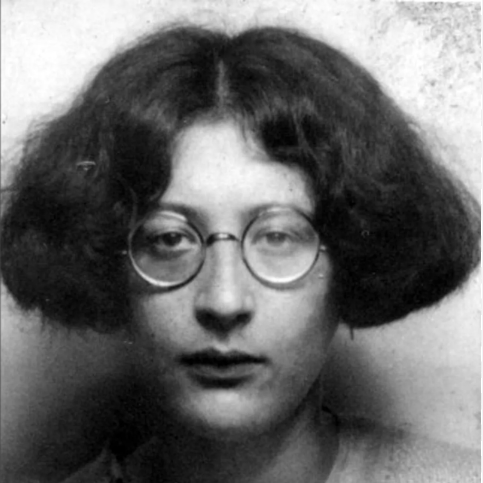
God's love for us is not the reason for which we should love him. God's love for us is the reason for us to love ourselves.
▼
Source
source
p. 270
3 months 3 weeks ago
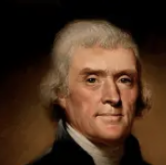
Treasury notes of small as well as high denomination, bottomed on a tax which would redeem them in ten years, would place at our disposal the whole circulating medium of the United States... The public... ought never more to permit its being filched from them by private speculators and disorganizers of the circulation.
▼
Source
source
Letter to William H. Crawford, 1815. ME 14:242
7 months 2 weeks ago
Courage, not cleverness; not even inspiration, is the grain of mustard that grows up to be a great tree.
▼
Source
source
p. 44e
CivilSimian.com created by AxiomaticPanic, CivilSimian, Kalokagathia