

6 months 1 week ago
And yet this might not necessarily involve the conversion of the Trinity into a Quaternity. If... in Greek, spirit, instead of being neuter had been feminine, who can say that the Virgin Mary might not already have become an incarnation or humanization of the Holy Spirit? ...And thus a dogmatic evolution would have been effected parallel to that of the divinization of Jesus, the Son, and his identification with the Word.
8 months 2 days ago
Adam was created righteous, acceptable, and without sin. He had no need from his labor in the garden to be made righteous and acceptable to God. Rather, the Lord gave Adam work in order to cultivate and protect the garden. This would have been the freest of all works because they were done simply to please God and not to obtain righteousness. ... The works of the person who trusts God are to be understood in a similar manner. Through faith we are restored to paradise and created anew. We have no need of works in order to be righteous; however, in order to avoid idleness and so that the body might be cared for an disciplined, works are done freely to please God.
▼
Source
source
pp. 73-74
7 months 3 weeks ago
The second is the partiality for unity proper to the philosophical mind, whence this wide-spread canon has flown forth: principles are not to be multiplied beyond supreme necessity, to which we give in our adhesion, not because we have insight into causal unity in the world either by reason or experience, but as seeking it by an impulse of the intellect which seems to itself to have by thus much advanced in the explication of phenomena, by as much as it is granted to it to descend from the same principle to a greater number of consequences,
7 months 3 weeks ago
Ramsgate is full of Jews and fleas.
▼
Source
source
MEKOR IV, 490, 25 August 1879
6 months 1 week ago
Not only are we unable to conceive of the full and living God as masculine simply, but we are unable to conceive of Him as individual simply, as the projection of a solitary I, an unsocial I, an I that is in reality an abstract I. My living I is an I that is really a We; my living personal I lives only in other, of other, and by other I's; I am sprung from a multitude of ancestors. I carry them within me in extract, and at the same time I carry within me, potentially, a multitude of descendants, and God, the projection of my I to the infinite - or rather I, the projection of God to the finite - must also be a multitude. Hence, in order to save the personality of God - that is to say, in order to save the living God - faith's need - the need of the feeling and the imagination - of conceiving Him and feeling Him as possessed of a certain internal multiplicity.
3 months 3 weeks ago
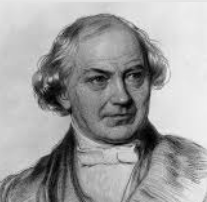
A whale is not a fish in natural history, but it is a fish in commerce and law. A plea that human laws which mention fish do not apply to whales, would be rejected at once by an intelligent judge.

7 months 3 weeks ago
Through the fortunate effect of my frankness, I had the rarest and surest opportunity to know a man well, which is to study him at leisure in his private life and living, so to speak, with himself. For he share himself without reservation and made me feel as much at home in his house as in mine. I had almost no other abode than his own.
▼
Source
source
Second Dialogue; translated by Judith R. Bush, Christopher Kelly, Roger D. Masters

6 months 1 week ago
We never know, believe me, when we have succeeded best.
▼
Source
source
Essays and Soliloquies
8 months 2 days ago
If you are a preacher of mercy, do not preach an imaginary but the true mercy. If the mercy is true, you must therefore bear the true, not an imaginary sin. God does not save those who are only imaginary sinners. Be a sinner, and let your sins be strong (sin boldly), but let your trust in Christ be stronger, and rejoice in Christ who is the victor over sin, death, and the world. We will commit sins while we are here, for this life is not a place where justice resides. We, however, says Peter (2. Peter 3:13) are looking forward to a new heaven and a new earth where justice will reign.
▼
Source
source
Letter 99, Paragraph 13. Erika Bullmann Flores, Tr. from: Dr. Martin Luther's Saemmtliche SchriftenDr. Johann Georg Walch Ed. (St. Louis: Concordia Publishing House, N.D.), Vol. 15, cols. 2585-2590.
8 months 3 weeks ago
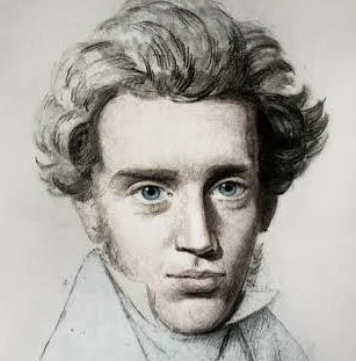
Now, in the solemn silence before God with the lilies and the birds, where accordingly there is nobody at all present, where accordingly there is no other intercourse for thee but with God-there indeed the rule holds good: either hold to Him/or despise Him. There is no excuse, for no one else is present, in any case no one is present in such a wise that thou canst hold to him without despising God; for precisely there in the silence it is clear how close God is to thee.
7 months 3 weeks ago
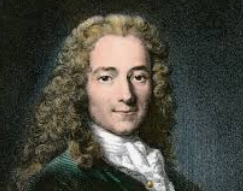
Let us cultivate our garden.
5 months 3 weeks ago
People in new environments always produce the new preceptual modality without any difficulty or awareness of change. It is later that the psychic and social realignments baffle societies.
▼
Source
source
ARTnews annual, Volume 31, Art Foundation, 1966, p. 56
6 months 2 weeks ago
Beyond all conscious lying and falsifying, there is a deeper "organic mendacity." Here the falsification is not formed in consciousness, but at the same stage of the mental process as the impressions and value feelings themselves: on the road of experience into consciousness. There is "organic mendacity" whenever a man's mind admits only those impressions which serve his "interest" or his instinctive attitude. Already in the process of mental reproduction and recollection, the contents of his experience are modified in this direction. He who is "mendacious" has no need to lie! In his case, the automatic process of forming recollections, impressions, and feelings is involuntarily slanted, so that conscious falsification becomes unnecessary.
▼
Source
source
L. Coser, trans. (1973), pp. 77-78
7 months 3 weeks ago
There is a divergence between private and social accounting that the market fails to register. One essential task of law and government is to institute the necessary conditions.
▼
Source
source
Chapter V, Section 42, p. 268
6 months 3 weeks ago
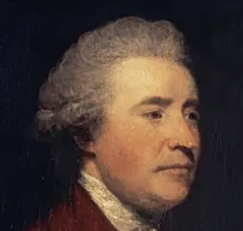
Better to be despised for too anxious apprehensions, than ruined by too confident a security.
5 months 3 weeks ago
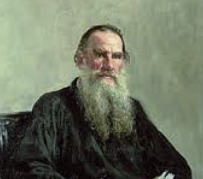
God is the infinite ALL. Man is only a finite manifestation of Him. Or better yet: God is that infinite All of which man knows himself to be a finite part. God alone exists truly. Man manifests Him in time, space and matter. The more God's manifestation in man (life) unites with the manifestations (lives) of other beings, the more man exists. This union with the lives of other beings is accomplished through love. God is not love, but the more there is of love, the more man manifests God, and the more he truly exists... We acknowledge God only when we are conscious of His manifestation in us. All conclusions and guidelines based on this consciousness should fully satisfy both our desire to know God as such as well as our desire to live a life based on this recognition.
▼
Source
source
Entry in Tolstoy's Diary
5 months 2 weeks ago
The population of the US is nearly 300 million, including many of the best educated, most talented, most resourceful, humane people on earth. By almost any measure of civilised attainment, from Nobel prize-counts on down, the US leads the world by miles. You would think that a country with such resources, and such a field of talent, would be able to elect a leader of the highest quality. Yet, what has happened? At the end of all the primaries and party caucuses, the speeches and the televised debates, after a year or more of non-stop electioneering bustle, who, out of that entire population of 300 million, emerges at the top of the heap? George Bush.
▼
Source
source
"Bin Laden's victory " The Guardian
8 months 2 weeks ago
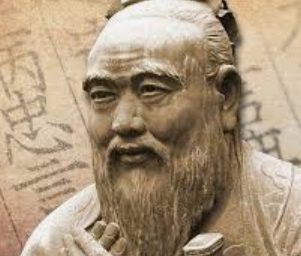
When you have faults, do not fear to abandon them.
4 months 5 days ago
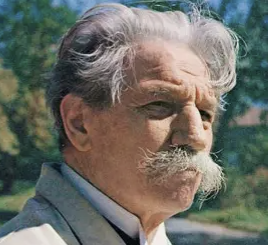
The thinking man must ... oppose all cruel customs no matter how deeply rooted in tradition and surrounded by a halo. True manhood is too precious a spiritual good for us to surrender any part of it to thoughtlessness. p. 305; also in The Animal World of Albert Schweitzer (1950), p. 179 Variant : The thinking man must oppose all cruel customs no matter how deeply rooted in tradition and surrounded by a halo. When we have a choice, we must avoid bringing torment and injury into the life of another, even the lowliest creature; to do so is to renounce our manhood and shoulder a guilt which nothing justifies.
▼
Source
source
As quoted in Becoming Vegan : The Complete Guide to Adopting a Healthy Plant-based Diet (2000) by Brenda Davis and Vesanto Melina, p. 261
6 months 3 weeks ago
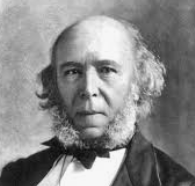
Every cause produces more than one effect.
▼
Source
source
On Progress: Its Law and Cause
6 months 4 weeks ago
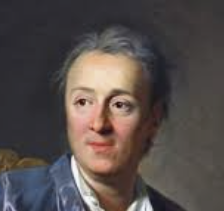
I have often seen an actor laugh off the stage, but I don't remember ever having seen one weep.
▼
Source
source
"Paradox on Acting" (1830), as quoted in Selected Writings (1966) edited by Lester G. Crocker

7 months 3 weeks ago
Wherever the want of clothing forced them to it, the human race made clothes for thousands of years, without a single man becoming a tailor.
▼
Source
source
Vol. I, Ch. 1, Section 2, pg. 49.

3 months 3 weeks ago
Professional standards, the standards of ambition and selfishness, are always sliding downward toward expense, ostentation, and mediocrity. They tend always to narrow the ground of judgment. But amateur standards, the standards of love, are always straining upward toward the humble and the best. They enlarge the ground of judgment. The context of love is the world.
▼
Source
source
The Responsibility of the Poet

4 months 2 weeks ago
From of old, a thousand thoughts, in his pilgrimings and wanderings, had been in this man: What am I? What is this unfathomable Thing I live in, which men name Universe? What is Life; what is Death? What am I to believe? What am I to do? The grim rocks of Mount Hara, of Mount Sinai, the stern sandy solitudes answered not. The great Heaven rolling silent overhead, with its blue-glancing stars, answered not. There was no answer. The man's own soul, and what of God's inspiration dwelt there, had to answer!

7 months 6 days ago
Meditate upon my counsels; love them; follow them; To the divine virtues will they know how to lead thee. I swear it by the One who in our hearts engraved The sacred Tetrad, symbol immense and pure, Source of Nature and model of the Gods.
▼
Source
source
As translated by Fabre d'Olivet
7 months 4 weeks ago
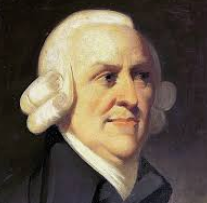
We are delighted to find a person who values us as we value ourselves, and distinguishes us from the rest of mankind, with an attention not unlike that with which we distinguish ourselves.
▼
Source
source
Section III, Chap. I.
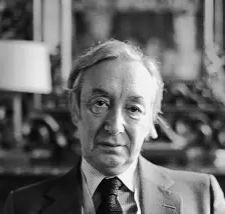
6 months 3 weeks ago
I saw a Divine Being. I'm afraid I'm going to have to revise all my various books and opinions.
▼
Source
source
National Post (3 March 2001).
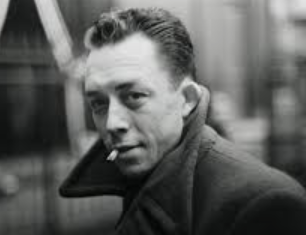
8 months 3 weeks ago
The world evades us because it becomes itself again. That stage scenery masked by habit becomes what it is. It withdraws at a distance from us.
6 months 1 week ago
I do not regard the late Carl Sagan as any kind of authority. On the contrary, as this book will show, I regard him in many ways as a dubious publicity seeker and careerist, more concerned to maintain his reputation as the brilliant and sceptical representative of hard-headed science than to look squarely and honestly at the facts.
▼
Source
source
In short, a bit of a crook. pp. xix-xx
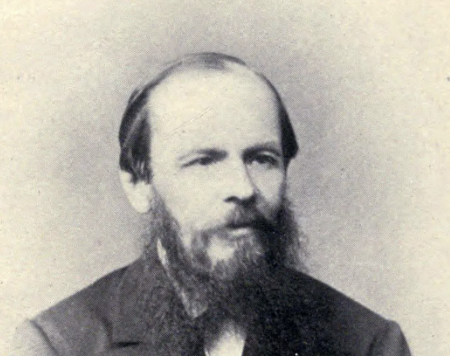
6 months 3 weeks ago
They showed me their trees, and I could not understand the intense love with which they looked at them; it was as though they were talking with creatures like themselves. And perhaps I shall not be mistaken if I say that they conversed with them. Yes, they had found their language, and I am convinced that the trees understood them. They looked at all Nature like that - at the animals who lived in peace with them and did not attack them, but loved them, conquered by their love. They pointed to the stars and told me something about them which I could not understand, but I am convinced that they were somehow in touch with the stars, not only in thought, but by some living channel.
7 months 3 weeks ago
One capitalist always kills many.
▼
Source
source
Vol. I, Ch. 32, p. 836.
7 months 4 weeks ago
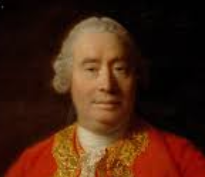
The more exquisite any good is, of which a small specimen is afforded us, the sharper is the evil, allied to it; and few exceptions are found to this uniform law of nature. The most sprightly wit borders on madness; the highest effusions of joy produce the deepest melancholy; the most ravishing pleasures are attended with the most cruel lassitude and disgust; the most flattering hopes make way for the severest disappointments. And, in general, no course of life has such safety (for happiness is not to be dreamed of) as the temperate and moderate, which maintains, as far as possible, a mediocrity, and a kind of insensibility, in every thing. As the good, the great, the sublime, the ravishing are found eminently in the genuine principles of theism; it may be expected, from the analogy of nature, that the base, the absurd, the mean, the terrifying will be equally discovered in religious fictions and chimeras.
▼
Source
source
Part XV - General corollary
7 months 1 day ago
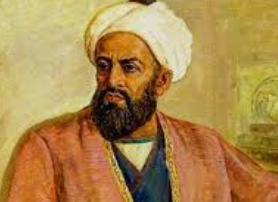
Indeed, the drunken man while in that condition does not know the definition of drunkenness nor the scientific account of it; he has not the very least scientific knowledge of it. The sober man, on the other hand, knows the definition of drunkenness and its basis, yet he is not drunk in the very least. Again the doctor, when he is himself ill, knows the definition and causes of health and the remedies which restore it, and yet is lacking in health. Similarly there is a difference between knowing the true nature and causes and conditions of the ascetic life and actually leading such a life and forsaking the world.
▼
Source
source
III. The Classes of Seekers, p. 47.
6 months 2 weeks ago
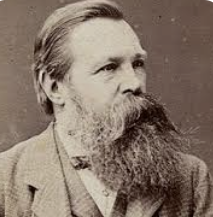
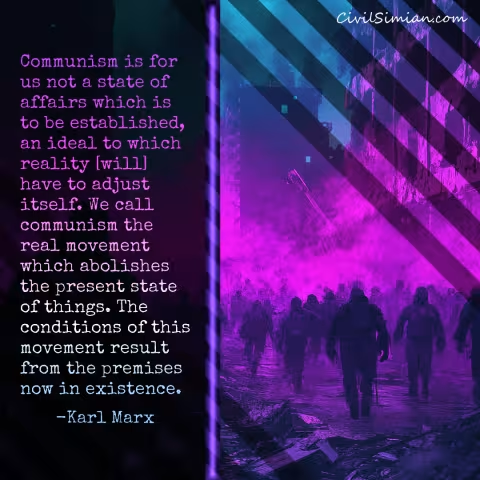
Democratic socialists are either proletarians who are not yet sufficiently clear about the conditions of the liberation of their class, or they are representatives of the petty bourgeoisie, a class which, prior to the achievement of democracy and the socialist measures to which it gives rise, has many interests in common with the proletariat. It follows that, in moments of action, the communists will have to come to an understanding with these democratic socialists, and in general to follow as far as possible a common policy with them - provided that these socialists do not enter into the service of the ruling bourgeoisie and attack the communists. It is clear that this form of co-operation in action does not exclude the discussion of differences.
5 months 3 weeks ago
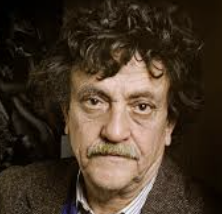
The big advantage of being a chemistry major was the freedom to be tasteless.

7 months 3 weeks ago
I am to talk about Apologetics. Apologetics means of course Defence. The first question is - what do you propose to defend? Christianity, of course...
▼
Source
source
"Christian Apologetics" (1945), p. 89
6 months 2 weeks ago
We are all secularised anarchists today.
4 months 1 week ago
It is the quality of a great soul to scorn great things and to prefer that which is ordinary rather than that which is too great.

5 months 1 week ago
We share this planet, our home, with millions of species. Justice and sustainability both demand that we do not use more resources than we need. Restraint in resource use and living within nature's limits are preconditions for social justice. The commons are where justice and sustainability converge, where ecology and equity meet. The survival of pastures and forests as community property, or of a common good like a stable ecosystem, is only possible with social organizations with checks and controls on the use of resources built into their principles. The breakdown of a community, with the associated erosion of concepts of joint ownership and responsibility, can trigger the degradation of common resources.
▼
Source
source
(p.50)
6 months 3 weeks ago
Taxing is an easy business. Any projector can contrive new impositions, any bungler can add to the old.

6 months 1 week ago
A young delicate tree, that is being clipped and cut by the gardener in order to give it an artificial form, will never reach the majestic height and the beauty as when allowed to grow in nature and freedom.
7 months 3 weeks ago
Those who believe that they are exclusively in the right are generally those who achieve something.
▼
Source
source
"Note on Dogma"
8 months 2 weeks ago
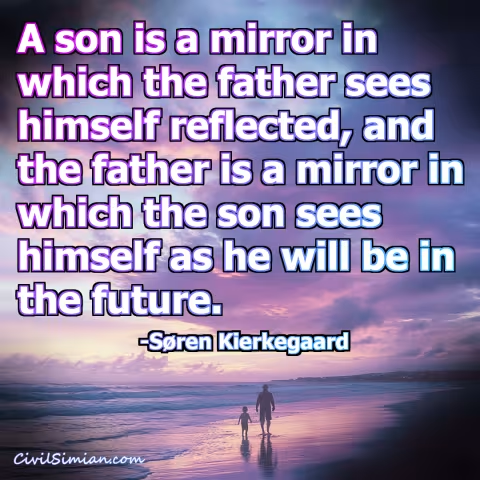
When your father is alive, observe his will. When your father is dead observe his former actions. If, for three years after the death of your father you do not change from the ways of your father, you can be called a 'real son'.
6 months 1 week ago
I must confess that my estimate of Lovecraft would not have pleased his most ardent admirers. The view I expressed in that book was that, while Lovecraft was distinctly a creative genius in his own way, his pessimism should not be taken too seriously; that it was the pessimism of a sick recluse, and had about it an element of rassentiment, a kind of desire to take revenge on the world that rejected him. In short, Lovecraft was a 19th century romantic, born in the wrong time. Most men of genius dislike their own age, but the really great ones impose their own vision on the age. The weak ones turn away into a world of gloomy fantasy.
▼
Source
source
p. 2
8 months 2 days ago
Let us keep to Christ, and cling to Him, and hang on Him, so that no power can remove us.
▼
Source
source
p. 433
CivilSimian.com created by AxiomaticPanic, CivilSimian, Kalokagathia