

5 months 1 week ago
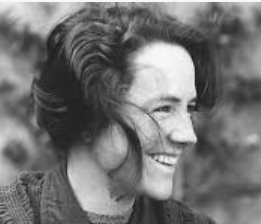
There are no signposts in the sky to show a man has passed that way before. There are no channels marked. The flier breaks each second into new uncharted seas.
▼
Source
source
North to the Orient (1935) Ch. 1
3 months 2 weeks ago
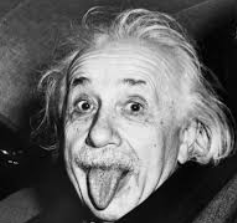
But what can be the attraction of getting to know such a tiny section of nature thoroughly, while one leaves everything subtler and more complex shyly and timidly alone? Does the product of such a modest effort deserve to be called by the proud name of a theory of the universe? In my belief the name is justified; for the general laws on which the structure of theoretical physics is based claim to be valid for any natural phenomenon whatsoever. With them, it ought to be possible to arrive at the description, that is to say, the theory, of every natural process, including life, by means of pure deduction, if that process of deduction were not far beyond the capacity of the human intellect. The physicist's renunciation of completeness for his cosmos is therefore not a matter of fundamental principle.

8 months 3 weeks ago
Fate is not in man but around him.
3 months 3 weeks ago
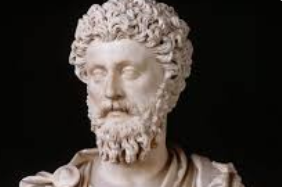
The mind is the ruler of the soul. It should remain unstirred by agitations of the flesh--gentle and violent ones alike. Not mingling with them, but fencing itself off and keeping those feelings in their place. When they make their way into our thoughts, through the sympathetic link between mind and body, don't try to resist the sensation. The sensation is natural. But don't let the mind start in with judgments, calling it 'good' or 'bad.'
▼
Source
source
(Hays translation) V, 26
5 months 1 week ago
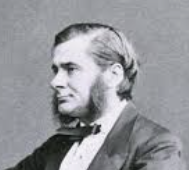
For myself I say deliberately, it is better to have a millstone tied round the neck and be thrown into the sea than to share the enterprises of those to whom the world has turned, and will turn, because they minister to its weaknesses and cover up the awful realities which it shudders to look at.
▼
Source
source
Aphorism #367, in Aphorisms and Reflections (1907) edited by Henrietta A. Huxley, his widow

7 months 3 weeks ago
I think no virtue goes with size; The reason of all cowardice Is, that men are overgrown, And, to be valiant, must come down To the titmouse dimension.
▼
Source
source
The Titmouse, st. 5
5 months 1 week ago
He had a head which statuaries loved to copy, and a foot the deformity of which the beggars in the streets mimicked.
▼
Source
source
p. 313
7 months 3 weeks ago
The husband who decides to surprise his wife is often very much surprised himself.
▼
Source
source
La Femme Qui a Raison, Act 1, scene 2, 1759

7 months 3 weeks ago
Nobody knows what is going to happen because so much depends on an enormous number of variables, on simple hazard. On the other hand if you look at history retrospectively, then, even though it was contingent, you can tell a story that makes sense.... Jewish history, for example, in fact had its ups and downs, its, enmities and its friendships, as every history of all people has. The notion that there is one unilinear history is of course false. But if you look at it after the experience of Auschwitz it looks as though all of history-or at least history since the Middle Ages - had no other aim than Auschwitz.... This, is the real problem of every philosophy of history how is it possible that in retrospect it always looks as though it couldn't have happened otherwise?
4 months 5 days ago
The last fact which knowledge can discover is that the world is a manifestation, and in every way a puzzling manifestation, of the universal will to live.
4 months 5 days ago
Beat a dog once and you only have to show him the whip.


7 months 1 day ago
We attest that He is the Willer of all things that are, the ruler of all originated phenomena; there does not come into the visible or invisible world anything meager or plenteous, small or great, good or evil, or any advantage or disadvantage, belief or unbelief, knowledge or ignorance, success or failure, increase or decrease, obedience or disobedience, except by His will. What He wills is, and what He does not, will not; there is not a glance of the eye, nor a stray thought of the heart that is not subject to His will. He is the Creator, the Restorer, the Doer of whatsoever He wills. There is none that rescinds His command, none that supplements His decrees, none that dissuades a servant from disobeying Him, except by His help and mercy, and none has power to obey Him except by His will.
▼
Source
source
Ihyaa 'Ulum al-Deen. Beirut: Dar Ibn Hazm (2005), p. 107.

6 months 1 week ago
Someone has said that it requires less mental effort to condemn than to think. The widespread mental indolence, so prevalent in society, proves this to be only too true. Rather than to go to the bottom of any given idea, to examine into its origin and meaning, most people will either condemn it altogether, or rely on some superficial or prejudicial definition of non-essentials.
3 months 2 weeks ago
I have only two rules which I regard as principles of conduct. The first is: Have no rules. The second is: Be independent of the opinion of others.
8 months 3 weeks ago
Every rebellion implies some kind of unity.
5 months 3 weeks ago
THERE IS NEVER ANYTHING TO PRO-DUCE. In spite of all its materialist efforts, production remains a utopia. We can wear ourselves out in materializing things, in rendering them visible, but we will never cancel the secret.
▼
Source
source
(p. 65)

4 months 2 weeks ago
A mystic bond of brotherhood makes all men one.
▼
Source
source
Essays, Goethe's Works.
6 months 1 week ago
Our life is a hope which is continually converting itself into memory and memory in its turn begets hope. Give us leave to live! The eternity that is like an eternal present, without memory and without hope, is death. Thus do ideas exist in the God-Idea, but not thus do men live in the living God, in the God-Man.


6 months 2 weeks ago
Music is everything. God himself is nothing more than an acoustic hallucination.

7 months 3 weeks ago
The wraith of Sigmund said. "You know what this is, I suppose. Religious melancholia. Stop while there is time. If you dive, you dive into insanity."
▼
Source
source
Pilgrim's Regress 168
7 months 3 weeks ago
The chief pleasure of his life in these days was to go down the road and look through the window in the wall in the hope of seeing the beautiful Island. ... the sight of the Island and the sounds became very rare ... and the yearning for the sight ... became so terrible that John thought he would die if he did not have them again soon. ... it came into his head that he might perhaps get the old feeling-for what, he thought, had the Island ever given him but a feeling?-by imagining. He shut his eyes and set his teeth again and made a picture of the Island in his mind.
▼
Source
source
Pilgrim's Regress 12-13
4 months 1 week ago
You need a change of soul rather than a change of climate.

6 months 4 weeks ago
All those who seek to destroy the liberties of a democratic nation ought to know that war is the surest and shortest means to accomplish it.
▼
Source
source
Book Three, Chapter XXII.
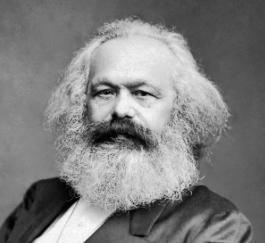
7 months 3 weeks ago
A commodity appears, at first sight, a very trivial thing, and easily understood.Its analysis shows that it is, in reality, a very queer thing, abounding in metaphysical subtleties and theological niceties.
▼
Source
source
Vol. I, Ch. 1, Section 4, pg. 81.
4 months 1 week ago
If one rejects laissez faire on account of man's fallibility and moral weakness, one must for the same reason also reject every kind of government action.
▼
Source
source
Planning for Freedom (1952), p. 44
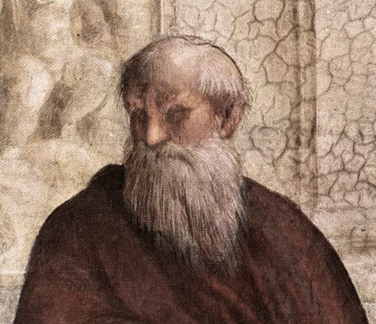
8 months 1 week ago
When the soul has descended into generation (from its first divine condition) she partakes of evil, and is carried a great way into a state the opposite of her first purity and integrity, to be entirely merged in which, is nothing more than to fall into a dark mire. ...The soul dies as much as it is possible for the soul to die: and the death to her is, while baptized or immersed in the present body, to descend into matter, and be wholly subjected by it; and after departing thence to lie there til it shall arise and turn its face away from the abhorrent filth. This is what is meant by falling asleep in Hades, of those who have come there.

3 months 3 weeks ago
Man, in wearing himself out his whole life long by saying: What is that! and what is that called! and what does that mean! is a big spectacle to himself if he wants to open his eyes. All his natural powers tending towards the truth, he never ceases looking for true names; he senses a language prior to that of Babel, and even of Eden.
▼
Source
source
p. 68
4 months 2 weeks ago
The Age that admires talk so much can have little discernment for inarticulate work, or for anything that is deep and genuine. Nobody, or hardly anybody, having in himself an earnest sense for truth, how can anybody recognize an inarticulate Veracity, or Nature-fact of any kind; a Human Doer especially, who is the most complex, profound, and inarticulate of all Nature's Facts? Nobody can recognize him: till once he is patented, get some public stamp of authenticity, and has been articulately proclaimed, and asserted to be a Doer. To the worshipper of talk, such a one is a sealed book. An excellent human soul, direct from Heaven,-how shall any excellence of man become recognizable to this unfortunate? Not except by announcing and placarding itself as excellent,-which, I reckon, it above other things will probably be in no great haste to do.
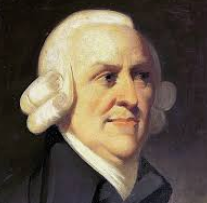
7 months 4 weeks ago
The value which the workmen add to the materials, therefore, resolves itself in this case into two parts, of which the one pays their wages, the other the profits of the employer upon the whole stock of materials and wages which he advanced.
▼
Source
source
Chapter VI, p. 58.
3 months 3 weeks ago
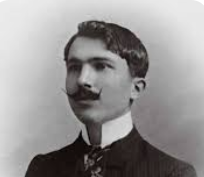
Love responsibility. Say: "It is my duty, and mine alone, to save the earth. If it is not saved, then I alone am to blame." Love each man according to his contribution in the struggle. Do not seek friends; seek comrades-in-arms.

4 months 2 weeks ago
O thou who art able to write a Book, which once in the two centuries or oftener there is a man gifted to do, envy not him whom they name City-builder, and inexpressibly pity him whom they name Conqueror or City-burner! Thou too art a Conqueror and Victor; but of the true sort, namely over the Devil: thou too hast built what will outlast all marble and metal, and be a wonder-bringing City of the Mind, a Temple and Seminary and Prophetic Mount, whereto all kindreds of the Earth will pilgrim.
▼
Source
source
Bk. II, ch. 8.
7 months 3 weeks ago
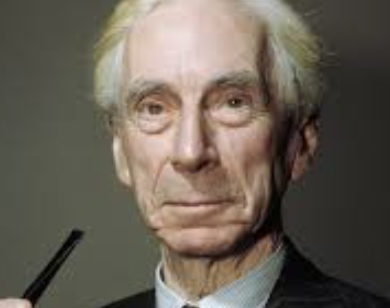
The life of man is a long march through the night, surrounded by invisible foes, tortured by weariness and pain, towards a goal that few can hope to reach, and where none may tarry long.

5 months 3 weeks ago
It is precisely because we can destroy that we are under an obligation to know why we ought not to do it, and to summon those countervailing powers that curb our destructive capacity. Nonviolence becomes an ethical obligation by which we are bound precisely because we are bound to one another; it may well be an obligation against which we rail, in which ambivalent swings of the psyche make themselves known, but the obligation to preserve the social bond can be resolved upon without precisely resolving that ambivalence. The obligation not to destroy each other emerges from, and reflects, the vexed social form of our lives, and it leads us to reconsider whether self-preservation is not linked to preserving the lives of others.
▼
Source
source
p. 148

3 months 3 weeks ago
No government ought to be without censors; and where the press is free no one ever will.
▼
Source
source
Letter to George Washington (9 September 1792) The word "censor" in this context means one who censures or an adverse critic not an official who decides what can be published.

7 months 1 week ago
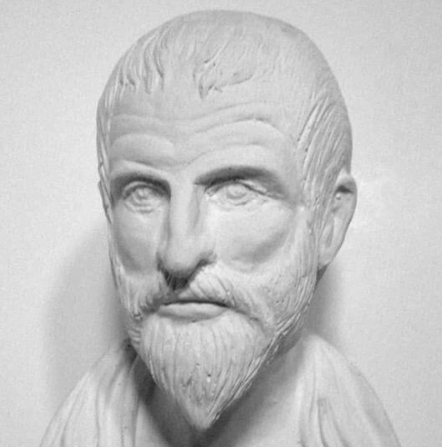
Not much younger than these (sc. Hermotimus of Colophon and Philippus of Mende) is Euclid, who put together the Elements, collecting many of Eudoxus' theorems, perfecting many of Theaetetus', and also bringing to irrefragable demonstration the things which were only somewhat loosely proved by his predecessors. This man lived in the time of the first Ptolemy. For Archimedes, who came immediately after the first (Ptolemy), makes mention of Euclid: and, further, they say that Ptolemy once asked him if there was in geometry any shorter way than that of the elements, and he answered that there was no royal road to geometry. He is then younger than pupils of Plato but older than Eratosthenes and Archimedes; for the latter were contemporary with one another, as Eratosthenes somewhere says.
▼
Source
source
As quoted by Sir Thomas Little Heath, The Thirteen Books of Euclid's Elements (1908) Vol.1 Introduction and Books I, II p.1, citing Proclus ed. Friedlein, p. 68, 6-20.
3 months 3 weeks ago
Someone within me is struggling to lift a great weight, to cast off the mind and flesh by overcoming habit, laziness, necessity. I do not know from where he comes or where he goes. I clutch at his onward march in my ephemeral breast, I listen to his panting struggle, I shudder when I touch him.
7 months 3 weeks ago
Communism differs from all previous movements in that it overturns the basis of all earlier relations of production and intercourse, and for the first time consciously treats all natural premises as the creatures of hitherto existing men, strips them of their natural character and subjugates them to the power of the united individuals. Its organisation is, therefore, essentially economic, the material production of the conditions of this unity; it turns existing conditions into conditions of unity. The reality, which communism is creating, is precisely the true basis for rendering it impossible that anything should exist independently of individuals, insofar as reality is only a product of the preceding intercourse of individuals themselves.
▼
Source
source
Vol. I, Part 4.
6 months 2 weeks ago
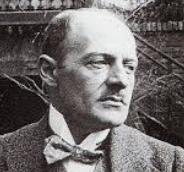
The fake love of ressentiment man offers no real help, since for his perverted sense of values, evils like "sickness" and "poverty" have become goods.
▼
Source
source
L. Coser, trans. (1961), p. 92

7 months 3 weeks ago
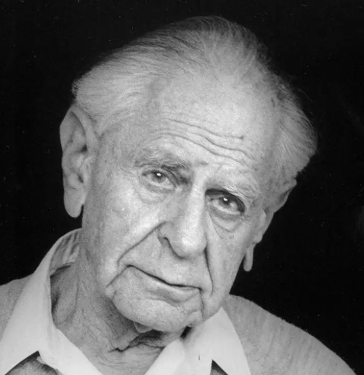
Do not allow your dreams of a beautiful world to lure you away from the claims of men who suffer here and now. Our fellow men have a claim to our help; no generation must be sacrificed for the sake of future generations, for the sake of an ideal of happiness that may never be realised.
7 months 2 weeks ago
If a lion could talk, we could not understand him.
▼
Source
source
Pt II, p. 223 of the 1968 English edition
5 months 2 weeks ago
We mustn't forget how quickly the visions of genius become the canned goods of intellectuals.
▼
Source
source
Herzog (1964) [Penguin Classics, 2003, ISBN 0-142-43729-8], p. 82
5 months 1 week ago
The sea does not reward those who are too anxious, too greedy, or too impatient. To dig for treasures shows not only impatience and greed, but lack of faith. Patience, patience, patience, is what the sea teaches. Patience and faith. One should lie empty, open, choiceless as a beach - waiting for a gift from the sea.
5 months 3 weeks ago
There are no passengers on Spaceship Earth. We are all crew.
▼
Source
source
Statement in 1965, in reference to Operating Manual for Spaceship Earth (1963) by Buckminster Fuller
8 months 3 weeks ago
There is but one truly serious philosophical problem and that is suicide. Judging whether life is or is not worth living amounts to answering the fundamental question of philosophy. All the rest, whether or not the world has three dimensions, whether the mind has nine or twelve categories comes afterwards. These are games; one must first answer. And if it is true, as Nietzsche claims, that a philosopher, to deserve our respect, must preach by example, you can appreciate the importance of that reply, for it will precede the definitive act. These are facts the heart can feel; yet they call for careful study before they become clear to the intellect. If I ask myself how to judge that this question is more urgent than that, I reply that one judges by the actions it entails. I have never seen anyone die for the ontological argument.
▼
Source
source
Absurdity and Suicide

8 months 3 days ago
There are four classes of Idols which beset men's minds. To these for distinction's sake I have assigned names - calling the first class, Idols of the Tribe; the second, Idols of the Cave; the third, Idols of the Market-Place; the fourth, Idols of the Theater.
▼
Source
source
Aphorism 39
CivilSimian.com created by AxiomaticPanic, CivilSimian, Kalokagathia