

7 months 3 weeks ago
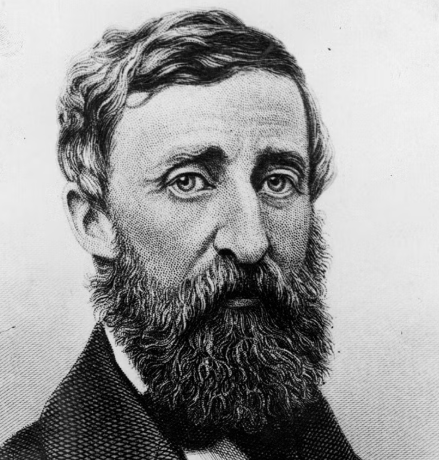
Who looks in the sun will see no light else; but also he will see no shadow. Our life revolves unceasingly, but the centre is ever the same, and the wise will regard only the seasons of the soul.
▼
Source
source
March 10, 1841
6 months 1 week ago
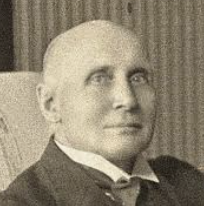
The universities are schools of education, and schools of research. But the primary reason for their existence is not to be found either in the mere knowledge conveyed to the students or in the mere opportunities for research afforded to the members of the faculty. Both these functions could be performed at a cheaper rate, apart from these very expensive institutions. Books are cheap, and the system of apprenticeship is well understood. So far as the mere imparting of information is concerned, no university has had any justification for existence since the popularization of printing in the fifteenth century. Yet the chief impetus to the foundation of universities came after that date, and in more recent times has even increased. The justification for a university is that it preserves the connection between knowledge and the zest of life, by uniting the young and the old in the imaginative consideration of learning.
6 months 2 weeks ago
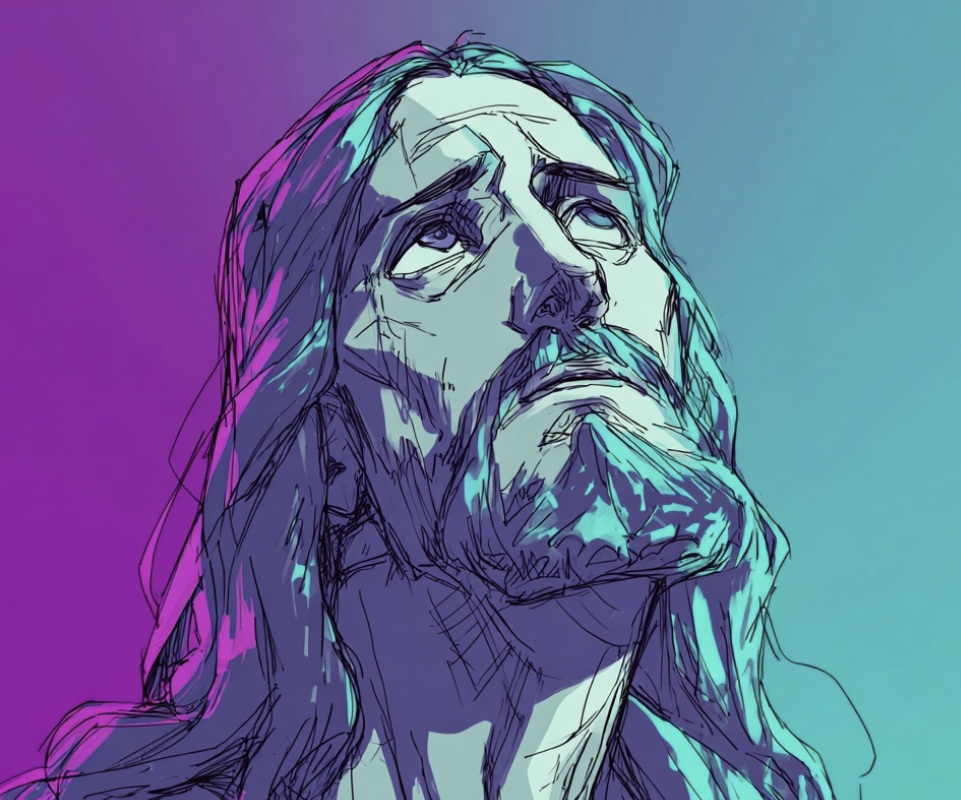
I have said these things to you so that by means of me you may have peace. In the world you will have tribulation, but take courage! I have conquered the world.
▼
Source
source
16:33, NWT

7 months 3 weeks ago
Undoubtedly we have no questions to ask which are unanswerable. We must trust the perfection of the creation so far, as to believe that whatever curiosity the order of things has awakened in our minds, the order of things can satisfy. Every man's condition is a solution in hieroglyphic to those inquiries he would put. He acts it as life, before he apprehends it as truth.
▼
Source
source
Introduction
7 months 3 weeks ago
I am here to plead his cause with you. I plead not for his life, but for his character - his immortal life; and so it becomes your cause wholly, and is not his in the least. Some eighteen hundred years ago Christ was crucified; this morning, perchance, Captain Brown was hung. These are the two ends of a chain which is not without its links. He is not Old Brown any longer; he is an angel of light.
7 months 2 weeks ago
Choose a wife who is of character, because that one is good who in the end is more respected.
▼
Source
source
(p. 60)
6 months 1 week ago
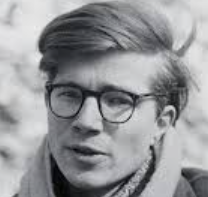
The Outsider may be an artist, but the artist is not necessarily an Outsider.
▼
Source
source
Chapter one, The Country of the Blind
4 months 1 week ago
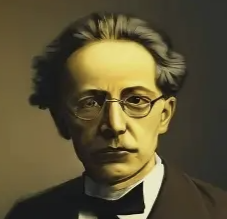
All right, men are as they should be, can be. What should they be? Surely not more than they can be! And what can they be? Not more, again, than they - can, than they have the competence, the force, to be. But this they really are, because what they are not, they are incapable of being; for to be capable means - really to be. One is not capable for anything that one really is not; one is not capable of anything that one does not really do. Could a man blinded by cataract see? Oh, yes, if he had his cataract successfully removed. But now he cannot see because he does not see. Possibility and reality always coincide. One can do nothing that one does not, as one does nothing that one cannot.
▼
Source
source
Cambridge 1995, p. 291
8 months 3 days ago
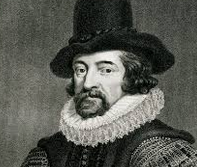
Sacred and inspired divinity, the sabaoth and port of all men's labours and peregrinations.
▼
Source
source
Book II
4 months 1 week ago
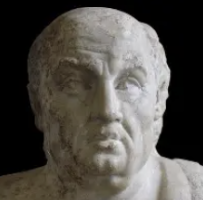
It is to this law that our souls must adjust themselves, this they should follow, this they should obey. Whatever happens, assume that it was bound to happen, and do not be willing to rail at Nature. That which you cannot reform, it is best to endure, and to attend uncomplainingly upon the God under whose guidance everything progresses; for it is a bad soldier who grumbles when following his commander.
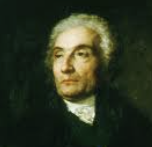
3 months 3 weeks ago
How many mistakes power has committed! And how often has it ignored the means to conserve itself! Man is insatiable for power; he is infinite in his desires, and, always discontented with what he has, he loves only what he has not. People complain about the despotism of princes; they should complain about that of man. We are all born despots, from the most absolute monarch of Asia to the child who smothers a bird with his hand for the pleasure of seeing something in the world weaker than himself. There is no man who does not abuse power, and experience proves that the most abominable despots, if they come to seize the sceptre, will be precisely those who rant against despotism.
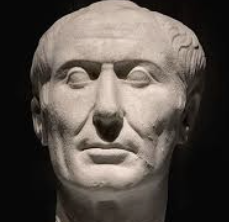
5 months 3 weeks ago
Pain will force even the truthful to speak falsely.
▼
Source
source
Maxim 232
4 months 1 week ago
Unrighteous fortune seldom spares the highest worth; no one with safety can long front so frequent perils. Whom calamity oft passes by she finds at last.
▼
Source
source
lines 325-328; (Megara).

6 months 2 weeks ago
All liberation depends on the consciousness of servitude, and the emergence of this consciousness is always hampered by the predominance of needs and satisfactions which, to a great extent, have become the individual's own.
▼
Source
source
p. 7


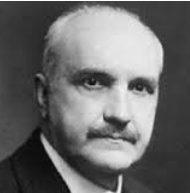
6 months 2 weeks ago
Happiness is the only sanction of life; where happiness fails, existence remains a mad and lamentable experiment.
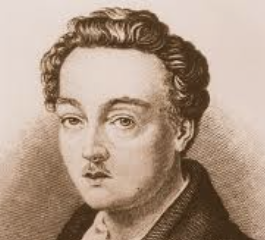
6 months 3 weeks ago
The revolution must end and the republic must begin. In our constitution, right must take the place of duty, welfare that of virtue, and self-defense that of punishment. Everyone must be able to prevail and to live according to one's own nature.
▼
Source
source
Act I.
7 months 3 weeks ago
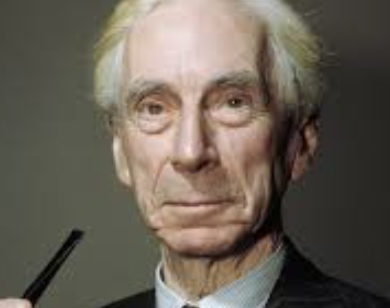
The first thing to realize, if you wish to become a philosopher, is that most people go through life with a whole world of beliefs that have no sort of rational justification, and that one man's world of beliefs is apt to be incompatible with another man's, so that they cannot both be right. People's opinions are mainly designed to make them feel comfortable; truth, for most people is a secondary consideration.
▼
Source
source
"How to Become a Philosopher" (1942), in The Art of Philosophizing, and Other Essays (New York: Philosophical Library, 1968), p. 2
6 months 2 weeks ago
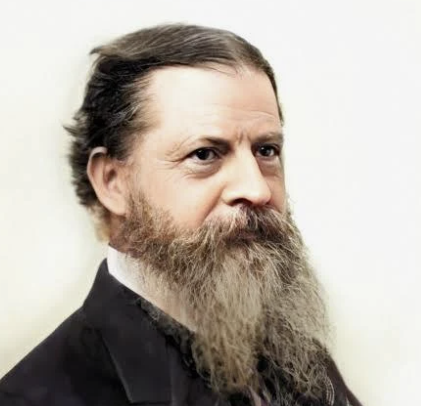
Thus far, gentlemen, I have been insisting very strenuously upon what the most vulgar common sense has every disposition to assent to and only ingenious philosophers have been able to deceive themselves about. But now I come to a category which only a more refined form of common sense is prepared willingly to allow, the category which of the three is the chief burden of Hegel's song, a category toward which the studies of the new logico-mathematicians, Georg Cantor and the like, are steadily pointing, but to which no modern writer of any stripe, unless it be some obscure student like myself, has ever done anything approaching to justice.
▼
Source
source
Lecture II : The Universal Categories, §3. Laws: Nominalism, CP 5.59

4 months 4 days ago
Bacon, Locke, Descartes, Hume, and all the others knew they were giving rights to vulgarity. But in so doing-in addition to caring for man's well-being-they were providing rights for themselves.
▼
Source
source
"Commerce and Culture," p. 289.
6 months 1 week ago
What is beginning to emerge, then, is a theory about psychic sensitivity. It runs as follows. When I relax deeply, it is as if someone opened up the partition between the two compartments of my brain, turning them into a single large room. I experience a sense of mental freedom as if I can suddenly breathe more deeply, and a feeling of contact with things. Everyone has had the experience of being in a state of hurry or excitement, and failing to notice that they have bruised or scratched themselves -- until the excitement evaporates and the pain makes itself known. Hurry and tension raise our sensitivity threshold, and at the same time, erect a glass wall between us and reality. In the "unicameral" state, this wall vanishes, and everything seems more real.
▼
Source
source
p. 51

7 months 2 weeks ago
Sometimes, because my position has not been made clear enough, people think I'm a sort of radical anarchist who has an absolute hatred of power. No! What I am trying to do is to approach this extremely important and tangled phenomenon in our society, the exercise of power, with the most reflective, and I would say prudent attitude. Prudent in my analysis, in the moral and theoretical postulates I use: I try to figure out what's at stake. But to question the relations of power in the most scrupulous and attentive manner possible, looking into all the domains of its exercise, that's not the same thing as constructing a mythology of power as the beast of the apocalypse.
▼
Source
source
"Power, Moral Values, and the Intellectual", interview in History of the Present 4
7 months 4 weeks ago
All registers which, it is acknowledged, ought to be kept secret, ought certainly never to exist.
▼
Source
source
Chapter II, Part II, Appendix to Articles I and II, p. 935.
5 months 3 weeks ago
Fortune is like glass-the brighter the glitter, the more easily broken.
▼
Source
source
Maxim 280
7 months 3 weeks ago
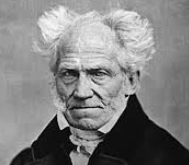
Only a male intellect clouded by the sexual drive could call the stunted, narrow-shouldered, broad-hipped and short-legged sex the fair sex.
▼
Source
source
Vol. 2, Ch. 27, § 369
7 months 3 weeks ago
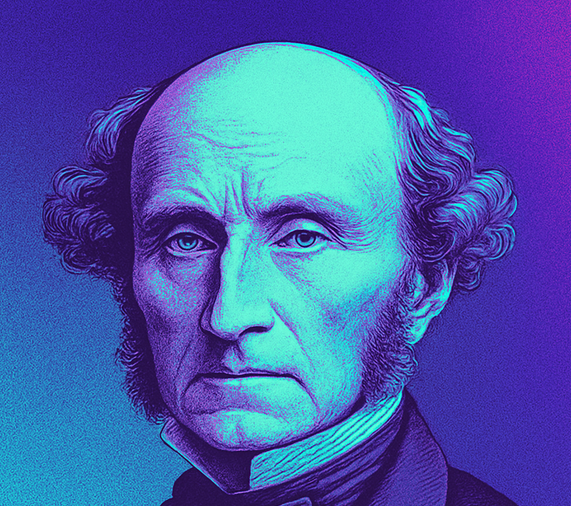
The notion that truths external to the mind may be known by intuition or consciousness, independently of observation and experience, is, I am persuaded, in these times, the great intellectual support of false doctrines and bad institutions. By the aid of this theory, every inveterate belief and every intense feeling, of which the origin is not remembered, is enabled to dispense with the obligation of justifying itself by reason, and is erected into its own all-sufficient voucher and justification. There never was such an instrument devised for consecrating all deep-seated prejudices.
▼
Source
source
(pp. 225-226)
8 months 3 weeks ago
There are limits beyond which your folly will not carry you. I am glad of that. In fact, I am relieved.

6 months 2 weeks ago
I anticipated witnessing in my lifetime the disappearance of our species. But the Gods have been against me.

8 months 1 week ago
The highest perfection of human life consists in the mind of man being detached from care, for the sake of God.
▼
Source
source
III, 130, 3
7 months 3 weeks ago
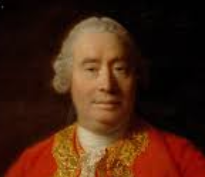
Grief and disappointment give rise to anger, anger to envy, envy to malice, and malice to grief again, till the whole circle be completed.
▼
Source
source
Part 1, Section 4
6 months 2 weeks ago
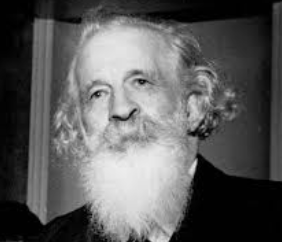
A word is a bud attempting to become a twig. How can one not dream while writing? It is the pen which dreams. The blank page gives the right to dream.
▼
Source
source
Introduction, sect. 6
7 months 3 weeks ago
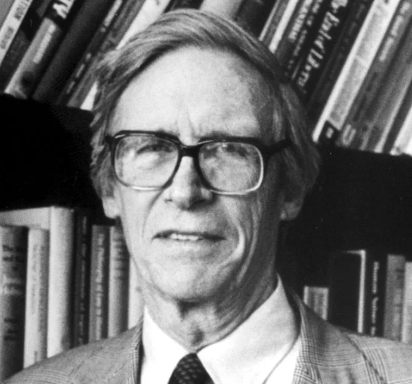
Many conservative writers have contended that the tendency to equality in modern social movements is the expression of envy. In this way they seek to discredit this trend, attributing it to collectively harmful impulses.
▼
Source
source
Chapter IX, Section 82, p. 538
7 months 2 weeks ago
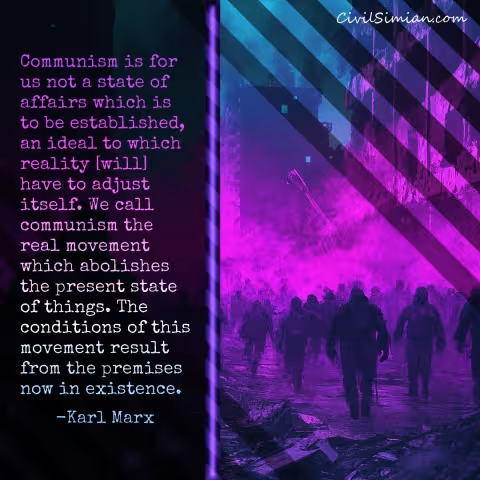
Truthfulness under oath is, by now, a matter of our civic religion, our relation to our fellow citizens rather than our relation to a nonhuman power.
▼
Source
source
"John Searle on Realism and Relativism." Truth and Progress: Philosophical Papers, Volume 3 (1998).
8 months 1 day ago
A little folly is desirable in him that will not be guilty of stupidity.
▼
Source
source
Book III, Ch. 9. Of Vanity
7 months 4 weeks ago
Our merchants and master-manufacturers complain much of the bad effects of high wages in raising the price, and thereby lessening the sale of their goods both at home and abroad. They say nothing concerning the bad effects of high profits. They are silent with regard to the pernicious effects of their own gains. They complain only of those of other people.
▼
Source
source
Chapter IX, p. 117.
5 months 3 days ago
A created thing is never invented and it is never true: it is always and ever itself.
▼
Source
source
Creation
7 months 3 weeks ago
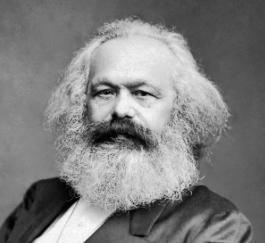
A spider conducts operations that resemble those of a weaver, and a bee puts to shame many an architect in the construction of her cells. But what distinguishes the worst of architects from the best of bees is this, that the architect raises his structure in imagination before he erects it in reality.
▼
Source
source
Vol. I, Ch. 7, pg. 198.
7 months 3 weeks ago
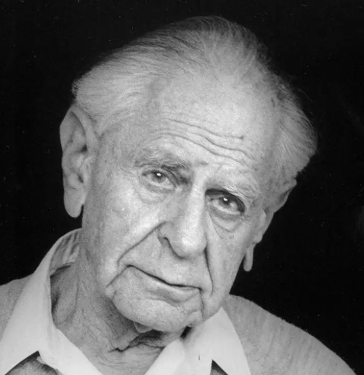
Always remember that it is impossible to speak in such a way that you cannot be misunderstood: there will always be some who misunderstand you.
8 months 1 day ago
Courtesy is a science of the highest importance. It is, like grace and beauty in the body, which charm at first sight, and lead on to further intimacy and friendship, opening a door that we may derive instruction from the example of others, and at the same time enabling us to benefit them by our example, if there be anything in our character worthy of imitation.
3 months 3 weeks ago
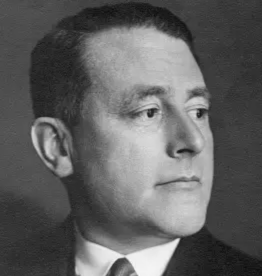
All significant concepts of the modern theory of the state are secularized theological concepts not only because of their historical development-in which they were transferred from theology to the theory of the state, whereby, for example, the omnipotent God became the omnipotent lawgiver-but also because of their systematic structure, the recognition of which is necessary for a sociological consideration of these concepts. The exception in jurisprudence is analogous to the miracle in theology.
8 months 3 weeks ago
Throughout history there have been peasant rebellions which have followed always the same course. Blindly, the peasants sacked and destroyed, and when members of the "upper classes" fell into their hands, they killed ruthlessly and cruelly, for never in their lives had they been taught gentleness and mercy by those now in their power.
4 months 1 week ago
Pain he endures, death he awaits.

6 months 3 weeks ago
The most important subject, and the first problem of philosophy, is the restoration in man of the lost image of God; so far as this relates to science.Should this restoration in the internal consciousness be fully understood, and really brought about, the object of pure philosophy is attained.
7 months 2 weeks ago
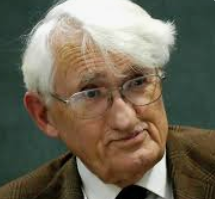
I shall develop the thesis that anyone acting communicatively must, in performing any speech act, raise universal validity claims and suppose that they can be vindicated.
▼
Source
source
p. 22

7 months 1 week ago
At times the world sees straight, but many times the world goes astray.
▼
Source
source
Book II, epistle i, line 63
CivilSimian.com created by AxiomaticPanic, CivilSimian, Kalokagathia