



6 months 2 weeks ago
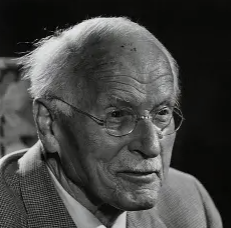
The great problems of life - sexuality, of course, among others - are always related to the primordial images of the collective unconscious. These images are really balancing or compensating factors which correspond with the problems life presents in actuality. This is not to be marvelled at, since these images are deposits representing the accumulated experience of thousands of years of struggle for adaptation and existence.
▼
Source
source
Ch. 5, p. 271
7 months 3 weeks ago
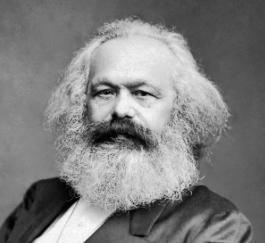
So far as living instruments of labour are concerned, for instance horses, their reproduction is timed by nature itself. Their average lifetime as instruments of labour is determined by the laws of nature. As soon as this term has expired they must be replaced by new ones. A horse cannot be replaced piecemeal; it must be replaced by another horse.
▼
Source
source
Vol. II, Ch. VIII, p. 174.
7 months 2 weeks ago
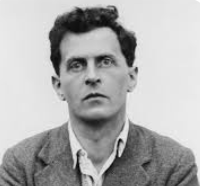
If someone asked us 'but is that true?' we might say "yes" to him; and if he demanded grounds we might say "I can't give you any grounds, but if you learn more you too will think the same."
7 months 3 weeks ago
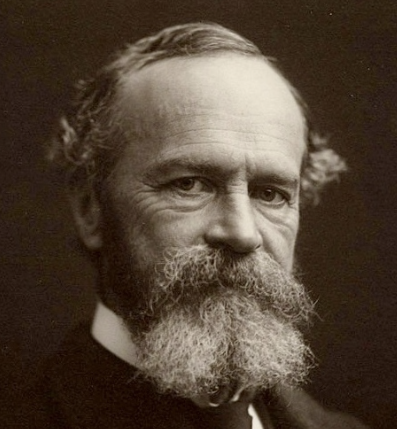
As we take, in fact, a general view of the wonderful stream of our consciousness, what strikes us first is this different pace of its parts. Like a bird's life, it seems to be made of an alternation of flights and perchings.
▼
Source
source
Ch. 9

7 months 1 week ago
For why do you hasten to remove things that hurt your eyes, but if anything gnaws your mind, defer the time of curing it from year to year?
▼
Source
source
Book I, epistle ii, lines 37-39; translation by C. Smart

4 months 2 weeks ago
Consider the great elements of human enjoyment, the attainments and possessions that exalt man's life to its present height, and see what part of these he owes to institutions, to Mechanism of any kind; and what to the instinctive, unbounded force, which Nature herself lent him.
6 months 2 weeks ago
If the awareness of our limitations begins to limit or to dim our value consciousness as well-as happens, for instance, in old age with regard to the values of youth-then we have already started the movement of devaluation which will end with the defamation of the world and all its values. Only a timely act of resignation can deliver us from this tendency toward self-delusion.
▼
Source
source
L. Coser, trans. (1973), p. 59
4 months 1 week ago
Death weighs on him who is known to all, but dies unknown to himself.
▼
Source
source
lines 401-403; (Chorus)

6 months 2 weeks ago
Everyone must destroy their life. According to the way they do it, they're either triumphants or failures.

7 months 3 weeks ago
Nature magically suits the man to his fortunes, by making these the fruit of his character.
▼
Source
source
Fate
4 months 2 weeks ago
One of the most striking signs of the decay of art is the intermixing of different genres.
▼
Source
source
Propylaea (1798) Introduction

7 months 5 days ago
Declining from the public ways, walk in unfrequented paths.
▼
Source
source
Symbol 5
6 months 2 weeks ago
The physical change in the thickness of walls since the Middle Ages could be shown in a diagram. In the fourteenth century each house was a fortress. Man spent the major portion of his day in them, in secret and well-defended solitude. That solitude, working on the soul hour after hour, forged it, like a transcendent blacksmith, into a compact and forceful character. Under its treatment, man consolidated his individual destiny and sallied forth with impunity, never yielding to the contamination from the public. It is only in isolation that we gain, almost automatically, a certain discrimination in ideas, desires, longings, that we learn which are ours, and which are anonymous, floating in the air, falling on us like dust in the street.
▼
Source
source
p. 168
4 months 1 week ago
Liberty of the people is not my liberty!
▼
Source
source
Cambridge 1995, p. 190
6 months 2 weeks ago
In that very hour he became overjoyed in the holy spirit and said: “I publicly praise you, Father, Lord of heaven and earth, because you have carefully hidden these things from wise and intellectual ones and have revealed them to young children. Yes, O Father, because this is the way you approved.
▼
Source
source
Luke 10:21, New World Translation of the Holy Scriptures
6 months 2 weeks ago
Some minds will jump here jump to the conclusion that a past idea cannot in any sense be present. But that is hasty and illogical. How extravagant too, to pronounce our whole knowledge of the past to be mere delusion! Yet it would seem that the past is completely beyond the bounds of possible experience as a Kantian thing-in-itself.
6 months 1 week ago
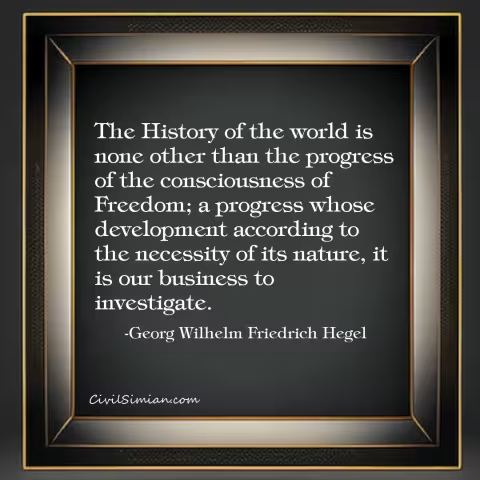
Our life is a hope which is continually converting itself into memory and memory in its turn begets hope. Give us leave to live! The eternity that is like an eternal present, without memory and without hope, is death. Thus do ideas exist in the God-Idea, but not thus do men live in the living God, in the God-Man.
6 months 3 weeks ago
There is something beautiful about virtue, Captain. But I am just a poor guy.
▼
Source
source
Scene VI.
7 months 2 weeks ago
I would really like to slow down the speed of reading with continual punctuation marks. For I would like to be read slowly. (As I myself read.)
▼
Source
source
p. 77e
7 months 3 weeks ago
Philosophy ... is a science, and as such has no articles of faith; accordingly, in it nothing can be assumed as existing except what is either positively given empirically, or demonstrated through indubitable conclusions.
▼
Source
source
Vol I
6 months 1 week ago
To desire friendship is a great fault. Friendship should be a gratuitous joy like those afforded by art or life. We must refuse it so that we may be worthy to receive it; it is of the order of grace.
▼
Source
source
p. 274
8 months 1 day ago
In plain truth, lying is an accursed vice. We are not men, nor have any other tie upon another, but by our word.
▼
Source
source
Book I, Ch. 9
4 months 2 weeks ago
Descend where you will into the lower class, in Town or Country, by what avenue you will, by Factory Inquiries, Agricultural Inquiries, by Revenue Returns, by Mining-Labourer Committees, by opening your own eyes and looking, the same sorrowful result discloses itself: you have to admit that the working body of this rich English Nation has sunk or is fast sinking into a state, to which, all sides of it considered, there was literally never any parallel.
6 months 2 weeks ago
To venture upon an undertaking of any kind, even the most insignificant, is to sacrifice to envy.
7 months 3 weeks ago
Whoever has used what means he is capable of, for the informing of himself, with a readiness to believe and obey what shall be taught and prescribed by Jesus, his Lord and King, is a true and faithful subject of Christ's kingdom; and cannot be thought to fail in any thing necessary to salvation.
▼
Source
source
§ 233
4 months 2 days ago
There are two kinds of animals on earth. One kind minds his own business, the other minds other people's business. The former are vegetarians, like cows, sheep and thinking men. The latter are carnivorous, like hawks, tigers and men of action.
▼
Source
source
As quoted by Tai-yi Lin (Lin Yutang's daughter) in her Foreword (26 March 1950) to The Importance of Living, p. x
5 months 3 weeks ago
Effects are perceived, whereas causes are conceived. Effects always preceed causes in the actual developmental order.
▼
Source
source
(p. 303)
7 months 3 weeks ago
Change alone is eternal, perpetual, immortal.
▼
Source
source
Unverified attribution noted in Respectfully Quoted: A Dictionary of Quotations (1993), ed. Suzy Platt, Library of Congress, p. 39;
3 months 3 weeks ago
I hope we shall... crush in it's birth the aristocracy of our monied corporations which dare already to challenge our government to a trial of strength and bid defiance to the laws of our country.
▼
Source
source
Letter to George Logan, 1816

7 months 3 weeks ago
When the qualification to vote is regulated by years, it is placed on the firmest possible ground, because the qualification is such as nothing but dying before the time can take away; and the equality of Rights, as a principle, is recognized in the act of regulating the exercise. But when Rights are placed upon, or made dependent upon property, they are on the most precarious of all tenures. "Riches make themselves wings, and fly away," and the rights fly with them ; and thus they become lost to the man when they would be of most value.
5 months 3 weeks ago
In order that men should embrace the truth - not in the vague way they did in childhood, nor in the one-sided and perverted way presented to them by their religious and scientific teachers, but embrace it as their highest law the complete liberation of this truth from all and every superstition (both pseudo-religious and pseudo-scientific) by which it is still obscured is essential: not a partial, timid attempt, reckoning with traditions sanctified by age and with the habits of the people - not such as was effected in the religious sphere by Guru Nanak, the founder of the sect of the Sikhs, and in the Christian world by Luther, and by similar reformers in other religions - but a fundamental cleansing of religious consciousness from all ancient religious and modern scientific superstitions.
▼
Source
source
VI
3 months 2 weeks ago
I find that even Eminent Writers (such as Raymund Lully, Paracelsus, and others) do so abuse the termes they employ, that as they will now and then give divers things one name, so they will oftentimes give one thing, many Names; and some of them (perhaps) such, as do much more properly signifie some Distinct Body of another kind; nay even in Technical Words or Termes of Art, they refrain not from this Confounding Liberty; but will, as I have Observ'd call the same Substance, sometimes the Sulphur, and Sometimes the Mercury, of a Body.
6 months 1 week ago
These are the visionary, mystical moments, when a man 'completes his partial mind'. His everyday conscious self is only a small part of the mind, like the final crescent of the moon. In moments of crisis, the full moon suddenly appears.
▼
Source
source
p. 156
7 months 4 weeks ago
No fixed capital can yield any revenue but by means of a circulating capital.
▼
Source
source
Chapter I, p. 311.
7 months 3 weeks ago
It is absurd to excite reason against the primary postulates of pure time, as, for example, continuity, etc., since they follow from laws prior and superior to which nothing is found, and since reason herself in the use of the principle of contradiction cannot dispense with the support of this concept, so primitive and original is it.
4 months 2 weeks ago
The force that had been lent my father he honorably expended in manful well-doing. A portion of this planet bears beneficent traces of his strong hand and strong head. Nothing that he undertook to do but he did it faithfully and like a true man. I shall look on the houses he built with a certain proud interest. They stand firm and sound to the heart all over his little district.
8 months 3 weeks ago
Just you think first, and don't bother to speak afterward, either.
4 months 2 weeks ago
At forty, I had attained the unperturbed mind.
▼
Source
source
"Discipline and Character", no. 41
8 months 1 day ago
It is not without good reason said, that he who has not a good memory should never take upon him the trade of lying.
▼
Source
source
Ch. 9. Of Liars, tr. Cotton, rev. W. Hazlitt, 1842
7 months 3 weeks ago
The emotions I feel are no more meant to be shown in their unadulterated state than the inner organs by which we live.
▼
Source
source
pp. 31-32
7 months 3 weeks ago
There is a physical relation between physical things. But it is different with commodities.
▼
Source
source
Vol. I, Ch. 1, Section 4, pg. 83.
4 months 5 days ago
Over the years it has become my firm opinion that sexual activity (even if only through masturbation) is "requisite and necessary, as well for the body as for the soul"; for men and women alike. It stimulates your glands, exercises your pelvis, thrills your nerves, brings mind and body together as one, and culminates in an ecstasy in which there is neither past nor future nor separation between self and other. We need that as we need vitamins, proteins, water, and air.
▼
Source
source
p. 122
4 months 2 weeks ago
Mahomet was only fourteen; had no language but his own: much in Syria must have been a strange unintelligible whirlpool to him. But the eyes of the lad were open; glimpses of many things would doubtless be taken in, and lie very enigmatic as yet, which were to ripen in a strange way into views, into beliefs and insights one day. These journeys to Syria were probably the beginning of much to Mahomet. One other circumstance we must not forget: that he had no school-learning; of the thing we call school-learning none at all.
7 months 3 weeks ago
The secret of happiness is to face the fact that the world is horrible, horrible, horrible.
▼
Source
source
Said in conversation with Mrs. Alan Wood; quoted in Alan Wood's Bertrand Russell, the Passionate Sceptic (Allen and Unwin, 1957), pp. 236-7

7 months 3 weeks ago
A strict allegory is like a puzzle with a solution: a great romance is like a flower whose smell reminds you of something you can't quite place. I think the something is 'the whole quality of life as we actually experience it.'
▼
Source
source
C. S. Lewis' Letters to Children - letter to Lucy, 9/11/1958
CivilSimian.com created by AxiomaticPanic, CivilSimian, Kalokagathia