

5 months 2 weeks ago
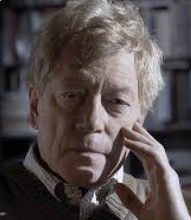
For we are social beings, who can exist and behave as autonomous agents only because we are supported in our ventures by that feeling of primal safety that the bond of society brings. We can envisage no project and no satisfaction on which the eyes of others do not shine. We are joined to those others, and even when they are strangers to us, they are also part of us. It is the indispensable need for membership that brings the national idea to our minds; and there is no rational argument that will expel it, once it is there. Without it, we are homeless; and even if our attitude to home is one of sour disaffection, home is no less necessary to our sense of who we are.
▼
Source
source
'The First Person Plural', in Ronald Beiner (ed.), Theorizing Nationalism (1999), p. 291
7 months 3 weeks ago
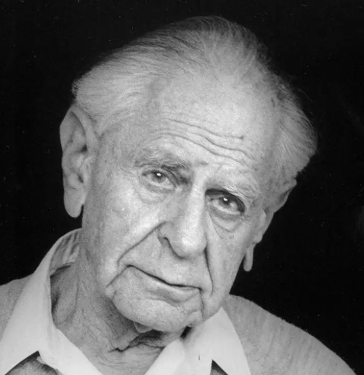
A rationalist, as I use the word, is a man who attempts to reach decisions by argument and perhaps, in certain cases, by compromise, rather than by violence. He is a man who would rather be unsuccessful in convincing another man by argument than successful in crushing him by force, by intimidation and threats, or even by persuasive propaganda.
6 months 6 days ago
I began with a strong bias toward skepticism. Besides, to tell the truth, I still find occult phenomena a little preposterous and irrelevant. What do they really matter if you place them against the truly great human achievements - against the creative genius of a Michaelangelo, a Beethoven, an Einstein? In that context they seem almost trivial.
▼
Source
source
p. 120
5 months 3 weeks ago
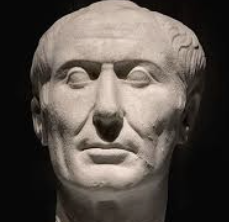
Amid a multitude of projects, no plan is devised.
▼
Source
source
Maxim 319

4 months 2 weeks ago
Friend!-Will the ballot-box raise the Noblest to the chief place; does any sane man deliberately believe such a thing?
8 months 6 days ago
If they have entered into the spirit if these rules, and if the rules have made sufficient impression on them to become rooted and established in their minds, they will feel how much difference there is between what is said here and what a few logicians may perhaps have written by chance approximating to it in a few passages of their works.



6 months 2 weeks ago
Almost anything that consoles us is a fake.
▼
Source
source
The Sovereignty of Good (1970) p. 59.

6 months 2 weeks ago
The concept of labor is not peripheral in Hegel's system, but is the central notion through which he conceives the development of society. Driven by the insight that opened this dimension to him, Hegel describes the mode of integration prevailing in a commodity-producing society in terms that clearly fore-shadow Marx's critical approach.
▼
Source
source
P. 78
6 months 3 weeks ago
It shews the anxiety of the great men who influenced the conduct of affairs at that great event, to make the Revolution a parent of settlement, and not a nursery of future revolutions.
▼
Source
source
Referring to the Glorious Revolution of 1688
7 months 3 weeks ago
If a person is stupid, we excuse him by saying that he cannot help it; but if we attempted to excuse in precisely the same way the person who is bad, we should be laughed at.
▼
Source
source
E. Payne, trans., vol. 2, p. 230

7 months 3 weeks ago
Some day you will be old enough to start reading fairy tales again.
▼
Source
source
The Lion, the Witch and the Wardrobe (1950), Dedication: "To Lucy Barfield"
5 months 3 weeks ago
The metropolis today is a classroom; the ads are its teachers. The traditional classroom is an obsolete detention home, a feudal dungeon.
▼
Source
source
(p. 12)
4 months 4 days ago
I am amazed that Congressmen can pass a bill imposing severe penalties on anyone who burns the American flag, whereas they are responsible for burning that for which the flag stands: the United States as a territory, as a people, and as a biological manifestation. That is an example of our perennial confusion of symbols with realities.
▼
Source
source
Audio lecture "Individual and Society"

7 months 3 weeks ago
I find men victims of illusion in all parts of life. Children, youths, adults, and old men, all are led by one bawble or another. Yoganidra, the goddess of illusion, Proteus, or Momus, or Gylfi's Mocking, - for the Power has many names, - is stronger than the Titans, stronger than Apollo.
▼
Source
source
Illusions

8 months 2 weeks ago
Yes, everyone sleeps at that hour, and this is reassuring, since the great longing of an unquiet heart is to possess constantly and consciously the loved one...
6 months 2 weeks ago
Therefore whoever hears these sayings of Mine, and does them, I will liken him to a wise man who built his house on the rock: and the rain descended, the floods came, and the winds blew and beat on that house; and it did not fall, for it was founded on the rock.
7 months 1 week ago
If I had followed the multitude, I should not have studied philosophy.
▼
Source
source
As quoted by Diogenes Laërtius, vii. 182.

6 months 1 week ago
A society like the Church, which claims to be Divine is perhaps more dangerous on account of the ersatz good which it contains then on account of the evil which sullies it. Something of the social labelled divine: an intoxicating mixture which carries with it every sort of license.
▼
Source
source
Devil disguised. p. 122
5 months 1 week ago
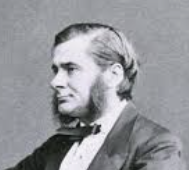
The consciousness of brutes would appear to be related to the mechanism of their body simply as a collateral product of its working, and to be as completely without any power of modifying that working as the steam-whistle which accompanies the work of a locomotive engine is without influence upon its machinery. Their volition, if they have any, is an emotion indicative of physical changes, not a cause of such changes.
5 months 3 weeks ago
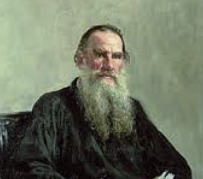
"He who exalts himself shall be humbled; and he who humbles himself shall be exalted." (Matthew 23:12) The person who exalts himself ... will be humbled, because a person who considers himself to be good, intelligent, and kind will not even try to become better, smarter, kinder. The humble person will be exalted, because he considers himself bad and will try to become better, kinder, and more reasonable.
▼
Source
source
p. 110
5 months 2 weeks ago
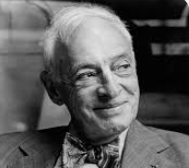
All a writer has to do to get a woman is to say he's a writer. It's an aphrodisiac.
▼
Source
source
As quoted in "Dailer's Choice" by Harriet Van Horne, in New York Magazine Vol. 10, No. 13 (28 March 1977), p. 80
7 months 3 weeks ago
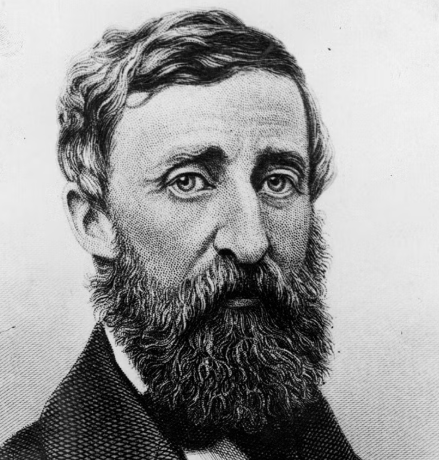
Some old poet's grand imagination is imposed on us as adamantine everlasting truth, and God's own word! Pythagoras says, truly enough, "A true assertion respecting God, is an assertion of God"; but we may well doubt if there is any example of this in literature.
7 months 3 weeks ago
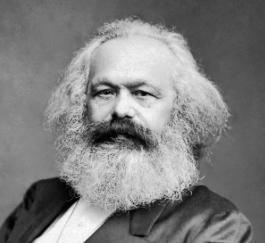
Under the ideal measure of values there lurks the hard cash.
▼
Source
source
Vol. I, Ch. 3, Section 1, pg. 116.
7 months 3 weeks ago
A mother gave her children Aesop's fables to read, in the hope of educating and improving their minds; but they very soon brought the book back, and the eldest, wise beyond his years, delivered himself as follows: This is no book for us; it's much too childish and stupid. You can't make us believe that foxes and wolves and ravens are able to talk; we've got beyond stories of that kind! In these young hopefuls you have the enlightened Rationalists of the future.
▼
Source
source
"Similes, Parables and Fables" Parerga and Paralipomena
7 months 3 weeks ago
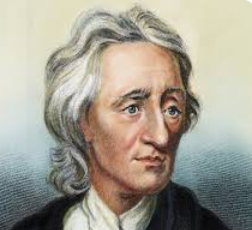
You have not that power you ought to have over him, till he comes to be more afraid of offending so good a friend than of losing some part of his future expectation.
▼
Source
source
Sec. 97
7 months 3 weeks ago
The sublime is excited in me by the great stoical doctrine, Obey thyself.
▼
Source
source
p. 14
8 months 3 weeks ago
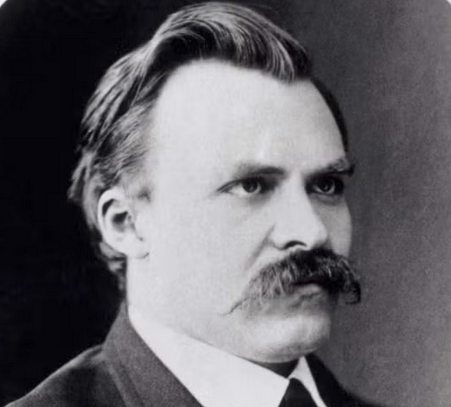
We still do not yet know where the drive for truth comes from. For so far we have heard only of the duty which society imposes in order to exist: to be truthful means to employ the usual metaphors. Thus, to express it morally, this is the duty to lie according to a fixed convention, to lie with the herd and in a manner binding upon everyone. Now man of course forgets that this is the way things stand for him. Thus he lies in the manner indicated, unconsciously and in accordance with habits which are centuries' old; and precisely by means of this unconsciousness and forgetfulness he arrives at his sense of truth.
6 months 2 weeks ago
Antiquity believed that the forces of love in the universe were limited. Therefore they were to be used sparingly,and everyone was to be loved only according to his value.
▼
Source
source
L. Coser, trans. (1961), p. 94

4 months 4 days ago
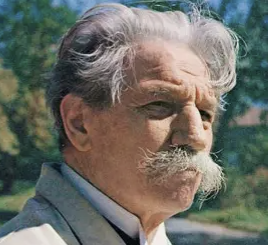
Don't let your hearts grow numb. Stay alert. It is your soul which matters.
5 months 3 weeks ago
A good reputation is more valuable than money.
▼
Source
source
Maxim 108


5 months 6 days ago
Rollers on the beach, wind in the pines, the slow flapping of herons across sand dunes, drown out the hectic rhythms of city and suburb, time tables and schedules. One falls under their spell, relaxes, stretches out prone. One becomes, in fact, like the element on which one lies, flattened by the sea; bare, open, empty as the beach, erased by today's tides of all yesterday's scribblings.
7 months 3 weeks ago
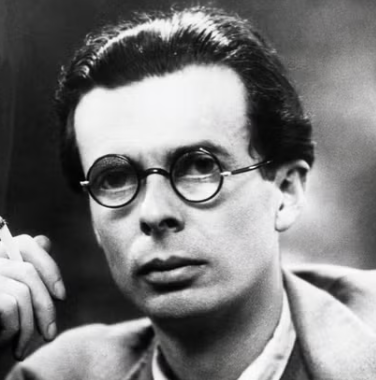
The Quaestor turned back the pages until he found himself among the Pensées. "We are not satisfied," he read, "with the life we have in ourselves and our own being; we want to live an imaginary life in other people's idea of us. Hence all our efforts are directed to seeming what we are not. We labor incessantly to preserve and embellish this imaginary being, and neglect that which is really ours." The Quaestor put down the book, ... and ruefully reflected that all his own troubles had arisen from this desire to seem what in fact he was not. To seem a man of action, when in fact he was a contemplative; to seem a politician, when nature had made him an introspective psychologist; to seem a wit, which God had intended him for a sage.
▼
Source
source
"Variations on a Philosopher" in Themes and Variations (1943), p. 2
6 months 4 weeks ago
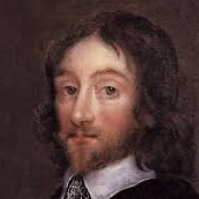
I could never divide myself from any man upon the difference of an opinion, or be angry with his judgement for not agreeing with me in that, from which perhaps within a few days I should dissent myself.
▼
Source
source
Section 6
4 months 1 week ago
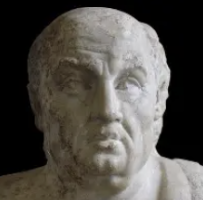
He who has injured thee was either stronger or weaker than thee. If weaker, spare him; if stronger, spare thyself.
▼
Source
source
De Ira (On Anger); Book III, Chapter V

7 months 2 weeks ago
The chief function of the disciplinary power is to 'train', rather than to select and to levy; or, no doubt, to train in order to levy and select all the more. It does not link forces together in order to reduce them; it seeks to bind them together in such a way as to multiply and use them.
▼
Source
source
Part Three, The Means of Correct Training
6 months 2 weeks ago
The fundamental sense of freedom is freedom from chains, from imprisonment, from enslavement by others. The rest is extension of this sense, or else metaphor.
7 months 3 weeks ago
The beauty or uncomeliness of many things, in good and ill breeding, will be better learnt, and make deeper impressions on them, in the examples of others, than from any rules or instructions can be given about them.
▼
Source
source
Sec. 82

3 months 3 weeks ago
It is impossible to care for each other more or differently than we care for the earth. This last statement becomes obvious enough when it is considered that the earth is what we all have in common, that it is what we are made of and what we live from, and that we therefore cannot damage it without damaging those with whom we share it. But I believe it goes farther and deeper than that. There is an uncanny resemblance between our behavior toward each other and our behavior toward the earth. Between our relation to our own sexuality and our relation to the reproductivity of the earth, for instance, the resemblance is plain and strong. By some connection we do not recognize, the willingness to exploit one becomes the willingness to exploit the other.
▼
Source
source
The Unsettling of America (1977), Chapter Seven : The Body and the Earth
8 months 1 week ago
In a word, neither death, nor exile, nor pain, nor anything of this kind is the real cause of our doing or not doing any action, but our inward opinions and principles.
▼
Source
source
Book I, ch. 11,33.
8 months 3 weeks ago
They despised everything but virtue, caring little for their present state of life, and thinking lightly of the possession of gold and other property, which seemed only a burden to them; neither were they intoxicated by luxury; nor did wealth deprive them of their self-control; but they were sober, and saw clearly that all these goods are increased by virtue and friendship with one another, whereas by too great regard and respect for them, they are lost and friendship with them.
7 months 3 weeks ago
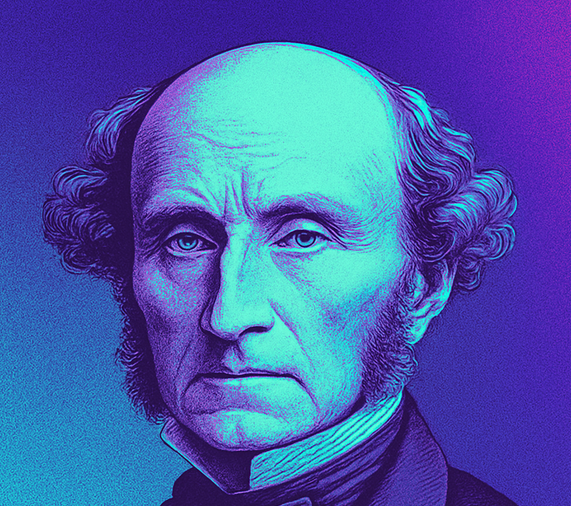
The remedies for all our diseases will be discovered long after we are dead; and the world will be made a fit place to live in, after the death of most of those by whose exertions it will have been made so. It is to be hoped that those who live in those days will look back with sympathy to their known and unknown benefactors.
▼
Source
source
Diary, April 15, 1854, in The Collected Works of John Stuart Mill, Toronto, 1988, vol. 27, p. 668
3 months 3 weeks ago
I am not the light, I am the night; but a flame stabs through my entrails and consumes me. I am the night devoured by light.

4 months 1 week ago
Criticism actually says: You must free your I so completely from all limitations that it becomes a human I. I say: Free yourself as far as you can, and you have done your part; because it is not given to everyone to break through all limits, or, more eloquently: that is not a limit for everyone which is one to the others. Consequently, don't exhaust yourself on the limits of others; it's enough if you tear down your own. Who has ever been able to break down even one limit for all people? Aren't countless people today, as at all times, running around with all the "limitations of humanity"? One who overturns one of his limits may have shown others the way and the means; the overturning of their limits remains their affair.
▼
Source
source
Landstreicher 2017, p. 97

CivilSimian.com created by AxiomaticPanic, CivilSimian, Kalokagathia