

5 months 1 week ago
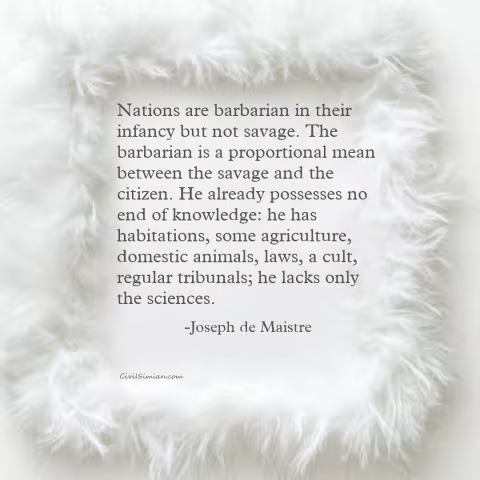
Rousseau's writings are so admirably adapted to touch both these classes that the effect they produced, especially in France, is easily intelligible.
▼
Source
source
"On The Natural Inequality of Men"

6 months 4 weeks ago
I have come across men of letters who have written history without taking part in public affairs, and politicians who have concerned themselves with producing events without thinking about them. I have observed that the first are always inclined to find general causes whereas the second, living in the midst of disconnected daily facts, are prone to imagine that everything is attributable to particular incidents, and that the wires they pull are the same as those that move the world. It is to be presumed that both are equally deceived.
▼
Source
source
Recollections of Alexis de Tocqueville, p. 80

7 months 3 weeks ago
Ever from one who comes to-morrow Men wait their good and truth to borrow.
▼
Source
source
Merlin's Song, II

4 months 2 weeks ago
A Parliament speaking through reporters to Buncombe and the twenty-seven millions, mostly fools.
▼
Source
source
Latter Day Pamphlets, No. 6.

6 months 2 weeks ago
Do not be afraid. I am the First and the Last, and the living one, and I became dead, but look! I am living forever and ever, and I have the keys of death and of the Grave.
▼
Source
source
Revelation 1:17-18, NWT
7 months 5 days ago
Hope is the only good that is common to all men; those who have nothing else possess hope still.
▼
Source
source
A Dictionary of Thoughts (1908) by Tryon Edwards, p. 234

7 months 3 weeks ago
Among these Jews there suddenly turns up a man who goes about talking as if He was God. He claims to forgive sins. He says He has always existed. He says He is coming to judge the world at the end of time. Now let us get this clear. Among Pantheists, like the Indians, anyone might say that he was a part of God, or one with God: there would be nothing very odd about it. But this man, since He was a Jew, could not mean that kind of God. God, in their language, meant the Being outside of the world, who had made it and was infinitely different from anything else. And when you have grasped that, you will see that what this man said was, quite simply, the most shocking thing that has ever been uttered by human lips.
▼
Source
source
Book II, Chapter 3, "The Shocking Alternative"
7 months 1 week ago
It is told that those who first brought out the irrationals from concealment into the open perished in shipwreck, to a man. For the unutterable and the formless must needs be concealed. And those who uncovered and touched this image of life were instantaneously destroyed and shall remain forever exposed to the play of the eternal waves.
▼
Source
source
As quoted by Tobias Dantzig, Number: The Language of Science (1930) also see Proclus, scholium to Book X of Euclid's Elements, vol. V.
5 months 2 days ago
By far my greatest dread in life [...] is that (some variant of) the Everett interpretation of Quantum Mechanics is true. Dave's Diary, BLTC Research, May 1996
8 months 3 weeks ago
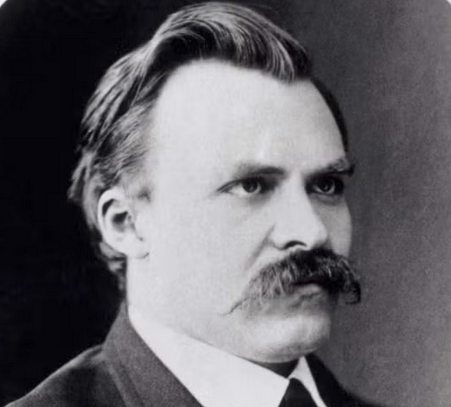
This is the mistake which I seem to make eternally, that I imagine the sufferings of others as far greater than they really are. Ever since my childhood, the proposition, my greatest dangers lie in pity, has been confirmed again and again.
8 months 1 day ago
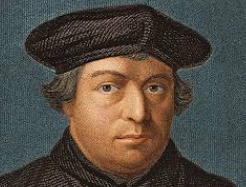
If we allow them any influence in our conscience, they become the cloak of evil, heresies and blasphemies.
▼
Source
source
Marthin Luther, Comment, ad Galat., 310. As cited by Rev. Msgr. Patrick F. O'Hare (1916), The Facts about Luther, p. 119. OCLC 4200594.
7 months 3 weeks ago
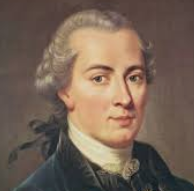
There will always be some people who think for themselves, even among the self-appointed guardians of the great mass who, after having thrown off the yoke of immaturity themselves, will spread about them the spirit of a reasonable estimate of their own value and of the need for every man to think for himself.
6 months 5 days ago
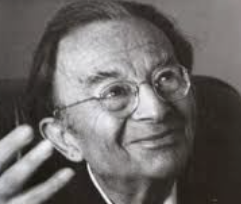
Fairness means not to use fraud and trickery in the exchange of commodities and services and the exchange of feelings.
5 months 3 weeks ago
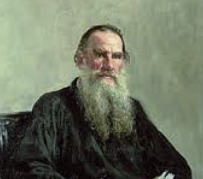
The only absolute knowledge attainable by man is that life is meaningless.
▼
Source
source
Ch. 5, translated by David Patterson, 1983
4 months 2 weeks ago
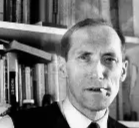
...shall we say that the difference between a vegetarian and a cannibal is just a matter of taste?
▼
Source
source
"The Idolatry of Politics", New Republic, 1986-June-16, page 31.
7 months 3 weeks ago
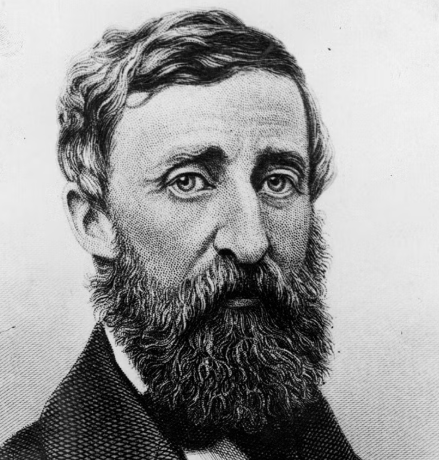
In some lyceums they tell me that they have voted to exclude the subject of religion. But how do I know what their religion is, and when I am near to or far from it? I have walked into such an arena and done my best to make a clean breast of what religion I have experienced, and the audience never suspected what I was about.
▼
Source
source
p. 490
7 months 3 weeks ago
Some people talk as if meeting the gaze of absolute goodness would be fun. They need to think again. They are still only playing with religion. Goodness is either the great safety or the great danger-according to the way you react to it.
▼
Source
source
Book I, Chapter 5, "We Have Cause to Be Uneasy"
3 months 3 weeks ago
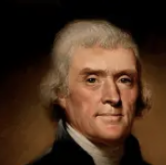
The doctrines of Jesus are simple, and tend all to the happiness of man.
8 months 3 weeks ago
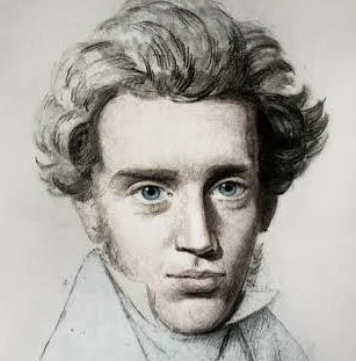
Anxiety may be compared with dizziness. He whose eye happens to look down into the yawning abyss becomes dizzy. But what is the reason for this? It is just as much in his own eye as in the abyss, for suppose he had not looked down. Hence, anxiety is the dizziness of freedom, which emerges when the spirit wants to posit the synthesis and freedom looks down into its own possibility, laying hold of finiteness to support itself. Freedom succumbs to dizziness. Further than this, psychology cannot and will not go. In that very moment everything is changed, and freedom, when it again rises, sees that it is guilty. Between these two moments lies the leap, which no science has explained and which no science can explain. He who becomes guilty in anxiety becomes as ambiguously guilty as it is possible to become.


4 months 2 weeks ago
Consider the great elements of human enjoyment, the attainments and possessions that exalt man's life to its present height, and see what part of these he owes to institutions, to Mechanism of any kind; and what to the instinctive, unbounded force, which Nature herself lent him.

6 months 2 weeks ago
I want to proclaim a truth that would forever exile me from among the living. I know only the conditions but not the words that would allow me to formulate it.

7 months 2 weeks ago
Athuroglossos is characterized by..: (1) When you have "a mouth like a running spring," you cannot distinguish those occasions when you should speak from those when you should remain silent; or that which must be said from that which must remain unsaid; or the circumstances and situations where speech is required from those where one ought to remain silent. (2) As Plutarch notes... you have no regard for the value of logos, for rational discourse as a means of gaining access to truth.
6 months 3 days ago
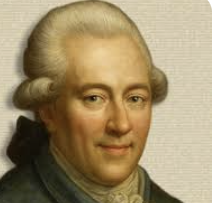
It is hardly to be believed how spiritual reflections when mixed with a little physics can hold people's attention and give them a livelier idea of God than do the often ill-applied examples of his wrath.
▼
Source
source
A 11
8 months 1 week ago
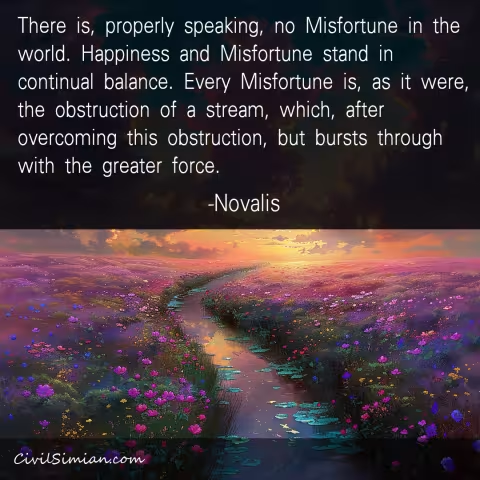
The more man meditates upon good thoughts, the better will be his world and the world at large.
8 months 1 week ago
When I see someone in anxiety, I say to myself, What can it be that this fellow wants? For if he did not want something that was outside of his control, how could he still remain in anxiety?
▼
Source
source
Book II, ch. 13, 1.
4 months 1 week ago
Might is a fine thing, and useful for many purposes; for 'one goes further with a handful of might than with a bagful of right'. You long for freedom? You fools! If you took might, freedom would come of itself. See, he who has might 'stands above the law'. How does this prospect taste to you, you 'law-abiding' people? But you have no taste!
▼
Source
source
Cambridge 1995, p. 151



6 months 6 days ago
...the Outsider's problem is the problem of denial of self-expression.
▼
Source
source
Chapter Four The Attempt to Gain Control
6 months 3 weeks ago
So to be patriots as not to forget we are gentlemen.
6 months 1 week ago
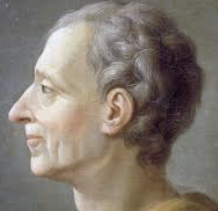
People here argue about religion interminably, but it appears that they are competing at the same time to see who can be the least devout.
▼
Source
source
No. 46. (Usbek writing to Rhedi)

8 months 1 day ago
For my own part, I cannot without grief see so much as an innocent beast pursued and killed that has no defence, and from which we have received no offence at all.
▼
Source
source
Ch. 11, tr. Cotton, 1685
4 months 1 week ago
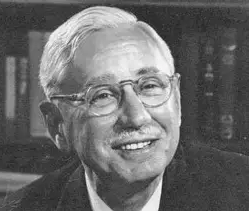
Middle age begins with marriage; for then work and responsibility replace carefree play, passion surrenders to the limitations of social order, and poetry yields to prose.
▼
Source
source
Ch. 3 : On Middle Age

7 months 2 weeks ago
The soul is the prison of the body.
▼
Source
source
Discipline and Punish (1977) as translated by Alan Sheridan, p. 30

3 months 1 week ago
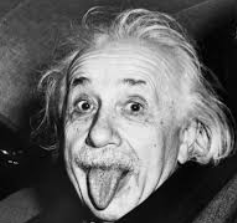
Besides agreeing with the aims of vegetarianism for aesthetic and moral reasons, it is my view that a vegetarian manner of living by its purely physical effect on the human temperament would most beneficially influence a lot of mankind.
3 months 3 weeks ago
When we get piled upon one another in large cities, as in Europe, we shall become corrupt as in Europe.
▼
Source
source
Letter to James Madison (20 December 1787), The Writings of Thomas Jefferson (19 Vols., 1905) edited by Andrew A. Lipscomb and Albert Ellery Bergh, Vol. VI, p. 392.
6 months 3 weeks ago
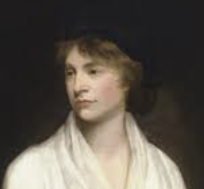
The more I see of the world, the more I am convinced that civilisation is a blessing not sufficiently estimated by those who have not traced its progress; for it not only refines our enjoyments, but produces a variety which enables us to retain the primitive delicacy of our sensations. Without the aid of the imagination all the pleasures of the senses must sink into grossness, unless continual novelty serve as a substitute for the imagination, which, being impossible, it was to this weariness, I suppose, that Solomon alluded when he declared that there was nothing new under the sun!
▼
Source
source
Letter 2
6 months 3 weeks ago
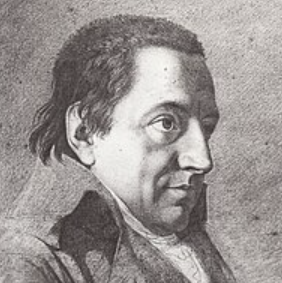
While all these are disturbed and divided by the multifarious objects to which their thoughts must be applied, the Philosopher pursues, in solitary silence and in unbroken concentration of mind, his single and undeviating course towards the Good, the Beautiful, and the True; and that is his daily labour, to which others can only resort at times for rest and refreshment after toil.
▼
Source
source
P. 17
7 months 3 weeks ago
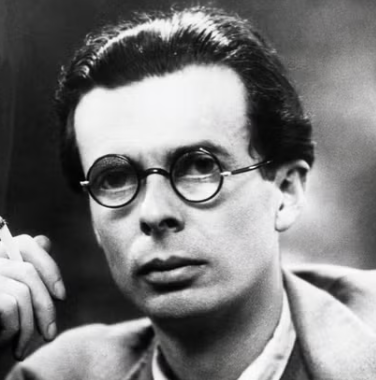
Single-mindedness is all very well in cows or baboons; in an animal claiming to belong to the same species as Shakespeare it is simply disgraceful.
▼
Source
source
Do What You Will, 1929
7 months 3 weeks ago
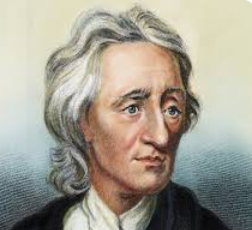
They should always be heard, and fairly and kindly answer'd, when they ask after any thing they would know, and desire to be informed about. Curiosity should be as carefully cherish'd in children, as other appetites suppress'd.
▼
Source
source
Sec. 108

8 months 1 week ago
You called and cried out loud and shattered my deafness. You were radiant and resplendent, you put to flight my blindness. You were fragrant, and I drew in my breath and now pant after you. I tasted you, and I feel but hunger and thirst for you. You touched me, and I am set on fire to attain the peace which is yours.

6 months 6 days ago
books are only what we want them to be; rather, what we read into them.
7 months 3 weeks ago
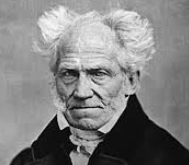
It is the courage to make a clean breast of it in the face of every question that distinguishes the philosopher. He must be like Sophocles' Oedipus, who, seeking enlightenment concerning his terrible fate, pursues his indefatigable inquiry even though he divines that appalling horror awaits him in the answer. But most of us carry with us the Jocasta in our hearts, who begs Oedipus, for God's sake, not to inquire further.
▼
Source
source
Letter to Johann Wolfgang von Goethe (November 1815)
7 months 3 weeks ago
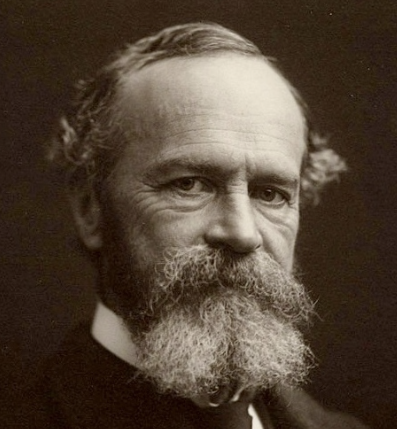
No particular results then, so far, but only an attitude of orientation, is what the pragmatic method means. The attitude of looking away from first things, principles, 'categories,' supposed necessities; and of looking towards last things, fruits, consequences, facts.
▼
Source
source
Lecture II, What Pragmatism Means
4 months 1 week ago
Among the smaller duties of life I hardly know any one more important than that of not praising where praise is not due.
▼
Source
source
Lecture IX : On the Conduct of the Understanding
CivilSimian.com created by AxiomaticPanic, CivilSimian, Kalokagathia