

4 months 1 day ago
True peace of mind comes from accepting the worst.
▼
Source
source
p. 158
8 months 1 day ago
It is not without good reason said, that he who has not a good memory should never take upon him the trade of lying.
▼
Source
source
Ch. 9. Of Liars, tr. Cotton, rev. W. Hazlitt, 1842



7 months 1 week ago
Repentance for one's evil deeds is the safeguard of life.

6 months 4 weeks ago
In the United States, the majority undertakes to supply a multitude of ready-made opinions for the use of individuals, who are thus relieved from the necessity of forming opinions of their own.
▼
Source
source
Book One, Chapter II.
5 months 3 weeks ago
The peculiar and amusing nature of those answers stems from the fact that modern history is like a deaf person who is in the habit of answering questions that no one has put to them. If the purpose of history be to give a description of the movement of humanity and of the peoples, the first question - in the absence of a reply to which all the rest will be incomprehensible - is: what is the power that moves peoples? To this, modern history laboriously replies either that Napoleon was a great genius, or that Louis XIV was very proud, or that certain writers wrote certain books. All that may be so and mankind is ready to agree with it, but it is not what was asked.
▼
Source
source
Vol 2, pt 5, p 236 - Selected Works, Moscow, 1869

6 months 2 weeks ago
Everything exists; nothing exists. Either formula affords a like serenity. The man of anxiety, to his misfortune, remains between them, trembling and perplexed, forever at the mercy of a nuance, incapable of gaining a foothold in the security of being or in the absence of being.
6 months 3 weeks ago
Deny them this participation of freedom, and you break that sole bond, which originally made, and must still preserve the unity of the empire.
6 months 3 days ago
It is almost everywhere the case that soon after it is begotten the greater part of human wisdom is laid to rest in repositories.
▼
Source
source
K 37
4 months 1 week ago
What madness this is, to punish oneself because one is unfortunate, and not to lessen, but to increase one's ills! You ought to display, in this matter also, that decent behaviour and modesty which has characterised all your life: for there is such a thing as self-restraint in grief also.
7 months 3 weeks ago
Hast thou named all the birds without a gun; Loved the wood-rose, and left it on its stalk.
▼
Source
source
Forbearance
8 months 1 week ago
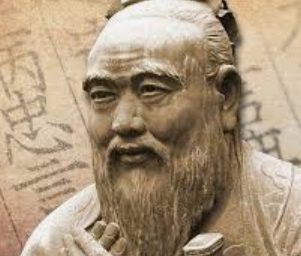
All things are nourished together without their injuring one another. The courses of the seasons, and of the sun and moon, are pursued without any collision among them. The smaller energies are like river currents; the greater energies are seen in mighty transformations. It is this which makes heaven and earth so great.
8 months 1 week ago
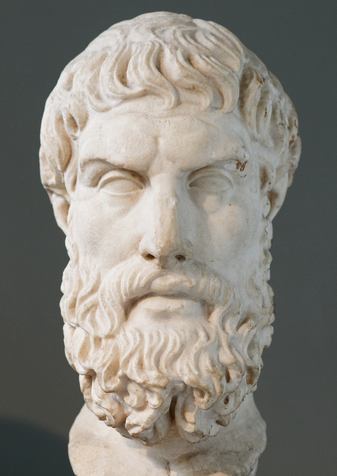
Temperance is that discreet regulation of the desires and passions, by which we are enabled to enjoy pleasures without suffering any consequent inconvenience. They who maintain such a constant self-command, as never to be enticed by the prospect of present indulgence, to do that which will be productive of evil, obtain the truest pleasure by declining pleasure.
5 months 3 weeks ago
To love life is to love God. Harder and more blessed than all else is to love this life in one's sufferings, in undeserved sufferings.
▼
Source
source
Bk. XIV, ch. 15

7 months 3 weeks ago
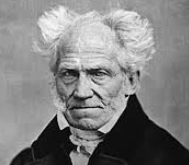
Hatred comes from the heart; contempt from the head; and neither feeling is quite within our control.
▼
Source
source
"Psychological Observations"
8 months 1 week ago
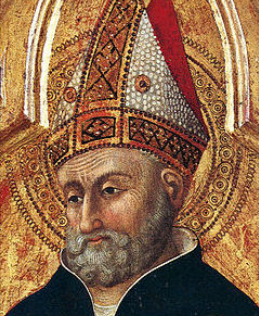
Therefore let every Christian, yea, let the whole body of Christ everywhere cry out, despite the tribulations it endures, despite temptations and countless scandals, saying: "Preserve my soul, for I am holy; save Thy servant, O my God, that trusteth in thee" (Ps. 85:2) No, this holy one is not proud, for he trusts in God.
▼
Source
source
p.429
4 months 1 week ago
He who conquers his enemy with meekness, wins fame.
4 months 4 days ago
A state of war only serves as an excuse for domestic tyranny.
▼
Source
source
The Gulag Archipelago
6 months 3 weeks ago
It seemed clear to me that life and the world somehow depended upon me now. I may almost say that the world now seemed created for me alone: if I shot myself the world would cease to be at least for me. I say nothing of its being likely that nothing will exist for anyone when I am gone, and that as soon as my consciousness is extinguished the whole world will vanish too and become void like a phantom, as a mere appurtenance of my consciousness, for possibly all this world and all these people are only me myself.
6 months 1 week ago
We need to recognize the destructive role played by the media in fanning the flames of the "Black-Jewish Conflict." Cornel West, bell hooks, Richard Green, Barbara Christian, Henry Louis Gates, Marian Wright Edelman, Nell Painter, Albert Raby....Why are these names not as well known outside the African American community as the names of Louis Farrakhan or Leonard Jeffries? Are they, in their diversity and dynamism, less representative of the African American community?
▼
Source
source
Melanie Kaye/Kantrowitz "Jews, Class, Color, and the Cost of Whiteness" in The Issue is Power

7 months 5 days ago
Having departed from your house, turn not back; for the furies will be your attendants.
▼
Source
source
Symbol 15
8 months 1 day ago
He who is not sure of his memory, should not undertake the trade of lying.
▼
Source
source
Book I, Ch. 9
7 months 3 weeks ago
Freedom of Men under Government is, to have a standing Rule to live by, common to every one of that Society, and made by the Legislative Power erected in it; a Liberty to follow my own Will in all things, where the Rule prescribes not; and not to be subject to the inconstant, uncertain, unknown, Arbitrary Will of another Man: as Freedom of Nature is, to be under no other restraint but the Law of Nature.
▼
Source
source
Second Treatise of Civil Government, Ch. IV, sec. 21
4 months 3 weeks ago
Utopia is a meta-utopia: the environment in which Utopian experiments may be tried out; the environment in which people are free to do their own thing; the environment which must, to a great extent, be realized first if more particular Utopian visions are to be realized stably.
▼
Source
source
Ch. 10 : A Framework for Utopia; The Framework, p. 312
5 months 2 weeks ago
To spendthrifts money is so living and actual-it is such a thin veil between them and their pleasures! There is only one limit to their fortune-that of time; and a spendthrift with only a few crowns is the Emperor of Rome until they are spent. For such a person to lose his money is to suffer the most shocking reverse, and fall from heaven to hell, from all to nothing, in a breath.
▼
Source
source
A Lodging for the Night.
6 months 2 weeks ago
No work of art can be instantaneously perceived because there is the no opportunity for conservation and increase in tension, and hence none for that release and unfolding which gives volume to a work of art.
▼
Source
source
p. 189
5 months 1 week ago
The life, the fortune, and the happiness of every one of us, and, more or less, of those who are connected with us, do depend upon our knowing something of the rules of a game infinitely more difficult and complicated than chess. It is a game which has been played for untold ages, every man and woman of us being one of the two players in a game of his or her own. The chessboard is the world, the pieces are the phenomena of the universe, the rules of the game are what we call the laws of Nature. The player on the other side is hidden from us. We know that his play is always fair, just, and patient. But also we know, to our cost, that he never overlooks a mistake, or makes the smallest allowance for ignorance. To the man who plays well, the highest stakes are paid, with that sort of overflowing generosity with which the strong shows delight in strength. And one who plays ill is checkmated - without haste, but without remorse.
8 months 1 week ago
Truth is the ultimate end of the whole universe.
▼
Source
source
I, 1, 2
6 months 2 weeks ago
The class of big capitalists, who, in all civilized countries, are already in almost exclusive possession of all the means of subsistance and of the instruments (machines, factories) and materials necessary for the production of the means of subsistence. This is the bourgeois class, or the bourgeoisie.
7 months 3 weeks ago
The only thing that will redeem mankind is co-operation, and the first step towards co-operation lies in the hearts of individuals.
▼
Source
source
p. 212
5 months 2 days ago
No amount of happiness enjoyed by some organisms can notionally justify the indescribable horrors of Auschwitz. [...] Nor can the fun and games outweigh the sporadic frightfulness of pain and despair that occurs every second of every day. For there's nothing inherently wrong with non-sentience or [...] non-existence; whereas there is something frightfully and self-intimatingly wrong with suffering.
▼
Source
source
2.7 Why Be Negative?
6 months 2 weeks ago
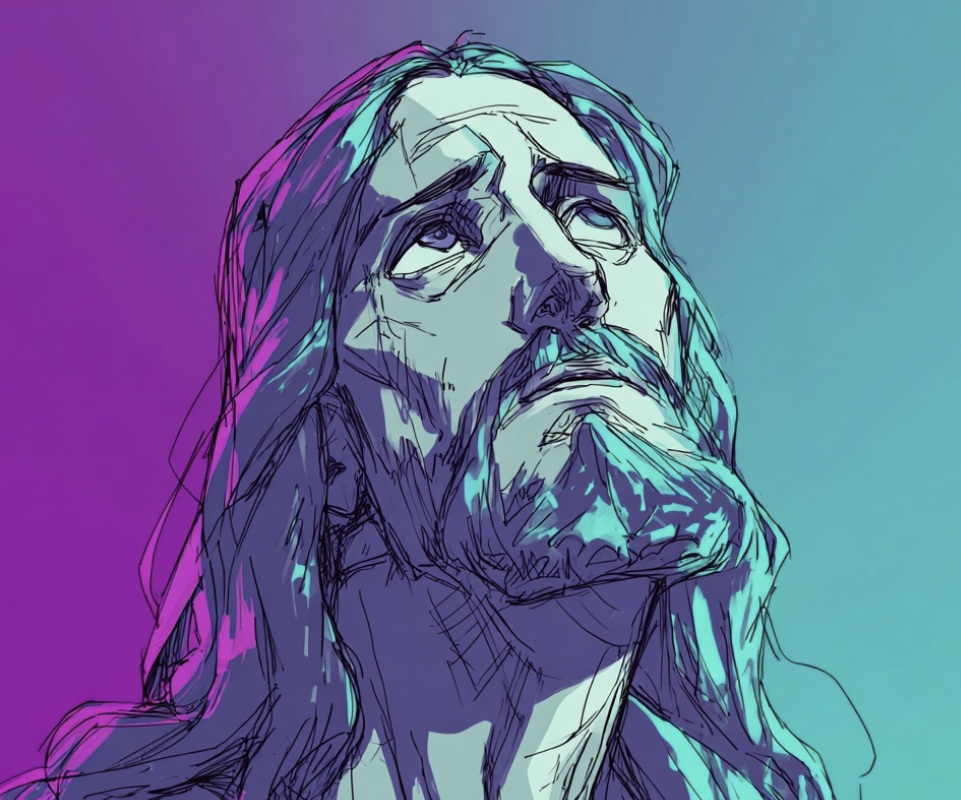
The foxes have holes, and the birds of the air have nests; but the Son of man hath not where to lay his head.
▼
Source
source
8:20 (KJV)
7 months 3 weeks ago
Nature offers nothing that can be called this man's rather than another's ; but, under nature, everything belongs to all - that is, they have authority to claim it for themselves. But, under dominion, where it is by common law determined what belongs to this man, and what to that, he is called just who has a constant will to render to every man his own, but he, unjust who strives, on the contrary, to make his own that which belongs to another.
▼
Source
source
Ch. 2, Of Natural Right
6 months 2 weeks ago
As the years pass, the number of those we can communicate with diminishes. When there is no longer anyone to talk to, at last we will be as we were before stooping to a name.

8 months 3 weeks ago
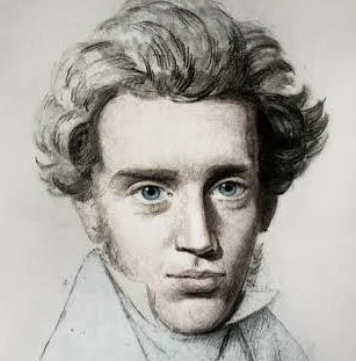
I have never definitely broken with Christianity nor renounced it. To attack it has never been my thought. No, from the time when there could be any question of the employment of my powers, I was firmly determined to employ them all to defend Christianity, or in any case to present it in its true form.
7 months 3 weeks ago
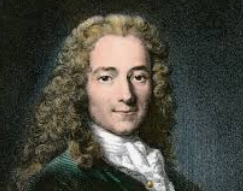
Where there is friendship, there is our natural soil.
▼
Source
source
Letter to Nicolas-Claude Thieriot, 1734

4 months 2 weeks ago
There is only one purpose to which a whole society can be directed by a deliberate plan. That purpose is war, and there is no other.
▼
Source
source
Ch. V: "The Totalitarian Regimes", §7, p. 90
3 months 3 weeks ago
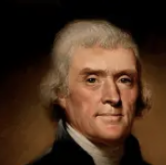
Every man should be protected in his lawful acts, and be certain that no ex post facto law shall punish or endamage him for them. ...The sentiment that ex post facto laws are against natural right, is so strong in the United States, that few, if any, of the State constitutions have failed to proscribe them. The federal constitution indeed interdicts them in criminal cases only; but they are equally unjust in civil as in criminal cases, and the omission of a caution which would have been right, does not justify the doing what is wrong. Nor ought it to be presumed that the legislature meant to use a phrase in an unjustifiable sense, if by rules of construction it can be ever strained to what is just.
4 months 2 weeks ago
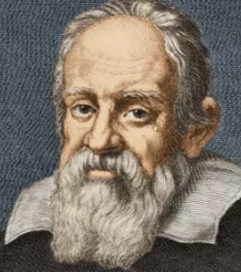
I am quite convinced; and, believe me, if I were again beginning my studies, I should follow the advice of Plato and start with mathematics, a science which proceeds very cautiously and admits nothing as established until it has been rigidly demonstrated.
▼
Source
source
Simplicio, First Day, page 90.
3 months 2 weeks ago
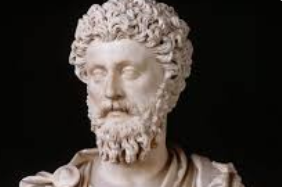
Do what nature now requires. Set thyself in motion, if it is in thy power, and do not look about thee to see if any one will observe it; nor yet expect Plato's Republic: but be content if the smallest thing goes on well, and consider such an event to be no small matter. Forward, as occasion offers. Never look round to see whether any shall note it.... Be satisfied with success in even the smallest matter, and think that even such a result is no trifle.
▼
Source
source
IX, 29

6 months 6 days ago
Atheism ... in its philosophic aspect refuses allegiance not merely to a definite concept of God, but it refuses all servitude to the God idea, and opposes the theistic principle as such. Gods in their individual function are not half as pernicious as the principle of theism which represents the belief in a supernatural, or even omnipotent, power to rule the earth and man upon it. It is the absolutism of theism, its pernicious influence upon humanity, its paralyzing effect upon thought and action, which Atheism is fighting with all its power.

6 months 1 week ago
Might is that which makes a thing of anybody who comes under its sway. When exercised to the full, it makes a thing of man in the most literal sense, for it makes him a corpse.
▼
Source
source
in The Simone Weil Reader, p. 153
5 months 3 weeks ago
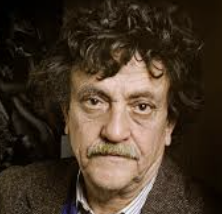
My theory is that all women have hydrofluoric acid bottled up inside.
▼
Source
source
On difficulties with women, as quoted in "Kurt Vonnegut, Writer of Classics of the American Counterculture, Dies at 84" by Dinitia Smith in The New York Times
CivilSimian.com created by AxiomaticPanic, CivilSimian, Kalokagathia